
 Worksheets
Natural Selection
Total questions: 30
Worksheet time: 22mins
Which factor is necessary in order for natural selection to occur in a species?
genetic variation within a population
plenty of food
a strong family structure
a livable environment
Which of the following is an example of natural selection?
a plant growing between rocks
a tree growing towards sunlight
bears moving into a new part of a forest over many generations
shrubs growing longer thorns over many generations
Charles Darwin noticed that finches on different islands of the Galápagos Islands were similar but that their beaks differed. What explanation for these differences did he propose?
The beaks of the finches are adapted to the way the bird usually gets food.
Beak size is related to the size of the finch.
Specific genetic mutations occur that make beak size change in response to random selection factors.
The different beaks of the finches would one day evolve into identical beaks.

Based on the diagram below, which choice BEST represents the relative ages of the fossils, from oldest to youngest?
Snail shell, clam shell, fish skeleton
Fish skeleton, clam shell, snail shell
Clam shell, snail shell, fish skeleton
Fish skeleton, snail shell, clam shell
A population of organisms is separated into two groups for many years. When will the two populations be considered two different species?
When the populations behave differently
When the populations live in different habitats
When the populations eat different food
When the populations can no longer produce fertile offspring
Changes in a species over long periods of time is called
Selective Breeding
Fossil Record
Mating
Evolution
A trait that helps an organism survive and reproduce is called a(n)
Species
Adaptation
Evolution
Selection
The process by which individuals that are better adapted to their environment are more likely to survive and reproduce than other members of the same species is called
Natural Selection
Evolution
Competition
Overproduction
Which of the following is the best example of an adaptation that helps an organism survive in its environment?
A thick coat of fur on an animal that lives in the desert.
A deep and spreading roots root system in a desert plant.
Green coloring in a lizard living on gray rocks.
Thin, delicate leaves on a plant in a cold climate.

About how long ago did flowering plants first appear?
450 million years ago
350 million years ago
150 million years ago
100 million years ago
In his observations of the finches in the Galapagos Islands, Darwin stated that we could never "watch" natural selection in action. Why did Darwin believe this?
Natural selection is an internal process that cannot be outwardly observed.
Natural selection is a process that occurs randomly, and it is unlikely that a human would be present when it occurs.
Natural selection happens so quickly, it is difficult to see.
Natural selection occurs over so many generations, it is impossible to see changes occur.

A human’s arm, a cat’s front leg, a dolphin’s front flipper, and a bat’s wing
Have similar kinds of bones.
Have nothing in common.
Are very similar to insect wing and jelly fish tentacles.
Are used in similar ways.
A group of closely related organisms that can mate with one another and produce fertile offspring is considered the same_________.
Species
Variation
Fossil
Evolution
The trace or remains of once living organisms preserved in sedimentary rock are called _____.
Fossils
Natural selection
Adaptation
Species
Humans often use antibacterial soap to kill bacteria that may be on their hands in order to prevent the spread of diseases. Some bacteria have the ability to resist the soap and will pass their genes onto to the next generation. The bacteria evolve so that the antibacterial soap no longer affects them. Why are bacteria able to evolve so quickly?
They reproduce lots of offspring in the hopes that at least some will survive.
They reproduce quickly and have a short generation time.
They can live anywhere.
People do not use antibacterial soap enough.
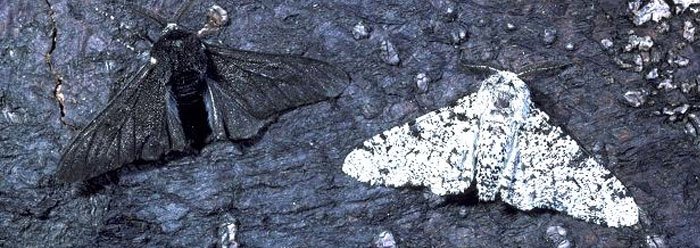


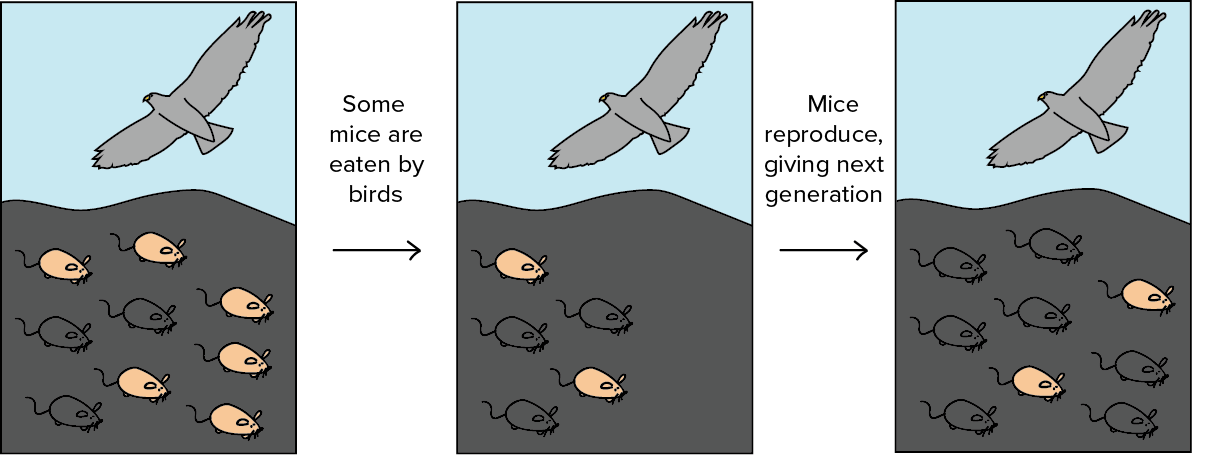
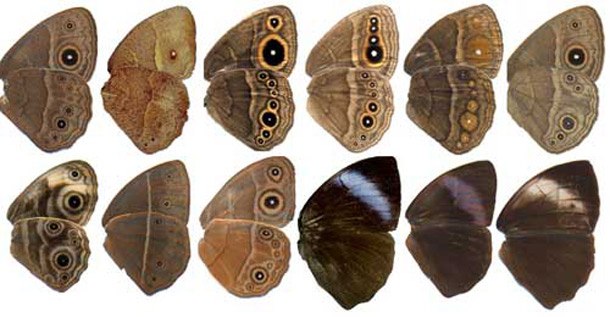


What is the successful adaptation?

