
 Worksheets
Respiratory System
Total questions: 63
Worksheet time: 33mins


1. larynx
2. nasal cavity
3. pharynx
4. trachea
Which of the following is the correct order that air would flow during inhalation.
The schol nurse is presenting to a class of students on how to prevent the transmission of the common cold . Which information should the nurse include
Instruct the children to always keep a tissue with them
Explain to the children the importance of getting immunized against virus that causes the cold
Tell the students that they should go to the doctor immediaely
Instruct the student on proper hand washing hygine
A patient with Influenza A is being discharged from the emergency department with prescription antibiotics . Which statement by the client indicates and understanding for this prescription
The pills will make you feel better fast and I can return to work
The antibiotics will help prevent me from developing bacterial pneumonia
If I had gotten this prescription sooner, I could have been prevented
I need to take these pills until I feel better
A newly admitted patient with a productive cough has the following v/s 148/89, 108, 32,102, PsO2 of 95%, Which order would be implemented first
Place on contact precautions
Adminiser ibuprofen
Hang Ancef IVPB
Call lab to get a stat blood culture
The nurse is reviewing the charts for these patients who are scheduled in October for yearly physical examinations. Which patients will the nurse plan to administer the influenza vaccine? Choose all that apply
50 year old female with asthma
20 year old male on prednison
90 year old male in a assisted living facility
70 year old with a egg allergy
45 year old with a pacemaker
A patient who has sleep apnea and has used a CPAP for 2 weeks, and has return to the sleep clinic the patient tells the nurse "My sleep has not improved at all" Which response by the nurses is most appropriate
CPAP results takes more than a few weeks to achieve the maxium effect
Have you been using the CPAP every night?
Do you want to talk to the doctor about surgery
Have you tried to increase the CPAP pressure higher?
The client diagnosed with restrictive airway (asthma) has been prescribed a glucocorticoid inhailed medication. What information should the nurse teach regarding this medication
Do not abruptley stop taking the medication , it must be tapered off.
Immediately rinse the mouth following administration of the drug.
Hold the medication in the mouth for 15 seconds before swallowing.
Take the medication immediately when an attack starts.
The charge nurse is making rounds. Which client should the nurse assess first?
The 29 year old client diagnosed with reactive airway disease who is complaining the nurse caring for him was rude.
The 76 year old client diagnised with heart failure who has 2+ edema of the lower extremeties.
The 15-year old client diagnosed with diabetic ketoaidosis after a bout witht the flu who has a blood glucose reading of 189mg/dl.
The 62 year old client diagnosed with COPD and pneumonia who is receiving O2 by nasal cannula at 2L/pm.
A 56 year old client is admitted with a diagnosis of rule out TB. Which type of precautions will the nurse implement
Standard Precautions
Contact Precautions
Droplet Precautions
Airborn Precautions
What instruction does the nurse provide while teaching a patient with asthma the appropriate use of a peak meter flow?
Take and record peak flow readings when having asthma symptoms or an attack
Increase the doses of long term control medications for the peak in the red zone
Use of the flow meter each morning after taking asthma medications
Empty the lungs and then inhale rapidly through the mouthpiece
When teaching a client with asthma about the use of the peak flowmeter, the nurse instructs the patient
Increase the use of quick relief medications if the meter indates the yellow zone
Carry the flow meter at all times
Close the mouth around the mouth piece and inhale quickly when using the flow meter
Go to the emergency room if the meter indicates the yellow zone
A patient is scheduled to undergo bronchoscopy. the nurse will anticipate an order to hold which of the following medications on the morning of the procedure
Ibuprofen
Atenolol
Omeprazole
Digoxin
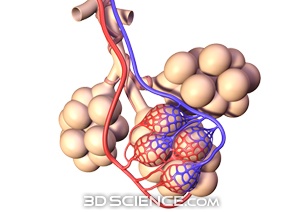

Carbon dioxide and oxygen gas are exchanged through the process of diffusion into tiny blood vessels in the alveoli of the lungs. In order for oxygen to diffuse into the blood during inhalation, what is true about blood concentration?
oxygen levels are low
oxygen levels are high
carbon dioxide levels are low
Anemia results from a decrease in the number of red blood cells. Although red blood cells only carry about 15% of the CO 2 produced by cellular respiration, why would an individual with anemia report shortness of breath?
Fewer red blood cells to convert CO 2 to HCO 3 - + H + in the blood will result in a decreased pH and an increase in ventilation, or shortness of breath.
Fewer red blood cells to convert CO 2 to HCO 3 - + H + in the blood will trigger an increase in the pH and a decrease in ventilation, or shortness of breath.
What is the compound called when oxygen binds with hemoglobin in a mammal?
oxyhemoglobin
bicarbonate ion
Emphysema is a lung disease in which the alveoli in both lungs slowly break down. Which of the following would be a direct result of this disease?
lower amounts of oxygen would diffuse across the membranes of alveoli into the bloodstream
less particulate matter would be trapped by mucous in the alveoli
The gas laws indicate that pressure and volume are inversely proportional. Pulmonary ventilation relies on the gas laws for both inhalation and exhalation. Which of the following accurately describes the relationship between the gas laws and pulmonary ventilation?
When the diaphragm contracts, lung volume increases causing a decrease in pressure leading to inhalation.
When the diaphragm contracts, lung volume increases causing a decrease in pressure leading to exhalation
What is the process called when air moves in and out of the lungs?
pulmonary ventilation
internal ventilation
Which molecules transport the majority of the carbon dioxide in the blood?
bicarbonate ions
carbohemoglobin
In mammals, what process allows the gas exchange of both oxygen and carbon dioxide through the respiratory membrane?
simple diffusion
passive transport
osmosis
What is the correct organizational sequence of lung inspiration?
1. Diaphragm and intercostal muscles contract
2. The size of the thoracic cavity increases
3. External air is pulled into the lungs due to an increase in intrapulmonary volume
2,1,3
1,2,3
3,2,1
What must happen in order for air to be drawn into the lungs?
The diaphragm contracts and flattens while the intercostal muscles expand the rib cage, causing an increase in space within the chest cavity. The increase in space means the air pressure is lower inside than outside, causing a rush of air into the lungs.
The diaphragm contracts and pulls the rib cage in while the intercostal muscles relax, expanding the upper region of the chest. This opens up the lungs, and air is pushed in as the intercostal muscles contract.
The diaphragm relaxes and bubbles up, expanding the chest cavity to lower the air pressure in the lungs. The intercostal muscles then relax to allow the opening of the trachea and pharynx so that air can rush into the lungs due to the difference in air pressure.
A chimpanzee is exhaling. Which of the following is true regarding this process?
Pressure inside the chest cavity will be greater than outside the body.
Pressure inside the chest cavity will decrease to force air out.
Volume inside the chest cavity and outside the body will remain the same.
The structure of the respiratory system
is designed for gas exchange. Which of the following describes how structures
in the respiratory system are designed to allow for gas exchange?
The alveoli are made of a single layer of
permeable
cells surrounded by capillaries.
The nasal cavity is lined with cells that produce mucous to trap particles present in air as it is inhaled.
Carbon dioxide (CO 2) levels in the blood are involved in buffers that help regulate blood pH. As a consequence, pulmonary ventilation plays a critical role in maintaining blood pH levels. Which of the following accurately describes how the respiratory system participates in maintaining blood pH?
When we exhale, the diaphragm relaxes and the lungs empty releasing CO 2 to regulate pH.
When we inhale, the diaphragm relaxes and the lungs empty releasing CO 2 to regulate pH.
When we exhale, the diaphragm contracts and the lungs fill with air bringing in CO 2 to regulate pH.
Smoking can cause a form of Chronic
Obstructive Pulmonary Disease (COPD) referred to as emphysema, a serious lung
disease. How do smoking and emphysema impact the respiratory system’s ability
to exchange gasses?
The surface area needed for gas exchange in alveoli is decreased.
Cilia are prevented from removing debris from the respiratory system.
In the lungs, carbon dioxide from the blood is exchanged for oxygen in the air. The carbon dioxide leaves the body as we exhale. Which of the following describes how the oxygen is transported to cells in the body after inhalation?
Oxygen attaches to the iron in hemoglobin in red blood cells.
The globulin portion
of hemoglobin in red blood cells carries the oxygen.
A mammal is inhaling. Which of the following is true regarding this process?
The lung volume will increase while the pressure will decrease.
The lung volume will decrease while the pressure will increase.
For the following question, assume a constant body temperature.
Which of the following best describes the relationship between pressure and volume in pulmonary ventilation?
pressure is inversely proportional to volume
pressure will fluctuate relative to the volume
Compliance, in the respiratory system, refers to the ease with which one can expand the lungs and the thorax. Which of the following situations would decrease compliance?
fluid accumulation in lungs
full extension of intercostal muscles
What would increase the rate of oxygen exchange in the alveoli of the lungs?
an increase in hemoglobin in the bloodstream
a decrease in erythrocytes in the bloodstream
A problem with the secretion of pulmonary surfactant would cause which of the following problems to occur?
gas diffusion rates would decrease in the alveoli
lungs would leak fluid into other cavities
filling of the pleural cavity with fluid would be prevented

