
 Worksheets
Auto Tech Electrical
Total questions: 67
Worksheet time: 51mins
Name
Class
Date
1.
An Electron has what kind of charge?
a)
Positive
b)
Negative
c)
No charge
d)
Double positive
2.
The sub-multiple milli matches which of the following?
a)
1/10000
b)
1/100
c)
1/1000
d)
1/100000
3.
The SI unit which represents meter squared is?
a)
volume
b)
area
c)
height
d)
density
4.
Two resistors are connected in series. If both have a resistance of 10 Ohms, their total resistance will be?
a)
10 Ω
b)
20 Ω
c)
0.5 Ω
d)
8 Ω
5.
A secondary battery cell,
a)
cannot be re-charged
b)
can be re-charged
c)
can be thrown away
d)
cannot be replaced
6.
Which of the following is a type of transformer loss?
a)
aluminium loss
b)
lost my copper
c)
PVC loss
d)
copper loss
7.
A solenoid is a?
a)
protective device
b)
an electromagnetic device
c)
a type of battery
d)
is very solid
8.
Fleming's Left hand rule matches which of the following?
a)
Motor (F = B I L)
b)
Motor (F = B L V)
c)
Generator (F = B I L)
d)
Generator Motor (F = B L V)
9.
P = V x I can be recalled through the?
a)
Ohm's law triangle
b)
Power Circle triangle
c)
Power triangle
d)
Ohm's law circle
10.
A type of transformer which uses only one coil is known as a?
a)
autotransformer
b)
step up
c)
step down
d)
step around
11.
If a transformer has 200 V coming in, and has a turns ratio of 1:2, its output voltage will be?
a)
200 V
b)
400 V
c)
50 V
d)
25 V
12.
Which of the following describes a positive ion?
a)
It gained electrons
b)
It lost electrons
c)
It is called an anion
13.
Which of the following describes a negative ion?
a)
It lost electrons
b)
It is called a cation
c)
It is called an anion
14.
Why do atoms form ions?
a)
To get a full outer shell
b)
To get 8 protons
c)
To get 8 neutrons
d)
To become larger
15.
How do atoms form ions?
a)
By gaining or losing electrons
b)
By gaining or losing protons
c)
By destroying electrons
d)
By gaining or losing neutrons
16.
If an atom has 6 valence electrons, will it become a positive or negative ion?
a)
Positive ion
b)
Negative ion
17.
An atom with a charge of +3 has _______.
a)
Lost 3 electrons
b)
Gained 3 electrons
c)
Lost 3 protons
d)
Gained 3 protons
18.
An atom with a charge of -4 has _______.
a)
Lost 4 electrons
b)
Gained 4 electrons
c)
A new total of 4 electrons
19.
Why are metals useful for making electrical wire?
a)
Metals do not bend.
b)
Metals hold much heat.
c)
Metals are insulators.
d)
Metals are conductors.
20.
Which is NOT an insulator.
a)
Wool
b)
Plastic
c)
Copper
d)
Glass
21.
Something electricity can't move through is called a(n) ______.
a)
conductor
b)
wire
c)
shoe
d)
insulator
22.
What is a example of a conductor?
a)
wood
b)
metal
c)
rubber
d)
rock
23.
What is a example of a insulator?
a)
metal
b)
rubber
c)
water
24.
Water is a insulator.
a)
True
b)
False
25.
Rubber is a insulator.
a)
true
b)
false
26.
What are Conductors?
a)
A conductor is a material that allows electric charge to move through it as an electric current. Usually the charge is carried by electrons, and the conductor is a metal.
b)
an insulator
c)
an conductor
d)
A material or an object that does not easily allow heat, electricity, light, or sound to pass through it. Air, cloth and rubber are good electrical insulators; feathers and wool make good thermal insulators. Compare conductor.
27.
What are insulators?
a)
A conductor is a material that allows electric charge to move through it as an electric current. Usually the charge is carried by electrons, and the conductor is a metal.
b)
An object that is really, really, really, and I mean really truely, awesome.
c)
A material or an object that does not easily allow heat, electricity, light, or sound to pass through it. Air, cloth and rubber are good electrical insulators; feathers and wool make good thermal insulators. Compare conductor.
28.
Which is NOT an insulator.
a)
Wool
b)
Plastic
c)
Copper
d)
Glass
29.
Why are metals useful for making electrical wire?
a)
Metals do not bend.
b)
Metals hold much heat.
c)
Metals are insulators.
d)
Metals are conductors.
30.
What is the difference between a conductor and an insulator?
a)
An insulator allows electricity to flow through it easily and a conductor does not
b)
A conductor allows electricity to flow through it easily and an insulator does not.
c)
An insulator is magnetic and a conductor is not
d)
A conductor is magnetic and an insulator is not
31.
A conductor allows energy to easily pass by.
a)
True
b)
False
32.
A insulator does not let energy flow through easily
a)
True
b)
False
33.
Which one is an insulator?
a)
Silver
b)
Copper
c)
Mechanical pencil
d)
plastic
34.
Which one is a conductor?
a)
wood
b)
iron
c)
plastic spoon
d)
paper
35.
The handle of a frying pan is often coated in rubber because rubber provides...
a)
Heat insulation
b)
Heat conduction
c)
A low melting point
d)
A nonstick surface
36.
Is iron a conductor or insulator?
a)
Conductor
b)
Insulator
37.
Which of the following is NOT an insulator?
a)
Wool
b)
Plastic
c)
Copper
d)
Styrofoam
38.
Is wood a conductor or insulator?
a)
Conductor
b)
Insulator
39.
What is NOT an example of an insulator in the kitchen?
a)
An oven mitt
b)
Pots and pans
c)
A wooden spoon
d)
A plastic measuring cup
40.
A great conductor of energy is:
a)
wood
b)
plastic
c)
metal
d)
cloth
41.
Conductors are materials that...
a)
Allow heat to pass through
b)
Stop heat from passing through
c)
Allow cold to pass through
d)
Stop cold from passing through
42.
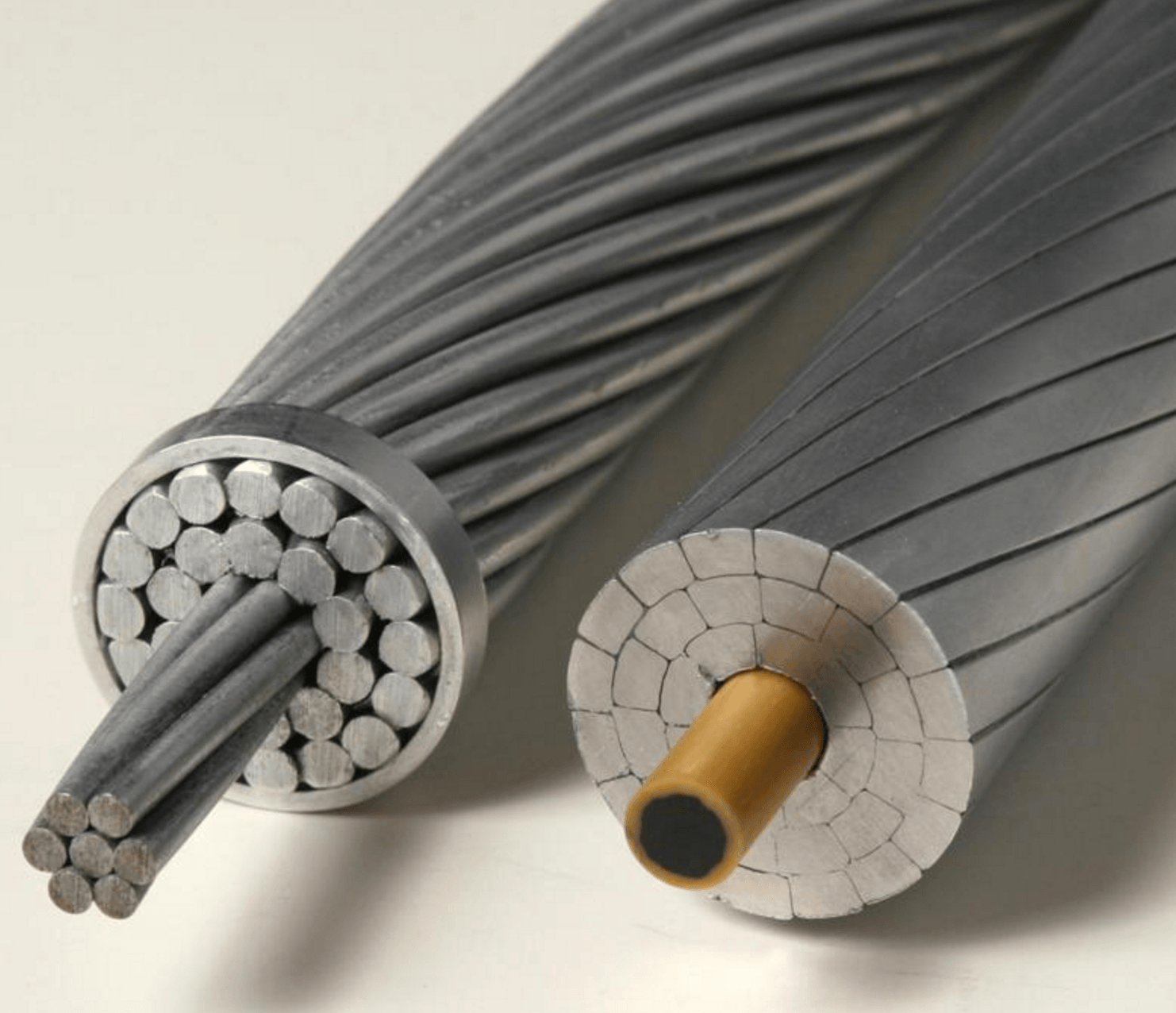
All of the following are conductors except _______.
a)
metal spoon
b)
wire
c)
iron nail
d)
plastic spoon
43.
Gloves help keep your hands warm in winter because:
a)
They are conductors of heat.
b)
They are fuzzy.
c)
They are conductors of electrical energy.
d)
They are insulators.
44.
An object that doesn't conduct heat well is known as:
a)
a conductor
b)
an insulator
45.

In a stable atom the amount of electrons is electron is equal to
a)
neutrons
b)
protons
c)
atomic mass
d)
neutrons + protons
46.

What is the charge of the electron
a)
positive
b)
no charge
c)
negative
d)
neutral
47.
How many Volts would it take to push 1 Amp through a resistance of 1 Ohm
a)
10 volts
b)
1 volt
c)
48 volts
d)
5 volts
48.
What size resistor would produce a 3 Amp current flow with a 12 Volt battery
a)
1 Ohm
b)
3 Ohms
c)
4 Ohms
d)
12 Ohms
49.
If the battery produced 12.6 Volts and what would be the current flow be for a 6 Ohm resistor
a)
2.1 Amps
b)
2.4 Amps
c)
1.71 Amps
d)
15 Amps
50.
How many Volts would we need to produce a current flow of 8 Amps through a 6 Ohm resistor
a)
12 volts
b)
24 volts
c)
1.3333
d)
48 volts
51.
What size resistor would produce a current flow of 5 Amps with a battery voltage of 12.6 volts
a)
60 Ohms
b)
2.52 Ohms
c)
1.71 ohms
d)
5.04 Ohms
52.
With the engine running the charging system produces 14.5 Volts what would the current flow be if a resistance of 6 Ohms was present
a)
2.41 Ohms
b)
2.52 Ohms
c)
2.1 Ohms
d)
0.3333 Ohms
53.
Transistors are semi-conductors that
a)
is used a one way valve for electricity
b)
is used to amplify electrical symbols
c)
conduct electricity easily
d)
are actually insulators
54.
Allows current to pass through in one direction only.
a)
bulb
b)
diode
c)
switch
d)
resistor
55.
If the doping level in a pn junction diode is increased, the width of depletion layer………..
a)
remains the same
b)
decreased
c)
increased
d)
none of the above
56.
In series circuits, current?
a)
Is the same throughout
b)
Divides among components
57.
Resistance is measured in ___.
a)
watts.
b)
amps.
c)
ohms.
58.
the tendency for a material to oppose the flow of electrons
a)
current
b)
circuit
c)
resistance
d)
difference
59.
AC stands for ___.
a)
Alternating Current
b)
Attraction Connections
60.
What is current measured in?
a)
Joules/Coulomb
b)
Amperes
c)
Centimeters
d)
Newtons
61.
Series circuit is
a)
a circuit with more than one path for current to travel
b)
has magnets to help current to travel
c)
a circuit that has only one path for the current to travel
d)
does not allow electric current to travel through it
62.
Ammeters are connected...
a)
In series
b)
In parallel
c)
Doesn't matter
63.

what is this symbol for?
a)
light bulb
b)
switch
c)
battery
d)
resistor
64.

The current flowing in an electric circuit can be increased by:
a)
increasing voltage or decreasing resistance.
b)
decreasing voltage or increasing resistance.
c)
increasing voltage and increasing resistance.
d)
decreasing voltage and decreasing resistance.
65.

This is the circuit symbol for ...
a)
an AC current source
b)
a DC current source
c)
an ammeter
d)
a voltmeter
66.
An atom that has more protons than electrons would have what charge?
a)
Positive
b)
Negative
c)
Neutral (Zero)
67.
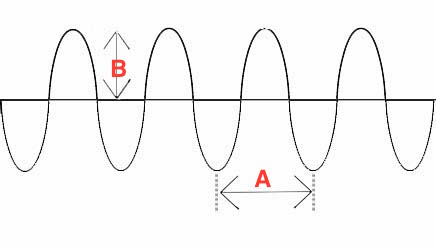
What property of the wave is represented by the letter "B"?
a)
amplitude
b)
crest
c)
trough
d)
wavelength
100 %

