
 Worksheets
Circulatory System
Total questions: 32
Worksheet time: 18mins
Name
Class
Date
1.
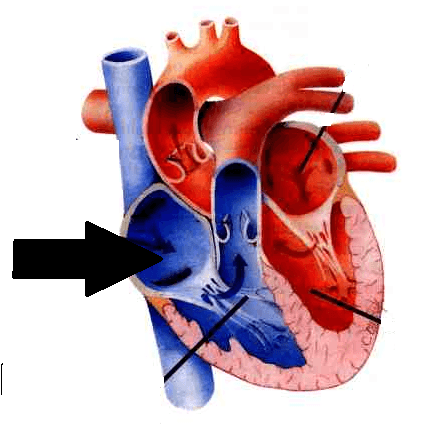
Identify
a)
Left atrium
b)
Right atrium
c)
Left ventricle
d)
Right ventricle
2.
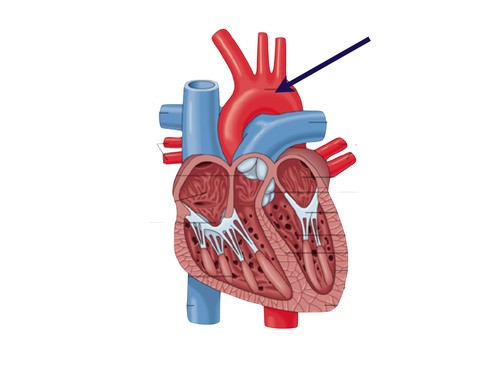
Identify
a)
Pulmonary veins
b)
Pulmonary artery
c)
Aorta
d)
Vena cava
3.
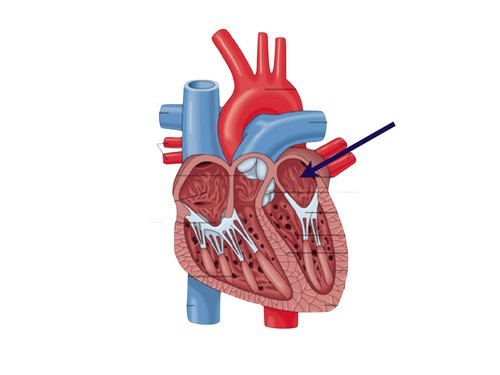
Identify
a)
Left atrium
b)
Right atrium
c)
Left ventricle
d)
Right ventricle
4.
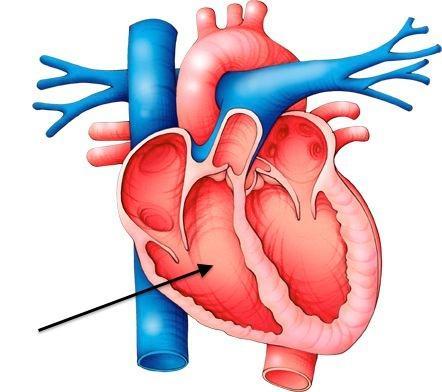
Identify
a)
Left atrium
b)
Right atrium
c)
Left ventricle
d)
Right ventricle
5.
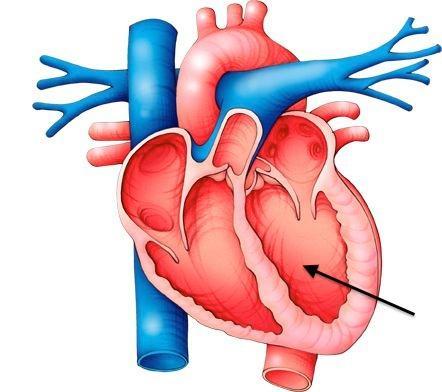
Identify
a)
Left atrium
b)
Right atrium
c)
Left ventricle
d)
Right ventricle
6.
The heart has ___ chambers.
a)
1
b)
2
c)
3
d)
4
7.
This chamber of the heart RECEIVES blood returning from the body
a)
Right Atrium
b)
Right Ventricle
c)
Left Atrium
d)
Left Ventricle
8.
Which chambers of the heart are the thickest and strongest?
a)
Atria
b)
Ventricles
c)
Valves
d)
Aorta
9.

True or False: There are four chambers in the heart.
a)
True
b)
False
10.
The aorta is the largest artery in the body. The blood leaving the aorta is full of?
a)
Oxygen
b)
Carbon Dioxide
c)
White blood Cells
d)
Potassium
11.
Thin-walled vessels that allow for the exchange of O2 , CO2, nutrients and wastes between blood cells or air sacs in the lungs
a)
Arteries
b)
Veins
c)
Capillaries
12.

What does Deoxygenated mean?
a)
Oxygen-rich
b)
Blood flow
c)
Oxygen-poor
d)
Water Flow
13.

A flap of tissue that prevents blood from flowing backward
a)
Aorta
b)
Atrium
c)
Septum
d)
Valve
14.
Compared to arteries, veins
a)
have a pleated endothelium.
b)
have thinner walls.
c)
have more smooth muscle in their tunica media.
d)
hold their shape better when cut.
15.
Compared to arteries, veins
a)
have a pleated endothelium.
b)
have thinner walls.
c)
have more smooth muscle in their tunica media.
d)
hold their shape better when cut.
16.
Carry blood away from heart; mostly oxygen-rich
a)
Arteries
b)
Veins
c)
Capillaries
17.
Which type of blood vessel has the thickest layer of smooth muscle in its walls?
a)
Arteries
b)
Veins
c)
Capillaries
d)
Ventricles
18.
What is pulmonary circulation?
a)
Blood travelling to and from the lungs
b)
Blood travelling to and from the body
c)
A blood clot in the lungs
d)
The vessel that brings blood to the lungs
19.
Blood circulation from the heart to the rest of the body is called
a)
Full body
b)
Systemic
c)
pulmonary
d)
heart to lung
20.
Which is the correct definition of the Circulatory system?
a)
The system fights disease so the body stays healthy.
b)
The system that circulates blood and oxygen through the body, consisting of the heart,blood vessels,and blood.
c)
Breaks down food into smaller pieces and absorbs those nutrients into the body.
d)
Provides shape and structure for the body.
21.
What function does the heart do?
a)
Protects organs and produces red blood cells.
b)
Generates heat.
c)
Breaks down food into nutrients.
d)
The heart is a pump, which moves the blood. The arteries and veins are the pipes where the blood flows.
22.
What is the main function of the artery?
a)
It controls your brain and your thought process.
b)
They carry oxygen- poor blood BACK to the heart.
c)
Arteries carry oxygen- rich blood AWAY from the heart.
d)
It receives information (senses) and sends messages to the body about how to react to things.
23.
Which is NOT a function of the circulatory system?
a)
deliver O2 and nutrients to cells
b)
remove CO2 and wastes from cells
c)
break down carbohydrates into glucose
d)
transport other materials through body
24.
Structure(s) that keep the blood flowing in one direction.
a)
Valve(s)
b)
Septum(s)
c)
Neuron(s)
d)
Bronchiole(s)
25.
arteries, veins, and capillaries are three types of __________
a)
heart valves
b)
blood vessels
c)
cells
d)
veins
26.

What does the Circulatory System do?
a)
Circulates the Blood throughout the body
b)
Circulates Water throughout the body
c)
Excretes Waste
d)
Controls all parts of the body
27.
What is an upper, thin-walled chamber through which blood is pumped to the ventricles?
a)
Valves
b)
Veins
c)
Ventricles
d)
Atrium
28.

What is a lower, thick-walled chamber that receives blood from the Atrium?
a)
Ventricle
b)
Valve
c)
Aorta
d)
Pericardium
29.

What is the Circulatory System also known as?
a)
The heart
b)
Cardiovascular System
c)
Nervous System
d)
Aorta
30.

What is the functon of an Pulmonary Circulation?
a)
Sends blood from the heart to the lungs to be purified.
b)
Carries the blood from the heart throughout the body
c)
Temporarily close a passage or permits blood flow in only one direction.
d)
Makes you bleed
31.

What do Red-Blood cells do?
a)
Carry oxygen from the lungs to the body cells and transport carbon dioxide from the cells back to the lungs
b)
keeps blood flowing in one direction to the heart and prevent blood from flowing backwards
c)
Collects blood from the capillaries and drain it into the veins
d)
Bring nutriients to the cells and carries away waste materials.
32.

What does blood do?
a)
Carries Water to cells
b)
Carries Oxygen to cells
c)
Carries Food to cells
d)
All of the above
100 %

