
 Worksheets
Notebook Scavenger Hunt
Total questions: 35
Worksheet time: 58mins
R1: All matter is made of:
energy
atoms
electrons
compounds

R2: Mass of the atom is found in the:
electron cloud
nucleus
protons
R2/L3: The positive particles of an atom are
electrons
positrons
neutrons
protons
R2/L3: Particles in an atom that are neutral and have no charge are
negatrons
electrons
neutrons
protons
R2/L3: The subatomic particle with a negative charge is the
electron
proton
neutron
nucleus
R8: Periods go _________ on the Periodic Table.
up and down
across
R12: Which of the following chemical formulas represents a compound?
C3
O2
CH3CHO
H2
R12: What can be found on the Periodic Table?
Element
Compound
MIxture

Which item on this element square is the chemical symbol?
Copper
29
Cu
63.546
H2O
R20/L20: Which of the following is a sign that a chemical reaction has occurred?
change in shape
melting
formation of a gas
dissolving

R19: What happens in ALL chemical changes?
Change in state of matter
A new substance is formed
Bubbles are produced
An explosion
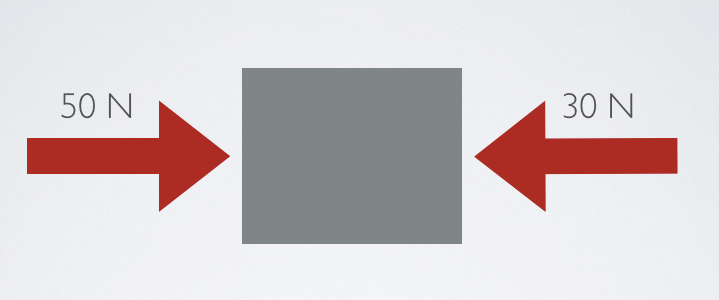
R22: How will this object move?
It won't move.
It will move to the right.
It will move to the left.
It will move up.

R22: How will this object move?
It won't move.
It will move to the right.
It will move to the left.
It will move in both directions.

R22: What is the net force?
40 N left
0 N Balalnced
400 N right
40 N right
R22: Which could be an example of a balanced force?
An asteroid moving at a constant speed through space
A car accelerating from a stop sign
A box of dishes falling from a counter
A rocket taking off
R24: What is velocity?
the quickness of an object
the location of an object
acceleration
speed in a specific direction
R23/R24: When a car goes around a corner at 20 mph, why do we say it accelerates?
The car is accelerating because of the velocity is constant
The car accelerates because it's going 20 mph
Cars always accelerate when they are in motion
The car is accelerating because it's changing direction
R23/R24: In each of the following cases, determine where the car has no acceleration ?
A car shortly after a stoplight turns green.
A car approaching a red light
A car with the cruise control set at 80 km/h
A car turning a curve at a constant speed
R25: What law is best described by inertia?
1st
2nd
3rd

R25/26/28: Which law does the picture represent?
1st
2nd
3rd
R32/33: What would you be most likely to find at a transform boundary?
Earthquakes
Volcanoes
Mountains
Rift
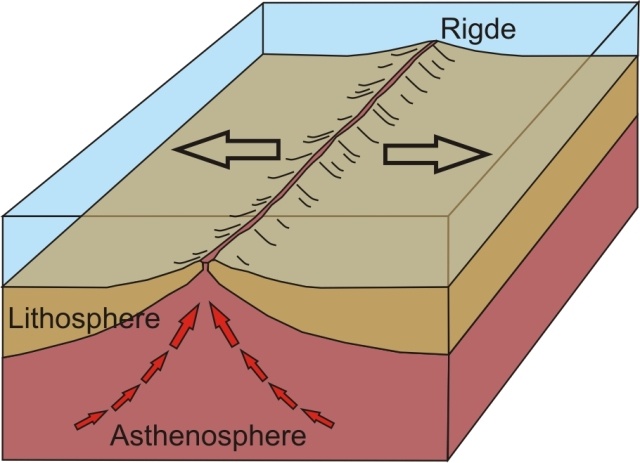
R32/33: What kind of plate boundary is shown here?
divergent
convergent
transform
subducting

R32/33: What kind of plate boundary is shown here?
divergent
convergent
transform
submergent
R31: Plate movement is caused by ______________.
the rotation of the Earth
ocean tides
convection currents in the mantle
the moon's gravity

R32/R33: Sometimes, when two tectonic plates collide, one is pushed below the other; this action at the convergent boundary is called...
Divergent boundary
Convergent boundary
Transform boundary
Subduction

L36/R36: At position A, which hemisphere would have summer?
Northern hemisphere
Southern hemisphere

R38: Name the moon phase
waning crescent
waxing crescent
waning gibbous
waxing gibbous
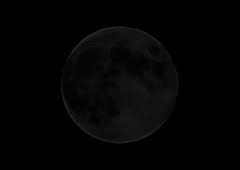
R38: Name the moon phase
First Quarter
Last Quarter
New Moon
Full Moon
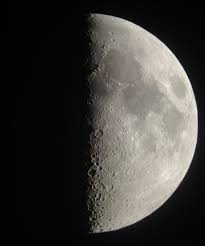
R38: Name the moon phase
First Quarter
Last Quarter
New Moon
Full Moon

