
 Worksheets
Science 5th grade Review
Total questions: 41
Worksheet time: 39mins
Name
Class
Date
1.

Where is moss least likely to grow?
a)
in a damp cave
b)
shady tree trunk
c)
under a rock
d)
in a dry, sunny field
2.
How are mosses and ferns alike?
a)
They both have fronds
b)
They both reproduce without seeds
c)
They both grow only at night
d)
They both grow in the oceans
3.
What is the function of the cell nucleus found in both plant and animal cells?
a)
to produce energy
b)
to control cell activity
c)
to remove waste products
d)
to allow molecules to enter the cell
4.
Which best explains how a single-celled organism can survive without other cells?
a)
They do not need to perform more than one function to survive.
b)
They are able to perform all necessary functions within one cell.
c)
They do not need any substance from outside of the cell.
5.
Which organelle is only found in a plant cell?
a)
nucleus
b)
chloroplast
c)
mitochondria
d)
cell membrane
6.
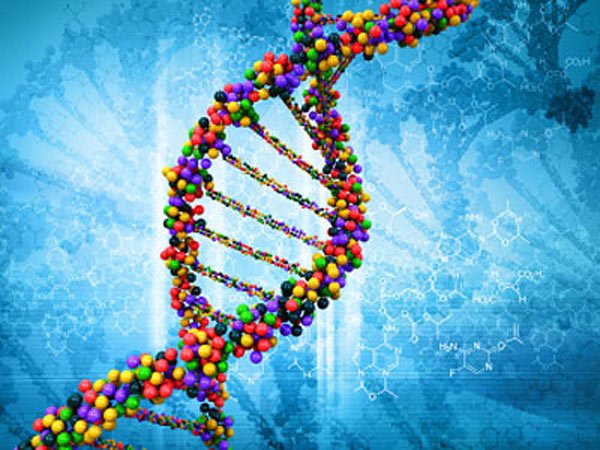
What is the name of the genetic material that is inside the nucleus?
a)
ER
b)
ATP
c)
YOLO
d)
DNA
7.
Consists of a jellylike substance that contains many organelles.
a)
ribosomes
b)
cytoplasm
c)
chloroplasts
d)
cell wall
8.
Gives the cell a rigid, box-like shape; outside of the cell membrane; in plants.
a)
cytoplasm
b)
chromatin
c)
cell wall
d)
cell membrane
9.
What is an Atom?
a)
Microscopic particles that make up matter
b)
Microscopic Protons
c)
Microscopic Neutrons
d)
Microscopic Nucleus
10.
Conductors
a)
generate power
b)
generate electricity
c)
generate light
d)
generate sound
11.
The States of Matter are:
a)
Solid Liquid Grass
b)
Solid Liquid Gasp
c)
Solid Liquid Gap
d)
Solid Liquid Gas
12.
Which characteristic did Malek most likely inherit from his parents?
a)
his ability to read fast
b)
his need to wear glasses
c)
his ability to speak English
d)
his need to count using his fingers
13.
The following are inherited traits of humans EXCEPT...
a)
long hair
b)
blue eyes
c)
long eyelashes
d)
small dimples
14.
A triangle-shaped (deposit) landform at the mouth of a river as it empties into a body of water:
a)
weather
b)
delta
c)
landform
15.
The buildup of land by depositing sediment and soil in a new location:
a)
earthquake
b)
weather
c)
deposition
16.
When a river flows over the Earth and carves out a hole in the surface it makes a:
a)
hill
b)
mountain
c)
canyon
17.
A delta forms when the river meets the ocean because:
a)
the river is colder than the ocean.
b)
the river slows down and drops sediments.
c)
the Earth builds up pressure in the river.
18.
What is necessary for sand dunes to form?
a)
a loose sand and strong wind
b)
pressure in the Earth
c)
ice glaciers
19.

The huge pieces of the earth's crust are called ____________________________.
a)
crust
b)
plates
c)
directions
d)
seismos
20.

What glacier landform is shown here?
a)
Moraine
b)
Kettle
c)
Erratic
d)
Till
21.

What coastal landform is shown here?
a)
Stack
b)
Stump
c)
Sea Cave
d)
Arch
22.
Which of the following is a sign that a chemical reaction has occurred?
a)
change in shape
b)
melting
c)
formation of a gas
d)
dissolving
23.
Is hammering wood together to build a house a chemical or physical change?
a)
chemical
b)
physical
24.
Is melting butter for popcorn a chemical or physical change?
a)
chemical
b)
physical
25.
Ms Jo Jo rubbed two balloons with a piece of wool. What will happen when the balloons are brought near each other?
a)
The balloons will repel each other.
b)
The balloons will attract each other.
c)
The balloons will become positively (+) charged.
d)
The balloons will pop.
26.
What is the major difference between static electricity and current electricity?
a)
Current electricity involves a continuous flow of neutrons; static electricity is a sudden transfer of protons
b)
Current electricity can be deadly; static electricity is almost always safe
c)
In current electricity, there's a single transfer of electrons; in static electricity, there's a steady flow of electrons
d)
Current electricity involves a flow of electrons; static
electricity involves a single transfer of electrons
27.

What kind of circuit is this?
a)
series
b)
parallel
28.
The natural chemical or physical processes that breaks down rock on Earth's surface.
a)
weathering
b)
erosion
c)
deposition
d)
jackhammering
29.
This type of weathering occurs when rock is physically broken down into smaller pieces of rock.
a)
mechanical weathering
b)
chemical weathering
c)
erosion weathering
d)
deposition
30.
Bob made an electromagnet but it was very weak. How can he make it stronger?
a)
take away a d-cell
b)
wrap the wire loosely
c)
use thicker wire
d)
use less winds
31.
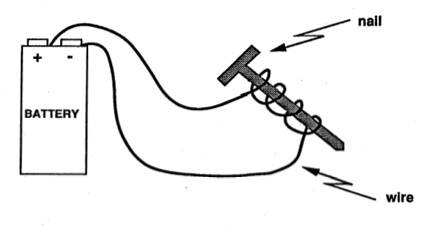
This is a picture of a simple electromagnet. How can the electromagnet be made stronger?
a)
Add more coils of wire to the nail.
b)
Use a smaller battery.
c)
Reverse the poles of the magnet.
d)
Remove all the coils and the nail.
32.
Deltas forming at the mouths of rivers
a)
Weathering
b)
Erosion
c)
Deposition
33.
Barrier islands are created by deposition along the coastline of continents. They can be a dangerous place to build houses and businesses because of the fast rate of weathering, erosion, and deposition that occurs there. If you were to build a business there, which of the following questions would be the biggest concern that you would have?
a)
Where would be the best place to build the business so that it is protected from storms which cause the winds and waves to erode and deposit sand?
b)
Before construction begins, should large amounts of sand be removed from the islands in order to stop erosion on the beach?
c)
Since barrier islands are always changing, what location would offer the best access to sand resources to help build the business?
d)
If an earthquake were to happen, would the barrier island sink into the ocean?
34.
Which two of the following items are permanent magnets?
a)
electromagnet
b)
bar magnet
c)
metal detector
d)
electric motors
e)
fridge magnet
35.
What does it mean to be cold blooded?
a)
Body temperature changes as outside temperature changes.
b)
Body temperature is always colder than outside.
c)
Body temperature is always hotter than outside.
36.
Which of these groups of animals are amphibians?
a)
frogs, toads, and salamanders
b)
bees, termites, and ants
c)
snakes, lizards, and turtles
d)
cows, foxes, sheep
37.
Turtles, tortoises, lizards, snakes, crocodiles and alligators are examples of...
a)
fish
b)
reptiles
c)
amphibians
38.
Most microorganisms cannot be seen without a...
a)
microscope
b)
magnifying lens
c)
telescope
d)
x-ray machine
39.
What is an organ system?
a)
Fungus that is a microorganism
b)
Organs that work together to do a job for the body
c)
Groups of cells that work together to perform a function
d)
Living things that are too small to see without a microscope
40.
Bats, dolphins, horses, humans and dogs are all examples of which group of mammals?
a)
monotremes
b)
marsupials
c)
placentals
41.

Sarah and Jake were each given a ball of clay of the same weight. Both students used all of their clay to make an object. Sarah rolled hers into a ball, Jake made a long, skinny rope. What is the weight of the clay figures now?
a)
Sarah's weighs more because it is round.
b)
Jake's weighs more because it is long.
c)
There is no way of knowing.
d)
The figures would be equal.
100 %

