wayground logo

Free Printable Worksheets

Font size

S
M
L
XL
Worksheets

Forces and Motion

Total questions: 127

Worksheet time: 2hrs 20mins
Name
Class
Date
1.
What is a PUSH or PULL of an object?
a)
Motion
b)
Force
c)
Friction
d)
Gravity
2.
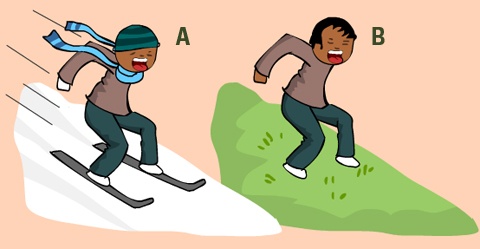
Why is it harder for the boy in Image B to get down the hill?
a)
Motion
b)
Friction
c)
Work
d)
Displacement
3.
Which force produces a change in motion?
a)
unbalanced force
b)
balanced force
c)
gravitational force
d)
frictional force
4.
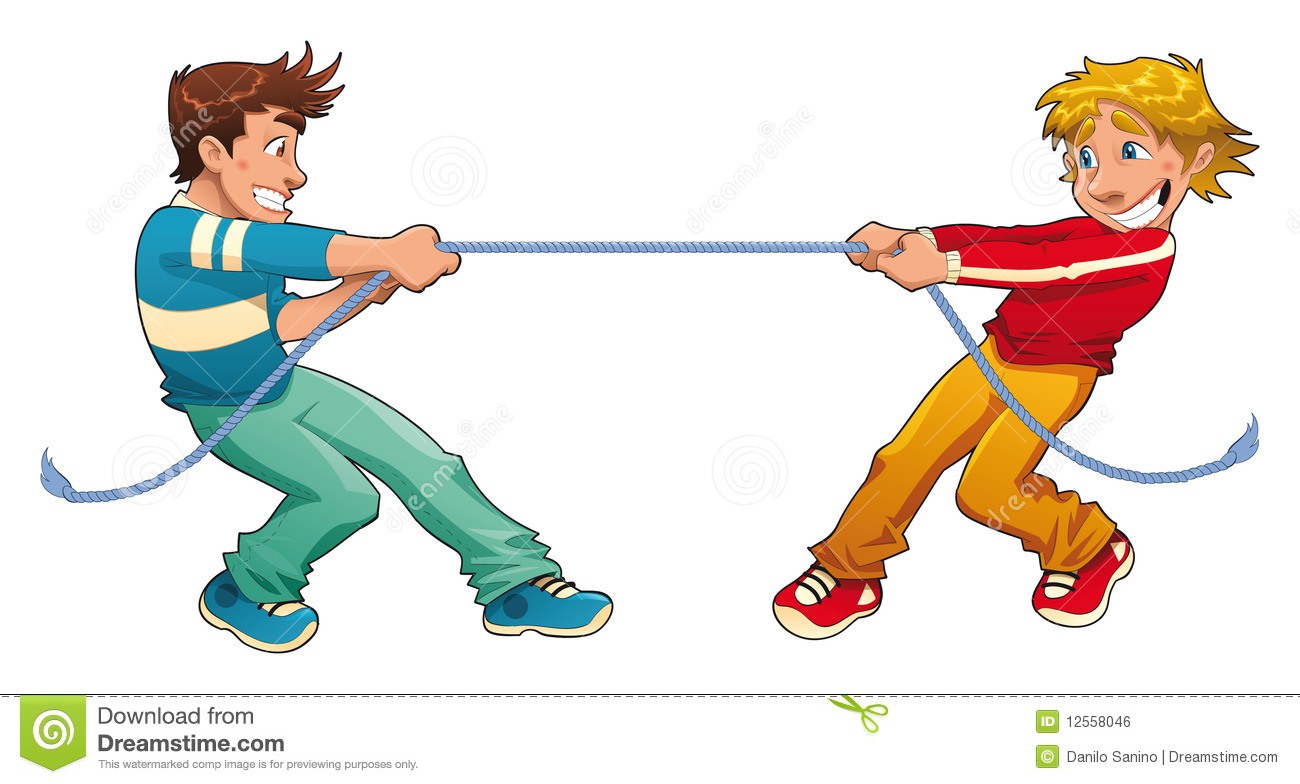
If these boys are pulling with the same amount of force.  What will happen?
a)
The boy in blue will win.
b)
They will not move at all.
c)
The boy in red will win.
d)
Both will fall down.
5.
_______________ is how fast an object changes over time. 
a)
speed
b)
velocity
c)
momentum
d)
acceleration
6.
What is the formula for force?
a)
F=M/A
b)
F=A/M
c)
F=M*A
d)
F=M*F
7.
What happens when two forces act in the same direction?
a)
They cancel each other out.
b)
The stronger one prevails.
c)
Their strengths are added.
d)
Their sum divided by the two is the total force.
8.
Any time the forces are unbalanced, an object will remain at rest. True or false?
a)
true
b)
false
9.
When you tell the direction and speed of an object, you give its
a)
motion
b)
velocity
c)
acceleration
d)
mass
10.
Which of the following statements is true? 
a)
Balanced forces cause a change in motion. 
b)
Unbalanced forces cause a change in motion. 
c)
Forces do not effect the change in motion. 
11.
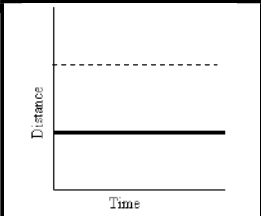
What does this graph represent?
a)
Constant speed
b)
Acceleration
c)
Not moving
12.
Which of the following objects has the least acceleration?
a)
a. an empty shopping cart pushed with a hard force
b)
b. a full shopping cart pushed with a hard force
c)
c. an empty shopping cart pushed with a light force
d)
d. a full shopping cart pushed with a light force
13.
A baseball is thrown a distance of 50 meters. What is the speed if it takes 2 seconds to cover that distance?
a)
100 m/s2
b)
25 m/s2
c)
52 m/s2
d)
100 seconds
14.
Speed is equal to 
a)
Distance/Time
b)
Time/Distance
c)
Time x Distance
d)
Acceleration
15.
Speed is different from velocity because
a)
Velocity has a direction
b)
Speed uses Distance /Time
c)
Velocity doesn't include time
d)
Velocity doesn't include distance
16.
During which interval is the object speeding up?
a)
A to B
b)
B to C
c)
D to E
d)
E to F
17.
What is this graph showing?
a)
Constant Speed
b)
Acceleration (speeding up)
c)
Deceleration (slowing down)
d)
No motion
18.
Objects that are changing their speed or their direction 
a)
force
b)
energy
c)
acceleration
d)
friction
19.
two or more forces act upon an object in such a way as to exactly counteract each other
a)
friction
b)
balanced force
c)
unbalanced force
d)
force
20.
a force that causes a change in motion of an object
a)
friction
b)
balanced force
c)
unbalanced force
d)
force
21.
the ability to do work
a)
energy
b)
force
c)
friction
d)
inert
22.
the capacity for vigorous activity; available power
a)
friction
b)
motion
c)
force
d)
energy
23.
a push or a pull acting upon an object
a)
force
b)
motion
c)
energy
d)
friction
24.
the close interaction between two surfaces that are sliding across each other
a)
force
b)
friction
c)
centripetal force 
d)
gravitational force
25.
Any two objects with mass attract each other with a type of force 
a)
kinetic energy
b)
potential energy
c)
inertia
d)
gravitational force
26.
a tendency of an object to resist change in its state of motion
a)
inertia
b)
kinetic energy
c)
potential energy
d)
force
27.
the amount of material in a substance
a)
inertia
b)
force
c)
mass
d)
motion
28.
the quantity of motion that an object possesses
a)
momentum
b)
kinetic energy
c)
potential energy
d)
inertia
29.
An object at rest will remain at rest or in the same uniform motion unless acted upon by an unbalanced force: law of inertia.
a)
Newton's First Law of Motion
b)
Newton's Second Law of Motion
c)
Newton's Third Law of Motion
30.
How is gravity affected by mass?
a)
the larger the mass of the object, the greater the gravity
b)
small objects have no gravity
c)
gravity is not affected by mass of objects, whether large or small
31.
What is a force that opposes motion between two surfaces?
a)
friction
b)
acceleration
c)
velocity
d)
motion
32.
What is the difference between mass and weight?
a)
mass is how much matter is in an object, and weight is the gravitational pull on that object
b)
mass and weight are the same
c)
weight affects how much mass is in an object
d)
weight is determined by how many atoms make up an object
33.
What slows down the motion of an object or keeps it from starting?
a)
mass
b)
friction
c)
gravity
d)
magnetism
34.
What are two examples of forces?
a)
Art and Music
b)
A push or pull
c)
A stand or ground
d)
The dark side and the light side
35.
What is motion?
a)
It's like the ocean
b)
Any change in an animal or person's position.
c)
Motion is like acting
d)
Any change in an object or person's position.
36.
What does force allow a ball player to do?
a)
To swing a baseball bat and hit a ball in a same direction
b)
To swing a baseball bat and drop a ball in a new direction
c)
To swing a baseball raquet and hit a ball in a new direction
d)
To swing a baseball bat and hit a ball in a new direction
37.
What pulls a ball back to earth?
a)
Gas
b)
Gravity
c)
Friction
d)
Molecules
38.
Why does a rolling ball stop?
a)
Gravity
b)
Friction
c)
Waterfalls
d)
Sand
39.
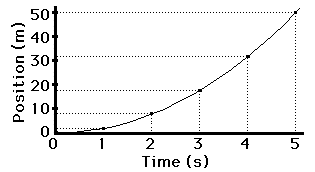
The picture of the position vs. time graph shows an object that is...
a)
accelerating/speeding up
b)
moving at a constant speed 
c)
not moving 
d)
accelerating/slowing down. 
40.
If these boys are pulling with the same amount of force.  What will happen?
a)
The boy in blue will win.
b)
They will not move at all.
c)
The boy in red will win.
d)
Both will fall down.
41.
The force that causes a ball to fall to the ground is ____________________________
a)
gravity
b)
lubricant
c)
friction
d)
motion
42.
The measure of the force of gravity on your body is your _________________
a)
height
b)
length
c)
weight
d)
age
43.
The tendency of an object at rest to stay at rest unless it is acted upon by a force is ___________________
a)
inertia
b)
motion
c)
gravity
d)
lubricant
44.
Ms. Pittman was walking at a constant pace to warm up for a run, but then stopped to tie her shoe. After tying her shoe she began running.
What distance/ time graph represents Ms. Pittman.
a)
A
b)
B
c)
C
d)
D
45.
Which graph represents a students standing at their locker for a period of time.
a)
A
b)
B
c)
C
d)
D
46.
Which graph represents a students standing at their locker for a period of time.
a)
A
b)
B
c)
C
d)
D
47.
Ms. Pittman went to the movies. She drove at a constant speed the whole way there, and after the movie was over she drove back home at the same constant speed.
What graph is represented by Ms. Pittman's journey?
a)
Top Left
b)
Top Right
c)
Bottom Left
d)
Bottom Right
48.
What is the Average Speed?
Distance: 10m
Time: 5s
a)
2
b)
1/2
c)
50
d)
100
49.
A ball is moving in a certain direction.  What would happen to the ball if a greater force was applied on the ball along its direction of motion?
a)
The speed of the ball would decrease.
b)
The speed of the ball would increase.
c)
The ball will stop instantly.
d)
The ball will change direction.
50.
A _____________________ must be exerted on an object at rest to cause it to move.
a)
weight
b)
inertia
c)
force
d)
gravity
51.
What 2 things do you need to calculate speed?
a)
distance and friction
b)
direction and time
c)
direction and friction
d)
distance and time
52.
The force that pulls objects toward the center of the Earth.
a)
motion
b)
air resistance
c)
gravity
d)
friction
53.
A push or pull that causes an object to move, stop, or change direction.
a)
force
b)
motion
c)
energy
d)
inertia
54.
If a tennis ball, a baseball, and a golf ball are dropped together from a high place, which ball will land first? 
a)
They land at the same time.
b)
The baseball lands first.
c)
The golf ball lands first.
d)
The tennis ball lands first.
55.
Why does a crumpled piece of paper land before a flat sheet of paper? 
a)
Gravity exerts more force on the crumpled paper. 
b)
There is more air resistance on the flat paper. 
c)
The crumpled paper is heavier
d)
The flat paper is lighter.
56.
A train that travels 100 kilometers in 4 hours is traveling at what average speed? Remember: Speed= distance/time
a)
50 km/h
b)
100 km/h
c)
400 km/h
d)
25 km/h
57.
Who is traveling at the slowest speed? (click the words to view the picture)
a)
Finn
b)
Marceline
c)
Jake
d)
All are traveling the same speed
58.
A object with a lot of mass needs more force or less force to be moved? 
a)
More
b)
Less
59.
A ball is rolled on four different types of materials.  Which material will cause the least amount of friction between it and the ball?
a)
Tile Floor
b)
Carpet
c)
Grass
d)
Cement Sidewalk 
60.
A _____ is a pull or a push.
a)
force
b)
friction
c)
gravity
d)
speed
61.
One way that a force can cause the change in an object's motion is to...
a)
do nothing.
b)
eat ice cream.
c)
start the object moving.
d)
shine on the object.
62.
When you type on the keys of your Chromebook you are using a
a)
pull
b)
push
c)
gravity
d)
friction
63.
A _____ moves an object closer to you.
a)
push
b)
pull
c)
friction
d)
cat
64.
How are a push and a pull alike?
a)
You can hear them both.
b)
They are both names of cats.
c)
You can do them both at the same time.
d)
They are both forces.
65.
What force moves an object away from you?
a)
pull
b)
push
c)
gravity
d)
Jedi force
66.
Another way that force can cause the change in an object's motion is to...
a)
change its color.
b)
change its pitch.
c)
change its direction.
d)
change its spots.
67.
_____ is the force that slows and stops motion between touching objects.
a)
Friction
b)
Gravity
c)
Pull
d)
Push
68.
What measurements are needed to calculate the speed of an object?
a)
grams and force
b)
force and acceleration
c)
mass, time. and force
d)
time and distance
69.
Choose the BEST example of balanced forces.
a)
a car speeding up
b)
a leaf blowing in the wind
c)
a car moving at a constant speed
d)
a tennis ball bouncing back and forth between players.
70.
Choose the BEST answer that describes how the mass of an object affects its motion.
a)
The greater the mass of an object, the slower the motion of the object.
b)
The greater the mass of an object, the faster the motion of the object.
c)
The greater the mass of an object, the greater the force to move the object.
d)
The greater the mass of an object, the greater the distance the object will travel.
71.
Melissa and Gabe were testing the flight of leaves as they tossed them in the air.  The leaves would go up and then came to a rest on the ground.  What force made the leaves land on the ground?
a)
gravity
b)
friction
c)
air pressure
d)
mass
72.
Choose the correct tools for Melissa and Gabe to measure the speed of their leaves.
a)
measuring tape, balance, stopwatch
b)
spring scale, measuring tape
c)
measuring tape, stopwatch
d)
stopwatch, balance, spring scale
73.
Bret and Tara were investigating and measuring the motion of a toy jumping frog.  They wanted to find out how far the jumping frog would leap.  They placed the frog behind a starting line and measured the distance the frog traveled.  They repeated the procedure for 3 trials.  Bret and Tara created the attached data chart to record their results.
What did Bret and Tara use as a point of reference to determine the motion of the jumping frog?
a)
measuring tape
b)
centimeters
c)
starting line
d)
observations
74.
Use the chart to determine the BEST conclusion for Bret and Tara's investigation.  The forces that made the frog jump were:
a)
unbalanced forces of different strength, resulting in a different path and distance.
b)
non-contact forces of different strength, resulting in a different path and distance.
c)
different balanced forces with each trial, resulting in a different path and distance.
d)
forces in opposing directions, resulting in a different path and distance.
75.
Choose the BEST description of the force of motion of the jumping frog.
a)
unbalanced forces
b)
balanced forces
c)
the force of gravity
d)
the force of friction
76.
Erick and Emily graphed the motion of a rolling marble in a maze.  Use the graph attached and choose the BEST answer that explains motion of the marble between point A and point B on the graph.  The marble moved:
a)
at a rate of 5 meters per second.
b)
at a rate of 1 meter per second.
c)
steadily and accelerated for 5 seconds.
d)
gradually and slowed down for 5 seconds.
77.
Use the graph and choose the BEST answer that explains the forces acting on the marble between point A and point B. The forces acting on the marble:
a)
push the marble
b)
pull the marble using gravity
c)
were balanced
d)
were unbalanced
78.
Use the graph and choose the answer that describes the motion of the marble between point D and point E.
a)
The marble continued at a constant speed.
b)
The marble slowed down.
c)
The marble stopped.
d)
The marble was pulled to the ground by gravity.
79.
Use the graph and choose the answer that describes what happened to the marble at point B.
a)
An unbalanced force made the marble slow down.
b)
Unbalanced force made the marble change direction.
c)
The forces of friction and gravity made the marble slow down.
d)
A balanced force made the marble change direction and slow downn.
80.
The 5th graders were playing a game of tug-of-war.  The class was divided equally with half the class on one side of the rope and the other half on the opposite side.  For 5 minutes the students pulled and pulled but neither side could pull the flag to one side or the other.  Choose the description of the forces during the 5th grade tug-of-war.
a)
The forces were unbalanced in the game.
b)
The forces were friction, gravity, and chemical energy.
c)
The students all had the same amount of strength.
d)
The forces were balanced in the game.
81.
Mrs. Pollack's class was learning about magnetism.  The students noticed that the paper clips moved toward the magnet without the magnet touching the paper clips. What was the force that moved the paper clips?
a)
gravitational force
b)
balanced force
c)
contact force
d)
non-contact force
82.
Owen and Carter decided to investigate how far away they can hold the magnet before the paper clips begin to move..  Choose the BEST question for their investigation.
a)
What part of the magnet is the strongest?
b)
What type of magnet will pick up the most paper clips?
c)
What distance between the paper clip and magnet will start the motion of the paper clip?
d)
Does the mass of the paper clip affect the distance?
83.
Choose the tools and equipment for Carter and Owen's investigation.
a)
paper clips, metric ruler, stopwatch, hand lens
b)
paper clips, metric ruler, magnet
c)
bar magnet, horseshoe magnet, ring magnet, paper clips
d)
magnet, paper clip, balance, meteric ruler, stopwatch
84.
Choose the unit of measure of the data collection of the magnet investigation.
a)
centimeters and millimeters
b)
centimeters and meters
c)
inches and feet
d)
grams and kilogram
85.
Andrew and Brooklyn were investigating the speed of 2 different balls of the same volume but different mass down the slope of a ramp.  They measured the time it took for each ball to travel 5 meters. They collected this data:
Choose the BEST conclusion for their investigation.
a)
The mass of the ball does NOT affect the speed of the ball.
b)
The mass of the ball does NOT affect the distance the ball travels.
c)
The greater the mass of the ball, the slower the ball traveled.
d)
The greater the mass of the ball, the faster the ball traveled.
86.
What happens when 2 equal forces act on an on an object in the same direction.
a)
no movement; won't move
b)
object will move in the direction of the force
c)
Object will move in the opposite direction of the force
d)
Object flies
87.
What happens when 2 equal forces act on an object in opposing directions?
a)
no movement; won't move
b)
Object will move in the direction of the force
c)
Object will move in the opposite direction of the force
d)
the object flies
88.
How is motion affected when forces are unbalanced acting on an object?
a)
Change the speed, change direction, & cause and object at rest to move or change positions
b)
change speed
c)
change directions
d)
object at rest will move or change positions.
89.
How is motion affected when forces are balanced acting on an object?
a)
 Keep an object moving at the same speed.
b)
 Keep an object at rest or not moving
c)
Both options
d)
Neither option
90.

Wind pushes a toy sailboat across a pond. The boat moves in a straight path. Which of these changes?

a)

The boat's direction

b)

The boat's mass

c)

The boat's force

d)

The boat's position

91.

A student uses the same force to push a textbook and a notebook across a desk. The textbook has more mass than the notebook. How will the textbook move compared with the notebook?

a)

faster and farther

b)

faster but not farther

c)

slower but farther

d)

slower and not as far

92.

A car is moving along a street. The car passes a stop sign. The car passes a moving truck. A student wants to describe the car's changing position. Which object can the student use as a reference point?

a)

the stop sign

b)

the car

c)

the street

d)

the truck

93.

A bicycle travels a distance of 12 meters in 3 seconds. What is the speed of the bicycle?

a)

12 m/s

b)

6 m/s

c)

4 m/s

d)

3 m/s

94.

Which sentence is false?

a)

Friction makes moving objects slow down?

b)

Friction produces heat

c)

Friction makes moving objects speed up

d)

Friction is a force

95.

Which one should you use when you describe the position of an object?

a)

the object's speed

b)

a reference point

c)

the object's mass

d)

the object's energy

96.

A car moves 160 kilometers in 2 hours. What is the car's speed in kilometers per hour?

a)

320 km/h

b)

160 km/h

c)

80 km/h

d)

40 km/h

97.

Which one slows on objects motion?

a)

poistion

b)

speed

c)

distance

d)

friction

98.

If a women is parachuting, which factor will slow the woman's fall?

a)

magnetism

b)

air resistance

c)

balanced forces

d)

gravity

99.

What causes water in a stream to flow downhill?

a)

wind

b)

friction

c)

gravity

d)

resistance

100.

A car is making a sharp turn. Which factor keeps the car from going off the road?

a)

speed

b)

air pressure

c)

friction

d)

mass

101.

Which force causes an apple to fall to the ground?

a)

friction

b)

air resistance

c)

gravity

d)

balanced forces

102.
What is a PUSH or PULL of an object?
a)
Motion
b)
Force
c)
Friction
d)
Gravity
103.
What is MOVEMENT?
a)
Inertia
b)
Force
c)
Work
d)
Motion
104.
What happens when one force PULLS an object toward another?
a)
Friction
b)
Motion
c)
Gravity
d)
Magnetism
105.
What is a force that works AGAINST MOTION?
a)
Force
b)
Motion
c)
Gravity
d)
Friction
106.
Why is it harder for the boy in Image B to get down the hill?
a)
Motion
b)
Friction
c)
Work
d)
Displacement
107.
In the image, which of the person and their bikes will get down a hill faster? 
a)
The boy because he is younger
b)
The woman because she is stronger
c)
The boy because he has a greater mass which applies a greater force
d)
The woman because she has more mass and applies a greater force
108.
How is gravity affected by mass?
a)
the larger the mass of the object, the greater the gravity
b)
small objects have no gravity
c)
gravity is not affected by mass of objects, whether large or small
109.
Which force produces a change in motion?
a)
unbalanced force
b)
balanced force
c)
gravitational force
d)
frictional force
110.
Which force produces a change in motion?
a)
unbalanced force
b)
balanced force
c)
gravitational force
d)
frictional force
111.
The picture of the position vs. time graph shows an object that is...
a)
accelerating/speeding up
b)
moving at a constant speed 
c)
not moving 
d)
accelerating/slowing down. 
112.
Why does a rolling ball stop?
a)
Gravity
b)
Friction
c)
Waterfalls
d)
Sand
113.
If these boys are pulling with the same amount of force.  What will happen?
a)
The boy in blue will win.
b)
They will not move at all.
c)
The boy in red will win.
d)
Both will fall down.
114.
What pulls a ball back to earth?
a)
Gas
b)
Gravity
c)
Friction
d)
Molecules
115.
What pulls a ball back to earth?
a)
Gas
b)
Gravity
c)
Friction
d)
Molecules
116.
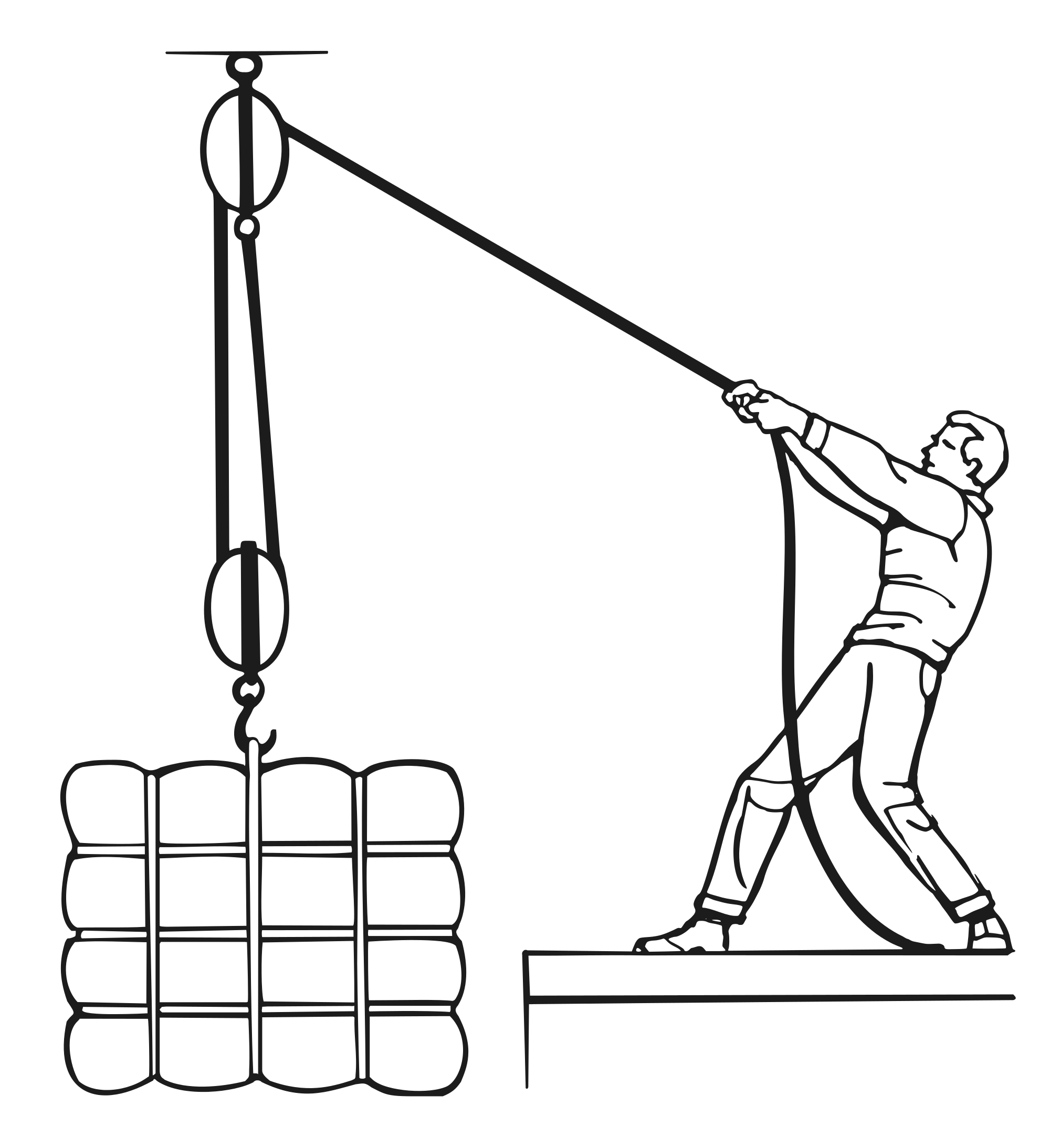
If you pull the cord, what direction will the box move?
a)
Up
b)
Down
c)
Left
d)
Right
117.
Which will be different on the moon?
a)
Mass of an object
b)
Weight of an object
118.
When an unbalanced force acts on an object, the force...
a)
Changes the motion of the object
b)
Is canceled by another force 
c)
Does not change the motion of the object 
d)
Is equal to the weight of the object 
119.
An object may move when a _______ is applied to it. 
a)
force
b)
gravity
c)
friction
120.
1.  It is easier to ride a bicycle down a hill than to ride up a hill because _______ helps the bicycle move down the hill. 
a)
gravity
b)
friction
c)
rotation
121.
_______ is a force that acts between two objects which are touching. This force slows any movement between the two objects.
a)
pressure
b)
magnetism
c)
friction
122.
What does this graph represent?
a)
Constant Speed
b)
Acceleration
c)
Deacceleration
d)
Not moving
123.
Which runner won the race?
a)
A
b)
B
c)
C
d)
It was a tie
124.
According to the graph how far does the person travel in the first 5 seconds?
a)
2 m
b)
10 m
c)
0 m
d)
5 m
125.
What is the person doing from 5 seconds to 10 seconds?
a)
Walking 
b)
Running
c)
Standing Still 
d)
Walking Fast
126.
What is happening at A?
a)
Stationary
b)
Accelerating
c)
Slower steady speed; moving away from the starting position
d)
Steady speed; returning to start position
127.
What is happening at E?
a)
Stationary
b)
Accelerating
c)
Fast steady speed; moving away from the starting position
d)
Steady speed; returning to start position