wayground logo

Free Printable Worksheets

Font size

S
M
L
XL
Worksheets

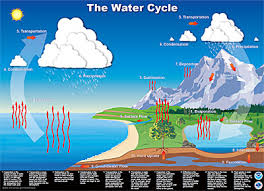
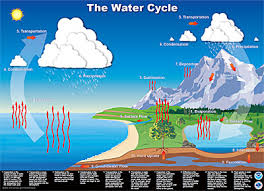
The Water Cycle

Total questions: 20

Worksheet time: 16mins

Name
Class
Date
1.
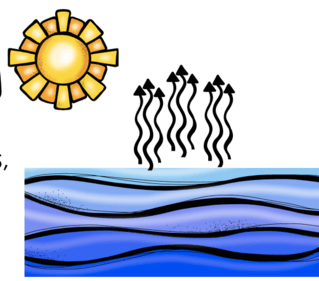
What part of the water cycle does this picture show?
a)
condensation
b)
precipitation
c)
evaporation
2.
Which of these is an example of precipitation?
a)
snow
b)
air
c)
clouds
d)
vapor
3.
Snow, sleet, hail, and rain are all examples of  ________________. 
a)
evaporation
b)
condensation
c)
accumulation
d)
precipitation
4.
What is it called when plants give off water vapor as a waste product?
a)
condensation
b)
evaporation
c)
sublimation
d)
transpiration
5.
What is the energy source for the water cycle?
a)
the sun
b)
the earth
c)
water
d)
the moon
6.
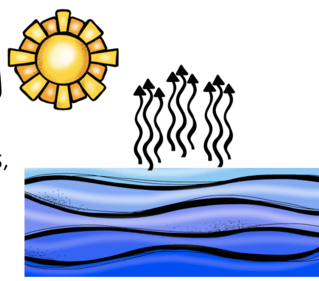
What part of the water cycle does this picture show?
a)
condensation
b)
precipitation
c)
evaporation
7.
When water condenses, the liquid water forms ______________.
a)
water vapor
b)
steam
c)
air
d)
clouds
8.
Evaporation happens when the sun ___________ water and turns it into vapor.
a)
cools
b)
heats up
c)
freezes
d)
lights up
9.
During which stage do clouds form?
a)
condensation
b)
evaporation
c)
precipitation
10.
Which stages does liquid water from the ocean turn into water vapor?
a)
condesantion
b)
evaporation
c)
precipitation
d)
run off
11.

Which state changes require the addition of energy? Choose all that apply!

a)

transpiration

b)

condensation

c)

evaporation

d)

sublimation

12.

When a solid changes directly to a gas

a)

transpiration

b)

precipitation

c)

sublimation

d)

evaporation

13.

When water vapor in the atmosphere condenses and forms water droplets, it _____ energy.

a)

absorbs

b)

transpires

c)

releases

d)

evaporates

14.

When water droplets in the atmosphere form ice crystals, they _____ energy.

a)

absorb

b)

release

c)

transpire

d)

evaporate

15.

Water that flows across Earth's surface

a)

fresh water

b)

surface water

c)

runoff

d)

groundwater

16.

Most of Earth's fresh water is stored in _________.

a)

lakes

b)

oceans

c)

rivers

d)

glaciers and ice caps

17.

What two factors drive the water cycle?

a)

Energy from the Sun and Gravity

b)

Winds and Radiation

c)

Ocean currents and the Coriolis Effect

d)

The Rotation of the Earth and Gravity

18.

As water evaporates and turns into water vapor, it ___ energy.

a)

transfers

b)

releases

c)

absorbs

d)

transpires

19.

As ice melts to liquid water, it _____ energy.

a)

absorbs

b)

releases

c)

evaporates

d)

transports

20.

The continuous movement of water between the atmosphere, the land, the oceans, and living things.

a)

Ocean Currents

b)

Infiltration

c)

Runoff

d)

The Water Cycle