
 Worksheets
WAY, WAY, BACK REVIEW
Total questions: 200
Worksheet time: 1hrs 12mins
Name
Class
Date
1.
Carbon dioxide is considered a _________________
a)
food
b)
waste
c)
energy
d)
fun party favor
2.

Which part of the cell is often called "the brain of the cell"?
a)
nuclear membrane
b)
endoplasmic reticulum
c)
nucleus
d)
mitochondria
3.

Controls what enters and leaves the cell
a)
Mitochondria
b)
Cell Membrane
c)
Cell Wall
d)
Nucleus
4.
Stores food and water for the cell.
a)
Cytoplasm
b)
Cell Wall
c)
Vacuole
d)
Nucleus
5.
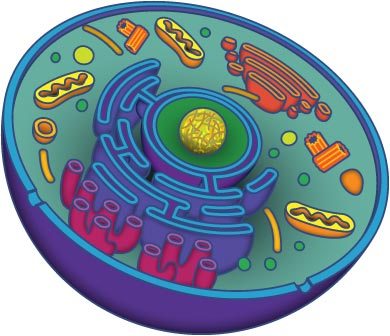
All living things are made up of...
a)
cells
b)
cell tissues
c)
organ
d)
organ systems
6.
Which structures are found in every living cell?
a)
cell membrane and cytoplasm
b)
chloroplasts and mitochondria
c)
a cell wall and nucleus
d)
chloroplasts and cell wall
7.
All cells need energy to function. Which cell organelle is responsible for producing energy in the cell?
a)
chloroplasts
b)
mitochondria
c)
nucleus
d)
vacuoles
8.

This organelle transports materials from throughout the cell.
a)
Endoplasmic Reticulum
b)
Ribosomes
c)
FedEx
d)
Golgi Complex
9.
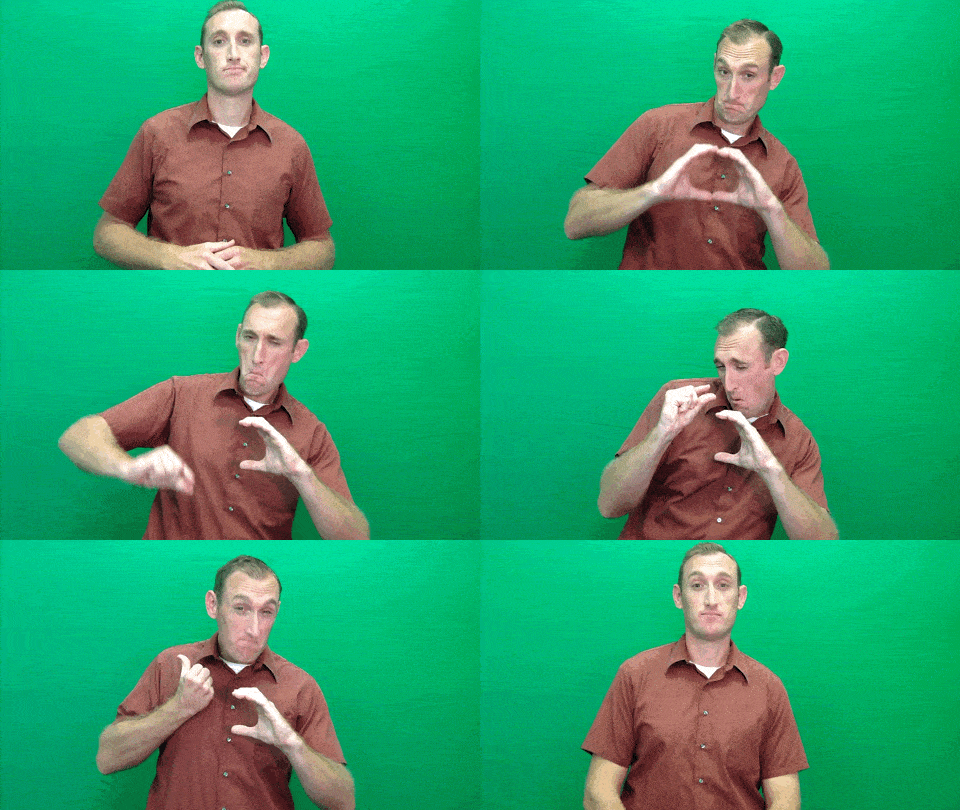
The ___________ is the basic unit of life
a)
organ
b)
cell
c)
atom
d)
tissue
10.
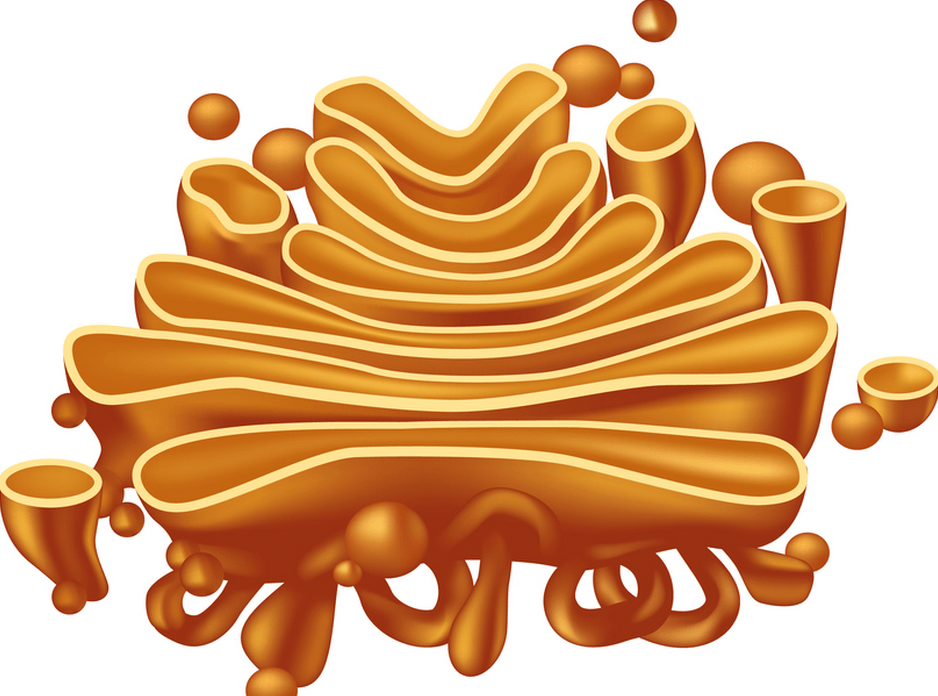
I am a protein packaging and shipping machine! Who am I?
a)
vacuole
b)
ribosome
c)
mitochondrion
d)
golgi apparatus
11.
What organelle is called the "powerhouse" of a cell?
a)
Endoplasmic Reticulum
b)
Nucleus
c)
Mitochondria
d)
Nucleolus
12.
All cells come from___________ cells.
a)
pregnant
b)
pre-existing
c)
paternal
d)
pin size
13.
Rocks are not living because
a)
they never move
b)
they aren't needed for humans
c)
they are not made of cells
d)
they don't break down
14.
An organism made of one cell is called
a)
unicellular
b)
multicellular
15.
Which organism listed below is a prokaryote?
a)
dog
b)
human
c)
sunflower
d)
bacterial cell
16.
Animal and plant cells are both this type of cell.
a)
Eukaryote
b)
Prokaryote
17.
Sac within the cytoplasm that is full of fluid; plants have one large; stores food, water, etc.
a)
vacuole
b)
cell wall
c)
lysosome
d)
ribosome
18.

I am the outer most layer of an animal cell. What am I?
a)
cell wall
b)
nucleus
c)
cell membrane
d)
cell skin
19.

I make proteins for the cell. What am I?
a)
ribosome
b)
mitochondria
c)
chloroplast
d)
lysosome
20.

What is this?
a)
mitochondria
b)
lysosomes
c)
chloroplast
d)
endoplasmic reticulum
21.

What does this structure do?
a)
supports the cell
b)
cell's control center
c)
converts energy to food
d)
makes proteins
22.

What is this a picture of?
a)
ribosome
b)
nucleus
c)
cell wall
d)
mitochondrion
23.
Which type of cell that HAS a nucleus?
a)
Prokaryote
b)
Eukaryote
24.
The ___________ is the basic unit of life.
a)
organ
b)
cell
c)
atom
d)
tissue
25.

Which of the following is NOT found in ALL cells?
a)
Cell Wall
b)
Cell Membrane
c)
Cytoplasm
d)
Genetic Material
26.

Which organelle is labeled letter A?
a)
Vacuole
b)
Ribosome
c)
Mitochondria
d)
Chloroplast
27.

Which organelle is labeled letter C?
a)
Endoplasmic Reticulum
b)
Ribosome
c)
Golgi Bodies
d)
Mitochondria
28.

TRUE/ FALSE: Plant and animal cells are identical.
a)
True
b)
False
29.
What four things do every organism need for survival?
a)
food, water, dirt, and a hat
b)
protection, water, food, and air
c)
air, sun, dirt, and water
d)
light, electricity, and worms
30.
Examples of a producer
a)
frog
b)
algae
c)
worm
d)
mouse
31.
Example of a consumer
a)
worm
b)
bacteria
c)
mushroom
d)
hawk
32.
Example of a decomposer
a)
fungus
b)
mouse
c)
plants
d)
frogs
33.
A tree is a ....
a)
composer
b)
decomposer
c)
producer
34.
Humans are considered...
a)
consumers
b)
decomposers
c)
producers
35.
Worms are considered...
a)
producer
b)
consumer
c)
decomposer
36.
Frogs are considered...
a)
consumers
b)
decomposers
c)
producers
37.

What is a herbivore?
a)
an animal that gets energy from eating other animals
b)
an organism that gets energy from eating only plants
c)
an animal that gets energy by eating both plants and other animals
d)
an animal that eats only herbs
38.

A connection of food chains with many food energy paths in an ecosystem is a ____________
a)
ecosystem
b)
food web
c)
environment
d)
population
39.

What is a carnivore?
a)
an animal that gets energy by eating other animals
b)
An animal that gets energy by eating only plants
c)
an animal that gets energy by eating both plants and animals
d)
an animal that makes its own energy through photosynthesis
40.

An animal that gets energy from eating both plants and animals is a
a)
herbivore
b)
carnivore
c)
omnivore
d)
autotroph
41.

Which of the following is NOT a consumer
a)
grass
b)
dog
c)
shark
d)
fish
42.

The shrew provides energy for the _______?
a)
cricket
b)
grasshopper
c)
frog
d)
snake
43.

Which of the following is a herbivore?
a)
cricket
b)
frog
c)
hawk
d)
shrew
44.

What is this called?
a)
Food Web
b)
Food Chain
c)
Abiotic Factors
45.

Where does the energy start in this food chain?
a)
Plant
b)
Sun
c)
Deer
d)
Wolf
46.

What's the role of consumers in a food chain?
a)
Use sunlight to make food
b)
Eat other species and keep them from overpopulating
c)
Break down dead stuff
d)
Add nutrients to the soil
47.
Which of these biological classification groups has the fewest members?
a)
class
b)
genus
c)
species
d)
kingdom
48.
Which of these biological classification groups has the most members?
a)
domain
b)
species
c)
order
d)
class
49.
What is a reasonable scientific explanation for rain forests having the most plant growth?
a)
Temperatures are warm all year long in the rain forest.
b)
People do not cut down trees in the rain forest.
c)
The leaves high in the rain forest canopy absorb most of the sunlight
50.
What is a reasonable scientific explanation for rain forests having the most plant growth?
a)
Temperatures are warm all year long in the rain forest.
b)
People do not cut down trees in the rain forest.
c)
The leaves high in the rain forest canopy absorb most of the sunlight
51.
Which terrestrial biome is characterized by long, severe winters and coniferous trees?
a)
Tundra
b)
Boreal Forest
c)
Temperate Forest
d)
Desert
52.

What is the fluid inside a cell called?
a)
Endoplasimic Reticulum
b)
Orange Juice
c)
Water
d)
Cytoplasm
53.
What do vacuoles do?
a)
They actually do not have an important role
b)
They protect the cell
c)
They are the brain of the cell
d)
storage area for cells; water storage in plants
54.
The site of photosynthesis
a)
ribosome
b)
mitochondria
c)
chloroplast
d)
nucleus
55.
Organisms that are classified as autotrophic are able to
a)
be seen with the human eye
b)
move
c)
reproduce
d)
make their own food
56.
What are the 8 levels of classification of living things from most general to most specific?
a)
domain, kingdom, phylum, class, order, family, genus, species
b)
domain, kingdom, phylum, class, order, family, genius, species
c)
domain, kingdom, phamily, class, order, family, genus, species
d)
domain, king, phillip, class, order, family, genus, species
57.
1 L = _______ mL
a)
1
b)
10
c)
100
d)
1000
58.
1 cm = _____ mm
a)
1
b)
10
c)
100
d)
1000
59.
Convert 23 cm to m
a)
2.3
b)
0.23
c)
2,300
d)
230
60.
Convert 34 g to kg
a)
0.034
b)
340
c)
0.00034
d)
34
61.
1 g = ______ mg
a)
1
b)
10
c)
100
d)
1000
62.
3.56 km = ________________ m
a)
0.00356
b)
3.56
c)
3,560
d)
35,600
63.
Convert: 15cm= ____ mm
a)
150 mm
b)
15 mm
c)
1.5 mm
d)
.015 mm
64.
What step does every scientific experiment begin with?
a)
hypothesis
b)
question/problem
c)
procedures
d)
conclusion
65.

What is a hypothesis?
a)
an educated guess stating what you believe will be the result of your experiement
b)
a random guess
c)
a statement of the outcome of your experiment
d)
step by step directions for your experiment
66.

What are the materials in your scientific method?
a)
your favorite markers and lucky eraser
b)
everything you will need to complete your experiment
c)
a hypothesis
d)
step by step directions to complete an experiment
67.
Testing a hypothesis often involves a(n):
a)
answer
b)
experiment
c)
problem
d)
safety check
68.
A series of steps used by scientists to solve a problem or answer a question.
a)
scientific method
b)
recipe
c)
data collection
d)
metric system
69.
Which statement is true about the fossil record?
a)
It is a record of all living things
b)
It shows how our climate has remained the same over time
c)
It provides evidence for history of life on Earth
d)
It does not support the theory of evolution
70.
An organism that no longer exists on Earth is called
a)
Decayed
b)
Evolved
c)
Extinct
d)
Preserved
71.

What type of fossil is this?
a)
Mold
b)
Cast
c)
Preserved remains
d)
Trace fossil
72.

What type of fossil is this?
a)
Trace fossil
b)
Mold
c)
Cast
d)
Carbon film
73.

What type of fossil is this?
a)
Mold
b)
Cast
c)
Preserved remains
d)
Petrified
74.

What is the correct order of the rock layers from oldest to youngest?
a)
B, C, D, E, A
b)
A, B, C, D, E
c)
E, D, C, B, A
d)
B, C, D, A, E
75.
Fossils are usually found in
a)
igneous rock
b)
extrusions
c)
intrusions
d)
sedimentary rock
76.
Which of the following is NOT something you could learn from a fossil?
a)
The size of the animal
b)
What the animal ate
c)
The color of the animal
d)
Where the animal lived
77.
In order for a fossil to form, which of the following events must happen FIRST?
a)
Slowly, minerals in the water replace the bone.
b)
Sediment covers the bone.
c)
An animal dies.
d)
The bone is no longer a bone, but a rock copy.
78.
Where can the oldest layer be found?
a)
The top layer
b)
The middle layer
c)
They are all the same age
d)
The bottom layer
79.
How are fossils created?
a)
Traces of organisms get turned into stone.
b)
Dead organisms are quickly buried for millions of years.
c)
Animals get trapped.
d)
All of the above
80.

Which fossil layer is the youngest?
a)
A. Layer A
b)
B. Layer B
c)
C. Layer C
d)
D. Layer D
81.
The Law of Superposition helps scientists to determine what?
a)
The absolute age of rock layers
b)
The age of fossils
c)
The relative age of rock layers
d)
the super powers of rocks
82.
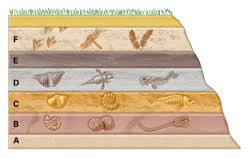
Which rock layer contains the newest fossils?
a)
F
b)
E
c)
B
d)
C
83.
What is hardened tree sap called?
a)
coprolites
b)
index fossils
c)
gastroliths
d)
amber
84.

Which of these choices is an example of something that is needed for survival?
a)
Adaptation
b)
Food
c)
Water
d)
All of the above
85.
A penguin's layer of blubber is an adaptation that helps a bird survive in this environment. In which environment?
a)
the desert
b)
a hot environment
c)
a cold environment
d)
the water
86.
Why do some animals hibernate?
a)
The cold weather makes them sleepy.
b)
Their food supply is smaller in the winter.
c)
They have no one to play with.
87.
Environmental changes leads to
a)
variations
b)
pollution
c)
predation
d)
artificial selection
88.
Natural selection is when ____________ decides who survives and who doesn't
a)
nature
b)
humans
c)
animals
d)
years
89.
Where the better adapted organisms survive to pass traits along to offspring.
a)
Variation
b)
Natural Selection
c)
Extinction
d)
Artificial Selection
90.
What is the advantage of having different shaped beaks?
a)
To look different from other species.
b)
To be able to eat the food readily. available in the environment.
c)
To protect itself against predators.
d)
To protect itself against prey.
91.
Why are advantageous traits more likely to be passed onto offspring?
a)
Because they are more likely to survive and reproduce.
b)
Because they come from dominant alleles.
c)
Because they come from recessive alleles.
d)
Because the trait is an acquired phenotype.
92.
The purpose of selective breeding is to
a)
get bigger animals
b)
get smaller animals
c)
create animals with desirable traits
d)
create animals with bad traits
93.
Problems with selective breeding include
a)
Better animals
b)
More Meat
c)
Animals can have bad health problems
d)
More diversity
94.
Why did the population of peppered moths in England change from light to dark after the Industrial Revolution?
a)
Light moths were easy to see against sooty trees and were eaten
b)
Light moths were killed by soot
c)
The birds that ate the dark moths were killed by soot
d)
Dark moths were produced by industrial processes
95.
Which type of trees is found in a temperate forest?
a)
deciduous
b)
evergreen
c)
gingko
d)
palm
96.
Plants in this biome are adapted to poor soil, extreme temperatures and less than 25 centimeters of rainfall per year.
a)
Tundra
b)
Taiga
c)
Desert
d)
Grasslands
97.
True/False: Pollination can occur within the same flower.
a)
True
b)
False
98.
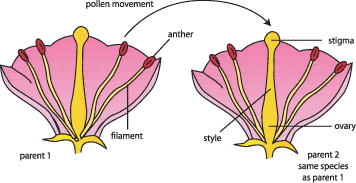
True/False: Pollination can occur between flowers of the same plant.
a)
True
b)
False
99.

True/False: Pollination can occur between flowers of the different plants of the same species.
a)
True
b)
False
100.
Pollination is the process by which the pollen grains are transferred from the ________ to the _________.
a)
anther... ovary
b)
anther ... stigma
c)
stigma ... ovary
d)
stigma ... filament
101.
Which of the following is/are types of pollination?
A) wind pollination
B) Insect pollination
C) explosive pollination
A) wind pollination
B) Insect pollination
C) explosive pollination
a)
B only
b)
A and B only
c)
All of the above
102.

What does an ovule become when it is pollinated?
a)
a seed
b)
a sprout
c)
a fruit
d)
it stays an ovule
103.
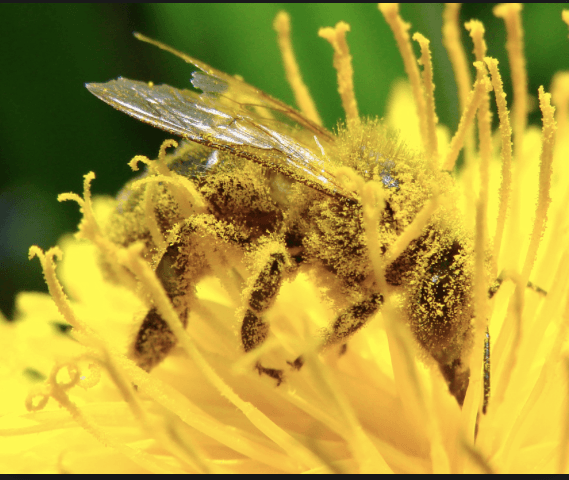
Pollination is the process by which pollen
a)
causes people to sneeze
b)
is formed inside a plant
c)
moves from stamen to pistil
104.

Fertilization is the process by which an
a)
egg and pollen combine
b)
embryo grows into a plant
c)
animal carries pollen between plants
105.

Can a plant reproduce if it doesn't make seeds?
a)
yes
b)
no
106.

What is the sticky part of the flower that catches pollen?
a)
style
b)
stigma
c)
ovary
d)
petal
107.

Which does not belong in the female part (pistil) of the flower?
a)
style
b)
stigma
c)
filament
d)
ovaries
108.
Do pine cones and flowers serve a similar function?
a)
Yes
b)
No
109.
What is a flower called if it has both male and female parts?
a)
a happy flower
b)
a perfect flower
c)
an imperfect flower
d)
an pristine flower
110.
What is an adaptation?
a)
A feature that helps a plant grow.
b)
A feature that helps a living thing survive.
c)
A feature that helps a living thing walk.
d)
A feature that that helps only animals survive.
111.
The roots absorb what for the plant?
a)
Water and Nutrients
b)
Soil and Sun
c)
Warmth and Water
d)
Tap and Fibrous
112.
What part of the plant absorbs oxygen?
a)
stem
b)
roots
c)
leaves
d)
flower
113.
Which is NOT a way seeds scatter?
a)
water
b)
wind
c)
animals eat fruit and seeds are deposited
d)
lightning
114.
The tundra is very cold year round. So plants will....
a)
grow together in a lump to protect from wind and cold.
b)
have hair to keep them warm
c)
"follow" the direction of the sun to stay warm and obtain a lot of sunlight for Photosynthesis.
d)
All of the above.
115.
Deserts are hot and dry so an example of a plant adaptation here is...
a)
long and deep root systems to absorb ground water
b)
plants grow on each other to reach sunlight
c)
dark in color to absorb sunlight
d)
grow on each other to protect from wind
116.
The female part of the flower is known as the ____.
a)
stamen
b)
anther
c)
filament
d)
pistil
117.
The male part of the flower is known as the _____.
a)
stamen
b)
pistil
c)
ovary
d)
petal
118.

What is #1 pointing to?
a)
ovary
b)
petal
c)
stigma
d)
stamen
119.

What is #8 pointing to?
a)
petal
b)
stamen
c)
pistil
d)
ovary
120.
What plant structure advertises to pollinators?
a)
leaves
b)
roots
c)
stems
d)
flowers
121.

What is #2 pointing to?
a)
anther
b)
filament
c)
ovary
d)
style
122.

What is #3 pointing to?
a)
stigma
b)
filament
c)
ovary
d)
anther
123.

What is #4 pointing to?
a)
anther
b)
style
c)
stigma
d)
ovary
124.

What is #5 pointing to?
a)
anther
b)
filament
c)
stigma
d)
style
125.

What is #6 pointing to?
a)
stigma
b)
style
c)
ovary
d)
petal
126.

What is #7 pointing to?
a)
anther
b)
ovary
c)
ovule
d)
petal
127.
Where is pollen made?
a)
ovary
b)
petal
c)
pistil
d)
anther
128.
What is the sticky part of the flower that catches pollen?
a)
style
b)
stigma
c)
ovary
d)
petal
129.
What part of the flower will turn into a fruit?
a)
petal
b)
ovary
c)
ovule
d)
stamen
130.
What part of the flower will turn into a seed?
a)
ovary
b)
anther
c)
ovule
d)
filament
131.
The thin stalk that supports the anther.
a)
Pistil
b)
Stamen
c)
Anther
d)
Filament
132.
The long stalk-like part that supports the stigma.
a)
Filament
b)
Anther
c)
Stigma
d)
Style
133.
The flower parts that are a varied color
a)
Seed
b)
Petals
c)
Stem
d)
Leaves
134.
The part of the flower that is under the petals
a)
Stem
b)
Roots
c)
Sepal
d)
Stalk
135.
The male part of the plant that sits on top of the filament
a)
Stamen
b)
Stigma
c)
Anther
d)
Style
136.
Which type of plate boundary would cause mountains to form
a)
Transform
b)
Convergent
c)
Divergent
d)
Reform
137.
This layer of Earth is solid Iron and Nickel
a)
Outer Core
b)
Mantle
c)
Inner Core
d)
Crust
138.
This layer of Earth is the thickest part
a)
crust
b)
outer core
c)
mantle
d)
inner core
139.
What are the two types of crust
a)
continental and oceanic
b)
ocean and upper
c)
lower and upper
d)
pizza and subway
140.
Which layer has convection currents?
a)
Inner Core
b)
Outer Core
c)
Mantle
d)
Crust
141.
When one plate sides underneath another, it _________ and the magma _________.
a)
hardens, sinks
b)
melts, sinks
c)
hardens, rises
d)
melts, rises
142.
Which of the following is NOT a tectonic boundary?
a)
Convergent
b)
Divergent
c)
Detergent
d)
Transform
143.
The area where two tectonic plates meet.
a)
mantle
b)
focus
c)
plate boundary
d)
convection
144.
This landform can occur at a divergent plate boundary.
a)
ocean trench
b)
mid-ocean ridge
c)
tall mountains
d)
transform fault
145.

What is the name of the plate boundary that slides past each other?
a)
Divergent
b)
Convergent
c)
Transform
d)
Mr. C the Slide Man
146.
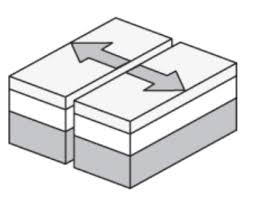
Name the boundary
a)
convergent boundary
b)
divergent boundary
c)
transform boundary
d)
sergent boundary
147.

Name the boundary
a)
convergent boundary
b)
divergent boundary
c)
transform boundary
d)
seregent boundary
148.
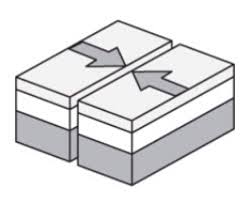
Name the boundary
a)
convergent boundary
b)
divergent boundary
c)
transform boundary
d)
seregent boundary
149.
The idea that continents slowly move over the earth's surface is
a)
Continental drift
b)
Sea floor spreading
c)
Fossils
d)
Mid-Ocean Ridges
150.
___________ hypothesis was that all the continents were once joined together in a single landmass
a)
Niels Bohr
b)
Alfred Wegener
c)
Gregor Mendel
151.
The once super continent was called
a)
super continent
b)
Pangea
c)
world mass
152.
Plates that move apart are called
a)
divergent
b)
convergent
c)
transform
153.
Plates that collide together are called
a)
divergent
b)
convergent
c)
transform
154.
Plates that slip past each other are called
a)
divergent
b)
convergent
c)
transform
155.
Plates move slowly over Earth's hot and semi-plastic __________.
a)
inner core
b)
granite
c)
mantle
d)
outer core
156.
The word "tectonic" describes the ________.
a)
forces that shape Earth's surface and the rock structures that form as a result
b)
type of oily plates found in the Earth's inner core
c)
the type of energy needed in the Earth to push it in orbit
d)
the surfaces that glide around in and out of the valleys and mountains of the Earth
157.
Earth's tectonic plates are large pieces of the ___________.
a)
Mesosphere
b)
Barysphere
c)
Lithosphere
d)
Earthsphere
158.
The asthenosphere is located _______.
a)
below the Lithosphere
b)
above the Barysphere
c)
in the Earthsphere
d)
between the Barysphere and the Mesosphere
159.
As the lava cools and hardens, it forms new _____.
a)
land crust
b)
oceanic crust
c)
inner core
d)
outer core
160.
The transfer of energy through liquid or gas.
a)
convection
b)
electricity
c)
con-transportation
d)
conduction
161.
A crack in the Lithosphere is called a ________.
a)
slip
b)
chip
c)
fault
d)
slab pull
162.

Day and night are caused by the ______________ of earth on its axis
a)
revolution
b)
orbit
c)
rotation
d)
tilt of the axis
163.

The earth orbits around the _________
a)
sun
b)
moon
c)
other planets
d)
solar system
164.
What causes there to be longer number of hours of light during the summer
a)
Earth tilt's away from the sun in summer
b)
Earth's revolves slower in summer
c)
Earth tilts toward the sun in summer
d)
Earth is closer to the sun
165.

Why is it warmer in the summer?
a)
Closer to the sun
b)
More direct light from Earth's tilt
c)
Stronger light from the sun
d)
Earth spins slower
166.

What are the reasons for the season?
a)
Earth's tilt & rotation
b)
Earth's tilt & revolution
c)
Earth's rotation & revolution
d)
Earth's tilt & resolution
167.
What is the "name" for the longest and shortest days of the year?
a)
equinoxes
b)
solstices
c)
months
d)
seasons
168.
In general, tides occur...
a)
each hour
b)
2 times a day
c)
each month
d)
twice a month
169.

Name this phase of the moon.
a)
waning crescent
b)
waxing crescent
c)
waning gibbous
d)
waxing gibbous
170.

Name this phase of the moon.
a)
waxing crescent
b)
waxing gibbous
c)
waning gibbous
d)
waning crescent
171.
Which moon phase is when you can't see the moon at all?
a)
Waning crescent
b)
Full moon
c)
Waxing gibbous
d)
New moon
172.

Name this phase of the moon. (NO MOON SEEN)
a)
New moon
b)
waxing crescent
c)
waning crescent
d)
full moon
173.

Name this phase of the moon.
a)
new moon
b)
1st quarter moon
c)
last quarter moon
d)
waning gibbous
174.

Name this phase of the moon.
a)
waning crescent
b)
waxing crescent
c)
waning gibbous
d)
waxing gibbous
175.
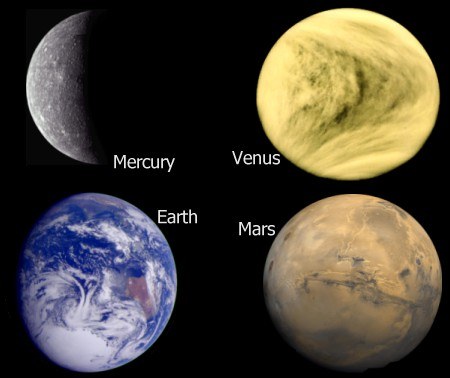
Earth and the other planets closest to the Sun are made mostly of _______
a)
gas
b)
metal
c)
water
d)
rock
176.

The moon is a natural ______ of Earth.
a)
comet
b)
axis
c)
satellite
d)
space probe
177.

Earth's ________ on its axis causes day and night.
a)
rotation
b)
revolution
c)
phase
d)
comet
178.

The __________ has planets, moons, comets, and asteroids.
a)
solar system
b)
earth
c)
rotation
d)
United States
179.
One of the main differences between the outer and inner planets is __________.
a)
The inner planets all have water
b)
the inner planets are much bigger than the outer planets
c)
the outer planets are gas planets
d)
the outer planets have rings, and the inner planets don't
180.
Which outer planets have rings?
a)
Just Saturn
b)
Saturn and Jupiter
c)
Jupiter, Neptune, and Saturn
d)
all 4 of them
181.
Which is the largest object in our solar system?
a)
Sun
b)
Jupiter
c)
Earth
d)
Pluto
182.
Which planet is third from the sun?
a)
Mars
b)
Pluto
c)
Venus
d)
Earth
183.
Which planet is fifth from the sun?
a)
Saturn
b)
Jupiter
c)
Mars
d)
Earth
184.
Which planet is fifth from the sun?
a)
Saturn
b)
Jupiter
c)
Mars
d)
Earth
185.
Which planet is seventh from the sun?
a)
Saturn
b)
Earth
c)
Venus
d)
Uranus
186.
Which planet is farthest from the sun?
a)
Neptune
b)
Pluto
c)
Earth
d)
Uranus
187.
Which planet is the largest in the solar
system?
system?
a)
Earth
b)
Venus
c)
Saturn
d)
Jupiter
188.
Which planet is known as the Red Planet?
a)
Jupiter
b)
Mars
c)
Earth
d)
Neptune
189.
What are Saturn's rings made of?
a)
light
b)
slime
c)
crystals
d)
ice and rocks
190.
How many days does it take the Earth to revolve around the Sun?
a)
30 days
b)
365 days
c)
100 days
d)
40 days
191.
A ball of ice and dust with a tail of gas and dust pointing away from the sun.
a)
Asteroid
b)
Comet
c)
Moon
d)
Meteor
192.
Which planet is the hottest?
a)
Mercury
b)
Uranus
c)
Venus
d)
Saturn
193.
Which planet is the windiest?
a)
Uranus
b)
Saturn
c)
Venus
d)
Neptune
194.

What type of galaxy is this?
a)
Spiral
b)
Elliptical
c)
Irregular
d)
Irrational
195.
A light year is...
a)
The speed light travels
b)
How long it takes light to get to you from the sun
c)
The distance light can travel in a year
d)
How many years it takes light to be emitted
196.
The color of a star is determined most by its
a)
temperature
b)
distance from Earth
c)
size
d)
mass
197.
Black Holes are thought to be remnants of ______________ explosion.
a)
Death Star
b)
The Big Bang Theory
c)
Supernova
d)
Planetary Nebula
198.
The shape of our Milky Way galaxy can be classified as ____________.
a)
Spiral
b)
Elliptical
c)
Irregular
d)
French
199.
What are the three states of matter?
a)
solid, volume, mass
b)
density, volume, mass
c)
solid, liquid, gas
d)
density, gas, volume
200.
What is one way matter change states?
a)
matter loses mass
b)
heat is added
c)
it doesn't change
d)
by doing nothing
100 %