wayground logo

Free Printable Worksheets

Font size

S
M
L
XL
Worksheets

Evolution

Total questions: 110

Worksheet time: 1hrs 21mins

Name
Class
Date
1.
Who is the father of evolution?
a)
Darwin
b)
Mendel
c)
Newton
d)
Einstein
2.
What is another name for natural selection?
a)
survival of the smartest
b)
survival of the fastest
c)
survival of the biggest
d)
survival of the fittest
3.
What is a change in an organism that allows for it to survive in its environment?
a)
homologous
b)
vestigial
c)
variation
d)
adaptation
4.
When all of the organisms of a species have died it is called
a)
evolution
b)
extinction
c)
adaptation
d)
natural selection
5.
What is the study of organisms at the early stages of development?
a)
DNA studies
b)
embryology 
c)
extinction
d)
fossil record
6.
What is an organism that has similar characteristics and can reproduce?
a)
species
b)
organism
c)
embryology
d)
vestigial 
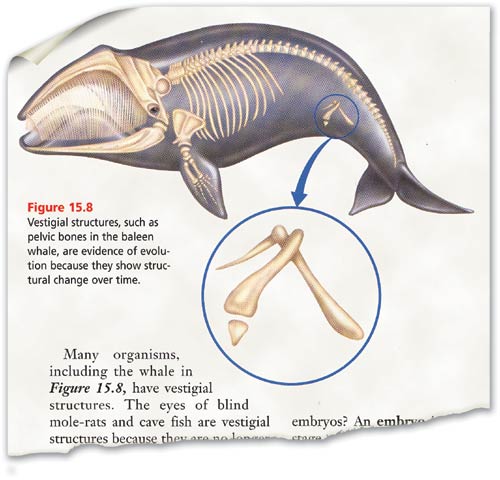
7.
What is this an example of?
a)
diversity of species
b)
variation
c)
vestigial structures
d)
DNA studies
8.
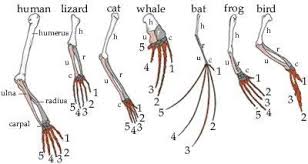
What is this an example of?
a)
vestigial structures
b)
embryology
c)
homologous structures
d)
fossil record
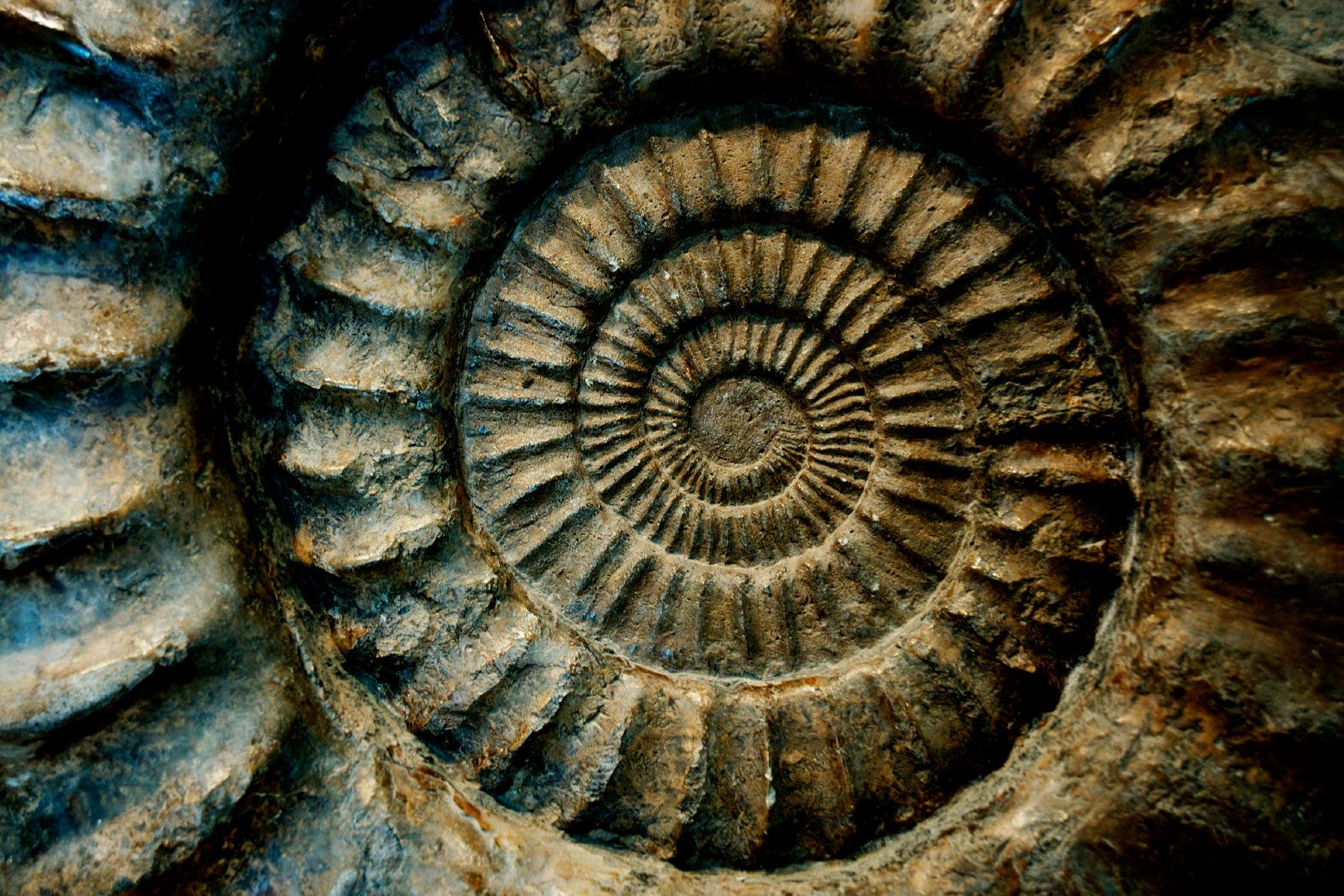
9.
Which layer is the oldest?
a)
1
b)
2
c)
3
d)
4
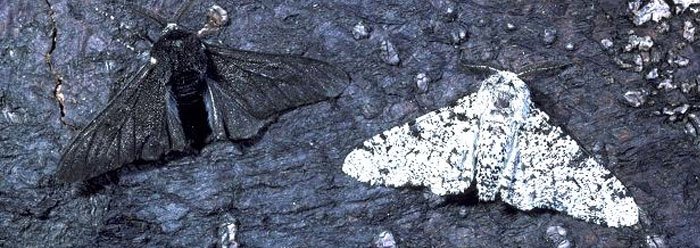
10.
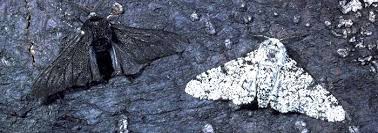
Predict which moth would increase in population
a)
light 
b)
dark
11.
When the DNA of an organism is altered it is referred to as…
a)
Mutation
b)
Gene Flow
c)
Genetic Drift
d)
Sexual Selection
12.

When individuals choose traits possessed by the opposite sex it is called…(hint: Birds of Paradise)

a)

Mutation

b)

Gene Flow

c)

Genetic Drift

d)

Sexual Selection

13.
The cause of artificial selection is…
a)
The environment
b)
Humans
c)
Mutation
d)
Gene Flow
14.
Darwin wrote that organisms with traits that are best suited to the environment will ________________
a)
increase in number
b)
become extinct
15.
Which of the following is NOT an example of natural selection? 
a)
People selectively breeding hamsters.
b)
Insect populations developing resistance to certain pesticides.
c)
Bacteria becoming resistant to antibiotics.
d)
Male birds of certain species developing colorful feathers to attract female mates.
16.
Which term refers to the process by which individuals that are better suited to the environment survive and reproduce therefore passing down their genes to their offspring? 
a)
Evolution 
b)
Variation 
c)
Adaptation
d)
Natural Selection 
17.
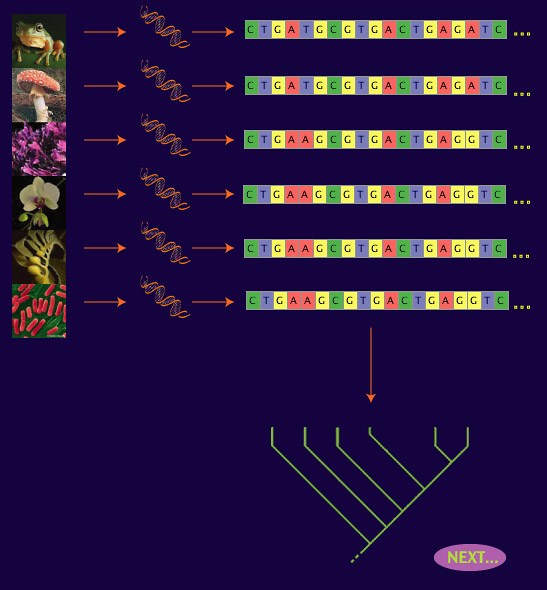
Which species’ DNA is most similar to the DNA of the toothed whale? 
a)
Hippopotamus 
b)
Baleen Whale
c)
Grazing Mammals
d)
Camels
18.
The environment around Manchester, England, changed during the Industrial Revolution.  How did this change affect peppered moths living in the area?
a)
Natural selection favored moths with dark wings because predators could not see them on the soot-colored trees.
b)
Natural selection favored moths with white wings that were easy for predators to see.
c)
Natural selection favored moths with white wings because predators could not see them on the soot-colored trees.
d)
Natural selection caused moths with white wings to become extinct.
19.
Two organisms that are closely related would have
a)
very similar DNA sequence
b)
exactly the same DNA sequences
c)
no proteins in common
d)
completely different DNA sequence
20.
A remnant or trace of an organism from the past is called a _______.
a)
Ancestor
b)
Skeleton
c)
Fossil
d)
Imprints
21.
Inherited trait that helps an organism survive is a(n) __________.
a)
Fossil
b)
Adaptation
c)
Ancestor
d)
Natural selection
22.
Structures with the same parts have different functions; suggests that organisms share a common ancestry
a)
vestigial structures
b)
homologous structures
c)
adaptive radiation
d)
fossil
23.
Which of the following is an example of a vestigial structure?
a)
the wings of a red-tailed hawk
b)
the hind limbs of a house cat
c)
the fins of sharks
d)
the tailbone of a human
24.
The diagram shows fossils in different rock layers. Which of these statements about the age of these fossils is most likely correct?
a)
Fossil A and C are the same age
b)
Fossil B is older than fossil C
c)
Fossils A is older than fossil B
d)
Fossil D is older than fossil C
25.
Which of the following is a term for a group of similar organisms that can reproduce fertile offspring?
a)
individual
b)
population
c)
species
d)
fossil
26.
Why are advantageous traits more likely to be passed onto offspring?
a)
Because they are more likely to survive and reproduce.
b)
Because they come from dominant alleles.
c)
Because they come from recessive alleles.
d)
Because the trait is an acquired phenotype.
27.
The ability of an organism to survive and reproduce in its specific environment 
a)
diversity.
b)
evolution
c)
adaptation
d)
 fitness
28.
Charles Darwin came up with this theory 
a)
Natural Selection
b)
Mutation
29.
To adjust to a changing environment
a)
Mutation
b)
Adapt
30.
Another word for adapt is ____________.
a)
change
b)
create
31.
What characteristic did Darwin observe about the finches on the Galapagos Islands?
a)
Their feathers 
b)
Genotypes 
c)
Their beaks
d)
Their body sizes
32.
Which term refers to the process by which individuals that are better suited to the environment survive and reproduce therefore passing down their genes to their offspring? 
a)
Evolution 
b)
Variation 
c)
Adaptation
d)
Natural Selection 
33.
The separation of a group of individuals from the rest of the population is referred to as 
a)
genetic drift
b)
natural selection
c)
geographic isolation
d)
survival of the fittest
34.
Who was the naturalist that traveled the world to study plants and animals?
a)
Albert Einstein
b)
Charles Darwin
c)
Charles Barkley
d)
Isaac Newton
35.
The white feathers of a snowy owl allow it to blend in with its environment during the winter months (snow). This is an example of ________________
a)
Species
b)
Environmental Change
c)
Adaptation
d)
Variation
36.
Darwin referred to this as survival of the fittest. Over time, it results in changes in the inherited characteristics of a population because organisms with adaptations that make them fit for their environment will survive and reproduce better than those without favorable traits.
a)
Natural Selection
b)
Genetic Variation
c)
Survival of the Fittest
37.
Genetic differences between organisms of the same species
a)
Variation
b)
Adaptation
c)
Behavior
d)
Environment
38.
What is the advantage of having different shaped beaks?
a)
To look different from other species.
b)
To be able to eat the food readily available in the environment.
c)
To protect itself against predators.
d)
To protect itself against prey.
39.
The struggle for existence against other members of an organisms species is
a)
Competition
b)
Natural Selection
c)
gene flow
d)
genetic drift
40.
Darwin's expedition took how many years?
a)
3
b)
4
c)
5
d)
6
41.
Darwin's expedition was called the Voyage of the _________.
a)
Titanic
b)
Beagle
42.
Which of the following is NOT a factor that affects the process of natural selection?
a)
Overpopulation
b)
Fossils
c)
Competition
d)
Variations
43.
A well-tested concept that explains a wide range of observations is called a(an):
a)
hypothesis
b)
experiment
c)
cause and effect
d)
scientific theory
44.
A group of similar organisms that can mate with each other and produce fertile offspring is called a species.  
a)
True  
b)
False
45.
Why are advantageous traits more likely to be passed onto offspring?
a)
Because they are more likely to survive and reproduce.
b)
Because they come from dominant alleles.
c)
Because they come from recessive alleles.
d)
Because the trait is an acquired phenotype.
46.
Natural selection is when ____________ decides who survives and who doesn't
a)
nature
b)
humans
c)
animals
d)
years
47.
The trees these moths used to live on were white, but have been covered in soot from coal factories. Which moth will be more successful in this environment?
a)
Dark moth
b)
Light moth
c)
Both will be equally successful
d)
Neither will be successful
48.
Change over time
a)
Natural Selection
b)
Selective Breeding
c)
Homeostasis
d)
Evolution
49.
Which best describes mutations?
a)
Always helpful
b)
Always harmful
c)
Can be helpful or harmful
d)
Always neutral
50.
Study of embryos of various organisms to show a common ancestor because of similarities in development
a)
natural selection
b)
embryology
c)
speciation
d)
evolution
51.
What does Darwin's theory of evolution suggest?
a)
species change over time
b)
extinct species are not related to living species
c)
different species can interbreed
d)
animals that look alike are most closely related
52.
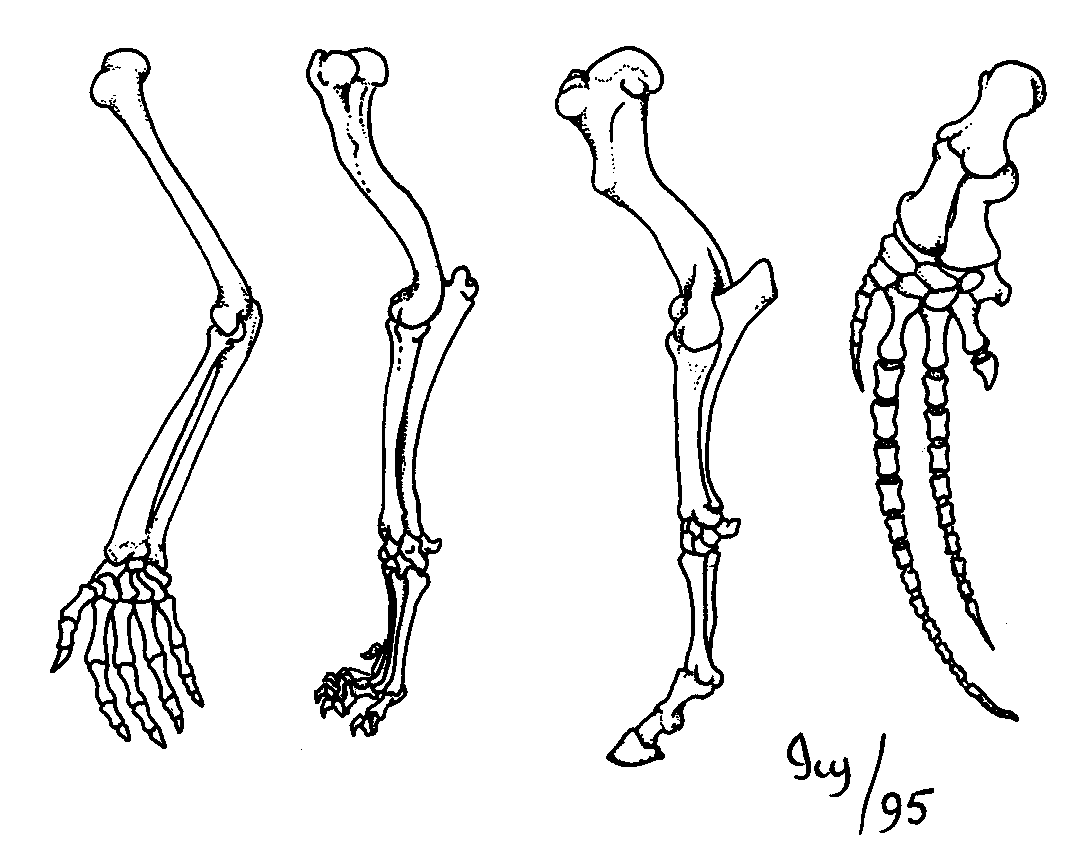
What type of structures are these?
a)
homologous
b)
vestigial 
c)
analogous
d)
fossil
53.
Which of these best represents a time period in which an organism could evolve?
a)
5 days
b)
100 years
c)
10,000 years
d)
2 decades
54.

Whales are aquatic mammals that contain a pelvis (hip) bone. Even though it does not aid in its movement, the function must have been used by a common ancestor of the whale. Thus, the pelvis is referred to as a(n)

a)

vestigial structure

b)

analogous structure

c)

homologous structure

55.
A theory has significant evidence to support it.  True or False
a)
True
b)
False
56.
The ability of an organism to survive and reproduce in its specific environment 
a)
diversity.
b)
evolution
c)
adaptation
d)
 fitness
57.
Where humans have bred organisms together based on traits we like.
a)
Evolution
b)
Natural Selection
c)
Extinction 
d)
Artificial Selection
58.
Genetic differences between organisms of the same species
a)
Variation
b)
Adaptation
c)
Behavior
d)
Environment
59.
The difference in the physical traits of an individual from those of other individuals in a group is called a(n)
a)
change
b)
adaption
c)
species
d)
variation
60.
The long and sharp beak of a woodpecker is an example of:
a)
Natural Selection
b)
Selective Breeding
61.
An error in DNA copying that results in a new trait
a)
Homeostasis
b)
Mutation
c)
Natural Selection
d)
Selective Breeding
62.

Charles Darwin wrote a book that detailed his discoveries. It was called....

a)

Principles of Geology

b)

On the Origin of Species

c)

The Origin of Species

d)

On Population

63.

This geologist said that gradual geological changes shaped Earth over a very long period of time!

a)

Charles Lyell

b)

Thomas Malthus

c)

Jean Baptiste Lamarck

d)

Alfred Russel Wallace

64.

This french naturalist said that species change over time with their environment; he said the "disuse and use of organs" led to the strengthening of some and loss of others.

a)

Charles Lyell

b)

Jean Baptist Lamarck

c)

Charles Darwin

d)

Thomas Malthus

65.

This English economist said that populations grow faster than the resources that are available to them, therefore competition and disease control populations.

a)

Charles Lyell

b)

Thomas Malthus

c)

Jean Baptiste Lamarck

d)

Alfred Russel Wallace

66.

This English naturalist didn't get credit for what he knew about evolution. He lived at the same time as Darwin and made many travels, too. He shared his findings with Darwin, which confirmed what Darwin already thought.

a)

Alfred Russel Wallace

b)

Thomas Malthus

c)

Charles Lyell

d)

Jean Baptiste Lamarck

67.

This event in evolution is characterized by a rapid, sudden change, which is usually caused by something environmental like a volcanic eruption, other natural disaster or the isolation of a species. It leads to quicker speciation.

a)

Punctuated Equilbrium

b)

Natural Selection

c)

Gradualism

d)

Survival of the FIttest

68.

This event in evolution is characterized by slow, gradual change and is caused by variation and natural selection.

a)

Gradualism

b)

Punctuated Equilibrium

c)

Survival of the Fittest

d)

Mutation

69.

This Entomologist (someone who studies insects) ran field tests to see if natural selection actually led to the rise of the black peppered moth.

a)

Charles Darwin

b)

Thomas Malthus

c)

Henry Kettlewell

d)

Jean Baptiste Lamarck

70.

Survival of the fittest means "biggest and strongest."

a)

True

b)

False

71.

Lucy, the Australopithecus Afarensis, was found in the year ________ in _______.

a)

1985, Atlanta

b)

1974, Ethiopia

c)

1675, Galapagos

d)

2001, Australia

72.

What made scientists think that Lucy was a common ancestor of humans?

a)

Her knee joint locked straight, so she could walk like humans do

b)

Her skull was the same size as humans

c)

She was just as tall as an average adult human female

d)

Her teeth were the same as one would find in a human skull

73.

Lucy was about ________ years old and about _______ feet tall.

a)

5, 2

b)

20,3.5

c)

40, 4

d)

13, 5

74.

Which scientist presented the idea of acquired characteristics?

a)

Jean Baptiste Lamarck

b)

Alfred Russel Wallace

c)

Charles Darwin

d)

Charles Lyell

75.

Who wrote the essay "On Populations?"

a)

Russel Wallace

b)

Charles Darwin

c)

Charles Lyell

d)

Thomas Malthus

76.

When Darwin's original finches were blown to the Galapagos by storm (likely), this is the BEST example of

a)

Separation

b)

Division

c)

Speciation

d)

Isolation

77.

When the birds of paradise experienced constant changes in their environment, this led to them being _________________ and _________________ and then ultimately led to ____________________.

a)

divided, isolated, speciation

b)

divided, isolated, survival of the fittest

c)

separated, divided, extinct

78.

There are ________ species of Darwin's finches and ________ species of the Birds of Paradise.

a)

20, 40

b)

200, 400

c)

15, 30

d)

13, 39

79.

Gigantopithecus were very large primates that lived 500,000 years ago. Since none of these mammals are still today, they are said to be....

a)

Extinct

b)

Threatened

c)

Endangered

d)

Declining

80.

Scientists have collected millions of fossils of different organisms, and have developed a timeline of life on Earth. What do we call this?

a)

Mutation

b)

Natural Selection

c)

The theory of evolution

d)

Fossil Record

81.

A physical or behavioral trait that helps an organism survive and reproduce in its environment is called a what?

a)

An adaptation

b)

A response to a stimulus

c)

A mutation

d)

Evolution

82.

What most likely caused the finches on the Galapagos Islands to have beaks that were different from the finches on the mainland?

a)

There were different types of predators on the island.

b)

There were different types of food available on the island.

c)

The finches had no water to drink.

d)

The finches on the mainland could not fly high enough.

83.

When looking at two birds of the same species, you notice that one has darker feathers than the other one. You also notice that one has a beak that is just a little longer. These slight differences within members of the same species are called.....

a)

Fossils

b)

Extinction

c)

Meiosis

d)

Variations

84.
What are the evidences for Evolution?
a)
Fossil Records
b)
Embryology
c)
Similar body structure
d)
All the above
85.
Evolution is a
a)
law
b)
theory
c)
hypothesis
d)
conclusion
86.
Do organisms "decide" to evolve and change?
a)
Yes, they know they need to change to survive 
b)
No, they change because of natural selection
87.
Which organisms are most likely to survive?
a)
the best adapted
b)
the fastest
c)
the strongest
d)
the most domesticated (tamed)
88.
Two organisms that are closely related would have
a)
very similar DNA sequence
b)
exactly the same DNA sequences
c)
no proteins in common
d)
completely different DNA sequence
89.
the hind leg bones in a whale are examples of
a)
homologous structures
b)
analogous structures
c)
fossils
d)
vestigals
90.
 characteristic or trait that helps an organism survive in its environment
a)
skills
b)
speciation
c)
natural instinct
d)
adaptation
91.
A scientist is examining a newly discovered species of bird to determine which type it is most closely related to.  The best method to determine relatedness is
a)
comparative embryology
b)
the fossil record
c)
comparative anatomy
d)
DNA analysis
92.
A remnant or trace of an organism from the past is called a _______.
a)
Ancestor
b)
Skeleton
c)
Fossil
d)
Imprints
93.
If an organism has a vestigial structure, that structure likely once had a function in a(n)
a)
close relative
b)
early ancestor
c)
unrelated organism
d)
embryological stage
94.
Which of the following is a term for a group of similar organisms that can reproduce fertile offspring?
a)
individual
b)
population
c)
species
d)
fossil
95.
Mutations are important because they bring about
a)
death of the organism in which they develop
b)
genetic variation needed for a population to evolve
c)
benefits for the individual, not for the population
d)
Hardey-Weinberg equilibrium within a population
96.
What is speciation?
a)
combining of tow species to form one with different traits
b)
isolation that affects mating behaviors
c)
timing of mating that prevents normal sexual selection
d)
divergence of two or more species from an existing one
97.
Similar DNA sequences between organisms illustrate
a)
natural selection
b)
common ancestry
c)
population bottlenecks
98.
Extinction can occur because of which of the following?
a)
All can be causes of extinction.
b)
Increased competition with other species
c)
New predators within the environment
d)
Loss of habitat and/or catastrophes
99.
Finches on the Galapagos Islands had different beaks in order to help them do what?
a)
Build nests
b)
Fight off predators
c)
Collect food sources
100.
Butterflies blending their wing color with their environment is an example of what?
a)
Adaptation
b)
Evolution
c)
Camouflage
d)
None of the above
101.
The man who studied genetics and came up with genetics is
a)
Watson
b)
Crick
c)
Mendel
d)
Darwin
102.
Genotype refers to the ...
a)
physical expression of the genes
b)
the possible combination of alleles in a gene
c)
whether an allele is dominant or recessive
d)
how an organism will appear
103.
Squidward has light blue skin, and his genotype for this trait is Bb. Would Squidward be considered a purebred or hybrid for light blue skin?
a)
Purebred
b)
Hybrid
104.
An offspring will receive how many alleles from each parent to determine a specific trait?
a)
one
b)
two
c)
three
d)
five
105.
Which of the following is a phenotype?
a)
BB
b)
Bb
c)
bb
d)
Blue eyes
106.
What is a phenotype
a)
The genetic make up (code)
b)
The physical trait
107.
having two of the same genes for the trait (sometimes called purebred).
a)
homozygous
b)
hetrozygous
c)
protein
d)
chromosome
108.
having two different genes for a trait (sometimes called hybrid).
a)
protein
b)
homozygous
c)
heterozygous
d)
genotype
109.
Magda is a tall, 11 year old drummer. She has a scar on her right cheek. She is good at swimming. Which of her traits did Magda most likely inherit?
a)
height
b)
the scar
c)
ability to swim
d)
ability to play drums
110.
G = green, g = yellow
The genotype for a yellow plant is...

a)
GG
b)
Gg
c)
gg
d)
all of the choices result in yellow