
 Worksheets
5th Grade GMAS Review
Total questions: 17
Worksheet time: 27mins
Name
Class
Date
1.
Characteristics passed from parents to their offspring.
a)
behavior
b)
learned trait
c)
inherited trait
d)
function
2.
The passing down of traits from parent to offspring.
a)
heredity
b)
environmental traits
c)
recessive trait
d)
punnett square
3.
What is NOT an example of an inherited TRAIT?
a)
eye color
b)
tongue rolling
c)
height
d)
speaking a language
4.
_________ is known as the product of parents
a)
Infant
b)
Toddler
c)
Offspring
d)
Adolescent
5.
Which of these is an inherited trait?
a)
a person's height
b)
where a person lives
c)
a person's ability to write
d)
a person learning a new language
6.
A dog rolls over and receives a treat. The dog rolls over again. This is an example of...
a)
learned behavior
b)
adaptive behavior
c)
inherited behavior
d)
instinctive behavior
7.
Katie observes three birds sitting on a tree branch in her yard. All three birds are red with brown on their chests. Which best explains why the three birds have similar appearances?
a)
The birds have similar diets.
b)
The birds live in the same habitat.
c)
The birds are sitting in the same tree.
d)
The birds are members of the same population.
8.
How was the Grand Canyon formed?
a)
earthquake
b)
flowing river
c)
waterfall
d)
rainstorm
9.
Which of these can help PREVENT soil erosion?
a)
construction sites
b)
planting grass
c)
raising grazing animals
d)
digging ditches
10.
A hill of sand made and shaped by wind.
a)
landform
b)
deposition
c)
sand dune
d)
seismology
11.
The breaking down or disintegration of substances such as rocks and minerals by physical, chemical, or biological processes is called ______________.
a)
Deposition
b)
Weathering
c)
Erosion
d)
The rock cycle
12.
The movement of sediment or soil from one location to another by means of water, ice, or wind is called ______________.
a)
Weathering
b)
Deposition
c)
Erosion
d)
Soil Movement
13.
A constructive force is defined as
a)
a natural occurrence that can build up or break down
b)
an earthquake or a volcano
c)
a natural force that builds up and creates new land
d)
a destructive force that has been controlled
14.
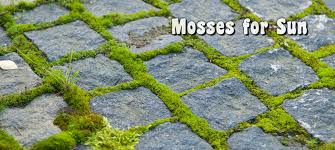
Which of the following is NOT true of mosses, liverworts, and hornworts?
a)
They are non-vascular
b)
They have roots, stems, and leaves
c)
They grow in moist places
d)
They are small and low-growing
15.

All flowering plants are ________________.
a)
gymnosterms
b)
angiosperms
c)
ugly
d)
non-vascular
16.
What is the difference between a reptile and an amphibian?
a)
Amphibians have a backbone and reptiles don't.
b)
Reptiles have a backbone and amphibians
c)
Amphibians live in water when young, and on land when older; while reptiles live on land.
d)
Reptiles live in water when young, and on land when older; while amphibians live on land.
17.
People belong to what CLASS of animals?
a)
Humans
b)
Mammals
c)
Birds
d)
Amphibians
100 %

