
NEW
Font size
 Worksheets
Unit 7 Review - Water Cycle & Weather
Total questions: 27
Worksheet time: 35mins
The continuous movement of water above the surface of the earth is known as _____
The Weather Cycle
The Precipitation Cycle
The Wet Cycle
The Water Cycle







In which part of the water cycle does a drop of water spend the LEAST amount of time?
In the ocean.
In a glacier
In the atmopsphere
Under the ground
Which of the following is a change caused by the Sun?
The Sun's energy is reflected off high mountains, causing cold temperatures.
The Sun's energy heats the Earth, contributing to evaporation.
The Sun's energy causes lava to boil and erupt from volcanoes.
The Sun's energy melts snow crystal in clouds, causing rain.

What process is occurring at location A in the diagram above?
Condensation
Precipitation
Evaporation
Runoff

What is letter B in the diagram?
Condensation
Precipitation
Evaporation
Runoff

What part of the water cycle is this?
Precipitation
Evaporation
Condensation
Transpiration
How does the Sun's energy affect the water cycle?
The Sun's energy evaporates water so there is less water for the water cycle.
The Sun's energy melts the icebergs sos that there is more water for the water cycle.
The Sun's energy gives light so each part of the water cycle can be seen.
The Sun's energy warms water so that it evaporates and rises into the air.
Which step of the water cycle describes condensation?
Water falls to the Earth as rain
The Sun heats up the lake and makes water vapor
The water vapor cools to form a cloud in the sky
Water runs off into lakes
When water evaporates from the ocean, the amount of water in the air -
increases
decreases
stays the same
disappears
If I placed a cup by our window and a cup in the closet what would cause the cup by the window to have less water within a few days?
The Sun would change the water from a liquid to a solid.
The Sun's light would cause the water to condense.
The water would change from a gas to a liquid.
Heat from the sun would cause the water to evaporate.

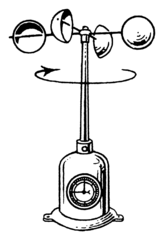
This is a _________________.
rain gauge
wind vane
thermometer

The Nature Club is planning a field trip to Piney Park to collect plant specimens. According to the newspaper forecast, what day should they go on their field trip?
Thursday, because the ground will have more time to dry out.
Thursday, because it will be warmer.
Wednesday, because the rain has stopped and there will be more shade.
Wednesday, because it is partly sunny.
The rain showers in the morning formed puddles on the ground. In the afternoon, the puddles were not there. What is the BEST explanation for what happened to the puddles?
Evaporation changed the puddles into water vapor.
Precipitation caused the puddles to flow away.
Deposition settling the water in a new place.
Condensation turned the puddles into fog

The students in Mrs. Beck's class recorded the amount of rainfall at the school for four months. The measurements were collected and recorded in the table above.
According to the data collected, which of the following is the BEST conclusion?
The rainfall amounts for September were too high.
December rainfall amounts were made of snow.
October was the driest of the four months.
The rainfall amounts for November were lower than expected.

What weather instrument is this?
Thermometer
Anenometer
Barometer
Rain Guage

