wayground logo

Free Printable Worksheets

NEW

Font size

S
M
L
XL
Worksheets

Texas Science 6th Grade 5th Six Weeks Review

Total questions: 75

Worksheet time: 1hrs 15mins

Name
Class
Date
1.
Name this boundary
a)
Convergent
b)
Divergent
c)
Transform
d)
Sergent
2.
Name the boundary
a)
divergent
b)
convergent
c)
transform
d)
sergent
3.
Name the boundary
a)
convergent
b)
transform
c)
divergent
d)
sergent
4.
Which of the following is where one plate slides under another plate?
a)
submarine zone
b)
divergence zone
c)
subduction zone
d)
lower zone
5.
Which of the following is associated with transform boundary?
a)
volcanoes
b)
mountains
c)
trenches
d)
earthquakes and fault line
6.
Which of the following land formation occurs at a divergent continental/continental boundary?
a)
mid-ocean ridge
b)
deep ocean trench
c)
Pacific hot spot
d)
rift valley
7.
Mountains form from....
a)
Plates sliding past one another
b)
collision of plates
c)
plates moving away from each other
d)
none of these
8.
Oceanic crust is.....
a)
Younger and less dense than continental crust
b)
Thinner, younger, and more dense than continental crust
c)
older, thicker, and less dense than continental crust
d)
Bigger and younger than continental crust
9.
Earth's plates are....
a)
Constantly moving and changing the face of the Earth
b)
Never moved
c)
Move seldom and very fast
d)
move when they feel like it
10.
What was the name given to all the continents when they were joined as one super continent?
a)
Supreme Continent
b)
Eurasia
c)
Plate tectonics
d)
Pangea
11.
Whenever a subduction zone is formed a ____ is formed.
a)
mountains
b)
Island arc
c)
rift valley
d)
volcanoes
12.
Plate movement is caused by _____
a)
The rotation of the Earth
b)
Ocean tides
c)
Convection current in the mantle
d)
The moon's gravity
13.
What are mid-ocean ridges?
a)
A chain of underwater falls
b)
A chain of underwater volcanoes
c)
A chain of underwater mountains
d)
A chain of underwater rocks
14.
Created by a divergent boundary
a)
rocky mountain
b)
Mariana's Trench
c)
mid-Atlantic ridge
d)
volano
15.
Plates moving apart would be...
a)
convergent
b)
divergent
c)
transform
16.
Which is subducted in an ocean-continental convergent boundary?
a)
continental plate
b)
oceanic plate
17.
What type of boundary creates a new seafloor?
a)
convergent continental to continental
b)
convergent ocean to continental
c)
convergent ocean to ocean
d)
divergent 
18.
A subduction zone is formed....
a)
when one tectonic plate sinks below another
b)
at all plate boundaries
c)
when plates diverge
d)
at transform boundaries
19.
Which of the following is the softer moving area of the mantle that contains convection current?
a)
asthenosphere
b)
lithosphere
c)
outer core
d)
oceanic crust
20.
This area contains over 70 percent of volcanoes and 90 percent of earthquakes in the world.
a)
North American plate
b)
Ring of Fire
c)
Fiery rings
d)
African plate
21.
Which of the following did not support the Continental Drift Theory?
a)
Magnetic striping in the ocean floor
b)
identical fossils found in different continents
c)
Mountains that extend over continents
d)
Coastlines of continents such as South America and Africa fit like a puzzle
22.
Rocks are classified by -
a)
how they were formed.
b)
when they were formed.
c)
where they were formed.
d)
their color when formed
23.
Which of the following is one of the final processes in the formation of sedimentary rock?
a)
Melting
b)
Cementation
c)
Flowing
d)
Separation
24.
Metamorphic rock forms where any kind of rock –
a)
is crystalized after being liquid rock.
b)
contains fossils of marine organisms
c)
is changed by the extreme heat and pressure.
d)
is composed of cemented sediment.
25.
Which of the following features of a rock would classify it as definitely an igneous rock?
a)
Began its formation process millions of year in the past
b)
Created through slow, naturally occurring processes
c)
Formed when minerals were heated, then cooled
d)
Resulted from liquid rock being ejected from a volcano
26.
The interlocking crystals of an igneous rock help to classify it since these crystals are evidence of how the rock formed. The crystals are a result of –
a)
quartz coming out of solution.
b)
particles forming layers.
c)
chemical reactions of minerals.
d)
melted rock that cooled.
27.
Which of the following processes is one of the early steps in the formation of sedimentary rock?
a)
Weathering of existing rock
b)
Crystallization of molten minerals
c)
Melting of rock in volcanoes
d)
Chemical reactions that produce heat
28.
Sedimentary rock can be changed into igneous rock if sediments are –
a)
compacted.
b)
deposited.
c)
weathered.
d)
melted.
29.
Which type of rock results from melting and cooling of magma?
a)
Igneous
b)
Metamorphic
c)
Sedimentary
d)
Extrusive
30.
Wind, water, and ice breaking down rock is called
a)
Erosion
b)
Deposition
c)
Compaction
d)
Weathering
31.
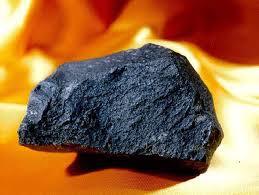
This rock was found near the mouth of a volcano. What type of rock is this?
a)
Sedimentary
b)
Igneous
c)
Metamorphic
32.
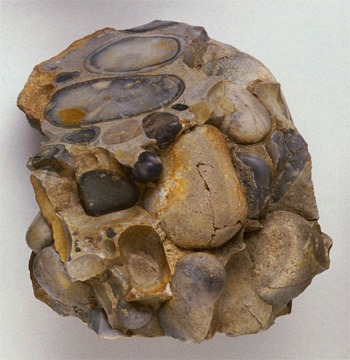
This rock was formed by smaller pieces of rock that settled at the bottom of a lake millions of years ago. What type of rock is this?
a)
Sedimentary
b)
Igneous
c)
Metamorphic
33.
This rock started as lava that cooled and then was heated and put under pressure over time. What type of rock is this?
a)
Sedimentar
b)
Igneous
c)
Metamorphic
34.

Huge pieces of lithosphere that slowly move on the asthenosphere and consist of the crust and the rigid, uppermost part of the mantle

a)

tectonic plates

b)

North American Plate

c)

Eurasian Plate

d)

African Plate

35.

A tectonic plate division of the lithosphere that includes the continental crust of Greenland, North America, Siberia, and the surrounding oceanic crust.

a)

tectonic plates

b)

African Plate

c)

North American Plate

d)

South American Plate

36.

A tectonic plate division of the lithosphere, including most of the landmasses of Europe and Asia.

a)

South American Plate

b)

North American Plate

c)

Eurasian Plate

d)

African Plate

37.

A tectonic plate division of the lithosphere that includes the continental crust of Africa and the surrounding oceanic crust.

a)

African Plate

b)

South American Plate

c)

North American Plate

d)

Eurasian Plate

38.

A tectonic plate division of the lithosphere that includes the continental crust of South America and the oceanic crust extending to the Mid-Atlantic ridge.

a)

North American Plate

b)

Eurasian Plate

c)

African Plate

d)

South American Plate

39.

A tectonic plate division of the lithosphere that includes the continental crust of India and Australia and the surrounding oceanic crust.

a)

Pacific Plate

b)

Antarctic Plate

c)

Indo-Australian Plate

d)

African Plate

40.

A tectonic plate division of the lithosphere that is composed entirely of oceanic crust and lies beneath the Pacific Ocean

a)

Antarctic Plate

b)

Indo-Australian Plate

c)

Pacific Plate

d)

Atlantic Plate

41.

A tectonic plate division of the lithosphere that includes the continental crust of Antarctica and the surrounding oceanic crust.

a)

Indo-Australian Plate

b)

Antarctic Plate

c)

African Plate

d)

Pacific Plate

42.
Identify the Major Plate labeled B
a)
African Plate
b)
Antarctic Plate
c)
Pacific Plate
d)
Eurasian Plate 
43.
Identify the Major Plate labeled I
a)
African Plate
b)
Antarctic Plate
c)
Pacific Plate
d)
Eurasian Plate 
44.
Identify the Major Plate labeled N
a)
African Plate
b)
Antarctic Plate
c)
Pacific Plate
d)
Eurasian Plate 
45.
Identify the Major Plate labeled J
a)
African Plate
b)
Antarctic Plate
c)
Pacific Plate
d)
Eurasian Plate 
46.
Identify the Major Plate labeled D
a)
Indo-Australian Plate
b)
North American Plate
c)
South Americana Plate
d)
Eurasian Plate 
47.
Identify the Major Plate labeled L
a)
Indo-Australian Plate
b)
North American Plate
c)
South Americana Plate
d)
Eurasian Plate 
48.
Identify the Major Plate labeled G
a)
Indo-Australian Plate
b)
North American Plate
c)
South Americana Plate
d)
Eurasian Plate 
49.
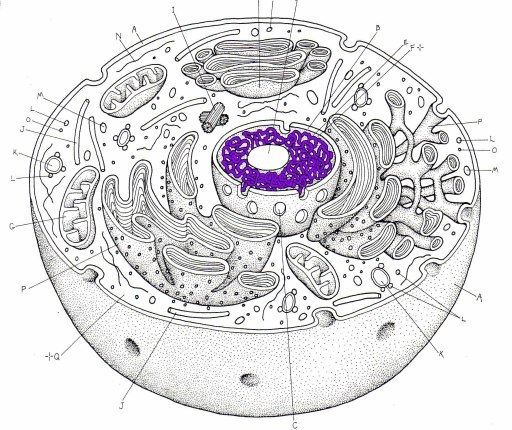
What kind of cell is this?
a)
Eukaryotic
b)
Prokaryotic
50.
Cells can only be seen with the help of a...
a)
hand lens 
b)
magnifying glass
c)
3D glasses 
d)
microscope 
51.
Bacteria is what kind of cell?
a)
Eukaryotic
b)
Prokaryotic
52.
All living things are made of...
a)
atoms 
b)
cells 
c)
bacteria 
d)
plants 
53.
What is unicellular? 
a)
one cell 
b)
many cells 
c)
no nuclues 
d)
DNA 
54.
What is multicellular? 
a)
one cell 
b)
no cells 
c)
many cells 
d)
no nucleus 
55.
All cells come from other...
a)
cells 
b)
plants 
c)
nucleus 
d)
microscopes 
56.
What type of cell has a nucleus? 
a)
eukaryotic
b)
prokaryotic 
57.
What type of cell does not have a nucleus?
a)
eukaryotic 
b)
prokaryotic 
58.
What type of cell does not have a nucleus?
a)
eukaryotic 
b)
prokaryotic 
59.
Plants and animal cells are examples of ___ cells 
a)
prokaryotic cells 
b)
eukaryotic cells 
60.
The thinnest layer of the Earth is the ___________.
a)
mantle
b)
crust
c)
core
61.
Tectonic plates are made up of continental crust and ________ crust.
a)
continental
b)
oceanic
c)
plates
d)
mantle
62.
There are how many different types of crust?
a)
1
b)
2
c)
5
d)
3
63.
What is the thickest layer of the Earth?
a)
the crust
b)
the mantle
c)
the outer core
d)
the inner core
64.
What is the core made of?
a)
steel
b)
iron 
c)
aluminum
d)
iron and nickel
65.
What describes the outer core?
a)
solid
b)
liquid
c)
viscous
d)
gas
66.
Why is the inner core solid?
a)
its unknown
b)
what it's made of
c)
the pressure
d)
it is colder than the outer core
67.
Which layer of the Earth is the only liquid layer?
a)
Outer Core
b)
Inner Core
c)
Mantle
d)
Lithosphere
68.
Which layer(s) of the Earth make up the asthenosphere?
a)
Part of the mantle
b)
Crust, mantle, Core
c)
Crust and upper mantle
d)
Only the crust
69.
What is the correct order (starting from the surface) of Earth's layers?
a)
crust, outer core, inner core, mantle
b)
mantle, outer core, inner core, crust
c)
crust, mantle, outer core, inner core
d)
outer core, inner core, crust, mantle
70.
What layer is a semisolid and acts like a plastic?
a)
Lithosphere
b)
Mantle
c)
Asthenosphere
d)
crust
71.
What happens to pressure as we move from the crust to the inner core?
a)
Pressure Decreases
b)
Pressure Increases
c)
Nothing
72.
What happens to temperature as we move from the crust to the inner core?
a)
Decreases
b)
Increases
c)
Nothing
73.
Less dense materials rise to the top.
a)
True
b)
False
74.
Which layer of Earth has the GREATEST density?
a)
crust
b)
mantle
c)
outer core
d)
inner core
75.
Which layer of Earth is made up of tectonic plates?
a)
outer core
b)
inner core
c)
asthenosphere
d)
lithosphere