wayground logo

Free Printable Worksheets

Font size

S
M
L
XL
Worksheets

Unit 3 - Japan, Middle Ages, Renaissance/Reformation

Total questions: 86

Worksheet time: 47mins

Name
Class
Date
1.
Which statement BEST describes the role of the emperor of Japan during the feudal period?
a)
The emperor had absolute control of Japan.
b)
The emperor was a cruel dictator who ruled harshly.
c)
The emperor was seen as a god.
d)
The emperor had limited control while the shogun ruled the empire.
2.
What was the result of Japan's early experiences with Europeans?
a)
Japan traded widely and embraced cultural diffusion with the European countries.
b)
Japan invited foreign officials to visit and share their ideas.
c)
Japan sent representatives to other countries.
d)
Japan adopted a policy of isolationism.
3.
What does the word "samurai" mean?
a)
"to protect"
b)
"to serve"
c)
"to defend"
d)
"to forgive"
4.
What item did peasants give to samurai and daimyo in exchange for protection?
a)
money they made
b)
crops they grew
c)
clothing they produced
d)
children they sold into slavery
5.
What culture greatly influenced the Japanese writing system and language?
a)
China
b)
Spain
c)
Greece
d)
Italy
6.
Which of the following strongly influenced the arts of Japan?
a)
the importance of the sea in the lives of the people
b)
the religious practices of Buddhism and Shintoism
c)
the importance of farming to the people
d)
the philosophy of Confucius
7.
What was the code of honor, loyalty, and discipline practiced by the samurai?
a)
chivalry
b)
bushido
c)
shintoism
d)
isolationism
8.
What was so scarce and valuable in Japan that control of it caused many conflicts?
a)
land
b)
gold
c)
water
d)
silver
9.
Why were the merchants located at the bottom of the social hierarchy in Japan?
a)
They did not follow the laws.
b)
They did not contribute to taxes.
c)
They did not produce anything.
d)
They did not practice Shinto.
10.
What did knights receive in exchange for their pledge of loyalty to a lord?
a)
a sword
b)
a fief (land and title)
c)
a holy relic
d)
an indulgence
11.
What was manorialism?
a)
The knights code of honor
b)
The economic system of feudalism 
c)
The social structure of feudalism
d)
The jobs done by groups of Christian Monks
12.
What does this diagram reveal about the feudal system?
a)
It was based on educational achievement
b)
It was based on Protestant or Catholic faith
c)
It was based on social advancement
d)
It was based on social class structure
13.
What brought stability to Western Europe after the fall of the Roman Empire?
a)
The election of government officials
b)
The development of the feudal system
c)
The development of the caste system
d)
The creation of well-structured cities
14.
What caused the growth of feudalism in Europe during the Middle Ages?
a)
The rivalry between the ancient empires
b)
The unification of European rulers
c)
The decline of the Roman Catholic Church
d)
The collapse of a strong central government
15.
Under manoralism, who did most of the actual work on the landholdings of the lords?
a)
King
b)
Knights
c)
Lords
d)
Pesants
16.
Which would be the most accurate description of a vassal?
a)
One who buys land from the government
b)
One who has a person working for him
c)
One who is the leader of the manor and gives away land
d)
One who is obligated to another because of land received
17.
How did feudalism help to create a nation-states in Western Europe?
a)
It changed the economy to be based on trade
b)
It weakened the power of the Roman Catholic Church
c)
it strengthened the kings army and centralized their power
d)
It did not make an impact on Western Europe
18.
Why did Europeans in the Middle Ages turn towards feudalism?
a)
It offered the people protection and stability
b)
It was forced upon them by the traders along the Silk Road
c)
The feudal system was similar to the Romans government
d)
The Pope told them to do it or they would not go to heaven
19.
In addition to a Lord/Noble, Which of the following could be considered vassals under the feudal system?
a)
King
b)
Pope
c)
Knight
d)
Samurai
20.
Which idea best describes the role of the Catholic Church in Europe during the Middle Ages?
a)
Church leaders were only involved in the spiritual aspect of people's lives.
b)
The church lost support because people stopped believing in God.
c)
The church provided a sense of stability, unity, and order.
d)
The church encouraged people to question authority.
21.
The Catholic Church was responsible for spreading what religion throughout Europe?
a)
Judaism
b)
Islam
c)
Buddhism
d)
Christianity
22.
Which work dictated the Catholic Church's work during the Middle Ages?
a)
the Bible
b)
Code of Hammurabi
c)
Twelve Tables
d)
the Torah
23.
Who led the Roman Catholic Church during the Middle Ages?
a)
the Rabbis
b)
the Pope
c)
the Archbishops
d)
the Bishops
24.
Which institution dominated life in Europe during the Middle Ages by helping people and keeping life stable?
a)
the Roman Catholic Church
b)
schools and universities
c)
a national bank
d)
the government
25.
What became the greatest source of stability in Western Europe after the fall of the Roman Empire?
a)
local and regional lords
b)
the Byzantine Empire
c)
the Magna Carta
d)
the Roman Catholic Church
26.
How did monasteries improve the lives of many Europeans?
a)
The provided bank loans.
b)
They provided military defenses.
c)
They provided education.
d)
They provided trade markets.
27.
What was the main purpose of monasteries in Europe during the Middle Ages?
a)
They served as large communal farms to grow food for the needy.
b)
They promoted justice and equality for people accused of crimes.
c)
They were centers of learning and culture for a few individuals.
d)
They were training centers for soldiers who fought in the Crusades.
28.
What was the primary goal of the Roman Catholic Church during the beginning of the Middle Ages?
a)
Force priests to get married to fellow Catholics.
b)
Influence people to become Christian
c)
Force people to buy indulgences.
d)
Persecute Lutherans and Calvinists
29.

Why did nobles make King John sign the Magna Carta?

a)

they wanted to give the king unlimited power.

b)

they wanted to separate the church and state.

c)

they wanted to replace him with a different ruler

d)

they wanted to limit the king's power.

30.

What style of government existed in England prior to the Magna Carta?

a)

direct democracy

b)

theocracy

c)

absolute monarchy

d)

constitutional monarcy

31.

Which English King did the nobles force to sign the Magna Carta?

a)

King John

b)

King Henry VIII

c)

Charlemange

d)

William the Conqueror

32.

What was the first democratic, legislative body in modern Europe?

a)

Rome's representative democracy

b)

Greece's direct democracy

c)

France's feudal system

d)

England's Parliament (Great Council)

33.

All of the following are rights protected in the Magna Carta except which one?

a)

the right to trial by jury

b)

the right to representative government

c)

the right to rule of law

d)

the right to a free education

34.

Which principle of the Magna Carta is included in our U.S. government?

a)

A. Sharia Law

b)

B. Natural Law

c)

C. Absolute Monarchy

d)

D. Representative Assemblies

35.

What document is considered one of history's most important democratic documents?

a)

A. the Magna Carta

b)

B. the Reconquista

c)

C. the Book of Kells

d)

D. the Spanish Inquisition

36.

By weakening the power of the king, the Magna Carta led to the end of which of the following?

a)

A. Feudalism

b)

B. Parilament

c)

C. Religious Orders

d)

D. Hundred Years War

37.

Including the King, Initially, who did the Magna Carta most impact?

a)

A. Nobles

b)

B. The Pope

c)

C. Common People

d)

D. Everyone

38.

To whom did the Magna Carta originally give rights?

a)

A. lords

b)

B. kings

c)

C. daimyo

d)

D. pesants

39.
The City of Jerusalem is important to what three major religions?
a)
Buddhism, Hinduism, and Islam
b)
Christianity, Islam, and Judaism
c)
Judaism, Islam, and Buddhism
d)
Islam, Buddhism, and Christianity
40.
In Europe, a long-term effect of the Crusades was
a)
the strengthening of the feudal system 
b)
the adoption of Islamic religious practices 
c)
an increased demand for goods from the East 
d)
increased European isolation 
41.
The Crusades were fought over the invasion of the Seljuk Turks in
a)
Byzantium
b)
Jerusalem
c)
England
d)
London
42.
Who was the Pope that called for the Crusades?
a)
Pope Urban II
b)
Pope Leo X
c)
Pope Urban I
d)
Pope Leo V
43.
Which occupation is most responsible for the spread of the Black Death?
a)
traders
b)
apprentices
c)
knights
d)
farmers
44.
What conclusion can be drawn from this map?
a)
The plague started in northern Europe and spread to Africa.
b)
Nobles gained more power since they were less likely to get the plague.
c)
Only people in Asia were affected by the plague.
d)
The plague was spread from Asia to Europe by traders.
45.
Which political system was weakened by the spread of the Black Death in Europe?
a)
democracy
b)
feudalism
c)
communism
d)
totalitarianism
46.
What animal is blamed for indirectly spreading the Black Death throughout Europe?
a)
cats
b)
dogs
c)
hamsters
d)
rats
47.
Which disease is responsible for the deaths of millions of people throughout Europe?
a)
Bubonic Plague
b)
chicken pox
c)
measles
d)
mumps
48.
Which group of people experienced the highest percentage of deaths due to the Black Death in Europe?
a)
kings
b)
knights
c)
lords
d)
serfs
49.
How was the social order in European society affected by the Black Death?
a)
Kings gave most of their power to the church clergy, so they would pray to stop the plague.
b)
Nobles were able to afford medicine to fight the plague and therefore were not affected by it.
c)
High death tolls reduced the population of workers and weakened the practice of feudalism.
d)
Most of the upper class was killed by the plague, and peasants were able to buy land. 
50.
Which group of people gained power due to the Black Death in Europe?
a)
lords
b)
peasants
c)
kings
d)
queens
51.
The Black Plague killed over 30% of Western Europe's population. What was a consequence of such a high   loss of life?
a)
increased wages for workers
b)
new advances in medicine
c)
an increase in religious tolerance
d)
an increase in the rural population
52.
What does the word "Renaissance" mean?
a)
Renewed
b)
Rebuilt
c)
Remade
d)
Rebirth
53.
What is one way that Medieval and Renaissance artists differ?
a)
Renaissance art focuses more on religion
b)
Medieval artists were more realistic
c)
Renaissance artist turned to Roman and Greek works for inspiration
d)
They are the same
54.
On what peninsula did the Renaissance begin?
a)
Spain
b)
England
c)
Italy
d)
Germany
55.
Humanism...
a)
emphasized the Bible
b)
leads to happier lives
c)
encourages people to learn Latin and Greek
d)
focuses on the potential of humans to achieve 
56.
The Sistine Chapel was painted by...
a)
Michalangelo
b)
Albrecht Durer
c)
Miguel Cervantes
d)
Leonardo DaVinci
57.
______________ art was flat with rigid, emotionless figures, while ______________ art had full backgrounds with figures that showed emotion and detail.
a)
Renaissance, Medieval
b)
Renaissance, Classical
c)
Classical, Medieval
d)
Medieval, Renaissance
58.
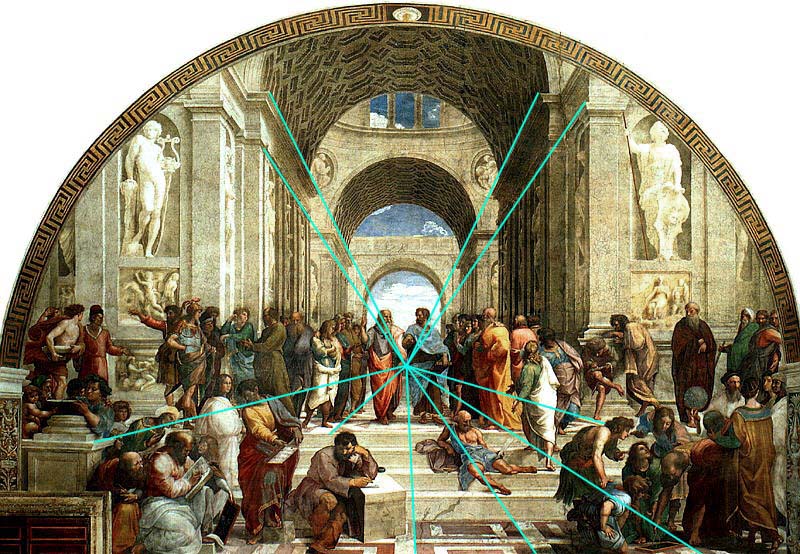
Title...
a)
School of Athens
b)
Last Judgment
c)
Last Supper
d)
Sistine Chapel
59.
Artist who painted the ceiling of the Sistine Chapel in Rome 
a)
Michelangelo
b)
Leonardo Da Vinci
c)
Perspective
d)
Patron
60.
Italian artist who also excelled in astronomy, engineering, and anatomy 
a)
Michelangelo
b)
Raphael
c)
Johann Guttenberg
d)
Leonardo da Vinci
61.
Which of the following is associated with classical learning?
a)
the ideas of the middle ages
b)
the ideas of Greece & Rome
c)
the ideas of ancient China
d)
the ideas of ancient India
62.
What provided the major economic support for the Renaissance?
a)
wealthy patrons
b)
church officials
c)
government grants
d)
kings competing for prestige
63.
What is the artistic technique that is used to show depth and distance on a flat surface?
a)
realism
b)
perspective
c)
idealism
d)
distancism
64.
Who painted the Mona Lisa?
a)
Michelangelo
b)
Boticceli
c)
Leonardo da Vinci
d)
Donatello
65.
During the Renaissance, why was Florence significant?
a)
Birthplace and symbol of the Renaissance
b)
Birthplace of Michelangelo
c)
The last place the Black Plague hit
d)
Home of all of the significant artists and sculptors 
66.
Why was the invention of the printing press so important?
a)
It embodied the spirit of the Renaissance
b)
It made books available to a wider audience
c)
It made Johannes Gutenburg famous
d)
It spurred the invention of the telescope
67.
Humanism is a way of thought that focuses on which of the following?
a)
The human potential for achievement
b)
the needs of the group over the individual
c)
the works of medieval writers
d)
the doctrines of the Christian Church
68.
Humanism is a way of thought that focuses on which of the following?
a)
The human potential for achievement
b)
the needs of the group over the individual
c)
the works of medieval writers
d)
the doctrines of the Christian Church
69.
Reopening of the "Silk Road" primarily allowed which of the following events to occur?
a)
the immigration of Chinese throughout Asia
b)
the increase of trade and spread of new ideas
c)
the spread of diseases to Europe
d)
allowed for quicker travel from China to Europe
70.
Based on the time period in history, with the invention of the printing press, what types of books were widely published?
a)
Cook books
b)
Bible texts
c)
Political ideologies
d)
Agricultural techniques
71.
Renaissance means 
a)
Renewal in business 
b)
Rebirth in art, literature, science
c)
Rebirth in the way that goods are made and distributed 
d)
Rebirth in medicine, music, play writing 
72.
Who sculpted the Pieta, David and painted the Sistine Chapel.
a)
Leonardo da Vinci
b)
Michaelangelo
c)
Raphael
d)
Cosimo de Medici
73.
The Printing Press 
a)
Allowed ideas to be spread faster because books were easier to get
b)
Was created by Leonardo Da Vinci
c)
Was invented by the Ottoman Turks
d)
Helped Mansa Musa spread Islam
74.

How would you classify Martin Luther and John Calvin?

a)

A. patrons from the Italian city-states

b)

B. leaders of the Protestant Reformation

c)

C. artists/sculptors of the Italian Renaissance

d)

D. scientists that challenged the church

75.

Who wished to reform Catholicism and began the Protestant Reformation?

a)

A. Johannes Gutenberg

b)

B. Michelangelo

c)

C. Martin Luther

d)

D. Niccolo Machiavelli

76.

Why did Martin Luther write the 95 Theses?

a)

A. to support the practices of the Roman Catholic Church

b)

B. to protest the practices of the Roman Catholic Church

c)

C. to gain personal wealth and become famous

d)

D. to gain a promotion in the church as the Pope's assistant

77.

Who IS NOT considered to be the influential people of the Reformation and Counter Reformation?

a)

A. Luther

b)

B. Calvin

c)

C. Knox

d)

D. Kepler

78.

What book was first reproduced in many languages by the printing press?

a)

A. Magna Carta

b)

B. Bible

c)

C. Qur'an

d)

D. Prince

79.

Who invented the printing press that helped diffuse ideas and provided more people the opportunity to read?

a)

A. Leonardo da Vinci

b)

B. Michelangelo

c)

C. Machiavelli

d)

D. Johannes Gutenberg

80.

Puritans, Huguenots, and Presbyterians all developed from which religion?

a)

A. Calvinism

b)

B. Lutheran

c)

C. Orthodox

d)

D. Catholic

81.

What event is considered to be the starting point of the Protestant Reformation?

a)

A. the invention of the printing press

b)

B. the reopening of the Silk Road

c)

C. the crucifixion of Jesus Christ

d)

D. the nailing of the 95 Theses

82.

The group that met over a 20-year period that enacted reform on the Catholic Church was called?

a)

A. Council of England

b)

B. Council of Spain

c)

C. Council of Trent

d)

D. Council of Tribunes

83.

The Catholic Church undertook an effort to reform itself during which period?

a)

A. The Peace of Augsburg

b)

B. New Renaissance

c)

C. Reorganization of the Catholic Church

d)

D. Counter-Reformation

84.

What was the "Peace of Augsburg?"

a)

A. It allowed Germanic kingdoms to determine their religious affiliations.

b)

B. It brought peace between Henry VIII and Charles V.

c)

C. It allowed people to decide which religion they wanted to follow.

d)

D. It allowed peace between multiple religious groups.

85.

Why did Medieval Christians fear excommunication?

a)

A. Those cast out from their church had to leave their villages.

b)

B. Those cast out from their church could not go to heaven.

c)

C. Those cast out from their church could not get work.

d)

D. Those cast out from their church could not rent property.

86.

What did Martin Luther teach?

a)

A. Anyone could have a direct relationship with God.

b)

B. People needed priests to help them communicate with God.

c)

C. The church was corrupt.

d)

D. God knew who would be saved before they were born.