
 Worksheets
Ohio 5th Grade State Test Review #4
Total questions: 30
Worksheet time: 22mins
Name
Class
Date
1.

What happens when the area in which you live tilts away from the sun?
a)
It is summer.
b)
It is spring.
c)
It is winter.
d)
It is fall.
2.

Which season is taking place in the Northern Hemisphere in Position 2?
a)
Winter
b)
Spring
c)
Summer
d)
Fall
3.

Which season is taking place in the Northern Hemisphere in Position 3?
a)
Winter
b)
Spring
c)
Summer
d)
Fall
4.
What is Earth's annual motion around the sun called?
a)
Rotation
b)
Revolution
5.
Object spinning on its axis.
a)
revolution
b)
rotation
6.
Earth's axis is tilted at -
a)
23.5 degrees
b)
33.5 degrees
c)
28 degrees
d)
90 degrees
7.
What is the equation to calculate speed?
a)
speed = distance/time
b)
speed = time/distance
c)
speed = time x distance
d)
speed = speed/time
8.

Which explains why the fork looks different under water?
a)
light can't pass through the glass
b)
the wavelength of light lengthens
c)
the amount of light increases when going through water
d)
light is refracted at an angle
9.
Opaque means...
a)
No light passes through it
b)
All light passes through it
c)
Some light passes through it
10.

Allows most light through
a)
eflection
b)
Refraction
c)
Translucent
d)
Transparent
11.

Which color absorbs all light?
a)
White
b)
Black
c)
Orange
d)
Green
12.
Sound is caused by?
a)
force
b)
vibrations
c)
instruments
13.
What are the reasons for the seasons?
a)
Earth's tilt and rotation.
b)
Earth's rotation and revolution.
c)
Earth's tilt and revolution.
d)
Earth's tilt and resolution
14.

What is in between the inner planets and the outer planets?
a)
Asteroid belt
b)
Kuiper belt
c)
Sun
d)
Moon
15.
The solar system consists of the sun, smaller objects, and ...
a)
8 planets and their moons
b)
6 planets
c)
only moons
d)
more than 100 stars
16.
Huge chunks of rock and metal (some measuring miles wide) and are believed to be left-over pieces of planets and moons are called:
a)
Comets
b)
Meteors
c)
Asteroids
d)
Meteroids
17.
They are sometimes called shooting stars
a)
interplanetary dust
b)
asteroids
c)
comets
d)
meteors
18.

A constellation is a group of visible ____ that form a pattern when viewed from Earth.
a)
planets
b)
stars
c)
patterns
d)
creatures
19.
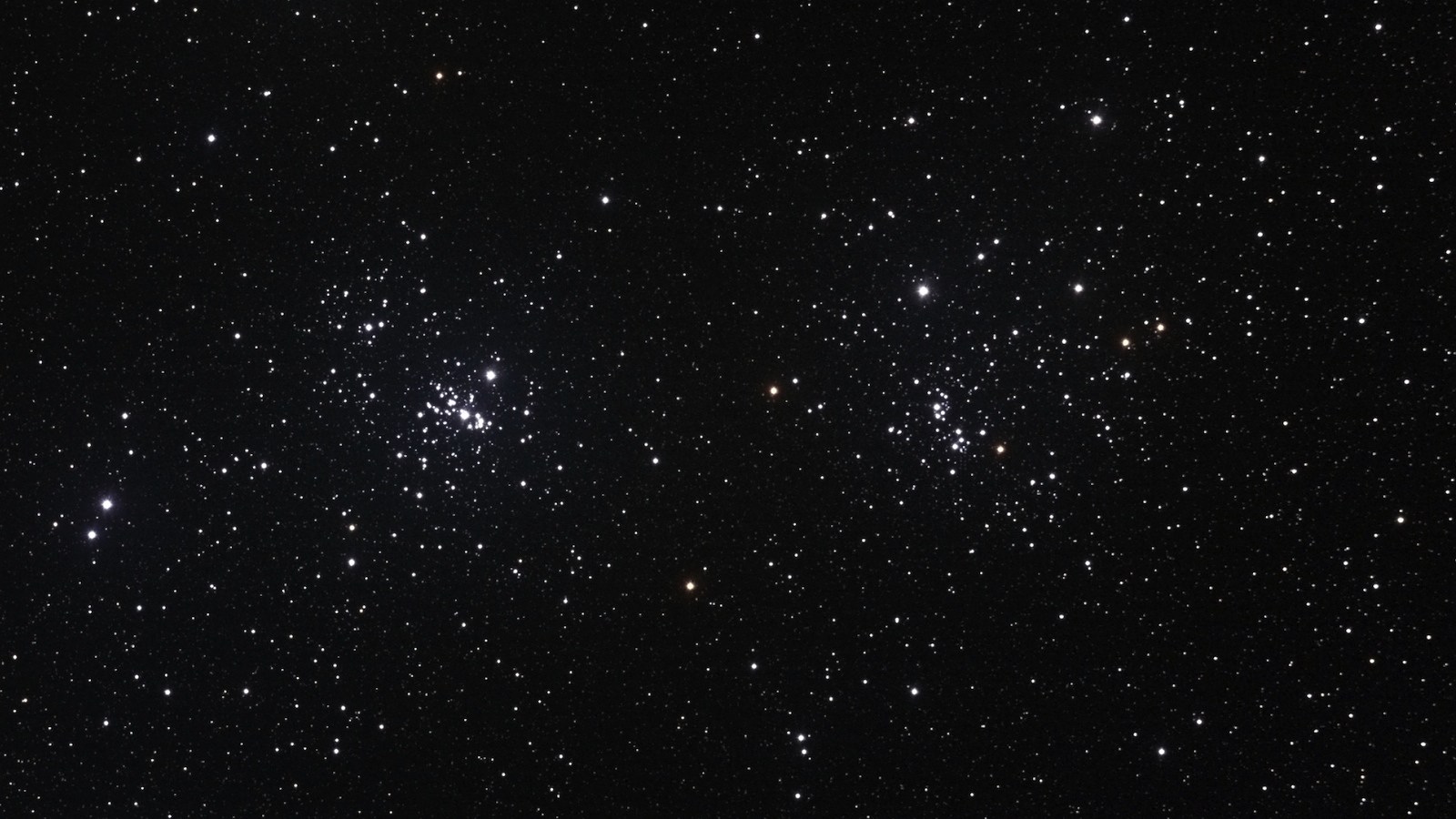
Why do other stars appear so much smaller than the sun?
a)
They are much smaller
b)
They are so far away
c)
They are not as bright
d)
They are dwarf stars
20.
Object spinning on its axis.
a)
revolution
b)
rotation
21.

The main source of energy for all life comes from ____.
a)
the Earth
b)
the moon
c)
the sun
d)
the food we eat/make
22.

Which statement about photosynthesis is correct?
a)
Plants get the energy they need for photosynthesis from water.
b)
Plants get the energy they need for photosynthesis from soil.
c)
Plants get the energy they need for photosynthesis from sunlight.
d)
Plants do not require energy to perform photosynthesis.
23.
A __________ includes all living and non-living things in an environment.
a)
population
b)
niche
c)
abitotic
d)
ecosystem
24.
________ are consumers that eat plants and meat.
a)
Herbivore
b)
Omnivore
c)
Carnivore
25.
All the members of one species that live within an area of an ecosystem
a)
population
b)
community
c)
niche
26.

Which is a biotic factor?
a)
Fox
b)
Mountain
c)
Air
d)
Sunlight
27.
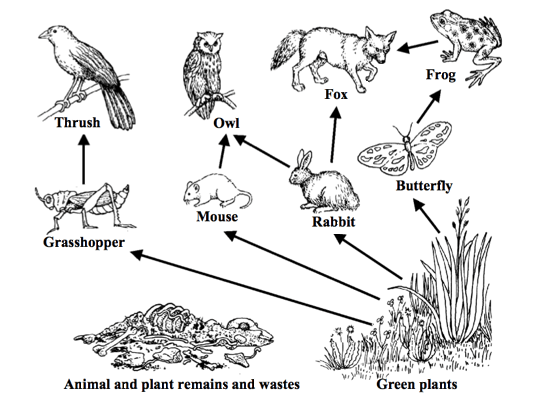
The owl receives energy from which organisms?
a)
grasshopper and mouse
b)
mouse and rabbit
c)
rabbit and butterfly
d)
butterfly and frog
28.
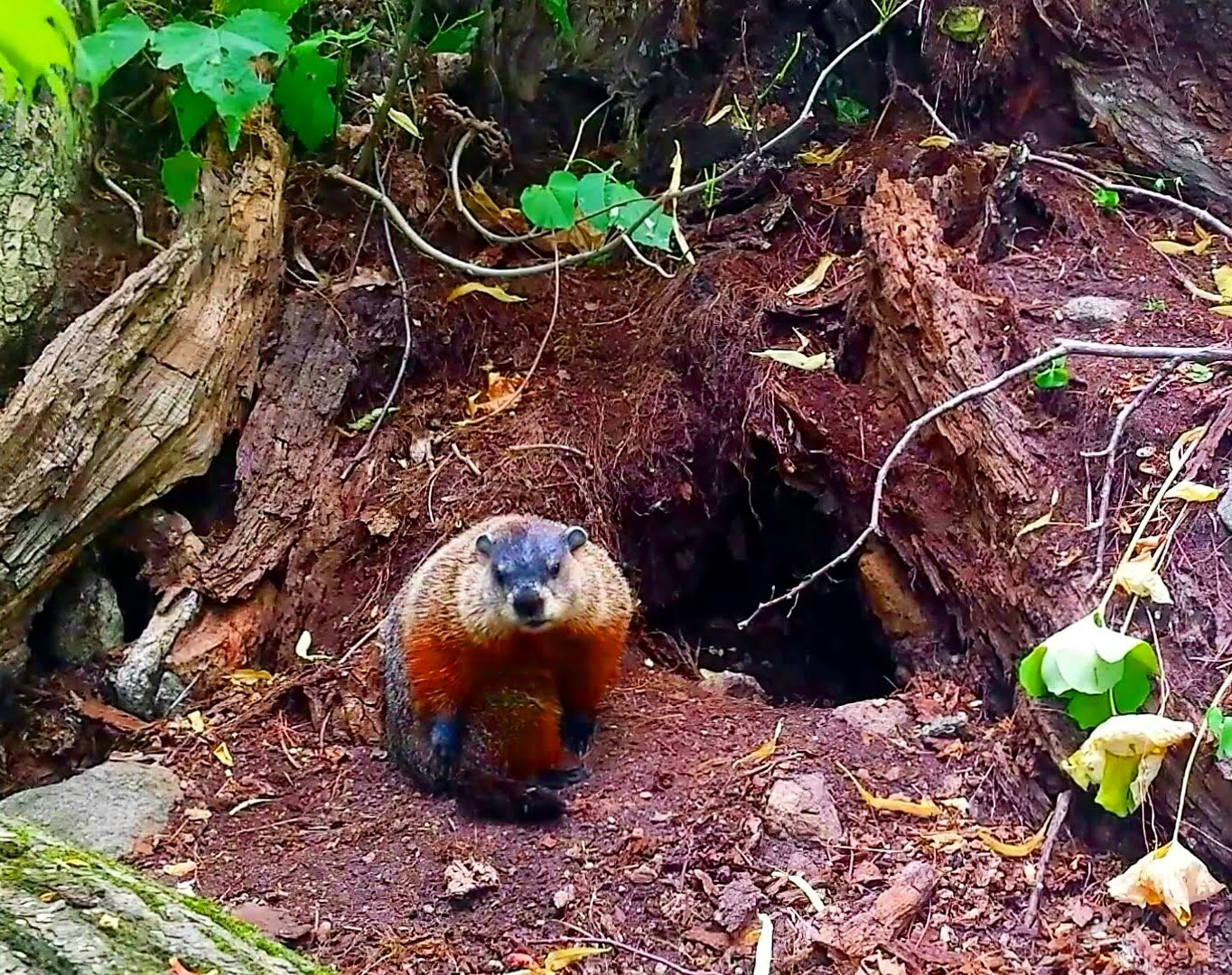
What type of symbiosis? Skunks often live in burrows that have been dug and abandoned by woodchucks.
a)
commensalism
b)
mutualism
c)
parasitism
d)
predation
29.
A push or pull that causes a change in motion
a)
Friction
b)
Gravity
c)
Force
d)
Mass
30.

A cut piece of clear glass or plastic in the form of a triangle or other geometric shape.
a)
Person
b)
Prison
c)
Prism
d)
Preacher
100 %

