wayground logo

Free Printable Worksheets

Font size

S
M
L
XL
Worksheets

Spring Benchmark review

Total questions: 197

Worksheet time: 6hrs 26mins

Name
Class
Date
1.
The use of pesticides and fertilizers must be carefully monitored 
because of the effect they can have on the environment. 
Which of the following is a possible negative effect of the use 
of these chemicals on the environment?
a)
Runoff carries these chemicals into lakes and streams.
b)
Theses chemicals cannot be purchased in large bulk.
c)

These chemicals are expensive to produce.
d)
Storage space for these chemicals is limited.
2.
What is a watershed?
a)
Land that collects and channels water froma small body of water to a larger body of water
b)
the shape of the land determined by elevation
c)
A natural stream of water of considerable  volume
d)
a river and all its tributaries
3.
Why is gravity a factor in watersheds? 
a)
it causes the water to flow away from a watershed
b)
it causes the water to flow down towards a watershed
4.
When fertilizers enter surface water, they cause problems in 
the watershed by -
a)
increasing the amount of nutrients available to fish in lakes and streams.
b)

clogging narrow streams and preventing water from flowing properly.
c)
raising the water level in nearby rivers to levels leading to flooding.
d)
causing rapid algal growth that decrease oxygen levels and choke aquatic life.
5.
A collection of watersheds all discharging into the same major body of water is referred to as a 
a)
watershed.
b)
drainage basin
c)
river system
d)
wetland
6.
The health of an ecosystem is directly related to the:
a)
Air quality
b)
Amount of animals in the area
c)
Water quality
d)
Amount of food in the area
7.
Abiotic means: 
a)
Living
b)
Dead
c)
Non-living
d)
Water
8.
Biotic means:
a)
Living
b)
Non-living
c)
Man made
d)
Found in nature
9.
An area of land where all the water flows to one location, like a funnel. 
a)
Superfund Site
b)
Watershed
c)
Succession
d)
River
10.
Underground water source. 
a)
River
b)
Superfund site
c)
Aquifer
d)
Cave
11.
The water that fills lakes and rivers
a)
groundwater
b)
surface water
c)
water table
d)
saturated zone
12.
Water stored  in cracks and pores below the Earth's surface is called:
a)
Groundwater
b)
Bogs
c)
Water in the ground
d)
surface water
13.
What is the top of the water-filled spaces  (saturated zone) in the ground called?
a)
Groundwater
b)
Reservoir
c)
Water Table
d)
Well
14.
Which of these most directly prevents erosion in a watershed?
a)
plant life
b)
soil type
c)
agricultural irrigation
d)
sediment transport
15.
In Texas, why is it dangerous if wastewater is emptied directly into local rivers, lakes, and bays?
a)
Wastewater can flow too quickly into the ocean and cause the sea level to rise.
b)
Wastewater can evaporate and cause air pollution.
c)
 Wastewater does not mix well with fresh water, so disrupts the flow of fresh water.
d)
Wastewater often contains contaminants that can kill aquatic organisms.
16.
The ability of a liquid to flow through a substance is:
a)
Porosity
b)
Permeability
17.
Suppose there is a drought in this area. The level of the river drops because of it.
What else could happen here?
a)
The river will immediately rise again.
b)
The water table will rise. 
c)
The water table will fall. 
d)
A new aquifer will form.
18.
Precipitation that does not soak into the ground is called this.
a)
aquifer
b)
erosion
c)
surface water
d)
water table
19.
The illustration provided shows a river and four cities on that river. When the water from the river was sampled at location X, it was determined to be polluted with various chemicals. What would be the most likely source for this pollution?
a)
City 1 and City 2
b)
City 2 and City 3
c)
City 1 only
d)
City 2 only
20.
What could happen to the water table if all the wells start pumping at once?
a)
the water table may fall
b)
the water table may rise
c)
the boat will sink
d)
the wells will overflow
21.
What is the ultimate ORIGINAL source of energy for living things
a)
Sugar
b)
Sun
c)
Moon
d)
Carbon Dioxide
22.
Which organisms perform Photosynthesis?
a)
Only Autotrophs
b)
Only Heterotrophs
c)
Autotrophs and Heterotrophs
23.
Which of the following is an example of a HETEROTROPH?
a)
Grass
b)
Algae
c)
Lemon Tree
d)
Bear
24.
Which gas is removed from the atmosphere during photosynthesis?
a)
hydrogen
b)
oxygen
c)
nitrogen
d)
carbon dioxide
25.
What are the products of photosynthesis?
a)
water and carbon dioxide
b)
oxygen and glucose
c)
oxygen and carbon dioxide
d)
oxygen and water
26.
What is photosynthesis?
a)
The process in which humans eat their food
b)
When a photographer takes a photo.
c)
To get your pictures from the photo lab.
d)
The process in which plants make their food.
27.
Chloroplasts are...
a)
Structures of animal cells to produce ATP
b)
Organelles where lipids are elaborated
c)
Specialized structures of plants where food is made
d)
Waste organelle of plants
28.
Which organelle from the plant cell is primarily responsible for converting sunlight to energy?
a)
Mitochonria
b)
Nucleus
c)
Vacuole
d)
Chloroplast
29.
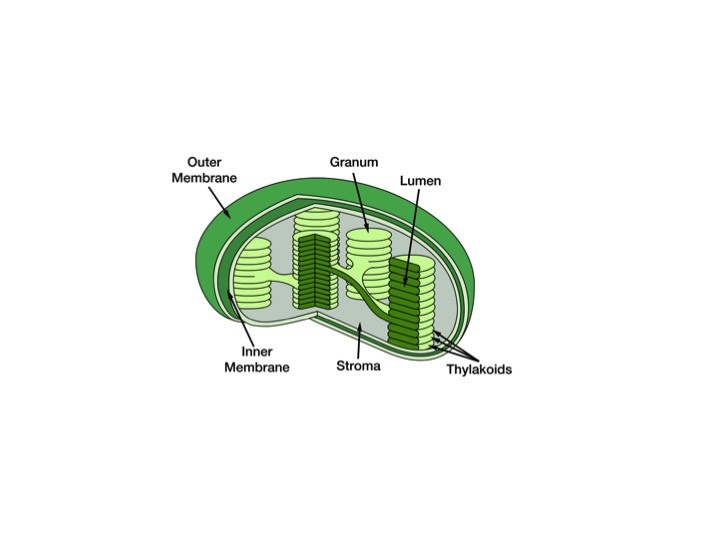
What process is the diagram representing?
a)
Photosynthesis
b)
Soil development
c)
Plant reproduction
d)
Nitrogen Cycle
Nitrogen cycle
30.
Which of the following statements is not part of the cell theory?
a)
Cells are the basic unit of structure and function in all living things.
b)
All cells are produced from other cells.
c)
Only animal cells are composed of cells.
d)
All living things are composed of cells.
31.
What is one way in which all living things on Earth are alike?
a)
All living things have hair.
b)
All living things are made of cells and come from other cells.
c)
The cells of all living things have chloroplast.
d)
All living things can move. 
32.
Which statement reflects one of the major components of the cell theory?
a)
All living things are multi-cellular.
b)
Organs are the basic unit of structure and function for all living things.
c)
All cells come from previously existing cells.
d)
Every organism has a reproductive system to ensure survival of the species.
33.
What structures distinguish a plant cell from an animal cell?
a)
Plant cells have cell walls and ribosomes.
b)
Plant cells have cell walls and chloroplasts.
c)
Plant cells have chloroplasts and ribosomes.
d)
Plant cells have chloroplasts and mitochondria.
34.
When cells are damaged, new cells are created by cell division. How does the cell theory support this fact?
a)
It states that all cells have a nucleus which divides.
b)
It states that all living things are made up of one or more cells.
c)
It states that cells come from previously existing cells.
d)
 It states that the basic units of structure and function are cells.
35.

The ___ is the basic unit of structure and function of organisms

a)

atom

b)

cell

c)

matter

d)

all other answers are correct

36.
Which statement is a part of the cell theory?
a)
all cells come from preexisting cells
b)
bacteria are prokaryotic cells
c)
eukaryotic cells are complex
d)
humans are multicellular
37.
The Cell Theory states...
a)
atoms create all matter
b)
living things evolve
c)
the cell is the backbone of all matter
d)
cells are the basic unit of structure and organization of organisms
38.
Which of the following is NOT a cell theory.
a)
All non-living things are made of cells
b)
All cells come from pre-existing cells
c)
Cells are the basic unit of structure and function of all living things
39.
Rocks are not living because
a)
they never move
b)
they aren't needed for humans
c)
they are not made of cells
d)
they don't break down
40.
Which is not a part of cell theory?
a)
All organisms are made of cells
b)
All existing cells come from preexisting cells
c)
All matter is composed of living cells
d)
The cell is the most basic unit of life
41.
The ___________ is the basic unit of life
a)
organ
b)
cell
c)
atom
d)
tissue
42.
Organs and tissues that perform the same function is called _____________?
a)
cells
b)
tissues 
c)
organ system
d)
organs
43.
A group of tissues that perform a similar function is called_____. (Examples include the heart, lungs or stomach)
a)
cells
b)
tissues
c)
organs
d)
organ system
44.
When many organ systems work together it can form...
a)
organ
b)
cells
c)
organ system
d)
organism 
45.
What is the correct order of organization
a)
tissues-cells-organs-organ systems-organism
b)
cell-tissue-organs-organ systems-organism
c)
organism-cells-tissues-organ systems-organism
d)
tissues-cells-organs-organ sytems-organism
46.
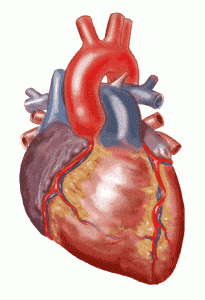
This is a example of........ 
a)
organ system
b)
cells
c)
organ
d)
tissue
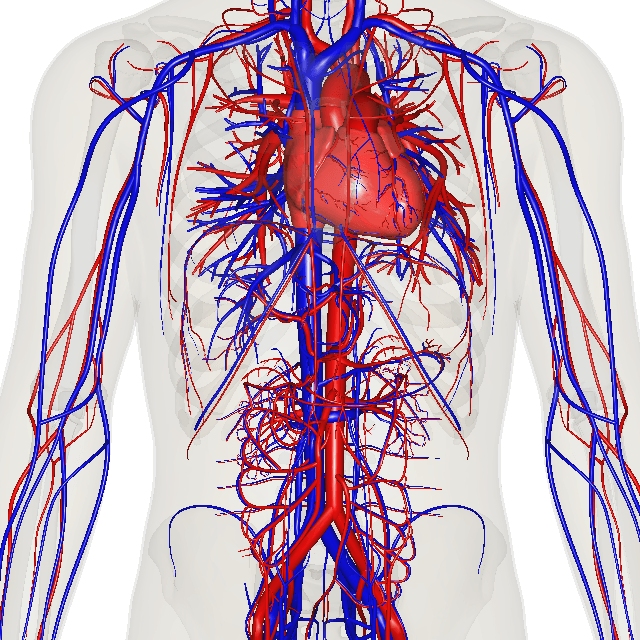
47.
This is a example of ........
a)
cell
b)
tissue
c)
organ 
d)
organ system
48.
This is a example of ........
a)
cell
b)
organ system
c)
organ
d)
tissue
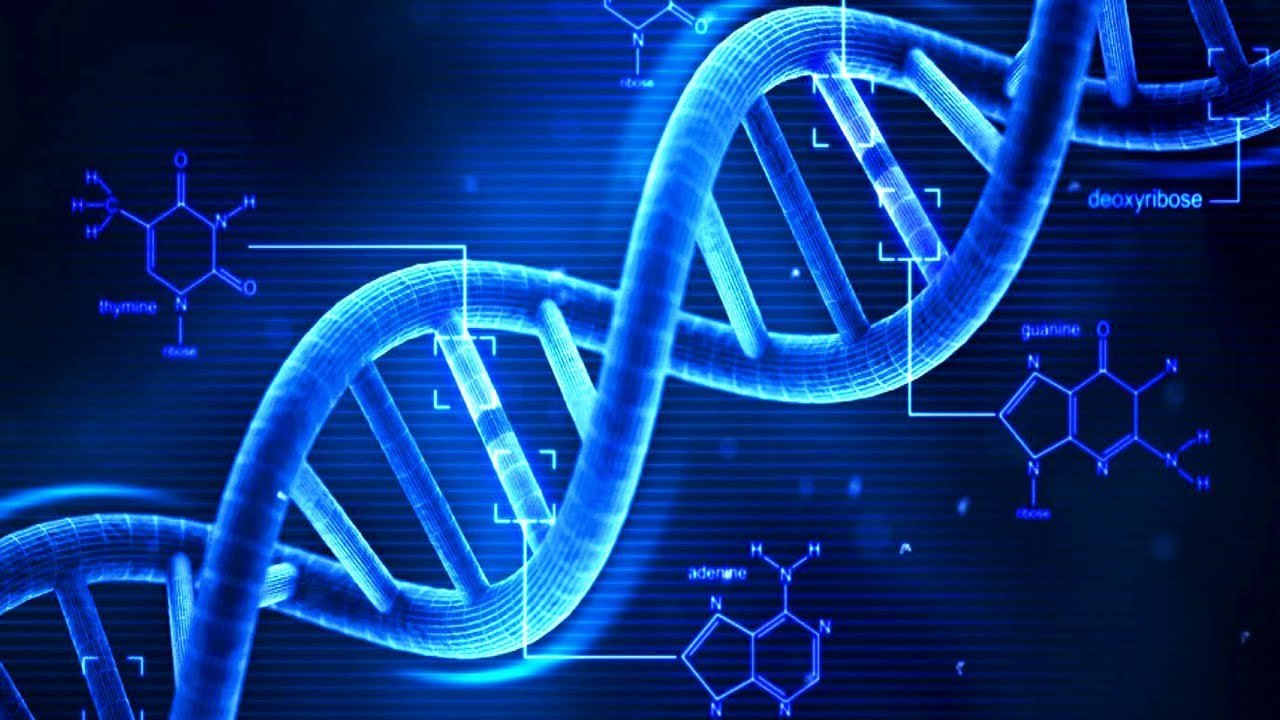
49.
This is a example of ........
a)
organ
b)
organ system
c)
tissue
d)
cell
50.
In order from smallest to largest, what are the five levels of organization in the body?
a)
organism, organ system, organ, tissue, cell
b)
cell, organ, organ system, tissue, organism
c)
cell, tissue, organ, organ system, organism
d)
cell, tissue, organ system, organ, organism
51.
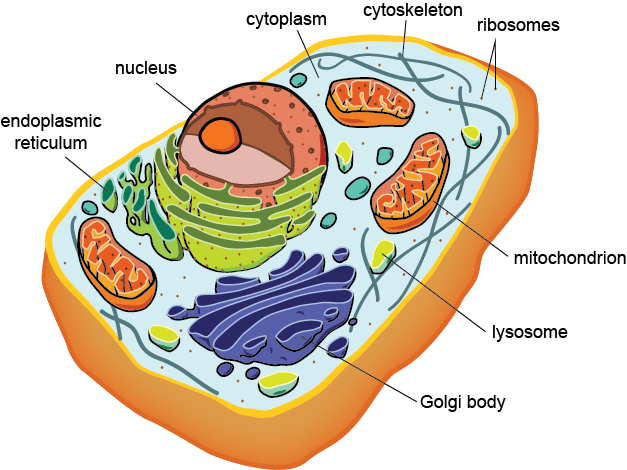
The cell part where sugar is combined with oxygen to release energy for the cell; cell's powerhouse
a)
cell wall
b)
nucleus
c)
mitochondria
d)
chloroplast
52.
Regulates what goes into and out of the cell
a)
Cell
b)
Cell membrane
c)
Cell theory
d)
Cell wall
53.
Gives structure to the plants
a)
Cell
b)
Cell membrane
c)
Cell theory
d)
Cell wall
54.
Site of photosynthesis in plant cells
a)
Chloroplast
b)
Cytoplasm
c)
Mitochondria
d)
Nucleus
55.
Fluid that surrounds the organelles
a)
Chloroplast
b)
Cytoplasm
c)
Mitochondria
d)
Nucleus
56.
Converts energy from food into energy a cell can use
a)
Mitochondria
b)
Nucleus
c)
Organelle
d)
Vacuole
57.
Controls functions of cells and contains genetic material
a)
Cell
b)
Cell theory
c)
Cell Wall
d)
Nucleus
58.
Differentiated structure within a cell that performs a specific function
a)
Cell
b)
Cytoplasm
c)
Vacuole
d)
Organelle
59.
Storage area for cells; water storage in plants
a)
Cell Wall
b)
Cell
c)
Vacuole
d)
Chloroplast
60.
Name Part Y
a)
Chloroplasm
b)
Chloroplast
c)
Cytoplasm
d)
Cytoplast
61.
Which letter shows the cell wall?
a)
X
b)
Y
c)
Z
d)
None of the above.
62.
Which 3 parts are found in both plant and animal cells?
a)
vacuole, cytoplasm, nucleus
b)
cell wall, cell membrane, nucleus
c)
cell membrane, cytoplasm, nucleus
d)
cell membrane, chloroplast, nucleus
63.
Which part of this cell is responsible for converting light energy to glucose?
a)
chloroplast
b)
cytoplasm
c)
cell wall
d)
nucleus
64.
which of these correctly describes the function of the cell membrane?
a)
structure and support
b)
controls substances entering and leaving cell.
c)
controls substances entering and exiting the nucleus
d)
controls chemical reactions
65.
What is the level of cellular organization from simplest to most complex?
a)
Organism, organ system, organ, tissue, cell
b)
cell, organ, organ system, tissue, organism
c)
cell, tissue, organ, organ system, organism
d)
organ, organ system, tissue, cell, organism
66.
What do all living organisms have in common?
a)
They all have cells
b)
They all have specialized cells that have a specific function 
c)
Their cells all have a cell wall
d)
they all get energy in the same way
67.
Cytoplasm is the
a)
Fluid that surrounds the organelles in a cell
b)
layer that surrounds and protects the cell
c)
organelle that produces energy through the break down of glucose
d)
organelle that stores energy
68.
The purpose of the vacuole is to
a)
Store water for the cell
b)
protect the insides of the cell
c)
convert sunlight into energy
d)
store DNA
69.
The function of the nucleus is to:
a)
make ribosomes
b)
provide "housing" for the organelles
c)
control the cell
70.
What is the function of the chloroplasts?
a)
to carry out photosynthesis
b)
make proteins
c)
control the cell
71.
What is the function of the vacuole?
a)
perform photosynthesis
b)
control the cell
c)
to store water, food and waste
72.
What is the function of the lysosome?
a)
to break down food
b)
to protect the cell
c)
to control the cell 
73.
The passing of traits from parent to offspring 
a)
Heredity 
b)
Genetics 
c)
Hybrid 
d)
Probability 
74.
The study of heredity and the variation of inherited characteristics 
a)
gene
b)
genetics 
c)
meiosis 
d)
hybrid 
75.
 which is heterozygous ?  
a)
Tt
b)
TT
76.
Which is homozygous ?
a)
Zz
b)
SS
77.
A homozygous dominant dog with brown fur is crossed with a heterozygous dog with brown fur. What are the percentages of the possible genotypes?
a)
100% BB
b)
75% BB and 25%Bb
c)
50 % BB and 50% Bb
d)
50% Bb and 50% bb
78.
Magda is a tall, 11 year old drummer. She has a scar on her right cheek. She is good at swimming. Which of her traits did Magda most likely inherit?
a)
height
b)
the scar
c)
ability to swim
d)
ability to play drums
79.

Which of the following characteristics would be a learned behavior?

a)

a frog hides beneath the surface of a pond

b)

a rabbit stays very still when a dog approaches

c)

a dog chases squirrels and other small animals

d)

a parrot says “good morning”

80.

Why are offspring usually similar, but not identical, to their parents?

a)

inherited traits come from many different organisms

b)

inherited traits change over time

c)

inherited traits result from a combination of parental traits

d)

inherited traits are not always passed on to offspring

81.

When Leslie says that she inherited her blue eyes from her mother, she means that

___.

a)

her mother taught her how to make her eyes blue

b)

she developed blue eyes from growing up around her mother

c)

the trait for blue eyes was passed on to her when she was born

d)

she got blue eyes by living close to the ocean

82.

All of the behaviors below demonstrate inherited traits/behaviors except ________.

a)

A limer’s black and white ringed tail

b)

An elephant rolling a block with his trunk

c)

A giraffe’s long neck and legs

d)

A lion’s sharp claws

83.

A raccoon sneaks into a farmer's house to get some food. With its small, human like

paws, it opens a jar of peaches. However, it quickly scurries out of the house when

the light comes on. Which statement describes an inherited trait of the raccoon?

a)

The raccoon sneaks into a farmer's house for food.

b)

The raccoon opens a jar to get peaches.

c)

The raccoon has paws that are small and human like.

d)

The raccoon leaves the house when the light comes on.

84.

A bird can learn behaviors based on experiences in its environment. Which of these is

a learned behavior?(4.10B)

a)

A bird sits on its eggs to keep them warm until they hatch.

b)

A baby bird uses its beaks to break out of its egg.

c)

A bird returns to the same bird feeder every day.

d)

A bird molts its feathers and grows new ones each year.

85.
The stomach releases hydrochloric acid and enzymes that break down the protein in meats and turn the protein into amino acids. This change is
a)
Physical
b)
Chemical
86.
Acids and enzymes are used in 
a)
physical digestion
b)
chemical digestion
87.
Breaking food down with the use of enzymes is known as:
a)
Chemical Digestion
b)
Physical Digestion
88.
Where does digestion begin?
a)
In the small intestine
b)
In the mouth
c)
In the throat
d)
In the stomach
89.
Saliva breaking down carbohydrates into sugars is...
a)
physical/mechanical
b)
chemical
90.
Chewing and tearing apart food into smaller pieces is...
a)
physical/mechanical
b)
chemical
91.
Hydrochloric acid in the stomach breaking down food is...
a)
physical/mechanical
b)
chemical
92.
The stomach pushing and churning food is...
a)
physical/mechanical
b)
chemical
93.
Enzymes, secretions, and converting into other substances are examples of:
a)
physical/mechanical digestion
b)
chemical digestion
94.
When you break a cracker into pieces it is a 
a)
Chemical change
b)
Physical change
c)
Chemical Weathering
d)
Physical Weathering
95.
Energy that is produced by the chewing is called...
a)
light
b)
mechanical
c)
thermal
d)
chemical
96.
Types of digestion in the stomach:
a)
physical/mechanical
b)
chemical
c)
both
97.
Chemical energy in food is transformed into heat, which is also known as...
a)
gravitational
b)
nuclear
c)
thermal
d)
elastic
98.
People get energy from the food that they eat and transform that energy as they move. Which energy transformations occur as a student rapidly rubs the palms of his hands together?
a)
mechanical to thermal to electrical
b)
chemical to mechanical to thermal
c)
mechanical to chemical to sound
d)
chemical to sound to electrical
99.

Reproduction involving a single organism where genetic copies of itself are made.

a)

Sexual Reproduction

b)

Asexual Reproduction

c)

Budding

d)

Pollination

100.

Reproduction that combines genetic material of two organisms

a)

Sexual Reproduction

b)

Asexual Reproduction

c)

Fertilization

d)

Budding

101.
Sexual reproduction requires _____ parents and asexual reproduction requires ___ parents
a)
1,1
b)
2,2
c)
2,1
d)
1,2 
102.
What is an advantage of sexual reproduction?
a)
Allows genetic variation
b)
Only needs one parent
c)
Happens very quickly
d)
Offspring are exact copies of parent
103.
What is one disadvantage of sexual reproduction?
a)
Only one parent needed
b)
Off spring are exact copies of parents
c)
Happens very quickly
d)
Needs two parents
104.
When comparing the offspring of sexually and asexually reproducing organisms, we would expect the genetic material (DNA) of the sexually reproducing organism to -
a)
contain fewer mutations
b)
be lesser in quantity
c)
be simpler overall
d)
show more variation
105.
What is NOT a characteristic of sexual reproduction? 
a)
Gametes from two parents unite to form a zygote.
b)
Offspring are genetically identical with the parent. 
c)
Offspring are different from their parents and sibling.
d)
Genetic variability of offspring help to ensure survival in changing environmental conditions.
106.
When a starfish grows a new body off a broken arm, what kind of reproduction is this?
a)
Sexual
b)
Differentiation
c)
Asexual 
d)
Specialization
107.
Where does an off spring get its traits in asexual reproduction?
a)
From both parents
b)
From only one parent
c)
From neither parent
d)
There are no traits handed down
108.
In general, asexual reproduction is used by _______ organisms.
a)
simple
b)
extinct
c)
complex
109.
A plant that has traits identical to the parent plant provides evidence that the plant 
a)
resulted from sexual reproduction. 
b)
resulted from asexual reproduction. 
c)
will develop many seeds. 
d)
will have large leaves. 
110.
Asexual reproduction can reproduce which offspring?
a)
Diverse offspring
b)
Both diverse and uniform offspring
c)
Uniform offspring
d)
Asexual offspring
111.
Requires only one parent
a)
asexual
b)
sexual
c)
both
112.
Offspring's genes are identical to parent
a)
asexual
b)
sexual
c)
both
113.
Offspring's genes are identical to each other
a)
asexual
b)
sexual
c)
both
114.
Create offspring
a)
asexual
b)
sexual
c)
both
115.
Passes genetic information onto future generations
a)
asexual
b)
sexual
c)
both
116.
Requires two parents
a)
asexual 
b)
sexual
c)
both
117.
Offspring have different genes
a)
asexual
b)
sexual
c)
both
118.
Offspring's genes aren't just like one parent's genes
a)
asexual
b)
sexual
c)
both
119.
Gives genetic variation
a)
asexual
b)
sexual
c)
both
120.
a)
budding
b)
binary fission
c)
sporulation
d)
regeneration
121.

Provides a barrier against injury and infection, helps regulate body temperature, protects against dehydration, secretes sweat and gases

a)

immune / lymphatic system

b)

digestive system

c)

integumentary sytem

d)

excretory system

e)

digestive system

122.

Eliminates waste products from the body

a)

immune / lymphatic system

b)

excretory system

c)

digestive system

d)

nervous system

e)

integumentary system

123.

Breaks down food into smaller particles with the help of enzymes so it can be absorbed and used by cells

a)

digestive system

b)

nervous system

c)

respiratory system

d)

skeletal system

e)

muscular system

124.

Transports gases, fluids, waste products, nutrients, hormones

a)

circulatory system

b)

digestive system

c)

respiratory system

d)

excretory system

e)

immune / lymphatic system

125.

Responds to internal and external stimuli

a)

nervous system

b)

integumentary system

c)

digestive system

d)

muscular system

e)

skeletal system

126.

Produces hormones; sends chemical messages through the body; controls growth, development and metabolism

a)

nervous system

b)

digestive system

c)

endocrine system

d)

reproductive system

e)

excretory system

127.

Produces hormones; sends chemical messages through the body; controls growth, development and metabolism

a)

nervous system

b)

digestive system

c)

endocrine system

d)

reproductive system

e)

excretory system

128.

Collects lost fluid from blood vessels and returns it to the circulatory system; protects the body against disease and infection

a)

circulatory system

b)

integumentary system

c)

digestive system

d)

immune / lymphatic system

e)

endocrine system

129.

Allows for gas exchange of carbon dioxide and oxygen between the blood, air, and tissues

a)

circulatory system

b)

digestive system

c)

respiratory system

d)

skeletal system

e)

integumentary system

130.

Provides structure and support; allows for movement; produces red and white blood cells; stores mineral reserves

a)

circulatory system

b)

muscular system

c)

digestive system

d)

skeletal system

e)

endocrine system

131.
Which of the following responses is a plant growing toward or leaning toward light?
a)
thigmotropism
b)
hydrotropism
c)
phototropism
d)
gravitropism
132.
Plant’s roots grow down, anchoring it into the soil. To what stimulus is the plant responding?
a)
thigmotropism
b)
hydrotropism
c)
phototropism
d)
gravitropism
133.
Which of the following responses is a plant growing toward or leaning toward touch?
a)
thigmotropism
b)
hydrotropism
c)
phototropism
d)
gravitropism
134.
A plant’s roots grow thicker near the stream than away from the stream.  To what stimulus is the plant responding? 
a)
thigmotropism
b)
hydrotropism
c)
phototropism
d)
gravitropism
135.
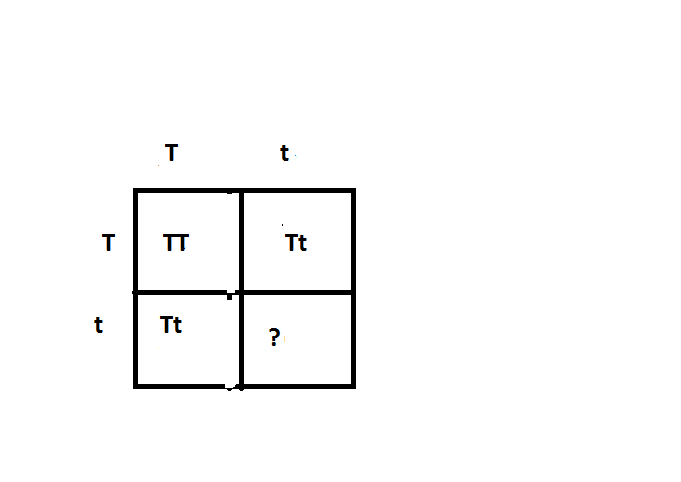
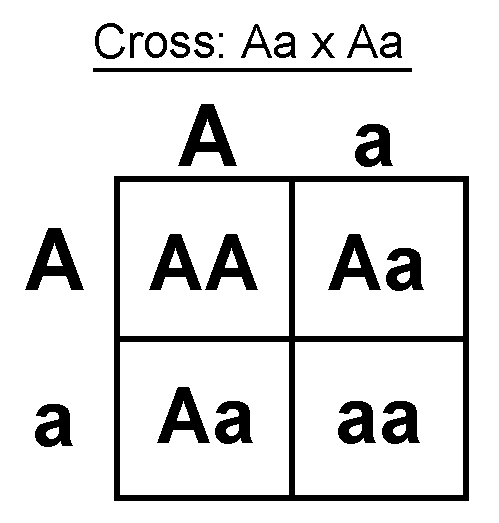
T - tall and t = short
In the punnett square below, what belongs in the missing square
a)
tt
b)
Tt
c)
Bb
d)
TT
136.
What is the phenotype of the offspring? (A-Brown hair; a-blond hair) 
a)
50 % Brown Hair and 50% Blond Hair 
b)
25 % Brown Hair and 75% Blond Hair 
c)
75 % Brown Hair and 25% Blond Hair 
d)
0% Brown Hair and 100% Blond Hair 
137.
A sea turtle digging a nest in the sand is an example of 
a)
inherited behavior
b)
learned behavior
c)
inappropriate behavior
d)
a defense
138.
Which is NOT a response to temperatures becoming warmer?
a)
Shedding
b)
Shivering
c)
Panting
d)
Sweating
139.
An inherited behavior is 
a)
a behavior that needs to be taught to the animal
b)
a defense mechanism
c)
a behavior an animal is born knowing how to do
d)
a behavior that results in sweating
140.
Which is a learned behavior?
a)
Being polite
b)
Having blue eyes
c)
Growing tall
d)
Being right-handed
141.
Some animals shed fur as a way to cool down.  What environmental stimulus leads to this?
a)
Seasons and temperatures becoming cooler
b)
The sun comes closer to Earth
c)
Seasons and temperatures get warmer
d)
It's beach season and they want to look good in a bathing suit
142.
After you run 100m as fast as you can, you will be breathing hard and your heart will be pumping faster.  What causes your breathing to return to normal?
a)
stimuli
b)
homeostasis
c)
impulses
d)
reasoning
143.
What caused this plant's behavior?
a)
response to gravity
b)
negative homeostasis
c)
excessive humidity
d)
lack of turgor pressure
144.
Organisms that are confronted with external stimuli in their environment respond to such stimuli internally.  Which of the following correctly identifies an external stimulus that triggers an internal response?
a)
hunger causes eating food
b)
thirst causes drinking water
c)
fever causes sweating
d)
being frightened causes muscles to tense
145.
You quickly move your head when a baseball is thrown toward your face. You are responding to ________________
a)
an external stimulus
b)
hormones
c)
pigments
d)
an internal stimulus
146.
Which biome is characterized by low temperatures and low amounts of rainfall?
a)
tundra
b)
desert
c)
temperate deciduous forest
d)
tropical rain forest
147.
Which biome covers most of the land mass near the Earth's equator?
a)
tundra
b)
desert
c)
grassland
d)
tropical rainforest
148.
Which major biome is home to cacti, mesquite, white thorn, pack rats, small reptiles, and coyotes?
a)
desert
b)
taiga
c)
tundra
d)
grassland
149.
Which biome contains large populations of grazing herbivores, few species of birds, and deep, rich soil?
a)
taiga
b)
tundra
c)
deciduous forest
d)
grassland
150.
What is the order of succession shown in this figure?
a)
A, B, C, D
b)
B, A, D, C
c)
C, D, A, B
d)
D, A, B, C
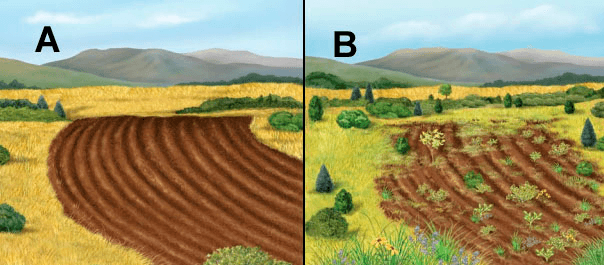
151.
What type of succession is shown going from figure A to figure B?
a)
primary succession
b)
ecological succession
c)
secondary succession
d)
intermediate
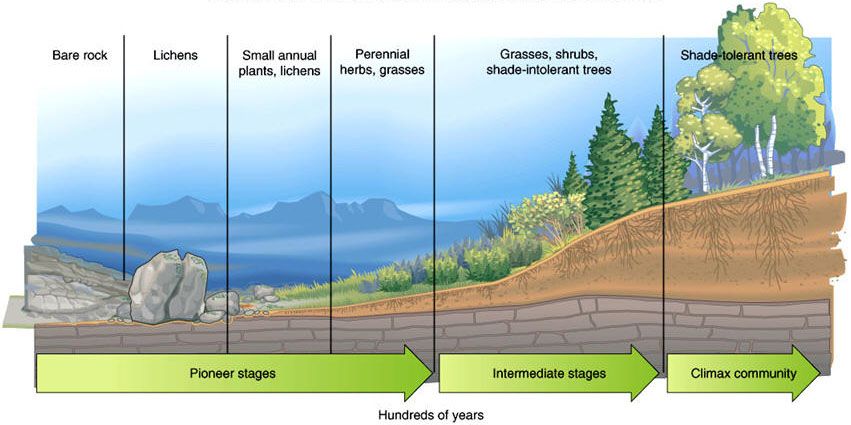
152.
The picture shows what type of succession?
a)
primary
b)
secondary
c)
tertiary
d)
quadanary
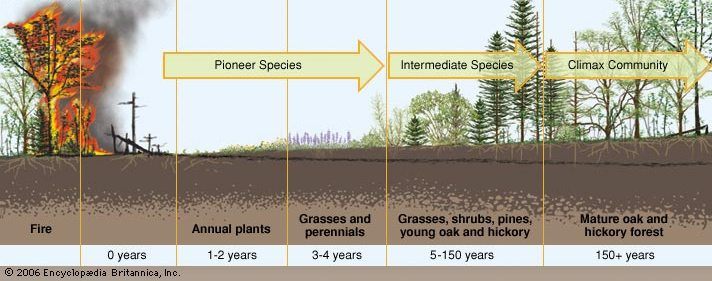
153.
The picture shows what type of succession?
a)
primary
b)
secondary
c)
tertiary
d)
quadanary
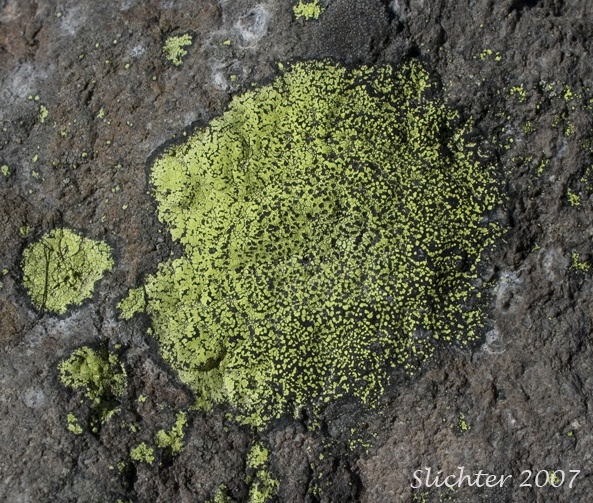
154.
What is the name given to lichen or algae after a primary succession?
a)
pioneer species
b)
volunteer species
c)
founder species
d)
conqueror species
155.
After a volcanic eruption, lava covers the land. What is the order that plants grow to repopulate the area?
a)
Lichens → Shrubs → Grasses → Trees
b)
Lichens → tree → shrubs→Grasses
c)
Grasses → Lichens → Shrubs → Trees
d)
Lichens → Grasses → Shrubs → Trees
156.
This is an example of...
a)
Secondary Succession
b)
Primary succession
c)
Utter and complete destruction! RAWR!
d)
Climax Communities
157.
A pioneer species is...
a)
a large organism
b)
the first organisms to adapt to a new environment 
c)
The best organism 
d)
Abiotic organisms 
158.
Which cell shows a wilted plant? 
a)
a)
b)
b)
159.
What is the breaking of rock that occurs by chemical reactions?
a)
abrasion
b)
erosion
c)
chemical weathering
d)
mechanical weathering
160.
The process in which broken rock is transported (moved).
a)
deposition
b)
erosion
c)
weathering
d)
abrasion
161.
The process where sediment is laid down in new locations.
a)
erosion
b)
abrasion
c)
weathering
d)
deposition
162.
What is a physical process that breaks rocks without changing the make up of the rock?
a)
chemical weathering
b)
mechanical weathering
c)
erosion
d)
deposition
163.
Oxygen in the air reacts with rocks to produce rust.
a)
carbonation
b)
oxidation
c)
acid rain
d)
abrasion
164.
Acid in groundwater dissolves rock.
a)
mechanical weathering
b)
chemical weathering
165.
Rocks in a riverbed become smooth from tumbling.
a)
mechanical weathering
b)
chemical weathering
166.
Water freezes and expands in cracks in rocks breaking the rock.
a)
mechanical weathering
b)
chemical weathering
167.
Acid rain dissolves rocks.
a)
mechanical weathering
b)
chemical weathering
168.
Sediment carried down a river and deposited at the mouth form a _______.
a)
moraine
b)
floodplain
c)
delta
d)
sand dune
169.
Which of the following is a herbivore?
a)
cricket
b)
frog
c)
hawk
d)
shrew
170.
Example of a decomposer
a)
fungus
b)
mouse
c)
plants
d)
frogs
171.
What might happen if you remove a primary consumer from the ecosystem?
a)
There would be more food for secondary consumers.
b)
The number of primary consumers would increase.
c)
The number of plants would increase.
d)
The number of secondary consumers would increase.
172.
Which of the following would be the most likely effect, if there were a sudden increase in the cricket population?
a)
There would be a decrease in the small bird population.
b)
There would be a decrease in the grass/flowers population.
c)
There would be a decrease in the mice population.
d)
There would be an increase in the grass/flowers population.
173.
How many primary consumers are there in this food web?
a)
1
b)
2
c)
3
d)
4
174.
An organism that hunts and feeds on another organism is a ______________________.
a)
prey
b)
producer
c)
predator
d)
decomposer
175.
An animal that is hunted as food
a)
prey
b)
predator
c)
decomposer
d)
producer
176.
An inherited trait that helps those organisms that have it to survive
a)
niche
b)
structure
c)
characteristic
d)
adaptation
177.
Coloring or another physical characteristic that help an organism blend in with its environment
a)
mimicry
b)
camouflage
c)
hibernation
d)
migration
178.
The role an organism plays in its ecosystem
a)
niche
b)
behavior
c)
structure
d)
function
179.
When an organism copies a characteristic of something else in order to better its chances for survival and reproduction
a)
hibernation
b)
camouflage
c)
mimicry
d)
migration
180.
The seasonal movement of an organism from one place to another
a)
camouflage
b)
migration
c)
hibernation
d)
function
181.
When an organism slows its life functions for a period of time to better its chances for survival during harsh conditions
a)
camouflage
b)
migration
c)
mimicry
d)
hibernation
182.
An organism that can make its own food is called?
a)
Consumer
b)
Producer
c)
Decomposer
d)
Herbivore
183.
A consumer gets energy by doing what?
a)
Making it themselves.
b)
Breaking down biotic wastes and dead organisms and returning raw materials to the ecosystem.
c)
Soaking it up from the ground.
d)
Feeding on other organisms.
184.
A carnivore eats only other animals. What is an example?
a)
Bison
b)
Elephant
c)
Caterpillar
d)
Coyote
185.
The energy role that break down biotic wastes and dead organisms is?
a)
Consumer
b)
Producer
c)
Scavenger
d)
Decomposer
186.
Name the producer in the food chain.
a)
sun
b)
grass
c)
grasshopper
d)
gecko
187.
Name the 3rd level consumer in the food chain.
a)
grass
b)
grasshopper
c)
gecko
d)
owl
188.
What organism is the herbivore in the food chain?
a)
none of them
b)
grasshopper
c)
gecko
d)
owl
189.
What is the main energy source for this food chain?
a)
sun
b)
water
c)
air
d)
I have no idea! 
190.
Why does the food chain usually never go past 3 or 4 trophic levels? 
a)
Scientists don't want to take the time to make larger food chains. 
b)
What is a trophic level? 
c)
Nothing consumes the last organism in that food chain. 
d)
There's not enough energy to pass onto another trophic level. 
191.
A dichotomous key for trees is provided. Hikers found a tree that has large brown cones and single sharp needles. What species of tree have the hikers found?
a)
Juniper
b)
Pine
c)
Spruce
d)
Fir
192.
A dichotomous key for insects is given. To what order does an insect with two pairs of scaly wings belong?
a)
Coleoptera
b)
Heteroptera
c)
Diptera
d)
Lepidoptera
193.
An illustration and a dichotomous key are given. What is the correct classification for this organism?
a)
Class Insecta
b)
Order Amblygygi
c)
Order Araneae
d)
Order Scorpiones
194.
What step do we always start with when using dichotomous keys?
a)
1
b)
2
c)
3
d)
4
195.
What is the purpose of a dichotomous key?
a)
to find a common ancestor
b)
to show the evolution of organisms
c)
to show relationships between organisms
d)
to identify organisms
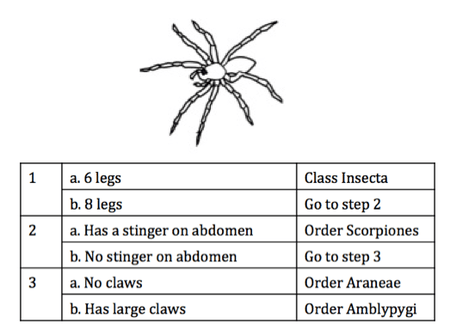
196.
An illustration and a dichotomous key are given. What is the correct classification for this organism?
a)
Class Insecta
b)
Order Amblygygi
c)
Order Araneae
d)
Order Scorpiones
197.

What is the difference between zooplankton and phytoplankton?

a)

Zooplankton only live in the zoo

b)

Phytoplankton are producers while zooplankton are consumers

c)

Zooplankton are producers while phytoplankton are consumers

d)

They are the same thing

Similar Resources on Wayground