wayground logo

Free Printable Worksheets

Font size

S
M
L
XL
Worksheets

End of the Year Science Review

Total questions: 107

Worksheet time: 2hrs 58mins

Name
Class
Date
1.
Beach reclamation projects on Georgia's coastal islands are designed to reverse the damage done by 
a)
Floods
b)
Erosion
c)
Oil Spills
d)
Tourists
2.

Which of the following processes are most important in causing rivers to slowly become shaped like an "S" over time? 
a)
heating and cooling
b)
weathering and soil formation
c)
erosion and deposition
d)
volcanic eruptions and earthquakes
3.
What process carved out the Grand Canyon? 
a)
faulting
b)
volcanic eruptions
c)
erosion
d)
earthquakes
4.
During the summer months, beaches along the Florida coast are eroded by hurricanes. What change could be made to help minimize this erosion? 
a)
Plant vegetation on the beach.
b)
Dig ditches to catch eroding sand.
c)
Build houses on the beach.
d)
Place fences parallel to the water.
5.
Levees have been built along much of the Mississippi River. What is the purpose of a levee? 
a)
to help control flooding
b)
to help control wildlife
c)
to help prevent erosion
d)
to allow traffic to cross the river
6.
A constructive force is defined as
a)
a natural occurrence that can build up or break down
b)
an earthquake or a volcano
c)
a natural force that builds up and creates new land
d)
a destructive force that has been controlled
7.
This process changes a landform by breaking down of sediments.  Some examples are waves constantly crashing into a cliff and plants growing in a crack in a rock.
a)
erosion
b)
weathering
c)
deposition
d)
plate movement
8.
This process changes landforms by carrying away the sediment.  Some examples are sediment being washed away by a river and sand being carried away from a beach by wind or water.
a)
deposition
b)
erosion
c)
weathering
d)
plate movement
9.
Which model would best illustrate a destructive process?
a)
A picture of a mountain range being formed at convergent plate boundaries.
b)
A delta created by the deposition of sediment from a river bed.
c)
Water in a crack in a rock that freezes and breaks the rock apart.
d)
A volcano erupting and creating an island.
10.
Which is NOT a way to control flooding?
a)
Levee
b)
Dam
c)
Erosion
d)
Planting crops
11.

Which is used to measure the waves of an earthquake?

a)

Jetty

b)

Earthquakes

c)

Topography

d)

Seismograph

12.

Which most likely is the reason a landowner places rocks along a riverbank?

a)

To decrease erosion

b)

To improve wildlife habitat

c)

To prevent flooding during heavy rainfall

d)

To encourage vegetation to grow along the riverbank

13.

The diagrams show where sand deposits along two different river banks. Which conclusion is best supported by comparing the two rivers?

a)

River B is wider than River A.

b)

River B is shallower than River A.

c)

River A deposits less sand than River B.

d)

River A picks up less sand than River B.

14.

The table shows the amount of rain that fell in one day in four different farmland locations.

In which location is the greatest amount of soil erosion

most likely to have occurred that day?

a)

W

b)

X

c)

Y

d)

z

15.

An acorn fell onto a crack in a large rock and started to grow there. What is a probable result as the seedling of an oak grows into a tree?

a)

The tree will absorb the material of the rock.

b)

The tree roots will crack the rock.

c)

The rock will turn into fertile soil.

d)

The tree will become petrified wood.

16.
A computer system that stores, organizes, retrieves, analyzes, and displays geographic data in layers is:
a)
GIS.
b)
GPS.
c)
remote sensing.
d)
topographic analysis.
17.

To help control flooding humans construct

a)

dams

b)

levees

c)

storm drain systems

d)

all of the above

18.
Which of these would be best for investigating how moving waves cause changes to land? 
a)
observing the shape of the banks of a fast moving river
b)
building a model of a hill made from dirt and slowly pouring water over it
c)
observing the shape of the land in different places along the ocean shore
d)
modeling the way that waves move in a bathtub or a swimming pool
19.
While most land areas are slow to change, the shape of beaches changes daily. Which of the following best explains this? 
a)
The heating and cooling of beaches changes the shape.
b)
Coastal animals change the shape of the shoreline.
c)
The wave action adds and removes sand daily.
d)
Sea level decreases each day, creating more coastal land.
20.
What is land formed over many years by the build up of sand and dirt just offshore from the mainland?
a)
barrier island
b)
beach nourishment
c)
dredging
d)
jetty
21.
What is the dumping of new sand onto an eroded beach to restore it?
a)
barrier island
b)
beach nourishment
c)
dredging
d)
jetty
22.
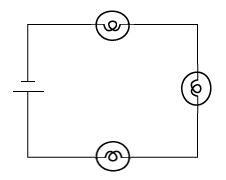
The picture shows an electrical circuit. This circuit is a series circuit because: 
a)
It has 3 light bulbs.
b)
The same current flows through all three light bulbs.
c)
It uses a single battery.
d)
The electrical current has more than one path to flow through
23.
What is a switch's function in a circuit?
a)
to make the current hotter or colder
b)
turn on and off the flow of current
c)
the pathway that current flows
d)
to add more power to the circuit
24.
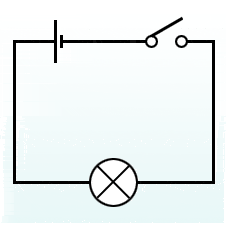
this circuit is .....?
a)
open
b)
parallel
c)
closed
d)
The cutest little circuit evah!
25.
Would would best complete this circuit?
a)
A wire
b)
A switch
c)
A battery
d)
A light bulb
26.
A fifth grade class constructed this circuit.  Which of these objects most likely made the light glow when connected to points X and Y?
a)
plastic straw
b)
cotton string
c)
aluminum foil
d)
rubber eraser
27.
What allows electricity to PASS EASILY THROUGH?
a)
Conductors
b)
Insulators
c)
Resistors
28.
What is the difference between a conductor and an insulator?
a)
An insulator allows electricity to flow through it easily and a conductor does not
b)
A conductor allows electricity to flow through it easily and an insulator does not.
c)
An insulator is magnetic and a conductor is not
d)
A conductor is magnetic and an insulator is not
29.
Olivia wanted to complete her circuit with a conductor.  What object is her best option?
a)
Wood stick
b)
Glass bead
c)
Aluminum foil
d)
Styrofoam
30.
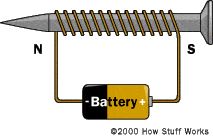
Which of the following is shown in the picture?
a)
Electromagnet
b)
Electric generator
c)
Electric motor
d)
Transformer
31.
This is a picture of a simple electromagnet. How can the electromagnet be made stronger?
a)
Add more coils of wire to the nail.
b)
Use a smaller battery.
c)
Reverse the poles of the magnet.
d)
Remove all the coils and the nail.
32.
How are electromagnets different from magnets?
a)
magnets can be turned on/off
b)
you can turn an electromagnet on/off
c)
magnets are more powerful
d)
magnets have a North and South pole
33.
What is the continuous movement of electrons called? 
a)
static electricity
b)
current electricity
c)
friction
d)
power
34.
Electrical charge built up on the surface of an object is called _________________.
a)
static electricity
b)
current electricity
c)
lightning
d)
electrons
35.

Opposite charges

a)

attract

b)

repel

c)

become neutral

d)

do nothing

36.

Mr. Anady rubbed two balloons against his wool sweater for 30 seconds each. What will happen when the balloons are brought near each other?

a)

The balloons will repel each other.

b)

The balloons will attract each other.

c)

The balloons will become positively (+) charged.

d)

The balloons will pop.

37.
What is the major difference between static electricity and current electricity?
a)
Current electricity involves a continuous flow of neutrons; static electricity is a sudden transfer of protons
b)
Current electricity can be deadly; static electricity is almost always safe
c)
In current electricity, there's a single transfer of electrons; in static electricity, there's a steady flow of electrons
d)
Current electricity involves a flow of electrons; static electricity involves a single transfer of electrons
38.
Where is the force of attraction the strongest on a magnet?
a)
at the poles
b)
in the middle
c)
above the magnet
d)
below the magnet
39.
What happens when two bar magnets repel each other?
a)
The poles of the magnets pull toward each other.
b)
The poles of the magnets push away from each other.
c)
The centers of the magnets pull toward each other.
d)
The centers o the magnets push away from each other.
40.
How is a permanent magnet DIFFERENT from a temporary magnet?
a)
A permanent magnet attracts materials made of iron.
b)
A permanent magnet has poles.
c)
A permanent magnet has a magnetic field.
d)
A permanent magnet keeps its magnetism for a long time.
41.
Earth acts like a giant magnet because its center is made up MOSTLY of
a)

granite

b)
limestone
c)
iron
d)
nickel
42.
What kind of magnet can be turned on and off?
a)
refrigerator magnet
b)
electromagnet
c)
magnetite
d)
iron
43.
In order for an electromagnet to be formed, an __________ current must pass through a coil of __________ wrapped around an ________ core.
a)
wire, iron, electric
b)
electric, wire, iron
c)
iron, electric, wire
44.

What is the name of a magnet that stays magnetic only while it touches a permanent magnet, or one that is magnetic for a very short time?

a)

Temporary magnet

b)

Semi-Permanant magnet

c)

Electromagnet

d)

Natural Magnet

45.
All of the following processes cause physical changes in matter EXCEPT _____
a)
melting
b)
freezing
c)
burning
d)
boiling
46.
In which state(s) of matter does water naturally occur on earth?
a)
gas
b)
liquid
c)
liquid and solid
d)
liquid, solid, and gas
47.
Ice melting
a)
Chemical Change
b)
Physical Change
48.
Wood burned in a fireplace
a)
Chemical Change
b)
Physical Change
49.
Cake batter baked in an oven
a)
Chemical Change
b)
Physical Change
50.
Blue liquid and yellow liquid mixed to make a green liquid
a)
Chemical Change
b)
Physical Change
51.
Baking soda and vinegar combine to make carbon dioxide
a)
Chemical Change
b)
Physical Change
52.
Copper roof changing color
a)
Chemical Change
b)
Physical Change
53.
An ice cube is placed in a pan. The pan is placed over an open flame. Which change will MOST likely happen over time?
a)
The ice changes to a liquid and back to a solid.
b)
The ice changes to a liquid then to a gas.
c)
The ice changes to a gas and back to a solid.
d)
The ice changes to a gas then to a liquid.
54.
A student placed an ice cube on a plate in the sun. Ten minutes later, only water was on the plate. Which process caused the ice cube to change to water?
a)
condensation
b)
evaporation
c)
freezing
d)
melting
55.
Which of these is an example of water changing from water vapor to liquid?
a)
moisture forming on a mirror when you breathe on it
b)
sweat forming on your body when you exercise
c)
ice cubes melting when you put them in a warm liquid
d)
rivers drying up during a very hot summer
56.
A student put 200 milliliters (mL) of water into a pot, sets the pot on a burner, and heats the water to boil. When the pot is taken off the burner, it contains only 180 milliliters (mL) of water. What happened to the rest of the water?
a)
It was used up.
b)
It condensed.
c)
It was absorbed by the heat.
d)
It turned into water vapor.
57.

How can you make liquid water become solid?

a)

remove heat

b)

Heat the water on the stove.

c)

Shake the water container very fast.

d)

Add a lot of salt to the water.

58.
What state of matter does this picture best represents?
a)
Solid
b)
Liquid
c)
Gas
59.
Substance with NO definite volume or shape...
a)
solid
b)
liquid
c)
gas
60.
Substance with a DEFINITE volume, but NO definite shape...
a)
solid
b)
liquid
c)
gas
61.
Substance with a DEFINITE shape and DEFINITE volume...
a)
solid
b)
liquid
c)
gas
62.
Some algae can suddenly “bloom”, or grow, very quickly. People call this reddish water a red tide. Some algae in a red tide contain poison that can kill fish.
a)
Harmful
b)
Beneficial
63.
A fungus is used to make riboflavin, an important vitamin.
a)
Harmful
b)
Beneficial
64.
Salmonella and E. Coli can make you sick.  They grow on raw chicken and other
meats, raw eggs, and other raw foods.
a)
Harmful
b)
Beneficial
65.
Yeast is used to make dough rise in the bread making process.
a)
Harmful
b)
Beneficial
66.
Some bacteria are able to eat substances like oil.  These bacteria are used to clean up oil spills or gasoline leaks.
a)
Harmful
b)
Beneficial
67.
Some fungi cause several skin diseases, including athlete’s foot.
a)
Harmful
b)
Beneficial
68.
Bacteria cause Tetanus, a serious infectious disease.
a)
Harmful
b)
Beneficial
69.
Bacteria are involved in the production of fuel, food, and medication.
a)
Harmful
b)
Beneficial
70.
Sauerkraut is produced by fermenting cabbage with bacteria.
a)
Harmful
b)
Beneficial
71.
Bacteria caused food poisoning.
a)
Harmful
b)
Beneficial
72.

can be further divided into fish, amphibians, reptiles, birds, and mammals

a)

invertebrates

b)

vertebrates

73.

do not have a hard outer covering or shell

a)

vertebrates

b)

invertebrates

74.

include insects, crabs, or clams

a)

vertebrates

b)

invertebrates

75.

include jellyfish, worms, shrimp, crayfish, sponges, sea stars, or snails.

a)

invertebrates

b)

vertebrates

76.

What do each of the following animals have in common?

fish, snake, turtle, segmented worm

a)

warm blooded

b)

vertebrates

c)

invertebrates

d)

cold blooded

77.

What group of animals has the following characteristics?

-cold-blooded

-live in "2 worlds"

-metamorphosis

-lay eggs in water

-born with gills, develop lungs

a)

reptiles

b)

amphibians

c)

echinoderms

d)

arthropods

78.
This structure for defense allows an organism to hide from a predator by changing or adapting their fur or skin coloration.
a)
Hibernation
b)
Mimicry
c)
Camouflage
d)
Migration
79.
A dog rolls over and gets a treat, so she rolls over again. This is an example of a...
a)
learned behavior
b)
inherited behavior
c)
physical trait
d)
instinct
80.
Crows are black birds with excellent hearing. In the wild they live 6-7 years. Some crows in Japan open hard-shelled nuts by dropping them in front of moving cars. Which of these is a learned behavior?
a)
excellent hearing
b)
dropping nuts in front of cars
c)
living 6-7 years
d)
having black feathers
81.

Why is a spider spinning a web an instinctive behavior?

a)

It learns how to spin the web from its mother.

b)

It learns how to spin a web through insight learning.

c)

It is born knowing how to spin a web.

d)

It learns how to spin a web through observational learning.

82.
A scientist observes sea otters using rocks to break open clamshells. Which of these investigations would best help the scientist determine whether this skill is a learned or an inherited behavior?
a)
Determining what sizes and kinds of rocks are used most often by sea otters
b)
Determining whether shellfish are an important food source in the diet of sea otters
c)
Raising young sea otters away from adult otters that use rocks and observing whether the young otters use rocks
d)
Observing families of sea otters over time to see whether adults that use rocks have offspring that use rocks
83.
Fox squirrels live in the trees of city parks in Texas.  Each spring they build nests of twigs and leaves in the tops of trees.   They are also often found near park benches, waiting to be fed by visitors.    
For fox squirrels, which of these is  a learned behavior?  
a)
Having brown fur 
b)
Taking food from people
c)
Having a long bushy tail 
d)
Having sharp claws 
84.
A dog owner feeds his new dog in its sleeping crate.  Soon the dog runs to its crate when it is hungry.  This behavior is an example of
a)
inherited behavior
b)
learned behavior
c)
instinct
d)
migration pattern
85.

a characteristic that is passed from parents to their offspring

a)

inherited traits

b)

instinctive behavior

c)

acquired trait

d)

learned behavior

86.

a physical characteristic that is not inherited, and may be an effect of the environment such as a scar or missing limb

a)

acquired trait

b)

learned behavior

c)

inherited trait

d)

instinctive behavior

87.

new organisms that come from parent organisms

a)

offspring

b)

adaptation

c)

function

d)

structure

88.
A prickly pear cactus is shown. The roots of the prickly pear cactus spread out in a wide underground network. How does this type of root system benefit a prickly pear cactus?
a)
By producing fruit and storing water
b)
By capturing sunlight and getting rid of waste materials
c)
By absorbing water and supporting the plant in loose, sandy soil
d)
By releasing nutrients into the sandy soil and taking in oxygen
89.

Some birds fly south for the winter. Birds know when and where to fly because of ________________.

a)

camouflage

b)

mimicry

c)

instinct

d)

hibernation

90.
Plants can be classified into two groups:
a)
seeds and cones
b)
trees and plants
c)
flowering and non-flowering
d)
fruits and vegetables
91.
Angiosperms are easily classified because of the ___ that they produce.
a)
cones
b)
leaves
c)
flowers and fruits
d)
rhizomes
92.
Scientists classify plants by: 
a)
How they use photosynthesis
b)
How they reproduce
c)
How they transport water
d)
How they transport water and reproduce
93.
What are three examples of nonvascular plants?
a)
grasses, daffodils and tomatoes
b)
mosses, tomatoes and dandelions
c)
mosses, liverworts, hornworts
d)
ferns, mosses, grasses
94.
Why do scientists classify living things?
a)
It helps scientists trap species to study
b)
It is easier to study organisms when grouped 
c)
It is a good way to keep organisms calm
d)
It is helpful when dissecting an organism
95.
Why are mosses unable to grow tall?
a)
They don't want to be near the sun.
b)
The lack vascular tissue and must transport nutrients cell to cell.
c)
They are unable to reproduce. 
d)
They are single-celled organisms.
96.
Which organelle is only found in a plant cell? 
a)
nucleus
b)
chloroplast
c)
mitochondria
d)
cell membrane
97.
Which of the following is directly involved in the transportation of materials inside/within the cell?
a)
Endoplasmic Reticulum
b)
Vacuole
c)
Lysosome
d)
Mitochondria
98.
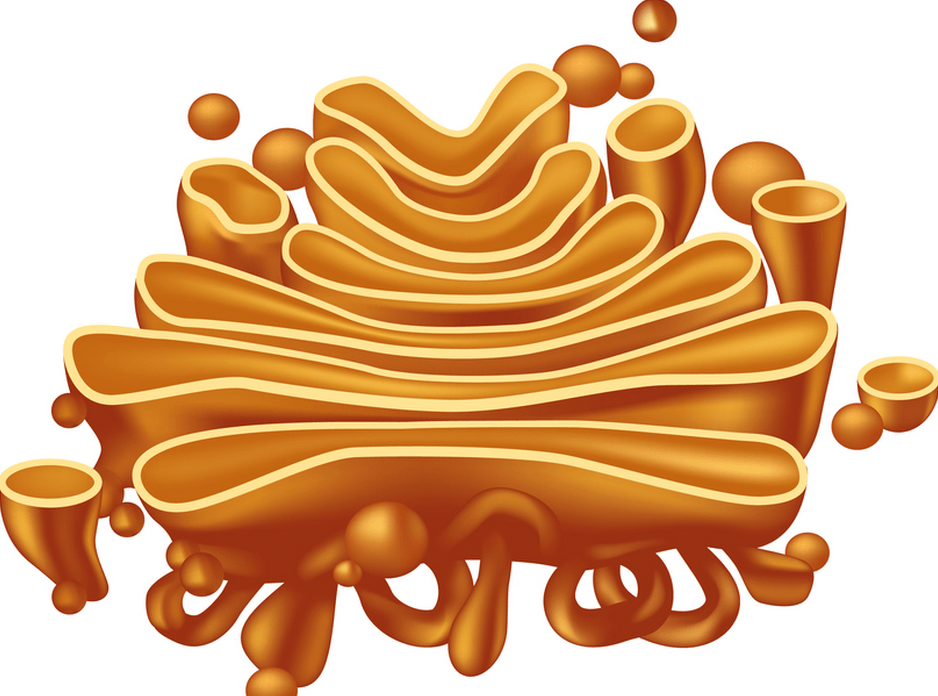
I am a protein packaging and shipping machine! Who am I?
a)
vacuole
b)
ribosome
c)
mitochondrion
d)
golgi apparatus
99.
You might think of me as the trash collector, but recycler is maybe more accurate. What am I?
a)
mitochondria
b)
lysosome
c)
vacuole
d)
ribosome
100.
Which part of the cell is often called "the brain of the cell"?
a)
nuclear membrane
b)
endoplasmic reticulum
c)
nucleus
d)
mitochondria
101.
What is found in both plant and animal cells but is much larger in plant cells?
a)
Nucleus
b)
Mitochondria
c)
Chloroplast
d)
Vacuole
102.
Where are proteins made?
a)
Golgi body
b)
Mitoichondria
c)
Chromosomes
d)
Ribosomes
103.
This organelle takes food and turns it into ENERGY for plant and animal cells.
a)
Chloroplast
b)
Mitochondria
c)
Lysosome
d)
Ribosome
104.
I am the outer most layer of an animal cell. What am I?
a)
cell wall
b)
nucleus
c)
cell membrane 
d)
cell skin
105.
A group of tissues that work together to perform a similar function is called_____. (Examples include the heart, lungs or stomach)
a)
cells
b)
tissues
c)
organs
d)
organ system
106.
 A group of cells that have similar functions? Examples are nervous, epithelial, muscle and connective
a)
cells
b)
tissues
c)
organs
d)
atoms
107.
Organs that work together to perform a related function is called _____________?
a)
cells
b)
tissues 
c)
organ system
d)
organs