
 Worksheets
Leap practice 1
Total questions: 43
Worksheet time: 34mins
Name
Class
Date
1.
If plants are exposed to sunlight, then they will grow taller.
What part of the scientific method is this an example of?
What part of the scientific method is this an example of?
a)
Procedure
b)
Hypothesis
c)
Question
d)
Results
2.

What does this graph show?
a)
Average Daily Temperatures
b)
Average Monthly Temperatures
c)
Weekly Daily Temperatures
d)
Daily Temperatures
3.
Evidence is ___________________
a)
A statement or conclusion that answers a question
b)
Scientific data that supports the claim
c)
A justification that connects the claim to the evidence
d)
Not vital when using an argument
4.

Which piece of evidence could be used to BEST support this claim:
High school students should be required to wear uniforms.
High school students should be required to wear uniforms.
a)
When adding everything up, a school uniform could end up costing more than $200.
b)
A student reported, "Allowing us to wear our own clothes gives us a chance to show our unique style and independence."
c)
At one school that recently required students to wear uniforms, attendence rates went up, and behavior incidents went down.
d)
School uniforms can be ordered online .
5.
What is the evidence?
In our experiment, the blocks had different masses, 20 g., 30 g., 44 g., 123 g and 142 g but the time for all five blocks to fall was about the same. It took between 1.5 and 1.8 seconds for them to fall. No, mass does not affect how quickly an object falls. Since the blocks had different masses but took about the same time, I know that mass does not affect how quickly something falls.
In our experiment, the blocks had different masses, 20 g., 30 g., 44 g., 123 g and 142 g but the time for all five blocks to fall was about the same. It took between 1.5 and 1.8 seconds for them to fall. No, mass does not affect how quickly an object falls. Since the blocks had different masses but took about the same time, I know that mass does not affect how quickly something falls.
a)
In our experiment, the blocks had different masses, 20 g., 30 g., 44 g., 123 g and 142 g but the time for all five blocks to fall was about the same. It took between 1.5 and 1.8 seconds for them to fall.
b)
No, mass does not affect how quickly an object falls.
c)
Since the blocks had different masses but took about the same time, I know that mass does not affect how quickly something falls.
6.
The theory of continental drift was not widely accepted by scientists because it did not explain how the continents could move. Which theory later explained this?
a)
The theory of plate tectonics
b)
The big bang theory
c)
The steady state theory
d)
The theory of evolution
7.
What is Pangaea?
a)
the process by which tectonic plates move around the Earth
b)
a type of thick, sticky lava
c)
the name of the ancient supercontinent
d)
the name of the scientist who first discovered plate tectonics
8.

This is an example of -
a)
convergent
b)
divergent
c)
transform
9.

This is an example of -
a)
convergent
b)
divergent
c)
transform
10.

The movement of plates at a divergent boundary
a)
move towards each other
b)
slide past each other
c)
move up and down
d)
move away from each other
11.

What part of the illustration shows Evaporation?
a)
1
b)
2
c)
3
d)
4
12.

What does this symbol on a weather map indicate?
a)
High pressure system
b)
Low pressure system
c)
Cold front
d)
Warm front
13.
Which weather tool measures temperature?
a)
thermometer
b)
barometer
c)
psychrometer
d)
anememeter
14.

A violently rotating column of air called a _____ when it comes in contact with the ground.
a)
hurrican
b)
tornado
c)
trade wind
d)
local wind
15.

A _____ is a large, swirling, low-pressure system that forms over the Atlantic Ocean.
a)
blizzard
b)
cold front
c)
tornado
d)
hurricane
16.
Rain, snow, sleet, and hail are all forms of _____.
a)
precipitation
b)
condensation
c)
evaporation
d)
climate
17.
The positive particles of an atom are
a)
electrons
b)
positrons
c)
neutrons
d)
protons
18.
In the modern periodic table elements are arranged by:
a)
atomic mass
b)
atomic number
c)
valence electrons
d)
number of isotopes
19.

What does the 1.00794 stand for?
a)
Hydrogen
b)
atomic number
c)
atomic mass
d)
atomic explosion
20.
What does the nucleus consist of?
a)
Protons + Electrons
b)
Neutrons + Electrons
c)
Atoms
d)
Protons + Neutrons
21.
What is the function of the cell nucleus found in both plant and animal cells?
a)
to produce energy
b)
to control cell activity
c)
to remove waste products
d)
to allow molecules to enter the cell
22.
Chloroplasts in plant cells allow the plant to perform a function that animal cells cannot do. What is the main function of the chloroplasts found in plant cells?
a)
to absorb light energy and manufacture food
b)
to remove waste materials by active transport
c)
to manufacture chemical energy from food
d)
to control the shape of the cell
23.
All cells need energy to function. Which cell organelle is responsible for producing energy in the cell?
a)
chloroplasts
b)
mitochondria
c)
nucleus
d)
vacuoles
24.
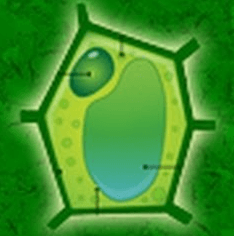
A rigid layer that lies outside the cell's membrane is...
a)
Cytoskeleton
b)
Cilia
c)
Cell Wall
d)
Flagella
25.
What are the 3 types of muscle tissue?
a)
Thigh, Calf, & Shoulder
b)
Traps, Forearm, & Abs
c)
Hamstring, Biceps, & Triceps
d)
Smooth Muscle, Cardiac Muscle, & Skeletal Muscle
26.
Which type of muscle is found in your heart?
a)
Skeletal
b)
Smooth
c)
Cardiac
d)
Straight
27.
When a muscle contracts, it _______
a)
gets longer
b)
gets shorter
c)
gets thinner
d)
grows hair
28.

Bile is made by which digestive organ?
a)
Gallbladder
b)
Stomach
c)
Rectum
d)
Liver
29.

Nutrients from digested food are absorbed in which digestive organ?
a)
Small Intestine
b)
Stomach
c)
Large Intestine
d)
Gallbladder
30.

Which organ pushes food down to the stomach?
a)
Mouth
b)
Esophagus
c)
Rectum
d)
Large intestine
31.

The opening at the end of the digestive system where solid waste comes out is the...
a)
rectum
b)
anus
c)
mouth
d)
large intestine
32.
During a lunar eclipse, what color does the moon appear?
a)
Black
b)
Red-orange
c)
Yellow-green
d)
White
33.
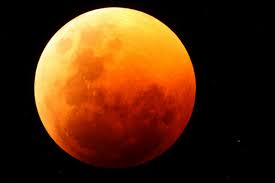
This image is an example of
a)
Lunar Eclipse
b)
New Moon
c)
Solar Eclipse
d)
Full Moon
34.
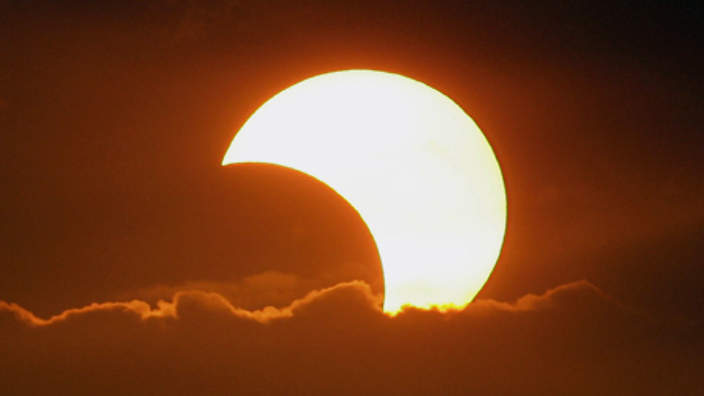
This image is an example of
a)
Lunar Eclipse
b)
Full Moon
c)
New Moon
d)
Solar Eclipse
35.
Tides are caused mainly by what?
a)
Moon’s gravitational pull
b)
Sun’s gravitational pull
c)
Earth’s gravitational pull
36.
Asexual reproduction that involves the regrowth of a lost body part is known as
a)
regeneration
b)
vegetative propagation
c)
binary fission
d)
sporulation
37.
Which type of cell division is used for asexual reproduction?
a)
Meiosis
b)
Mitosis
c)
Mutation
d)
Oogenesis
38.

Which organism do the owl and the weasel compete for in the food web?
a)
Hawk
b)
Spider
c)
Grasshopper
d)
Shrew
39.

Which of the following is a herbivore?
a)
cricket
b)
frog
c)
hawk
d)
shrew
40.

Which of the following would be the most likely effect, if there were a sudden increase in the cricket population?
a)
There would be a decrease in the small bird population.
b)
There would be a decrease in the grass/flowers population.
c)
There would be a decrease in the mice population.
d)
There would be an increase in the grass/flowers population.
41.
Example of a decomposer
a)
fungus
b)
mouse
c)
plants
d)
frogs
42.
Example of a consumer
a)
worm
b)
bacteria
c)
mushroom
d)
hawk
43.

An organism that gets energy from eating other organisms is a ______________
a)
producer
b)
consumer
c)
decomposer
d)
prey
100 %

