wayground logo

Free Printable Worksheets

Font size

S
M
L
XL
Worksheets

6th grade science post test review

Total questions: 106

Worksheet time: 2hrs 6mins

Name
Class
Date
1.
You have accidentally broken a test tube and spilled a chemical on the table. Which of the following best explains what you should do?
a)
Quickly dispose of the glass, wipe up the spill with the nearest cloth, and hope nobody notices.
b)
Throw the glass into the nearest trash bin and let the spill air-dry.
c)
Use water and paper towels to clean up the spill; place the broken test tube in the disposal container specified for sharp objects.
d)
Caution your lab partners to avoid the area while you inform the teacher of the small accident.
2.
What is the first thing you should do if an accident occurs?
a)
Find the emergency equipment.
b)
Start first aid treatment.
c)
Go to the nearest hospital.
d)
Notify your teacher.
3.
The most important lab safety rule is
a)
always wear a lab apron.
b)
always wear safety goggles.
c)
design and conduct your own experiments without asking your teacher.
d)
always follow your teacher's instructions and the lab instructions.
4.

You wash your hands thoroughly after completing your lab work.

a)

precaution

b)

hazard

5.

You rubbed your face while you were working with chemicals.

a)

precaution

b)

hazard

6.

You smelled a chemical by gently wafting the air toward you.

a)

precaution

b)

hazard

7.

You plugged in the microscope even though the plug was torn.

a)

precaution

b)

hazard

8.
During this step of the scientific method, a scientist would gather background information. 
a)
Hypothesis
b)
Research
c)
Observation
d)
Experiment 
9.
This step of the scientific method is an educated guess or a prediction. 
a)
Hypothesis
b)
Research
c)
Observation
d)
Conclusion
10.
Which one is an example of Qualitative Data?
a)
25 Pounds
b)
30 Seconds 
c)
2 Meters
d)
Soft
11.
Which is an example of Quantitative Data?
a)
42 grams
b)
Hard
c)
Squishy
d)
Blue
12.
The independent variable is what you _______ during an experiment.
a)
change
b)
do not change 
c)
measure
d)
count
13.
The dependent variable in an experiment is what you ________________. 
a)
Change
b)
Measure
14.
This is the group that we will compare our experimental group to. This group stays "normal."
a)
Control Group
b)
Experimental Group
c)
 Normal Group
d)
Weird Group
15.
The summary at the end of an experiment that explains the results. 
a)
conclusion
b)
procedures
c)
materials
d)
responding variable
16.
There are two types of data. Which type of data involves descriptions/photographs/illustrations that cannot be counted or measured?
a)
qualitative
b)
quantitative
17.
A series of steps used by scientists to solve a problem or answer a question. 
a)
scientific method
b)
recipe
c)
data collection
d)
metric system
18.
A series of steps used by scientists to solve a problem or answer a question. 
a)
scientific method
b)
recipe
c)
data collection
d)
metric system
19.
What is an INDEPENDENT Variable, or IV?
a)
the ONE thing we change on purpose when designing an investigation
b)
the results of the change we made with our independent variable; what we MEASURE; can be quantitative and/or qualitative data
c)
these are the ways we change our independent variable
d)
these are the conditions that stay the same in order to have a “fair” investigation.
20.
What is an DEPENDENT Variable, or DV?
a)
the ONE thing we change on purpose when designing an investigation
b)
the results of the change we made with our independent variable; what we MEASURE; can be quantitative and/or qualitative data
c)
these are the ways we change our independent variable
d)
these are the conditions that stay the same in order to have a “fair” investigation.
21.
Mario studied how far room temperature water would spurt out of a plastic milk carton when 3mm holes were punched at different heights from the bottom of the container. Identify the DEPENDENT variable
-3mm holes
-Distant water traveled out of carton
-Different heights of the holes in the container
-Ice water from Iceland
a)
3mm holes
b)
Distant water traveled out of carton
c)
Different heights of the holes in the container 
d)
Ice water from Iceland
22.
What skill is a scientist using when she listens to the sounds that an elephant makes?
a)
drawing conclusions
b)
making observations
c)
interpreting data
d)
making a hypothesis
23.
What is this science tool?
a)
jar
b)
beaker
c)
thermometer
d)
ruler
24.
What is this science tool?
a)
sun glasses
b)
safety goggles
c)
hand lenses
d)
beaker
25.
This piece of lab equipment is called a ___________________.
a)
triple beam balance
b)
spring scale
c)
thermometer
d)
graduated cylinder
26.
This piece of lab equipment is called a _______________.
a)
beaker
b)
spring scale
c)
graduated cylinder
d)
thermometer
27.
The triple beam balance tool measures what 
a)
Mass
b)
Temperature
c)
Volume
d)
Capacity
28.
Name this piece of lab equipment.
a)
test tube
b)
flask
c)
graduated cylinder
d)
bottle
29.
What tool is this?
a)
Microscope
b)
Graduated Cylinder
c)
Beaker
d)
Funnel
30.
What tool is this?
a)
Microscope
b)
Hand Lense
c)
Magnifying Glass
d)
Beaker
31.
This piece of lab equipment is called a _________________.
a)
graduated cylinder
b)
test tube
c)
spring scale
d)
beaker
32.
What is the best measurement for the graduated cylinder?
a)
63
b)
63.5
c)
64
d)
64.1
33.
This unit measures the volume of a liquid in a graduated cylinder.
a)
g (grams)
b)
mL (milliliters)
c)
cm (centimeters)
34.
This unit measures the mass of an object on a triple beam balance. 
a)
g (grams)
b)
mL (milliliters)
c)
cm (centimeters)
35.
We use this tool to measure the volume of a liquid.
a)
triple beam balance
b)
graduated cylinder
c)
pipette
36.
We use this tool to measure the mass of an object. 
a)
triple beam balance
b)
graduated cylinder
c)
ruler
37.
Volume is the amount of space an object takes up.
a)
True
b)
False
38.
What is the volume of the water?
a)
25 mL
b)
50 mL
c)
20 mL
d)
22 mL
39.

Scientific method steps: Check ALL that apply:)

a)

state the problem

b)

gather information

c)

form a hypothesis

d)

test the hypothesis

e)

collect and analyze data & draw conclusions
40.
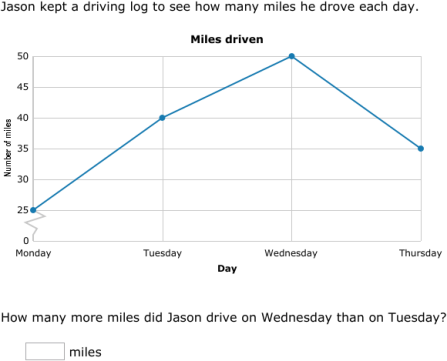
How many more miles did Jason drive on Wednesday than on Tuesday?
a)
40 miles
b)
10 miles
c)
5 miles
d)
50 miles
41.
What is the name of this graph?
a)
line plot
b)
line graph
c)
bar graph
d)
frequency table
42.
How many mountain bikes were sold?
a)
22
b)
28
c)
16
d)
6
43.
What type of graph is this?
a)
Bar Graph
b)
Line Plot
c)
Pictograph
d)
Tally Chart
44.
How many students have blue for a favorite color?
a)
11
b)
12
c)
14
d)
17
45.
In a gym class, students measured how high they could jump. The results are displayed on the following graph.
What height did most students jump?
a)
8 inches
b)
9 inches
c)
10 inches
d)
11 inches
46.
How many more ice cream shops are there than frozen yogurt shops? 
a)
There are 15 more ice cream shops than frozen yogurt shops.
b)
There are 20 more ice cream shops than frozen yogurt shops.
c)
There are 30 more ice cream shops than frozen yogurt shops.
d)
There are 55 more ice cream shops than frozen yogurt shops.
47.
What can you conclude from this bar graph?
a)
There are 1/2 as many Larch as Fir trees
b)
There are more Beech trees than Oak
c)
There are twice as many Oak trees as Maple trees
d)
There are fewer Oak trees than Beech trees
48.
What is the solubility at 35 degrees?
a)
3.0
b)
3.5
c)
4.0
d)
4.5
49.
How many species feed on thistle?
a)
0
b)
2
c)
4
d)
6
50.
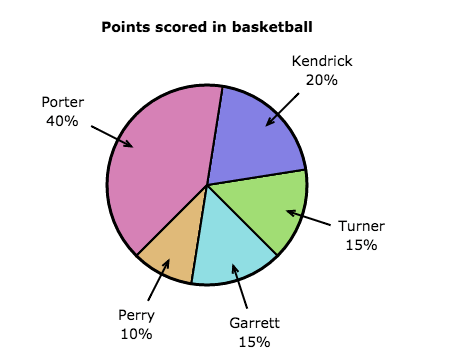
The team scored 50 points. How many points did Kendrick score?
a)
12 points
b)
20 points
c)
10 points
d)
72 points
51.
What percent of people chose snickers as their favorite candy?
a)
about 33%
b)
about 20%
c)
about 3%
d)
None of these
52.
At which point is potential energy greatest?
a)
W
b)
X
c)
Y
d)
Z
53.
__________ is stored energy. 
a)
Potential
b)
Kinetic
c)
None of the above 
d)
All of the above 
54.
The faster an object moves, the ________ kinetic energy it has. 
a)
more
b)
less
c)
none of the above
d)
same
55.
What kind of energy is in a moving skateboard?
a)
Potential
b)
Kinetic
c)
Both potential and kinetic energy
d)
none of the above
56.
What kind of energy is in a rock at the edge of a cliff?
a)
Potential
b)
Kinetic
c)
Both potential and kinetic energy
d)
none of the above
57.
Energy due to motion is ____________ energy. 
a)
Potential 
b)
Energy
c)
Kinetic
d)
Friction
58.
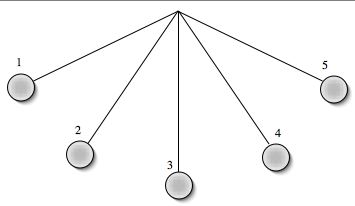
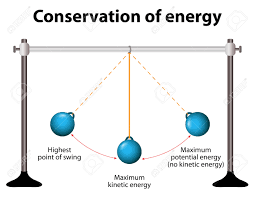
When a pendulum swings, at which point is kinetic energy highest?
a)
1
b)
2
c)
3
d)
4
59.
Conservation of energy states that energy cannot be ________ or ________, but can be altered from one form to another.
a)
created, destroyed
b)
gravity, force
c)
heat, created
60.
What are the two factors that affect kinetic energy?
a)
time and energy
b)
power and mass
c)
mass and speed
d)
time and work
61.
Choose the BEST answer that is an example of an energy transformation from potential energy to kinetic energy.
a)
a ball rolling down a ramp
b)
a picture hanging on the wall
c)
a swing swaying back and forth
d)
a coat hanging on a hook
62.
Gravitational potential energy depends on the ________ and ________ of the object. 
a)
Height and mass
b)
Friction and movement
c)
Mass and Movement
d)
Height and Friction 
63.

Energy stored because of gravity is called:

a)

Gravitational Potential Energy

b)

Kinetic Energy

c)

Mechanical Advantage

d)

Chemical Energy

64.

When you are holding a book, energy is stored between the book and Earth; this type of energy is called ________ potential energy.

a)

Kinetic Energy

b)

Chemical Energy

c)

Gravitational Potential Energy

d)

Electric Energy

65.

You throw a ball into the air as shown in the diagram. At what point does the ball have the most gravitational potential energy?

a)

W

b)

X

c)

Y

d)

Z

66.

At which position does the child on the swing have the most gravitational potential energy?

a)

W

b)

X

c)

Y

d)

Z

67.
What is the tiniest particle in the entire universe?
a)
cells
b)
gases
c)
atoms
d)
liquids
68.
Which part of an atom is POSITIVELY charged?
a)
protons
b)
neutrons
c)
electrons
d)
atoms
69.
What part of an atom is NEGATIVELY charged?
a)
protons
b)
neutrons
c)
electrons
d)
atoms
70.
Which part of an atom has no charge?
a)
protons
b)
neutrons
c)
electrons
d)
atoms
71.
What is the term for combining 2 or more atoms together?
a)
atoms
b)
elements
c)
molecules
d)
compounds
72.
What is the term for combining 2 or more DIFFERENT atoms together?
a)
atoms
b)
elements
c)
molecules
d)
compounds
73.
TRUE OR FALSE:
Every compound is a molecule but not every molecule is a compound.
a)
TRUE
b)
FALSE
74.
What is the picture displayed?
a)
Atom
b)
Element
c)
Molecule
d)
Compound
75.
What is the picture displayed?
a)
atom
b)
element
c)
molecule
d)
compound
76.
What is the picture displayed?
a)
atom
b)
element
c)
molecule
d)
compound
77.
What is the picture displayed?
a)
atom
b)
element
c)
molecule
d)
compound
78.
Are these molecules also compounds?
a)
YES
b)
NO
79.
Which state of matter has closely packed and organized particles?
a)
Solid
b)
Liquid
c)
Gas
d)
Plasma
80.
Which state of matter has closely packed and disorganized particles?
a)
Solid
b)
Liquid
c)
Gas
d)
Plasma
81.
Which state of matter has loosely packed and unorganized particles?
a)
Solid
b)
Liquid
c)
Gas
d)
Plasma
82.
Particles in this state of matter take the shape of their entire container.
a)
Solid
b)
Liquid
c)
Gas
d)
Plasma
83.
When molecules are vibrating in a fixed position, what state of matter are they in?
a)
Solid
b)
Liquid
c)
Gas
d)
I don't know 
84.
When molecules are moving fastest what state of matter are they?
a)
Solid
b)
Liquid
c)
Gas
d)
I don't know
85.
What is the difference between an atom and an element?
a)
nothing, they are the same
b)
atoms are the smallest amount of an element 
c)
elements are the smallest amount of an atom
d)
they are both imaginary
86.

Which form of matter has a definite shape and takes up space (has definite volume)?

a)

liquid

b)

solid

c)

gas

d)

clay

87.
What are the states of matter?
a)
solid, liquid, and juice
b)
solid and liquid
c)
solid and gas
d)
solid, liquid, and gas
88.
Which form of matter take the shape of a container like this juice?
a)
liquid
b)
solid
c)
glass
d)
gas
89.
The molecules in the picture are tightly held together with little movement. They have shape and energy.  Therefore, the picture represents _________.
a)
solid
b)
liquid
c)
gas
d)
plasma
90.
Molecules move quickest in which state of matter
a)
solid
b)
liquid
c)
gas
d)
solid, liquid and gas
91.
When the temperature of matter increases the particles...
a)
speed up and move closer
b)
speed up and move farther apart
c)
slow down and move closer together
d)
slow down and move farther apart
92.
What does this picture represent? 
a)
solid
b)
liquid 
c)
gas
d)
plasma
93.
Which of the following statements is NOT true of all different types of matter?
a)
They are made of atoms and molecules
b)
The particles are always in motion
c)
The particles always move at the same speed
d)
They are made of particles that are too small to see
94.
What does this graph represent?
a)
Constant Speed
b)
Acceleration
c)
Deacceleration
d)
Not moving
95.
According to the graph how far does the person travel in the first 5 seconds?
a)
2 m
b)
10 m
c)
0 m
d)
5 m
96.
What is happening at A?
a)
Standing still
b)
Accelerating
c)
Slower steady speed; moving away from the starting position
d)
Steady speed; returning to start position
97.
What is happening at E?
a)
Stationary
b)
Accelerating
c)
Fast steady speed; moving away from the starting position
d)
Steady speed; returning to start position
98.
How many times does this object STOP moving?
a)
None
b)
One time
c)
Two times
d)
Three times
99.
What is the equation to calculate speed?
a)
speed = distance/time
b)
speed = time/distance
c)
speed = time x distance 
d)
speed = speed/time 
100.
Which of the following is a unit of speed?
a)
km/hr
b)
hr
c)
km
d)
sec
101.
Macey decided to visit Dallas, which is 210 miles away from Houston. His trip took him 3 hours to complete. Calculate his average speed. 
a)
60 mph
b)
64 mph
c)
70 mph
d)
3 mph
102.
What does this graph represent?
a)
Constant Speed
b)
Acceleration
c)
Decceleration
d)
Not moving
103.
According to the graph how far does the person travel in the first 5 seconds?
a)
2 m
b)
10 m
c)
0 m
d)
5 m
104.
What is this object doing?
a)
moving at a constant speed away from start and then stops
b)
increasing speed and then stops
c)
decreasing speed and then constant speed
d)
moving at a constant speed away from start and then constant speed
105.
What is the speed this motion?
a)
constant speed
b)
not moving
c)
increasing
d)
decreasing
106.
What is this graph showing?
a)
Constant Speed
b)
Acceleration (speeding up)
c)
Deceleration (slowing down)
d)
At Rest