
 Worksheets
Cells and Ecosystems
Total questions: 20
Worksheet time: 16mins
Name
Class
Date
1.
What are the two broad categories of cells?
a)
prokaryotic and eukaryotic
b)
prokaryote and nucleoid
c)
eukaryotes and cells
d)
bacteria and archaea
2.
Prokaryote are?
a)
simple, mostly single-celled organism that lacks a nucleus, or any other membrane-bound organelle.
b)
have a peptidoglycan cell wall and many have polysaccharide capsules.
c)
have a true nucleus, which means the cell's DNA is surrounded by a membrane.
d)
contain membrane-bound organelles, such as the nucleus
3.
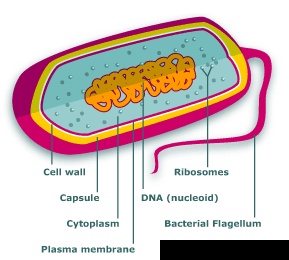
Which type of cell?
a)
Prokaryote
b)
Eukaryote
4.

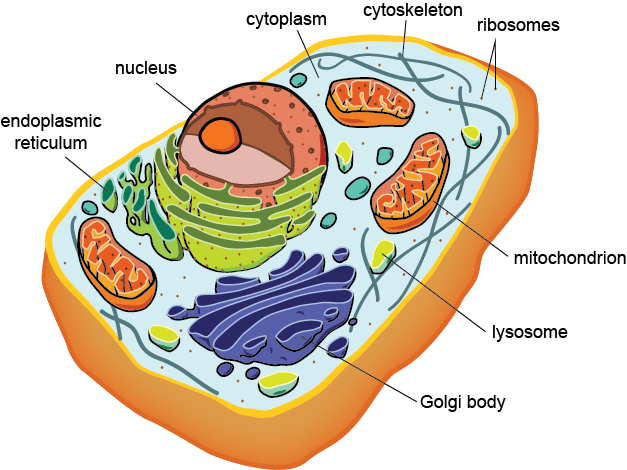
Which type of cell?
a)
Prokaryote
b)
Eukaryote
c)
Mixed
5.
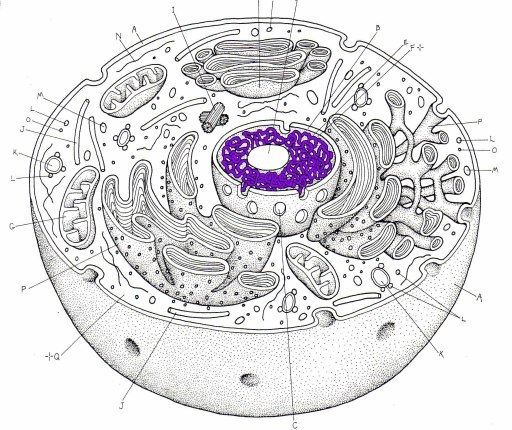
What kind of cell is this?
a)
Eukaryotic
b)
Prokaryotic
6.
All living things are made of...
a)
atoms
b)
cells
c)
bacteria
d)
plants
7.
Which of the following statements is not part of the cell theory?
a)
Cells are the basic unit of structure and function in all living things.
b)
All cells are produced from other cells.
c)
Only animal cells are composed of cells.
d)
All living things are composed of cells.
8.

The invention of the microscope made it possible for people to discover and learn about
a)
Plants
b)
Skin
c)
Animals
d)
Cells
9.
A __________ includes all living and non-living things in an environment.
a)
population
b)
niche
c)
abitotic
d)
ecosystem
10.
_______ are consumers that eat only meat.
a)
Herbivore
b)
Omnivore
c)
Carnivore
11.
________ are consumers that eat plants and meat.
a)
Herbivore
b)
Omnivore
c)
Carnivore
12.
Which group do fungi, bacteria, and termites belong to?
a)
decomposers
b)
producers
c)
herbivores
d)
omnivores
13.
Which organism make their own food through the process of photosynthesis?
a)
decomposer
b)
consumer
c)
herbivore
d)
producer
14.
What would most likely happen if an ecosystem no longer received sunlight?
a)
The number of herbivores would increase
b)
The number of plants would increase
c)
all organisms would adapt
d)
All living organisms would eventually die
15.

A system made up of organisms interacting with one another
a)
biology
b)
abiotic
c)
biotic
d)
ecosystem
16.

Nonliving things found in an ecosystem.
a)
factories
b)
factor trees
c)
biotic factors
d)
abiotic factors
17.

A group of the same type of organisms living in the same place at the same time.
a)
threatened species
b)
populations
c)
community
d)
limiting factor
18.
All of the populations that live in one area together
a)
limiting factors
b)
populations
c)
community
d)
speed limit
19.

Which is a biotic factor?
a)
sunlight
b)
air
c)
bacteria
d)
all of the above
20.

Ecosystems are always______.
a)
always changing
b)
always balanced
c)
never changing
d)
never balanced
100 %

