
 Worksheets
Heat
Total questions: 44
Worksheet time: 1hrs 6mins
Name
Class
Date
1.
Heat is the movement of ______.
a)
radiation
b)
thermal energy
c)
cold
d)
fire
2.
Thermal energy ALWAYS moves from _____ to _____.
a)
solid to liquid
b)
ice to water
c)
hot to cold
d)
solid to gas
3.
Heat moves by ______ when it travels through electromagnetic waves.
a)
radiation
b)
conduction
c)
insulator
d)
convection
4.
Heat moves by ______ when it travels from one solid to another solid.
a)
radiation
b)
convection
c)
thermal energy
d)
conduction
5.
The way heat moves in liquids and gases is called _______.
a)
convection
b)
radiation
c)
conduction
d)
temperature
6.
The way heat moves in liquids and gases is called _______.
a)
convection
b)
radiation
c)
conduction
d)
temperature
7.
All matter is made of _____ that are constanly moving.
a)
insulators
b)
particles
c)
convection
d)
pieces of plastic
8.
If an object has particles that are moving very quickly, the object 's temperature is probably _____.
a)
cold
b)
slow
c)
big
d)
hot
9.
If an object has particles that are moving very slowly, the object's temperature is probably ______.
a)
hot
b)
small
c)
cold
d)
big
10.
The flow of thermal energy from warmer objects to cooler objects is called ______.
a)
heat
b)
movement
c)
friction
d)
energy
11.
To measure the temperature difference between two cups of water, you would use a _____.
a)
measuring cup
b)
ruler
c)
thermometer
d)
balance scale
12.
Sawing a piece of wood causes the end being sawed to become warm. In this case, heat is produced by ____.
a)
burning fuels
b)
mixing matter
c)
electricity
d)
friction
13.
Glass, steel, and aluminum are good examples of ______.
a)
insulators
b)
thermal energy
c)
conductors
d)
radiation
14.
Plastic foam, wood, and rubber are good examples of ______.
a)
conductors
b)
insulators
c)
solar energy
d)
convection
15.

The heat from a hot burner to a pot is transferred by ______.
a)
convection
b)
insulation
c)
radiation
d)
conduction
16.
When holding a cup of ice water, your warm hand becomes cold. How does the heat transfer?
a)
From the cold cup to your hand
b)
From the cold cup to the warm air
c)
From the ice to your hand
d)
From your warm hand to the cold cup.
17.
How are heat from the sun and heat from a campfire alike?
a)
They move by radiation.
b)
They move by convection.
c)
They move by conduction.
d)
They are solar energy.
18.
A 15.75-g piece of iron absorbs 1086.75 joules of heat energy, and its temperature changes from 25°C to 175°C. Calculate the specific heat capacity of iron.
a)
0.46 J/gxoC
b)
1.654 J/gxoC
c)
2,567,446.875 J/gxoC
19.
How many joules of heat are needed to raise the temperature of 10.0 g of aluminum from 22°C to 55°C, if the specific heat of aluminum is 0.90 J/gx°C?
a)
297 Joules
b)
0.003 Joules
c)
297 J/gx°C
d)
0.003 J/gx°C
20.
A 0.3 g piece of copper is heated and fashioned into a bracelet. The amount of energy transferred by heat to the copper is 66,300 J. If the specific heat of copper is 390 J/g 0C, what Is the change of the copper's temperature?
a)
566.7 °C
b)
77,571,000 Joules
21.
The symbol for specific heat is .......
a)
c
b)
Q
c)
m
d)
t
22.
What is the formula to calculate heat energy required to raise the temperature of any substance?
a)
Q=mc∆t
b)
Q=mc
c)
Q= ½mv
d)
m=QC
23.
Specific heat is....
a)
The measure of kinetic energy of an objects particles
b)
A measure of the energy needed to increase the average kinetic energy of the particles
c)
The heating caused by the motion of flluid due to temperature difference
d)
The transfer of energy by electromagnetic radiation
24.
A high specific heat means...
a)
It heats up quickly with energy added
b)
It requires more energy to change temperature
25.

How many Joules of energy are required to change 10 gram of liquidwater from 20 C to 90 C?
a)
1400 J
b)
2800 J
c)
210,000 J
d)
1,400,000 J
26.
The specific heat of aluminum is 0.21 J/g°C. How much heat(Q) is released when a 10 g piece of aluminum foil is taken out of the oven and cools from 100° to 50°?
a)
105 J
b)
10.5 J
c)
1.05 J
27.
For a skillet, used for cooking, do you want a high or low specific heat
a)
High, so that it will need more energy to heat up
b)
Low, so that it will change temperature quickly
28.
20 g of water. specific heat of water is 4.18 J/x°C. temperature changes from 25° C to 20° C, how much heat energy (Q) moves from the water to the surroundings?
a)
418 Joules
b)
209 J
c)
83 J
d)
4.18 J
29.
The specific heat(c) of copper is 0.39 J/g °C. What is the temperature change(∆t) when 100 Joules of heat(Q) is added to 20 grams?
a)
12.82 °C
b)
24.12°C
c)
351 °C
30.

Which of the following is NOT true about heat?
a)
Heat moves from hot to cold
b)
Heat is a form of energy
c)
Heat cannot be transferred
d)
Heat makes molecules speed up
31.
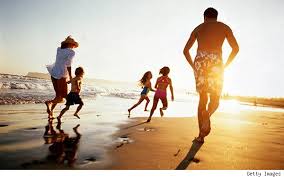
The sun shines down on this family as the play on the beach.
a)
conduction
b)
convection
c)
radiation
32.

A group of friends gather around a fire to stay warm.
a)
conduction
b)
convection
c)
radiation
33.
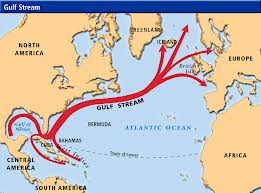
The Gulf Stream is a current that brings warm ocean water from the south to the north.
a)
conduction
b)
convection
c)
radiation
34.

Walking on the warm sand sand with your bare feet.
a)
conduction
b)
convection
c)
radiation
35.

Blow drying your wet hair.
a)
conduction
b)
convection
c)
radiation
36.

Which direction will the heat flow while this person holds a hot cup of tea?
a)
from the cup to her hand
b)
from her hand to the cup
c)
no heat is transferred
37.

Which direction will the heat flow while this ice cap melts?
a)
there is no heat transfer
b)
from the icecap to the water
c)
from the water to the icecap
38.
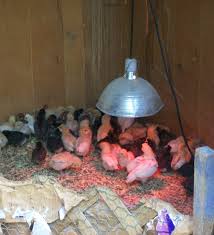
The baby chickens are kept warm from the heat lamps.
a)
conduction
b)
convection
c)
radiation
39.
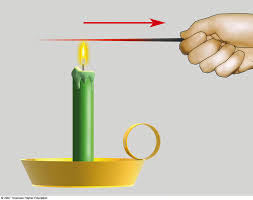
The candle will slowly heat the metal and transfer the heat directly to the mans hand.
a)
conduction
b)
convection
c)
radiation
40.

The warm air from this heater creates a current when the warm air rises and the cold air sinks.
a)
conduction
b)
convection
c)
radiation
41.

Heat transfers from an area of ____temperature to an area of ___ temperature.
a)
high to low
b)
low to high
c)
high to high
42.

The chocolate bunny and the lamp.
a)
conduction
b)
convection
c)
radiation
43.

The chocolate bunny and the blow dryer.
a)
conduction
b)
convection
c)
radiation
44.
Poor conductors like wood and plastic are called:
a)
conductors
b)
insulators
c)
burners
100 %

