
 Worksheets
8th Grade Science Review
Total questions: 78
Worksheet time: 1hrs 18mins
Name
Class
Date
1.

Any push or pull on an object.
a)
force
b)
velocity
c)
inertia
d)
momentum
2.

The force that opposes motion between two surfaces in contact with each other.
a)
inertia
b)
friction
c)
momentum
d)
gravity
3.

When all the forces on an object are equal and opposite, & the net force is zero, that's...
a)
balanced forces
b)
unbalanced forces
c)
terminal velocity
d)
reaction forces
4.

The combination of all the forces acting on an object is the...
a)
net force
b)
action force
c)
reaction force
d)
balance force
5.

Gravity is increased with...
a)
greater mass & shorter distance
b)
greater mass & farther distance
c)
lower mass & shorter distance
d)
lower mass & farther distance
6.

Mass x acceleration = ?
a)
force
b)
inertia
c)
momentum
d)
velocity
7.

What is the net force
a)
10 N
b)
0 N
c)
25 N
d)
1 N
8.

What is the net force?
a)
40 N left
b)
0 N Balalnced
c)
400 N right
d)
40 N right
9.

What is the net force?
a)
400 N Up
b)
400 N Down
c)
- 400 N Down
d)
800 N Down
10.

Which way is the force moving?
a)
it's not , it is balanced or moving at a constant
b)
to the right
c)
to the bottom
d)
up
11.

Which way is the object moving?
a)
It is not or moving at a constant speed
b)
moving to the right
c)
moving to the left
d)
going up
12.

Which way is the box moving?
a)
to the right
b)
to the left
c)
going up
d)
going down
13.

Which is moving up?
a)
a & b
b)
b
c)
b & c
d)
d
14.

How do you know that b is moving up?
a)
it has a down arrow
b)
it's the same
c)
the up arrow is larger
d)
it's red
15.

Which way is the object moving?
a)
left
b)
right
c)
down
d)
up
16.
_______ magnets have a North pole and a South pole.
a)
No
b)
Some
c)
All
d)
Broken
17.
The relationship between electricity and magnetism is called
a)
electrical energy.
b)
induced current.
c)
electromagnetism.
d)
ferromagnetism.
18.
Surrounding every magnet is a(n) __________ __________.
a)
magnetic field
b)
electrical current
c)
smaller magnet
d)
funny saying
19.

What kind of magnet can be turned on and off?
a)
a refrigerator magnet
b)
an electromagnet
c)
magnetite
d)
iron
20.
When two magnetic North poles are brought close to each other, they will
a)
attract
b)
repel
c)
create sparks
d)
cancel each other out
21.
When two magnetic South poles are brought close to each other, they will
a)
attract
b)
repel
c)
create sparks
d)
cancel each other out
22.
When a magnetic South pole is brought close to a magnetic North pole, the magnets will
a)
attract
b)
repel
c)
create sparks
d)
cancel each other out
23.
When magnetic field lines are drawn, how do they look?
a)
straight lines
b)
criss-crossed lines like X's
c)
curved lines from N to S pole and outwards
d)
lines extending outward in all directions like drawing the Sun
24.
Where is the strongest attraction force of the magnet?
a)
at the poles
b)
in the middle
c)
above the magnet
d)
below the magnet
25.
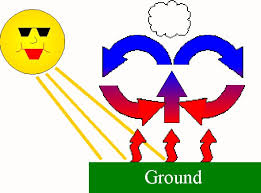
Warm air rises and the cool air sinks demonstrates this type of heat transfer.
a)
conduction
b)
convection
c)
radiation
d)
Insolation
26.

Which layer of Earth is located above the outer core?
a)
crust
b)
inner core
c)
mantle
d)
lithosphere
27.
Which of these two layers is a solid?
a)
innercore
b)
Outercore
28.
What is the top layer of the Earth's surface called?
a)
Mantle
b)
Innercore
c)
Outercore
d)
Crust
29.
A dense ball of solid iron and nickel.
a)
crust
b)
inner core
c)
mantle
d)
outer core
30.
Which best describes the asthenosphere?
a)
molten metal
b)
dense, solid metal ball
c)
solid that flows
d)
dry land and ocean floor
31.
Temperature _____________________ as you go deeper into the earth.
a)
increases
b)
decreases
c)
goes up and down depending on the layer
d)
stays the same
32.
Pressure ______________________ as you go deeper into the Earth
a)
increases
b)
decreases
c)
goes up or down depending on the layer
d)
stays the same
33.
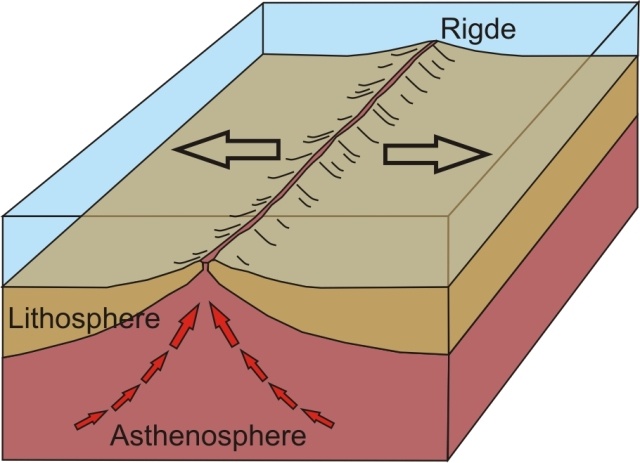
What kind of plate boundary is shown here?
a)
divergent
b)
convergent
c)
transform
d)
subducting
34.

What kind of plate boundary is shown here?
a)
divergent
b)
convergent
c)
transform
d)
submergent
35.

What kind of plate boundary is shown here?
a)
divergent
b)
convergent
c)
transform
d)
strike slip
36.
What geologic feature/event you be most likely to find at a transform boundary?
a)
Earthquakes
b)
Volcanoes
c)
Mountains
d)
Rift Valleys
37.
What geologic feature/event would you most likely to find at a divergent boundary between two pieces of oceanic crust?
a)
Rift Valley
b)
Mid-Ocean Ridge
c)
Island Arc
d)
Flat land
38.
What geologic feature/event would you most likely to find at a divergent boundary between two pieces of continental crust?
a)
Mid-Ocean Ridge
b)
Mountain
c)
Rift Valley
d)
Island Arc
39.
What geologic feature/event would you most likely to find at a convergent boundary between two pieces of continental crust?
a)
Volcano
b)
Mountain
c)
Rift
d)
Island Arc
40.
A subduction zone is formed...
a)
when one tectonic plate sinks below another
b)
at every type of convergent plate boundary
c)
at every type of divergent plate boundary
d)
at transform boundaries
41.
In which type of boundary do the plates move away from each other?
a)
convergent
b)
normal
c)
divergent
d)
transform
42.

Sometimes, when two tectonic plates collide, one is pushed below the other; this action at the convergent boundary is called...
a)
Divergent boundary
b)
Convergent boundary
c)
Transform boundary
d)
Subduction
43.
The Great Rift Valley in Africa occurs on land at this plate boundary.
a)
Convergent
b)
Divergent
c)
Transform
44.
The Himalayan mountains and Mt. Everest can be found at this plate boundary.
a)
Convergent
b)
Divergent
c)
Transform
45.

What feature is shown by the arrows?
a)
Mid-Atlantic Ridge
b)
Himalayan Mountains
c)
San Andreas Fault
d)
Andes Mountains
46.
What type of boundary is shown by the arrows?
a)
Transform
b)
Divergent
c)
Convergent
d)
Switching
47.

Which Rock layer or intrusion is the youngest?
a)
A
b)
B
c)
C
d)
D
48.

According to the law of superposition, the oldest fossils are found
a)
At the top of the rock layers
b)
Near the bottom of the rock layers
c)
In the middle of the rock layers
d)
Somewhat near the surface
49.

Which rock layer in the diagram seems to be the oldest?
a)
F
b)
E
c)
B
d)
A
50.

According to the law of superposition, which layer is the youngest?
a)
A
b)
B
c)
C
51.

Which of the following correctly lists the layers in order from oldest to youngest?
a)
A, B, C, D, E
b)
E, B, C, D, A
c)
E, D, C, B, A
d)
C, B, A, D, E
52.
When every organism of a species has died.
a)
Evolution
b)
Natural Selection
c)
Extinction
d)
Artificial Selection
53.
Where the better adapted organisms survive to pass traits along to offspring.
a)
Evolution
b)
Natural Selection
c)
Extinction
d)
Artifical Selection
54.
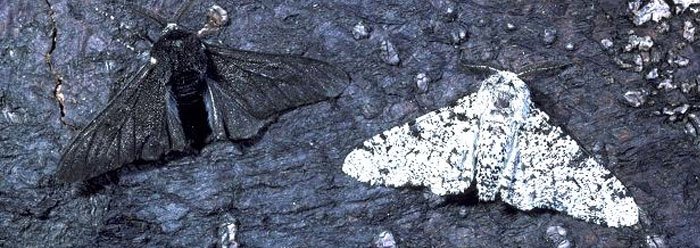
The trees these moths used to live on were white, but have been covered in soot from coal factories. Which moth will be more successful in this environment?
a)
Dark moth
b)
Light moth
c)
Both will be equally successful
d)
Neither will be successful
55.

What process is being shown in this image?
a)
Variation
b)
Natural Selection
c)
Selective Breeding
d)
Homeostasis
56.
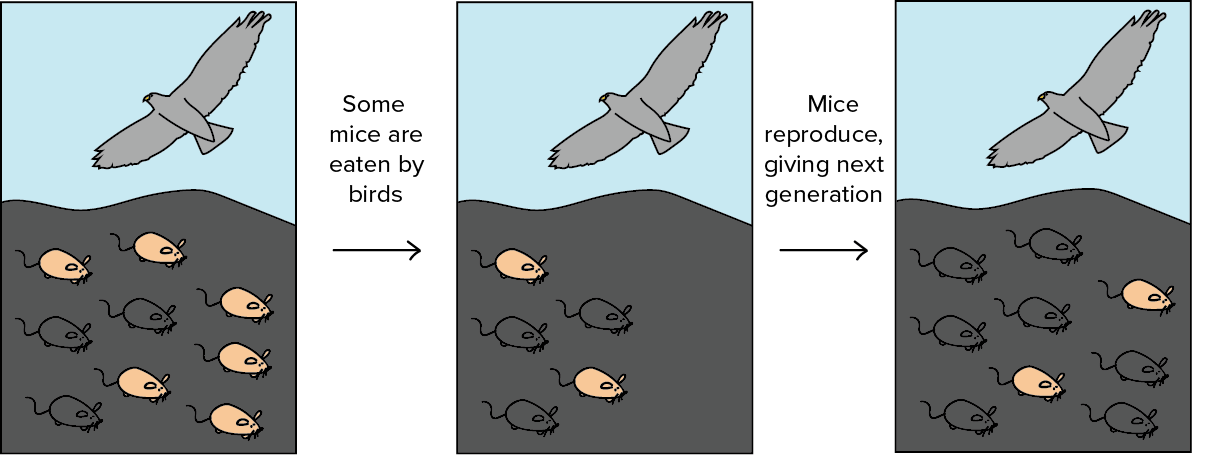
Why is the mouse population changing over time?
a)
The light mice can reproduce more successfully than the dark mice
b)
The hawks eat more dark mice than light mice because the dark mice taste better
c)
The hawks eat more light mice than dark mice because they can see the light mice more easily
d)
The hawks eat more dark mice than light mice because they can see the dark mice more easily
57.
Heredity is the passing of traits from _____________________ to _____________________
a)
predators to prey
b)
water to rain
c)
parents to offspring
d)
fungi to protists
58.
True or False: Recessive traits are ALWAYS present
a)
True
b)
False
59.

A ________________________ is used to predict the possible genotype from certain parents
a)
Mendel Grid
b)
Genetic Tic Tac Toe
c)
Punnett Square
d)
Pedigree Plot
60.

Each one of the boxes on the Punnett Square represents what probability of an offsprings' genotype?
a)
25%
b)
1%
c)
10%
d)
0%
61.
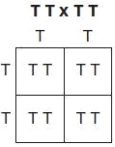
What ratio of the offspring from the cross shown will be homozygous recessive for the trait of tallness?
a)
0 in 4
b)
1 in 4
c)
2 in 4
d)
4 in 4
62.
Aa, DD, bB, yy are all examples of
a)
genotypes
b)
phenotypes
63.
Which of the following genotypes is heterozygous?
a)
Bb
b)
BB
c)
bb
d)
B
64.
Which of the following genotypes is homozygous dominant?
a)
A
b)
Aa
c)
AA
d)
aa
65.
In a flowering plant species, red flower color (R) is dominant over white flower color (r). What is the genotype of any red-flowering plant resulting from this species?
a)
rr
b)
R
c)
RR
d)
RR or Rr
66.
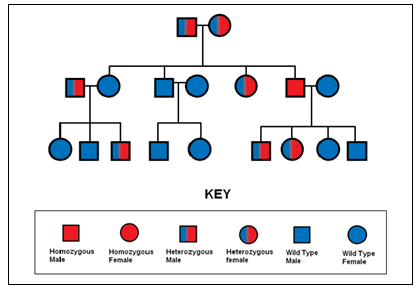
In a pedigree, what shape represents a male?
a)
circle
b)
square
c)
triangle
d)
diamond
67.
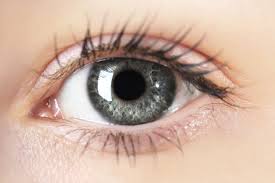
What you see, or the physical appearance.
a)
Genotype
b)
Phenotype
c)
Homozygous
d)
Heterozygous
68.
1 parent
a)
Sexual
b)
Asexual
c)
Both
d)
Neither
69.
2 parent
a)
Sexual
b)
Asexual
c)
Both
d)
Neither
70.
Diverse offspring
a)
Sexual
b)
Asexual
c)
Both
d)
Neither
71.
Identical offspring
a)
Sexual
b)
Asexual
c)
Both
d)
Neither
72.

Genetic variation
a)
Sexual
b)
Asexual
c)
Both
d)
Neither
73.
When a cell divides, what do we call the 2 new cells?
a)
mother cells
b)
father cells
c)
daughter cells
d)
son cells
74.
Before a cell can divide, what must happen?
a)
Nothing, it is always ready to divide
b)
The number of chromosomes must be cut in half
c)
The number of chromosomes must double
d)
The number of chromosomes must triple.
75.
In which type of cells will mitosis occur?
a)
egg cells
b)
sperm cells
c)
jail cells
d)
Body cells except the sperm and egg cells
76.
In meiosis, the haploid number of chromosomes in a human sex cell is:
a)
46
b)
92
c)
22
d)
23
77.
When you start with 1 cell, at the end of mitosis, how many identical cells will you have?
a)
1
b)
2
c)
3
d)
4
78.
After meiosis is complete how many cells will there be?
a)
1
b)
2
c)
3
d)
4
100 %

