Wayground logo

Free Printable Worksheets

Font size

S
M
L
XL
Worksheets

NCFE World History Review

Total questions: 207

Worksheet time: 3hrs 24mins

Name
Class
Date
1.
Where is Mesopotamia located?
a)
Between the Tiger and Ufrates River 
b)
Between the Tigris and Euphrates River
c)
Between the Indus and Nile River
2.
Theocracy is a form of government in which a country is ruled by a religious leader(s)
a)
True
b)
False
3.
What sea does the Nile river empty into?
a)
The Red Sea
b)
The Egyptian Sea
c)
The Mediterranean Sea
4.
Why had the economy of Rome fallen?
a)
Overuse of fields
b)
Too much money spent on gladiatorial fights
c)
Deflation
d)
Too much food
5.
The Ming dynasty fell due to ineffective rulers, corrupt government officials, and lack of money
a)
True
b)
False
6.
How did the Carolingian Empire fall?
a)
Charlemagne had died
b)
Land was divided into four
c)
Invasions from Pirates, Magmars, and Muslims
7.
Who are the Vikings?
a)
Germanic people from Sweden
b)
Scandinavian pirates
c)
Germanic people from Scandinavia
8.
Where did members of the National Assembly take an oath to pledge to meet until a constitution was established?
a)
A restaurant
b)
 A tennis court
c)
An opera house
d)
A theater
9.
Where did the Industrial Revolution begin?
a)
Britain
b)
France
c)
United States
d)
Italy
10.
What occurred from September 1793 to July 1794 in France and was led by Maximilen Robespierre?
a)
Reign of Terror
b)
French Revolution
c)
Age of Robespierre
d)
March on Versailles
11.
What famous 17th century thinker wrote the Leviathan, in which he stated that people need to be strictly controlled?
a)
Adam Smith
b)
Montesquieu
c)
Thomas Paine
d)
Thomas Hobbes
12.
When did the storming of the Bastille take place and mark the beginning of the French Revolution?
a)
July 10, 1788
b)
July 14, 1788
c)
July 10, 1789
d)
July 14, 1789
13.
Which estate was made up of members of the nobility?
a)
First Estate
b)
Second Estate
c)
Third Estate
d)
Both the Second & Third Estates
14.
Which of the following was a reason that members of the Third Estate began to resent the old regime and question the ancient system?
a)
They earned pitiful wages
b)
Faced starvation whenever prices of bread rose
c)
Owed fees from feudal times
d)
All of the above are correct
15.
What was the name of the doctrine created by Napoleon that embodied Enlightenment principles like the equality of all citizens before the law, religious toleration, and the abolition of feudalism?
a)
Bonaparte's Bible
b)
Napoleon's Doctrine
c)
Napoleonic Code
d)
Bonaparte's Articles of Enlightenment
16.
What machine was introduced during the French Revolution as a quicker, less painful form of execution?
a)
Hangman's noose
b)
Guillotine
c)
Electric chair
d)
Steel sword
17.
How did the French people react to Napoleon at first?
a)
They hated him
b)
They loved him
c)
They were indifferent
d)
They didn't think he would last long
18.
What U.S. document was the Declaration of the Rights of Man modeled after, which gave ALL French citizens (especially men) more rights than they had ever had before?
a)
Articles of Confederation
b)
Constitution
c)
Monroe Doctrine
d)
Declaration of Independence
19.
Which of the following was a reason that the French gov't was so deeply in debt in the time leading up to the French Revolution?
a)
Louis XIV has spent money on lavish courts
b)
Expenses looming from the Seven Years War
c)
Rising costs of goods & services
d)
All of these factors contributed to their debt
20.
What estate comprised nearly 95% of all French citizens, including the Bourgeoisie, urban workers, and peasants?
a)
First Estate
b)
Second Estate
c)
Third Estate
d)
Ninety Fifth Estate
21.
Who wrote the book "The Wealth of Nations" that argued free market should be allowed to regulate business activity?
a)
Rene Descartes
b)
Thomas Paine
c)
Adam Smith
d)
Noah Johnson
22.
What does neolithic era mean?
a)
Old stone age
b)
Bronze age
c)
New stone age
d)
Stone Age
23.
What does nomadic mean?
a)
People who stay in one place
b)
People who Hunt and gather food
c)
People who move place to place
d)
People who change their beliefs
24.
What is one of the most important characteristics of the first humans?
a)
Development of clothes
b)
Development of Armor 
c)
Development of Fire
d)
Development of Alphabet
25.
What made the change from Paleolithic period to Neolithic Period happen?
a)
Paleolithic Revolution
b)
Neolithic Agriculture
c)
Neolithic Agricultural Revolution
d)
Paleolithic Agricultural Revolution
26.
What were the 4 River Valley Civilizations?
a)
Indian, Chinese, Roman, Egyptian
b)
Mesopotamian, Greece, Egyptian, Chinese
c)
Indian, Chinese, Mesopotamian, Egyptian
d)
Indian, Roman, Chinese, Mesopotamian
27.
What was the first religion in the Ancient World to believe in ONE GOD?
a)
Buddhism
b)
Hinduism
c)
Zorastrinasim
d)
Judaism
28.
The area between Tigris and Euphrates rivers is part of what?
a)
Alps
b)
Hindu Kush
c)
Fertile Crescent
d)
Egypt
29.
What is a caste system?
a)
A simple form of social organization
b)
A complex form of social organization
c)
A form of organization
d)
None of the above
30.
What is Karma?
a)
Knowledge that all throughts and action result in no consequences
b)
knowledge that all thoughts and actions result in future consequences.
c)
knowledge that all thoughts and actions result in past consequences.
d)
none of the above
31.
The Great Wall provided what for China?
a)
Protection against southern invasion
b)
Protection against eastern invasion
c)
Protection against western invasion
d)
Protection against northern invasion
32.
What happened during age of Hellenistic Age
a)
Alexander spread Greek-like culture
b)
Alexander spread Greek culture
c)
Philip II of Macedon spread Greek-like culture
d)
Philip II of Macedon spread Greek culture
33.
The Roman Empire expanded to include which area?
a)
Italy
b)
Tiber River
c)
Latina
d)
Gaul
34.
What were the Twelve Tables?
a)
Constitution of Italy
b)
Constitution of Roman Republic
c)
Rules that Romans followed
d)
Twelve tables that Romans sat at to discuss constitutions. 
35.
Who was allowed to vote in Rome?
a)
Patrician men
b)
Plebian women
c)
Slaves
d)
Patrician and Plebeian men. 
36.
Which word means belief in MANY gods?
a)
polytheism
b)
monotheism
c)
atheism
d)
deism
37.
Which of the following is a characteristic of a civilization?
a)
Language
b)
Cities
c)
Town halls
d)
Agriculture
38.
The first civilization was located at
a)
India
b)
China
c)
Mesopotamia
d)
Egypt
39.
What was the Sumerian alphabet called?
a)
Hieroglyphics
b)
Greek
c)
Cunieform
d)
Mesopotamia words
40.
What did the early civilizat use for farming?
a)
Aquaducts
b)
Irrigation
c)
Sprinklers
d)
Wells
41.
Which civilization was MONOTHEISTIC?
a)
Sumerians
b)
Babylonians
c)
Egyptians
d)
Israelites
42.
What is a THEOCRACY?
a)
a government where the people vote
b)
a government without a leader
c)
a government where the priests lead in the name of a god
d)
a government between the Tigris & Euphrates rivers
43.
...long before they began to write things down. That period of history is called _________
a)
civilization
b)
prehistory
c)
ancient history
d)
B.C.
44.
A _________ is a large group of people who live in a society that is complex.
a)
ancient history
b)
prehistory
c)
A.D.
d)
civilization
45.
a group, or class, that is made up of people with similar backgrounds, wealth, and ways of living 
a)
Oral traditions 
b)
Civilization
c)
Domesticate
d)
Social class 
46.
the written and recorded events of people
a)
History
b)
Prehistory
c)
Oral traditions 
d)
Civilization
47.
What was the most important use for writing in early civilizations?
a)
self-expression through poetry and fiction
b)
correspondence between people
c)
accurate record keeping
d)
use in schools
48.
The six characteristics of civilizations are cities, governments, _____________, social structure, writing, and
a)
use of fire
b)
pets
c)
religion
d)
calligraphy
49.
The Babylonian leader Hammurabi is best known for his
a)
law code
b)
physical strength
c)
modern political organization
d)
religious reforms
50.
The Zhou dynasty claimed it ruled China because
a)
it had the Mandate of Heaven.
b)
it had an army of artists.
c)
Zhou ancestors had chosen it.
d)
the Mongols feared it.
51.
“According to the National Academy of Sciences, the Earth's surface temperature has risen by about 1 degree Fahrenheit in the past century, with accelerated warming during the past two decades. There is new and stronger evidence that most of the warming over the last 50 years is attributable to human activities.” 
This quote represents
a)
decolonization
b)
environmentalism
c)
information revolution
d)
terrorism
52.
“All peoples have the right to self-determination; by virtue of that right they freely determine their political status and freely pursue their economic, social and cultural development.  Inadequacy of political, economic, social or educational preparedness should never serve as a pretext for delaying independence.” 
This quote represents
a)
decolonization
b)
civil disobedience
c)
fundamentalism
d)
globalization
53.
The main cause of the Arab-Israeli conflicts from 1948 to 1973 was the clash between
a)
Palestine’s and Israel’s race for nuclear technology.
b)
Christian fundamentalism and Orthodox Judaism.
c)
Arab nationalism and Jewish nationalism.
d)
Arab socialism and Israeli capitalism.
54.
1. Creation of Department of Homeland Security
2. Passage of the USA PATRIOT Act 
3. Increased surveillance at U.S. airports
The actions listed above were taken in response to 
a)
US involvement in Operation Condor.
b)
the September 11, 2001 attacks on the Pentagon and World Trade Center.
c)
the bombing of the Murragh building in Oklahoma City in 1995.
d)
the financial crisis of 2008 –2009 and subsequent world recession.
55.
Germany, the Czech Republic, Slovakia, and Ukraine represent countries that
a)
provide sanctuary for violent groups such as Janjaweed and Al Qaeda.
b)
produce large amounts of oil for export and thus have great economic power.
c)
endured genocides at the hands of brutal military dictators in the 1990s.
d)
transitioned to democracy peacefully after the fall of the Soviet Union.
56.
Which of the following groups are associated with Muslim fundamentalism?
a)
Serbs and Croats
b)
Hutus and Tutsis
c)
Al Qaeda and the Taliban
d)
Hezbollah and Burundians
57.
From Stettin in the Baltic to Trieste in the Adriatic, an Iron Curtain has descended across the continent. Behind that line lie all the capitals of the ancient states of Central and Eastern Europe. Warsaw, Berlin, Prague, Vienna, Budapest, Belgrade, Bucharest and Sofia, all these famous cities and the populations around them lie in what I might call the Soviet Sphere, and all are subject, in one form or another, not only to Soviet influence, but to very high, and in some cases increasing measure of control from Moscow.
Which leader is famous for giving the speech from which the excerpt above was taken?
a)
Nikita Krushchev
b)
Harry Truman
c)
Winston Churchill
d)
Ho Chi Minh
58.
Western Democracies:  NATO : : Soviet Union and satellites:  __?__
a)
anti-Comintern Pact
b)
Soviet Security Agency
c)
Warsaw Pact
d)
Communist Defense Alliance
59.
Mao Zedong, Great Leap Forward, Collectivization of Agriculture, Long March, and ??
What completes the list?
a)
Cultural Revolution
b)
Cambodian Genocide
c)
Berlin Blockade
d)
Yalta Conference
60.
What 1962 issue served as an example of brinkmanship between United States & the USSR?
a)
Great Leap Forward
b)
Cuban Missile Crisis    
c)
construction of Berlin Wall
d)
Soviet invasion of Afghanistan
61.
Thomas Hobbes believed...
a)
People needed more government
b)
People needed less government
c)
He was indifferent to government control
d)
proponet for freedom of speech
62.
The enlightened philosopher that advocated for less government and sparked the thought process for the American and French Revolution was?
a)
Thomas Hobbes
b)
Montesquieu
c)
John Locke
d)
Adam Smith
63.
Which country lead the way for the Industrial Revolution?
a)
Britain
b)
France
c)
Russia
d)
United States
64.
Who lead the way with Socialism?
a)
Robert Owen
b)
Karl Marx
c)
John Wesley
d)
Adam Smith
65.
A political and economic theory of social organization that advocates that the means of production, distribution, and exchange should be owned and regulated by the community as a whole.
a)
democracy
b)
communism 
c)
socialism
d)
lassez faire
66.
A political theory derived from Karl Marx, advocating class war and leading to a society in which all property is publicly owned and each person works and is paid according to their abilities and needs.
a)
communism
b)
socialism
c)
democracy
d)
Methodism 
67.
The domination of one country over another. This happened in Africa when European countries tried to come in and take over. 
a)
Imperialism
b)
Communism
c)
Methodism
d)
Socialism
68.
Which Russian Tsar ended serfdom and was assassinated?
a)
Nicolas II
b)
Alexander I
c)
Alexander II
d)
Nicolas I
69.
Suffrage means what?
a)
right to vote
b)
freedom of speech
c)
freedom of religion
d)
right to bear arms
70.
Name 3 causes that lead to the Great War.
a)
Nationalism, Socialism, Imperalism
b)
Nationalism, Imperialism, Communism
c)
Nationalism, Imperialism, Alliances
d)
Nationalism, Imperialism, assisnation of Martin Luther King Jr. 
71.
Germany sent this note to Mexico asking for Mexico to invade the U.S.
a)
Zimmerman Note
b)
Love Note
c)
Federal Papers
d)
Wesley Note
72.
What was the name of the dynasty that ruled over Russia for over 300 years but fell to the Bolsheviks in the Russian Revolution?
a)
Romanov
b)
Putin
c)
Trotsky
d)
Stalin
73.
What is the name of the treaty that ended WWI?
a)
Treaty of Paris
b)
Treaty of London
c)
Treaty of Berlin
d)
Treaty of Versailles
74.
The focus of the Treaty of Versailles was...
a)
help Europe out of bankruptcy
b)
help Germany have a speedy recovery
c)
Reconstruction of the U.S.
d)
put all the blame on Germany and make them pay for the war
75.
How does Japan bring the U.S. into fighting in WWII?
a)
bomb Pearl Harbor
b)
Zimmerman Note
c)
sinking of the Lithuania
76.
What was the date of DDay
a)
June 27, 1944
b)
July 6, 1944
c)
June 6, 1944
d)
May 1, 1945
77.
After WWI, the (blank) was established which was then replaced with (blank) after WWII.
a)
League of Nations; United Nations
b)
United Nations; League of Nations
78.
(blank) took over Eastern Germany and (blank) took over Western Germany after WWII.
a)
France; Russia
b)
Britain; America
c)
America; Japan
d)
USSR; America, Britain, France
79.
NATO was lead by who?
a)
USSR
b)
China
c)
Korea
d)
America
80.
taking away land from the rich and giving to the peasants
a)
tributary state
b)
dowry
c)
pagoda
d)
land reform
81.
in china there was the emperor.......and then there was everybody else....like the wealthy and the peasants
a)
tributary state
b)
gentry
c)
pagoda
d)
land reform
82.
an exchange of 1 family that gives money and a daughter in exchange for a husband
a)
tributary state
b)
dowry
c)
pagoda
d)
land reform
83.
Muhammad is honored by Muslims as -
a)
king
b)
shah
c)
god
d)
prophet
84.
The split between Sunni and Shiite Muslims began with a disagreement about -
a)
choosing Muhammad's successor
b)
designating Mecca as a holy city
c)
the role of women in Islam
d)
practicing the Five Pillars
85.
Which city is important to Judaism, Christianity and Islam?
a)
Rome
b)
Medina
c)
Mecca
d)
Jerusalem
86.
Muslims try to visit the shrine in _______ least once in a lifetime
a)
Jerusalem
b)
Mecca
c)
Baghdad
d)
Rome
87.
Which of the following beliefs is held by Muslims, Jews, and Christians?
a)
belief in reincarnation
b)
belief in Jesus as the Messiah
c)
belief in one God
d)
belief in Muhammad
88.
China is in What continent
a)
Asia
b)
Europe
c)
Africa
d)
Australia
89.
What country is not in Europe?
a)
England
b)
Poland
c)
France
d)
Egypt
90.
What does absolute monarch mean?
a)
a group of people who control shopping
b)
A single ruler who rules with the opinion of all his subjects
c)
a king/queen who believes their power comes from God
d)
a king/queen who holds all the power in their country
91.
What is divine right?
a)
the idea that God created the monarchy and the monarch is His representative on Earth
b)
kings/ queens who hold all the power within their states' boundaries
92.
Why did they call them Early River Civilizations?
a)
Because the emerged near rivers.
b)
Because the people worshiped river gods
93.
Which is not an early civilization?
a)
sumerian
b)
indus valley 
c)
shang
d)
italy
94.
What was Hammurabi's code?
a)
A knight code during feudal times
b)
A unifying group of laws
c)
An encription code
d)
A kings tyrannical laws forced on slaves
95.
Which are two of the 5 characteristics of a Civilization?
a)
specialized workers and record keeping
b)
complex institutions and advanced language 
c)
advanced technology and magastructures
d)
medicine and advanced cities
96.
Which philosopher was Plato’s most prestigious student, was recruited by the Macedonians, and created the scientific method?
a)
Socrates
b)
Plato
c)
Aristotle
d)
Alexander
97.
What positive period of time came for Athens after they defeated the Persians?
a)
The Bronze Period
b)
The Good Times
c)
The Time of Gold
d)
The Golden Age
98.
What was Alexander the Great’s legacy?
a)
The Socratic Seminar
b)
Hellenistic Culture
c)
Horse Drawn Carriages
d)
Being a world traveler
99.
What is one aspect of government that the Greeks contribute to the U.S.?
a)
two branches of government
b)
abolishment of slavery
c)
womens sufferage
d)
presidency
100.
Which of these two infamous warring city-states in Greece had an excellent navy?
a)
Persia
b)
Sparta
c)
Corinth
d)
Athens
101.
What greek city-state was the first to use democratic governing?
a)
Athens
b)
Rome
c)
Sparta
d)
Persia
102.
What was the political system where royalty grave land in exchange for loyalty, and those living off the land where in debt to the noble owners?
a)
oligarchy
b)
fedualism
c)
feudalism
d)
republic
103.
What is the heliocentric view of the universe?
a)
The belief that the Earth is the center of the universe
b)
The belief that the moon is the center of the universe
c)
The belief that the sun is the center of the universe
d)
The belief in more than one God
104.
Nobles in England revolted against king John’s cruel rule and forced him to sign what document?
a)
The Constutuion
b)
Equal Rights Act
c)
Freedom Bill (1632)
d)
The Magna Carta
105.
Which philosopher believed in natural rights and had the initials “JL”?
a)
Jonathon Locke
b)
James Locke
c)
John Locke
d)
John Loche
106.
Which was the only female philosopher of her time?
a)
Jean Jacques Rousseau
b)
Mary Walker
c)
Dorothea Dix
d)
Mary Wollstonecraft
107.
During the Enlightenment, people were encouraged to use their own ability to ______ in order to judge what is right or wrong.
a)
dream
b)
hypothesize 
c)
reason
d)
philosophize 
108.
What was 1 subject that scientists made new discoveries in during the Enlightenment?
a)
anesthesiology 
b)
archeology
c)
bromatology
d)
biology
109.
Which two “Powers” were at war during ww1?
a)
Dellian and Peloponnesian 
b)
Central and Allied
c)
Britain and Germany
d)
Central and Adjacent 
110.
The sinking of the Lusitania led to which countries involvement in the war?
a)
United States
b)
United Kingdom
c)
Ireland
d)
East Africa
111.
What was the trigger for the beginning of world war one?
a)
Germany mobilizing
b)
The assassination of JFK
c)
The sinking of the Lusitania
d)
The assassination of Archduke Franz Ferdinand
112.
The Treaty of Versailles (1919) took away all military power and put huge debt on which country?
a)
Germany
b)
Italy
c)
USA
d)
Berlin
113.

What were the statements against the Catholic Church and posted to the door of the church called?

a)

Treaty of Versailles

b)

95 Theses

c)

Monroe Doctrine

d)

Luther's Bible

114.

What is another name for a Greek city-state?

a)

Sparta

b)

Acropolis

c)

Polis

d)

Oligarchy

115.
Who was the deeply religious German Monk who disagreed with the ways of the Catholic Church.
a)
John Calvin
b)
Thomas Hobbes
c)
Martin Luther
d)
Protestants
116.
The religious reform movement that divided the Western Church is called?
a)
Catholic Change
b)
Lutheran Shift
c)
Roman Reformation
d)
Protestant Reformation
117.
An economic policy where nations increased their wealth and power by obtaining large amounts of gold and silver and by selling more goods than they bought
a)
Socialism
b)
Imperialism
c)
Mercantilism
d)
Militarism
118.

The desire of King Henry VIII to do which of the following led to the founding of the Church of England?

a)

practice Protestantism

b)

create a theocracy

c)

punish the pope

d)

end his marriage

119.
Which was an immediate impact of the European ‘Age of Exploration’? (7-1.1)
a)
Britain controlled the western part of Africa.
b)
For a short time, the Aztec Empire ruled the world.
c)
Islamic culture spread throughout Asia and North America.
d)
European economic, political, and social influence spread throughout the Americas
120.
How did the Industrial Revolution affect the cities?
a)
Made the crime rate decrease
b)
Led to an increase in farm workers
c)
Make the cities cleaner and safer
d)
Led to an increase in population in the cities
121.
A city-state which favored democracy and a well-rounded education. 
(Also, the largest city-state by a wide margin)
a)
Sparta
b)
Athens
c)
Delphi
d)
Corinth
122.

What were the Fourteen Points created after World War 1?

a)

Parts of the “war guilt” clause

b)

A plan for the postwar world

c)

The constitution of the League of Nations

d)

The Terms of surrender offered to Germany

123.
A Soviet citizen living under Stalin’s rule had all aspects of life monitored and controlled by a centralized authority.
This is an example of
a)
A.  totalitarianism. 
b)
B. anarchism.
c)
C. theocracy. 
d)
D. democracy.
124.
Karl Marx’s slogan “. . . WORKERS OF ALL LANDS UNITE!” is associated with which economic theory?
a)
A.  capitalism 
b)
B. communism
c)
C. utopianism 
d)
D. mercantilism
125.
A militaristic city-state where boys were trained from an early age to fight.
a)
Athens
b)
Delphi
c)
Corinth
d)
Sparta
126.

Archduke Franz Ferdinand was the heir to the throne in which country?

a)

Serbia

b)

Belgium

c)

Austria-Hungary

d)

Russia

127.
What was the name of the voyage that took slaves from Africa to the Americas?
a)
Trans Continental Slave Trade
b)
Trans Atlantic Slave Trade
c)
The Long Voyage Home
128.
What was the name of the revolution that changed the name of Saint Domingue and gave the people their independence?
a)
The Haitian Revolution
b)
The Saint Domingue War
c)
The American Revolution
d)
The French Revoltuion
129.
Whose head got cut off during the French Revolution?
a)
The king
b)
The queen
c)
The king and the queen
d)
Nobody
130.
Is Africa a country or a continent?
a)
Country 
b)
Continent
131.
Political and social order that developed during the Middle Ages when royal governments were no longer able to defend their subjects?
a)
Feudalism
b)
Vassal 
c)
Knight
d)
Fief
132.
Under Feudalism, a man who served a lord in a military capacity?
a)
Vassal
b)
Knight
c)
Fief
d)
Chivalry
133.
Under Feudalism a member of the heavily armoured cavalry?
a)
Knights
b)
Fief
c)
Feudal Contract
d)
Feudalism 
134.
Under Feudalism, a grant of land made to a vassal
a)
Fief
b)
Knights
c)
Vassal
d)
Feudalism 
135.
Under Feudalism, the unwritten rules that determined the relationship between a lord and his vassal
a)
Feudal Contract
b)
Manor
c)
Serfs
d)
Medieval
136.
In the Middle Ages, the idea of civilized behavior that developed among the nobility?
a)
Chivalry
b)
Manor
c)
Serfs
d)
Bourgeoisie
137.
In Medieval Europe, an agricultural estate that a lord ran and peasants worked
a)
Manor
b)
Estate
c)
Fief
d)
Chivalry
138.
In Medieval Europe, a peasant legally bound to the land who had to provide labor services, pay rents, and be subject to the lord's control?
a)
Serfs
b)
Medieval
c)
Bourgeoisie
d)
Fief 
139.
Relating to the Middle Ages
a)
Medieval
b)
Fief
c)
Knights
d)
Chivalry
140.
The Middle Class, including merchants, industrialists, and professional people?
a)
Bourgeoisie
b)
Patricians
c)
Plebeians 
d)
Aristocracy
141.
A wealthy, powerful landowner
a)
Patricians
b)
Bourgeoisie
c)
Plebeians
d)
Aristocracy
142.
A uniform system of law that developed in England based on court decisions and on customs and usage rather than on written law codes?
a)
Common law
b)
Magna Carta
c)
Parliament
d)
Estate 
143.
The representative government that emerged. It was comprised of two knights from every country, two people from every town, and all the nobles and bishops throughout England
a)
Parliament
b)
Magna Carta
c)
Patricians
d)
Common Law 
144.
A social or political class
a)
Estate
b)
Parliament
c)
Magna Carta 
d)
Feudalism 
145.
Who were a Germanic peoples whose great love of adventure and search for spoils of war and new avenues of trade may have led them to invade other areas of Europe?
a)
Vikings
b)
Visigoths
c)
Vandals 
d)
Franks 
146.
What is the term that refers to the re-conquest of Spain?
a)
Reconquista
b)
Vassal
c)
Knights
d)
Chivalry
147.
In the 13th century, the ____________________ conquered Russia
a)
Mongols
b)
French
c)
Germans
d)
Muslim Empire 
148.
The American and French Revolutions were both caused in part by
a)
Food shortages owing to poor harvests
b)
Problems of royal succession
c)
High taxation that bred discontent
d)
Lack of social mobility in the peasant class
149.
The Berlin Conference of 1885 was able to
a)
Partition China so that Germany benefited
b)
Deal with economic problems in Asia
c)
Resolve issues of European rivalry in Africa
d)
Bring all of Africa under European control
150.
a belief in one God
a)
Gilgamesh
b)
monotheism
c)
polytheism
d)
scribe
151.
a pyramid-shaped structure with a temple at the tops, has many terraces
a)
pyramid
b)
ziggurat
c)
Ishtar
d)
battering ram
152.
writing developed by the Sumerians that used wedge-shaped marks made in soft clay
a)
writing
b)
monotheism
c)
cuneiform
d)
fertile crescent
153.
a city that governs itself and its surrounding territory
a)
city-state
b)
province
c)
empire
d)
Mesopotamia
154.
Curved strip of land that runs from the Mediterranean Sea to the Persian Gulf
a)
Mesopotamia
b)
Fertile Crescent
c)
silt
d)
Babylon
155.
a system that supplies dry land with water through ditches, pipes, or streams
a)
Fertile Crescent
b)
polytheism
c)
cuneiform
d)
irrigation
156.
What are the two main rivers in Mesopotamia?
a)
Tigris and Nile
b)
Tigris and Amazon
c)
Tigris and Euphrates
d)
Euphrates and Mississippi
157.
A wealthy, upperclass person in the Ancient Roman Republic
a)
patrician
b)
plebian
c)
counsul
d)
dictator
158.
An ordinary citizen in the ancient Roman Republic
a)
patrician
b)
plebian
c)
counsul
d)
mercenary
159.
What is the name of the amphitheater/arena which still stands today in Rome?
a)
Colosseum
b)
Parthenon
c)
aqueduct
d)
city-state
160.
Who changed their name to Augustus ?
a)
Antony 
b)
Octavian
c)
Ceasar 
d)
Draco 
161.
what was the first codified law
a)
Justinian's law
b)
Hammurabi's code
c)
The bill of rights
d)
Greek Orthodox
162.
what was the first codified law
a)
Justinian's law
b)
Hammurabi's code
c)
The bill of rights
d)
Greek Orthodox
163.
What invention helped to spread the information of the Reformation?
a)
The Globe
b)
The Mona Lisa
c)
The Paint Brush
d)
The Printing Press
164.
Feudalism
a)
political system of land agreements with lords and vassals
b)
increase in strong central government
c)
depended on support of emperors
d)
was instituted by the church
165.
Who fought in the Hundred Years' War?
a)
England and China
b)
Japan and France
c)
England and France
d)
England and Italy
166.
Which time are we not currently living in?
a)
A.D.
b)
B.C.E
c)
C.E.
d)
Year of our Lord
167.
Which of these dates is the most recent?
a)
1652 B.C.
b)
A.D. 1560
c)
A.D. 1200
d)
1200 B.C.
168.
Who made the "Lucy" find?
a)
Tim White
b)
Donald Johanson
c)
2 hikers
d)
Pope Gregory
169.
This calendar was introduced in 1582.
a)
Gregorian
b)
Julian
c)
Gailileo
d)
Lucy
170.
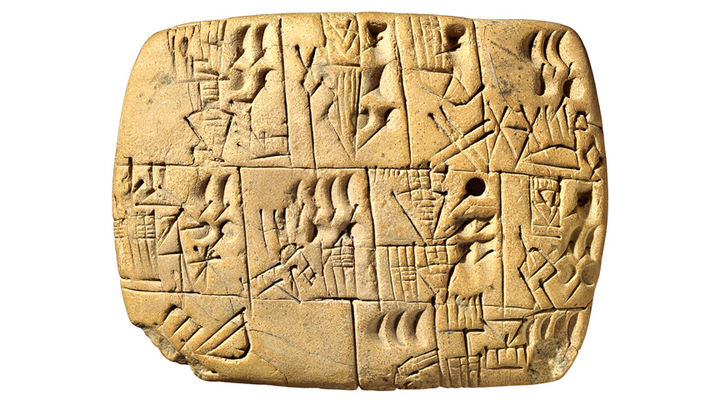
What is this an example of?
a)
Fossils
b)
Artifacts
c)
Cave paintings
d)
pottery
171.
Which is an example of an artifact
a)
Otzi
b)
Lucy
c)
an arrowhead
d)
a bone buried deep in the ground
172.
Lucy is an example a(an)
a)
fossil
b)
artifact
c)
cave painting
d)
iceman
173.
The term A.D. stands for
a)
After Death
b)
Anno Domini
c)
Before Christ
d)
After Christ
174.
The term B.C.E. stands for
a)
Before Christ
b)
After Death
c)
Before Common Era
d)
Common Era
175.
Term meaning, "allowing each person to have only one husband or wife."
a)
sedentary
b)
matriachal
c)
polygamous
d)
monogamous
176.
What is cultural diffusion?
a)
belief in spirits
b)
a society's art, clothing, and buildings
c)
spread of ideas, customs, and technologies
d)
destruction of a society's beliefs 
177.
Rome defeated Carthage in the conflict known as 
a)
Phoenician Conflict
b)
Punic Wars
c)
Struggle of the Orders
d)
Macedonian Wars 
178.
Roman Republic was governed primarily by a
a)
Congress
b)
Dictator
c)
Senate
d)
House of Reps
179.
Who was appointed dictator for life?
a)
Crassus
b)
Octavian
c)
Julius Caesar
d)
Antony 
180.
What was not a reason for the decline of the Roman empire?
a)
A strong military
b)
disruption of trade
c)
invasions
d)
money spent on defense 
181.
The 200 years of Roman history of peace and prosperity...time of the five good emperors
a)
Peace of Rome
b)
Council of Nicea
c)
Roman Cease 
d)
Pax Romana 
182.
Body of civil law created for the Byzantine Empire was known as what?
a)
Orthodox Law
b)
Roman Law
c)
Justinian Code
d)
Greek Code 
183.
What is geography?
a)
Study of topographical features of a region
b)
Study of the universe
c)
Study of world land forms
184.
Put theses events in order.
Atlantic Slave Trade, Black Death, Renaissance, Fall of Roman Empire
a)
Fall of Roman Empire, Black Death, Renaissance, Atlantic Slave Trade
b)
Fall of Roman Empire, Renaissance, Black Death, Atlantic Slave Trade
c)
Renaissance, Atlantic Slave Trade, Black Death, Fall of Roman Empire
d)
Atlantic Slave Trade, Black Death, Renaissance, Fall of Roman Empire
185.
Who were enslaved in the Atlantic Slave Trade
a)
People from Western Africa
b)
Prisoners of war
c)
Criminals
d)
All of the above
186.
What Were The 4 Terms Of The Versailles Treaty In Regards To Germany?
a)
Bow, Repair, Avail, and Trees
b)
Bowman, Rock-star, Avatar, Territory
c)
Blame, Reparations, Army, Slaves
d)
Blame, Reparations, Army, Territory 
187.
Who Created The Five-Year Plan?
a)
Truman
b)
Stalin
c)
Czar Nicholas II
d)
Mussolini
188.
Who Was Czar Nicholas II?
a)
Leader of Democratic Russia
b)
Leader of Soviet Russia
c)
American Soldier
d)
President of The United States
189.
What Type Of Government System Did Mussolini Support?
a)
Communism
b)
Facism
c)
Democracy
d)
Capitalism 
190.
What Is Totalitarianism?
a)
State Controls All Aspects of Life and Government
b)
The People Control The Government
c)
Anarchy
191.
During what decade did the Great Depression  occur?
a)
1910's
b)
1920's
c)
1930's
d)
1940's
192.
Who were the Bolsheviks?
a)
Czar Nicholas' small group of supporters
b)
They protested the war and were essentially the Communist party.
c)
They supported the War and were later considered the Communist party.
d)
leninThey were Rasputin's friends.
193.
Who rose to power as a dictator in Germany in 1933?
a)
Paul von Hindenburg
b)
Otto von Bismarck
c)
Adolf Hitler
d)
Konrad Adenauer
194.
What was the name of Hitler's political party that came to dominate Germany?
a)
NAZI
b)
Soviet
c)
Fascist
d)
Democrat
195.
What was the name of Stalin's totalitarian party that ruled Russia?
a)
NAZI
b)
Soviet
c)
Fascist
d)
Nationalist
196.
Which of the following is the best example of communism?
a)
A govt. encourages people to start a business, but the govt. can tell them what to produce.
b)
People can start their own business, and produce whatever they want.
c)
The govt. controls all the factories, and distributes the profits to the workers equally.
d)
A factory owner can make more money than their employees, but not that much more.
197.
Why Did Jewish Germans Wear The Yellow Star of David?
a)
Nuremberg Laws required Jews to wear this
b)
A symbol Jews picked to represent their religious beliefs
c)
 Yellow because the Germans thought of Jews as cowards 
d)
Part of the Gestapo plan to pick on Jews
198.
What Asian nation began aggressive imperialism of neighboring nations in the 1930s - including Manchuria and the Nanking Massacre?
a)
China
b)
Korea
c)
Vietnam
d)
Japan
199.
Stalin disposed of anyone that went against him and his communist ideas during the
a)
Great Purge
b)
Great Depression
c)
Great Gatsby
d)
Great War
200.
Stalin Helped The Soviet Union by...
a)
restoring the Pope to power.
b)
turning Russia into an industrial nation
c)
listening to the people.
d)
allowing ownership of private property.
201.
What was the name of the book  Hitler wrote in prison that outlined his racist ideas and how Germany should be unified?
a)
Mein Durchfall
b)
Mein Kampf
c)
Meine schlecten Tag
d)
Mein stinkende Schuhe
202.

The Night of the Long Knives

a)

Death to All People

b)

Killing of German leaders who failed during WWI

c)

decimated the Schutzstaffel

d)

weakened Hitler's power

203.
What ideology means anti-Jewish
a)
Anti-Semetism
b)
Sexism
c)
Classism
d)
Nationalism
204.
The episode of anti-Jewish violence that took place throughout Germany on November 9, 1938 was known as 
a)
Kristallnacht.
b)
Mein Kampf.
c)
the Night of the Long Knives.
d)
SchultzStaffel.
205.
After WWI, the Weimar Republic faced many severe problems, including
a)
the lack of a bill of rights and suffrage for women.
b)
runaway inflation and one-party rule.
c)
runaway inflation and many political parties.
d)
the inability to develop a multi-party system.
206.
Germany mainly suffered what problems during the Great Depression?
a)
Inflation and unemployment
b)
Attacks from France and British embargoes
c)
Austrian immigration and communist revolutions
d)
Overproduction of industry and coal strikes
207.
The Triple Alliance during World War I consisted of . . .
a)
The U.S, Britain, and France
b)
Russia, Germany, and Japan
c)
Italy, Japan, and Germany
d)
Germany, Austria-Hungary, and Turkey