
 Worksheets
7th Grade EOC Review
Total questions: 60
Worksheet time: 59mins
Name
Class
Date
1.
Wind, water, and ice are often involved in weathering and erosion, which can cause changes on Earth. However, weathering and erosion are different processes. Which of the following statements best describes how these two processes differ?
a)
Weathering is a much quicker process than erosion.
b)
Weathering breaks rocks apart, while erosion moves rocks or sediment from place to place.
c)
Weathering moves rocks and sediment from place to place, while erosion breaks rocks apart.
d)
Weathering moves rocks without breaking them, while erosion breaks rocks apart before moving them.
2.
Earth has a great variety of surface features that are caused by weathering and erosion. Which of the following describes a change due to weathering?
a)
Ocean waves washing sand off the beach
b)
Rivers carrying soil and rocks through valleys
c)
Wind blowing sand and pebbles off of a sand dune
d)
Tree roots breaking rocks into smaller pieces of rock
3.
The foods we eat provide energy. Which type of energy do we get from our food?
a)
Heat
b)
Electrical
c)
Chemical
d)
Mechanical
4.

Beth is conducting an experiment to determine how often she should fertilize her bean plants so they will grow quickly. She is going to test four plants as shown in the table. Which variable is Beth testing?
a)
Brand of fertilizer used
b)
Amount of fertilizer used
c)
How often the plant is fertilized
d)
Time of day the plants are fertilized
5.
Delilah followed these steps of an investigation:
1. Collect five objects made of different types of metal.
2. Place them on a large laboratory table.
3. Touch each metal object with a magnet and lift slowly.
4. Record observations.
Which of the following statements is Delilah most likely testing?
1. Collect five objects made of different types of metal.
2. Place them on a large laboratory table.
3. Touch each metal object with a magnet and lift slowly.
4. Record observations.
Which of the following statements is Delilah most likely testing?
a)
All types of metal are attracted to magnets.
b)
Each magnet can lift the metal objects to the same height.
c)
Larger magnets can pick up heavier metal objects than smaller magnets.
d)
Heaver metal objects are more attracted to magnets than lighter metal objects are.
6.
Frank uses a bowling ball to demonstrate how energy can cause changes. Which of the following actions would NOT demonstrate a change caused by applying energy to the ball?
a)
He holds the bowling ball in both hands.
b)
He spins the bowling ball with one hand.
c)
He rolls the bowling ball across the floor.
d)
He lifts the bowling ball to place iton a shelf.
7.

Isabelle classified some objects as conductors or as insulators. She made this chart to organize and record her data. Which item is classified incorrectly?
a)
Aluminum Foil
b)
Paper Clip
c)
Toothpick
d)
Wooden Block
8.
5) Many people take vitamin C when they feel they are catching a cold. In fact, some people seem to recover more quickly when they take C vitamins.
What is the main problem with concluding vitamin C helps you fight off a cold based on this information?
What is the main problem with concluding vitamin C helps you fight off a cold based on this information?
a)
We cannot know exactly how vitamin C works.
b)
We cannot keep track of how much vitamin C people take.
c)
We cannot know how long the cold would have lasted without the vitamin C.
d)
We cannot know what other changes in diet people may have made while sick.
9.
Tom is creating an experiment to see what food his pet lizard likes the best. He creates an experiment in which he offers his lizard a choice of crickets or mealworms. He records how much of each choice is eaten each day. At the end of two weeks, Tom finds the lizard has eaten a few more mealworms than crickets.
What must Tom do to be sure his results are valid?
What must Tom do to be sure his results are valid?
a)
include another food option besides crickets
b)
repeat the same experiment to confirm his results
c)
buy additional lizards and begin multiple experiments
d)
feed only mealworms for a while then offer a choice again
10.
Erosion and weathering can both cause changes to the surface of Earth. Which of the following only happens because of erosion and not because of weathering?
a)
rocks form deep underground
b)
rocks become smooth and round
c)
rocks are broken into small pieces
d)
rocks are moved from one place to another
11.

Roger collected 4 rock samples and wrote a description of how each was formed. Which of the following rocks is a metamorphic rock?
a)
A
b)
C
c)
B
d)
D
12.
Which of the following is part of the lithosphere?
a)
Crust
b)
Upper mantle
c)
Both Upper mantle and crust
d)
All of Earth above its cores
13.
What type of rock would you most likely find a fossil inside of?
a)
sedimentary
b)
igneous
c)
metamorphic
d)
diamond
14.
True or False:
Sedimentary rocks always form under water.
a)
true
b)
false
15.
What type of rock is formed when magma and lava cools and hardens?
a)
minerals
b)
sedimentary
c)
igneous
d)
metamorphic
16.
What type of rock is formed when an existing rock has been changed into a new rock?
a)
sedimentary
b)
igneous
c)
minerals
d)
metamorphic
17.
What layer of the Earth are minerals found in?
a)
outer core
b)
inner core
c)
mantle
d)
crust
18.
What type of rock forms when sand, particles of rock, bits of soil, and remains of once-living things are cemented?
a)
igneous
b)
sedimentary
c)
minerals
d)
metamorphic
19.
Which of the following is a type of rock?
a)
igneous
b)
metamorphic
c)
sedimentary
d)
All of the above
20.
What do we call the scientist who studies rocks?
a)
geologist
b)
rock scientist
c)
rockologist
d)
mineralogist
21.
Metamorphic rocks are existing rocks that have been changed into new rocks by _____.
a)
heat
b)
time
c)
pressure
d)
All of the above
22.
The continuous series of change that rocks undergo is known as the _____.
a)
rock cycle
b)
water cycle
c)
hibernation
d)
metamorphisis
23.
The distance between the position of rest and the highest point of a wave
a)
amplitude
b)
crest
c)
trough
d)
wavelength
24.
The existence of different species in a given area or specific period of time
a)
frequency
b)
biotic
c)
biodiversity
d)
meiosis
25.
The peak or highest point on a wave
a)
crust
b)
trough
c)
amplitude
d)
crest
26.
The number of cycles or waves per unit time
a)
frequency
b)
wavelength
c)
period
d)
velocity
27.
The process of nuclear division in cells during which the number of chromosomes is reduced by half
a)
mitosis
b)
homozygous
c)
heterozygous
d)
meiosis
28.
The process of nuclear division in cells during which the nucleus of a cell divides into two nuclei, each with the same number of chromosomes
a)
mitosis
b)
homozygous
c)
heterozygous
d)
meiosis
29.
A cell structure that contains the cell's genetic material; also where protons and neutrons are located
a)
organelle
b)
allele
c)
nucleus
d)
molecule
30.
The theory in which Earth's crust is divided into sections whose movements cause seismic activity along boundaries
a)
convergent
b)
transform fault
c)
plate tectonics
d)
conservation of mass and energy
31.
Internal energy found by adding the kinetic energy of particles making up a substance
a)
work
b)
potential energy
c)
thermal energy
d)
pressure
32.
The lowest point on a wave
a)
crest
b)
trough
c)
amplitude
d)
compression
33.
The distance between crests of a wave
a)
wavelength
b)
amplitude
c)
rarefaction
d)
frequency
34.
Any alternate form of a gene that an organism may have for a particular trait
a)
Dominance
b)
Allele
c)
Genotype
d)
Homozygous
35.
Heat transfer in a gas or liquid by the circulation of currents from one region to another
a)
Conduction
b)
Radiation
c)
Convection
d)
Thermal energy
36.
Tendency of certain alleles to mask the expression oftheir corresponding alleles
a)
Homozygous
b)
Recessive
c)
Dominance
d)
Recessive
37.
The sum total of the genetic information contained in an organism
a)
Allele
b)
Biotic
c)
Phenotype
d)
Genotype
38.
Cell or organism that has two different alleles for a particular trait
a)
Homozygous
b)
Heterozygous
c)
Dominance
d)
Recessive
39.
Cell or organism that has identical alleles for a particular trait
a)
Homozygous
b)
Heterozygous
c)
Dominance
d)
Recessive
40.
A scientific explanation of facts and patterns resulting from observations or experiments
a)
Theory
b)
Tropism
c)
Pressure
d)
Product
41.
A dense ball of solid iron and nickel.
a)
crust
b)
inner core
c)
mantle
d)
outer core
42.
What part of the earth is a layer of rock that comprises 67% of Earth’s mass?
a)
mesosphere
b)
mantle
c)
asthenosphere
d)
lithosphere
43.
Temperature and pressure _____________________ as you go deeper into the earth.
a)
increase
b)
decrease
c)
increase and then decrease
d)
stay the same
44.
The type of plate boundary where two plates come together is a .....
a)
Convergent Boundary
b)
Divergent Boundary
c)
Transform Boundary
d)
Plate Boundary
45.
Which of the following causes Earth's tectonic plates to move?
a)
Energy from the Sun
b)
Magnetic Pole Reversal
c)
Convection currents in the mantle
d)
Faults in Mountain Ranges
46.

What type of event will occur at this boundary?
a)
Earthquake
b)
Volcano Eruption
c)
Tornado
d)
Mountain Building
47.

Cattle egrets forage (feed) in fields among cattle. The egret gets easy access to flying insects stirred up by the cattle, and the cattle don't care if they are there or not.
a)
mutualism
b)
commensalism
c)
competition
d)
parasitism
48.
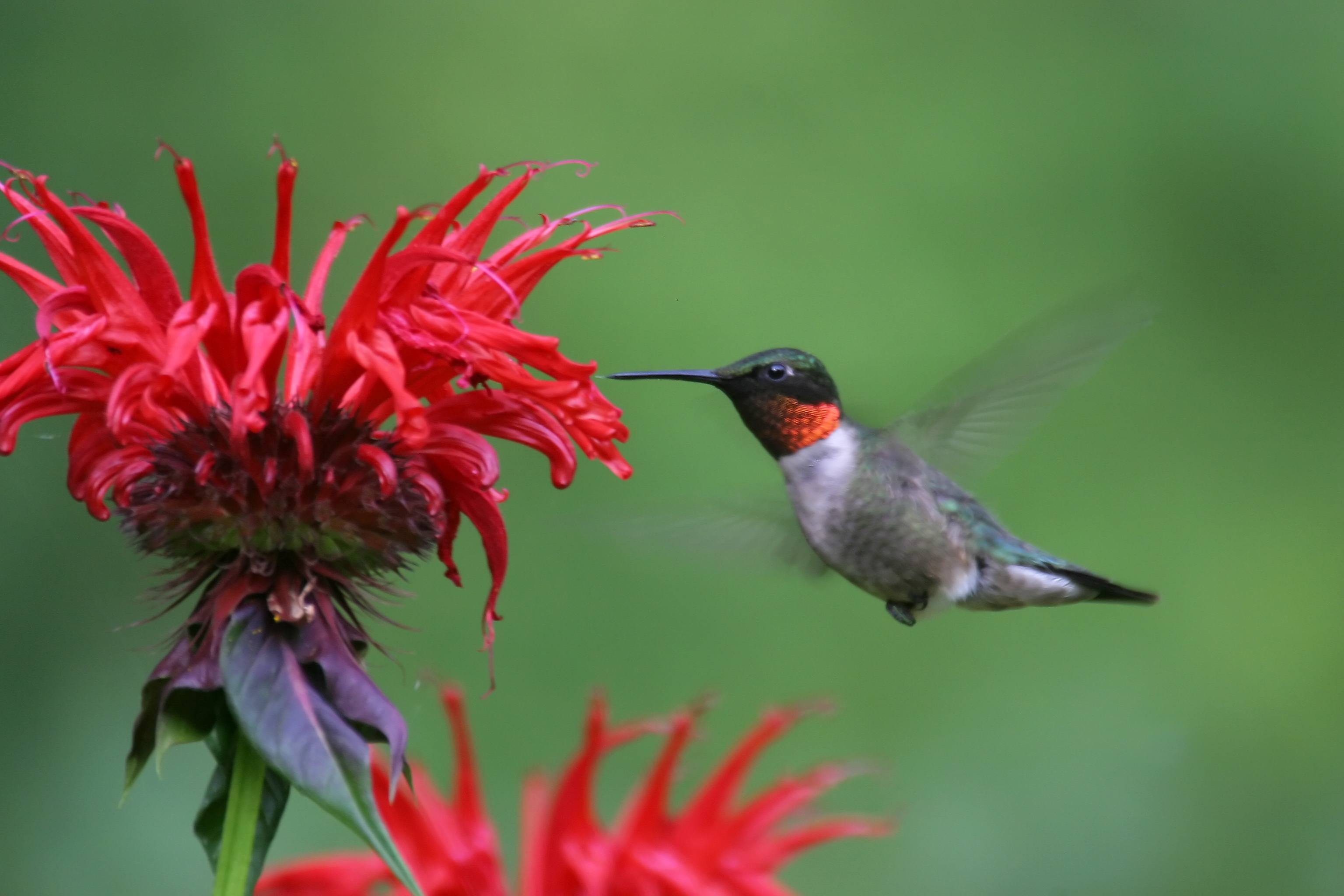
What type of symbiosis? Hummingbirds feed on nectar from flowers. The flowers are pollinated by hummingbirds as they move from flower to flower.
a)
commensalism
b)
mutualism
c)
parasitism
d)
predation
49.
Two male Giraffes are fighting over the last green leaf of a tree that is dying.
a)
Competition
b)
Mutualsim
c)
Predation
d)
Commensalism
50.

Which best describes what a food chain shows you?
a)
Energy flow through an ecosystem
b)
Food flowing through an ecosystem
c)
Consumers going into other consumers
d)
Who eats who
51.

What are plants called in a food chain?
a)
Producers
b)
Consumers
c)
Decomposers
d)
Scavengers
52.

What are animals called in a food chain?
a)
Producers
b)
Consumers
c)
Decomposers
d)
Plants
53.

What are the organisms that break down dead stuff?
a)
Producers
b)
Consumers
c)
Decomposers
d)
Organisms
54.

Where does the energy start in this food chain?
a)
Plant
b)
Sun
c)
Deer
d)
Wolf
55.

What is the role of decomposers in a food chain?
a)
Use sunlight to make food
b)
Eat other organisms to gain energy
c)
Make the food for the whole food chain
d)
Break down dead organisms and add nutrients to the soil
56.
a deer population has significantly increased, the best hypothesis is
a)
the deer's main predator has been eliminated
b)
competition increased
c)
decreased water levels of local ponds
d)
organisms that rely on similar food sources migrated to the area
57.
Which event is the best example of competition between species in a pond?
a)
dragonflies landing on lily pads
b)
lizards and snakes lying in the sun
c)
hawks eating mice
d)
frogs and toads eating flies
58.

In pea plants, the tall allele is dominant to the short allele. What key would demonstrate this?
a)
Tall = T
Short = S
Short = S
b)
Tall = T
Short = t
Short = t
c)
Tall = t
Short = T
Short = T
d)
Tall = TT
Short = tt
Short = tt
59.

A green pea plant (Gg) is crossed with a yellow pea plant (gg). Describe the genotype of the offspring. (Be sure to remember that the capital letter is dominant).
a)
50% heterozygous and 25% homozygous recessive
b)
50% heterozygous and 50% homozygous recessive
c)
100% homozygous recessive
d)
25% heterozygous and 50% homozygous
60.

A tall plant (Tt) is crossed with a short plant (tt). What is the phenotype of the offspring?
a)
75% tall; 25% short
b)
25% tall; 75% short
c)
50% tall; 50% short
d)
100% tall
100 %

