wayground logo

Free Printable Worksheets

Font size

S
M
L
XL
Worksheets

Environmental Issues

Total questions: 55

Worksheet time: 1hrs 24mins

Name
Class
Date
1.
Which human activity would be most likely to have a negative impact on the environment?
a)
Planting trees to control soil erosion
b)
Limiting the use of chemicals that kill weeds.
c)
Stopping the draining of swamps.
d)
Burning coal and oil to generate electric power.
2.
What is a renewable resource?


a)
 one that can be replaced quickly 
b)
one that is man-made
c)
one that comes from the sun 
d)
one that will never run out 
3.
Fertilizers and pesticides are examples of
a)
industrial waste
b)
agricultural waste
c)
sewerage
d)
road runoff
4.
The gradual increase in the temperature of the atmosphere is known as _____.
a)
drought
b)
point source
c)
global warming
d)
heat
5.
What is the major cause for air pollution? 
a)
factories and cars
b)
cigarretes 
c)
deforestation
d)
oil spills
6.
Coal, oil and gas are examples of
a)
Shell Fuels
b)
Bone fuels
c)
Fossil fuels
d)
Sea fulels
7.
Nutrient Pollution is...
a)
Pollution made up of bacteria
b)
Pollution made up of chemicals
c)
Pollution made up of phosphate and nitrate
d)
Pollution made up of too much dirt and land moving into the water
8.

Three general categories of environmental issues are related to

a)

resource use, pollution, and population growth.

b)

pollution, climate change, and greenhouse gases.

c)

air, water, and soil pollution.

d)

natural resources, costs, and benefits.

9.

Advances in medicine and in farming have increased

a)

human population growth

b)

biodiversity

c)

renewable resources

d)

exotic species

10.

Trash in the environment is a problem because

a)

animals can eat it and die.

b)

animals can get their heads stuck in containers.

c)

it can kill ocean plants and animals.

d)

all of the above

11.

Over the past 200 years, the level of carbon dioxide in the atmosphere has

a)

increased steadily.

b)

increased, but recently decreased.

c)

decreased steadily.

d)

shown no change.

12.

In making environmental decisions and policies, governments interact with

a)

organizations.

b)

businesses.

c)

citizens.

d)

all of these.

13.

Which of the following is not a condition of sustainability?

a)

considering ways of not being harmful to the environment

b)

avoiding depleting natural resources

c)

using resources without regard to the effects on the environment

d)

supporting long-term ecological balance

14.
When a population __________, the demand for resources increases.
a)
declines
b)
grows
15.

Climate change is caused by rising levels of

a)

the oceans.

b)

carbon dioxide and other greenhouse gases.

c)

oxygen in the atmosphere.

d)

fossil fuels.

16.
The main human activity that releases greenhouse gases is
a)
using bottled water
b)
burning fossil fuels
c)
texting on cellphones
d)
eating meat
17.
Changes in temperature are expected to be greatest
a)
near the equator
b)
near the poles
18.
Deforestation contributes to greenhouse gases by
a)
loss of trees that would otherwise remove carbon dioxide from the air
b)
burning wood releases carbon dioxide
c)
Both are correct
19.
Some greenhouse gases are naturally present in the Earth's atmosphere
a)
True
b)
False
20.
Melting of glaciers and polar ice caps....
a)
will result in cooler temperatures in the Arctic
b)
will result in sea-levels rising
c)
Will have no effect on ecosystems
d)
None of the above
21.
The warming of the atmosphere by the trapping of heat being radiated to space is called
a)
evaporation
b)
condensation
c)
the greenhouse effect
d)
radiation
22.
The ozone layer protects us from
a)
UV rays
b)
CFCs
c)
Increased atmospheric heat
d)
Decreased atmospheric heat
23.
The ozone layer is damaged by
a)
CFCs
b)
Increase in greenhouse gases
c)
Increased global temperatures
d)
Sulfuric and nitric acids
24.
What absorbs ultraviolet rays in the atmosphere?
a)
troposphere
b)
stratosphere
c)
ozone layer
d)
greenhouse gases
25.
Which of the following is not a cause of acid rain?
a)
Volcanic Eruptions
b)
Burning of fossil fuels
c)
electric cars
d)
combustion engins
26.
Sulfur and nitrogen oxide release into the atmosphere is most responsible for

a)
ozone depletion
b)
acid precipitation
c)
global warming   
d)
eutrophication 
27.
6. What is the PH Scale used for?
a)
To measure something as an acid or base.
b)
To measure acids only.
c)
To measure bases only.
28.
What two air pollutants that most often produce acid rain?
a)
Nitrogen Oxides and Sulfur Oxides
b)
Carbon Dioxide and Ozone
c)
Particulate Matter
d)
None of the above
29.
What human activity is the primary source of acid rain?
a)
Cars
b)
deforestation
c)
coal powerplants
d)
volcanoes
30.
An organic substance that changes color in the presence of an acid or base
a)
indicator
b)
inhibitor
c)
catalyst
d)
salt
31.
Which is the stronger acid?
a)
pH 1
b)
pH 4
c)
pH 8
d)
pH 13
32.
What is the pH of a neutral substance?
a)
0
b)
5
c)
7
d)
10
33.
Biodiversity refers to
a)
extinct species
b)
the variety of species on Earth
c)
nonrenewable resources
d)
the rate of species decline
34.
When taken to a new habitat, non-native plants often threaten native plants of the new habitat.  Why do they do this?
a)
Non-native plants are able to mutate rapidly
b)
Non-native  plants cause native animals to relocate
c)
Non-native plants are able to be used for medicine
d)
Non-native plants compete with native plants for resources
35.
What effect will an invasive species have on the carrying capacity of an ecosystem?
a)
The carrying capacity will increase
b)
The carrying capacity for everyone will decrease
c)
The carrying capacity will only decrease for those in competition for same resource
d)
The carrying capacity for all animals will stay the same
36.
1. What makes a species invasive?
a)
Moving to a new ecosystem and taking resources from natives 
b)
Not having papers
c)
Species that can't adapt
d)
Plants that take up too much space
37.
If a blue catfish is introduced and eats the large fish who eat the smaller fish, what will happen to the population of the smaller fish?
a)
Increase
b)
Decrease
c)
Stay the same
d)
No affect on smaller fish
38.

Which organism in the food web would

contain the highest concentration of chemical pollutants?

a)

producers

b)

primary consumers

c)

secondary consumers

d)

tertiary consumers

39.

Which organism in the food web shown to the right would

contain the lowest concentration of chemical pollutants?

a)

producers

b)

primary consumers

c)

secondary consumers

d)

tertiary consumers

40.

Algae grow rapidly when certain nutrients are added to the water supply causing an algal bloom. Eutrophication describes the process of adding nutrients to the water supply. What human activity is most responsible for the eutrophication that leads to algal blooms?

a)

Burning fossil fuels

b)

Disposing of pesticides

c)

Fertilizer for food crops

41.

The rapid growth of algae, called an algal bloom, can lead to the formation of dead zones that cannot sustain aquatic life. This is mainly because the algal bloom lowers the amount of –

a)

chemical pollutants

b)

dissolved oxygen

c)

freshwater runoff

42.

Which organism shown in the food chain above would contain the greatest concentration of chemical pollutants?

a)

phytoplankton

b)

krill

c)

tuna

d)

shark

43.

Pollution resulting from the use of fertilizers and the disposal of sewage from humans and livestock can lead to an algal bloom. The effects of these pollutants on algae growth can be intensified as a result of which of the following?

a)

The decreased use of solar power

b)

An increase in freshwater runoff

c)

An increase in organic farming practices

44.

Most health experts recommend only eating tuna a few times a week and only eating shark a few times a month. Why would health experts have this view of eating these fish?

Hint: think biomagnification

a)

Most fish are low in protein and high in saturated fats which can cause health problems

b)

People with diets high in fish tend to have high blood pressure and heart issues

c)

Eating these fish could result in the buildup of pollutants in the fat tissue of humans

45.

When deforestation occurs, some species become extinct as their habitats are destroyed. What effect does this have on global biodiversity?

a)

the biodiversity of the planet increases

b)

the planet’s biodiversity is not affected

c)

the biodiversity of the planet decreases

46.

Why do we want to keep fertilizers (nitrogen and phosphorous) out of water? (Pick best answer)

a)

Prevent eutrophication

b)

nitrogen will make the water cloudy

c)

fertilizer will attract rats

d)

to reduce global warming

47.

Pollution that affects small animals will eventually affect large predators because of....

a)

eutrophication

b)

biomagnification

c)

pesticides

d)

synergistics

48.

Cultural eutrophication involves mainly:

a)

dense growth of organisms such as plankton

b)

biosolids

c)

aerobic aquatic bacteria

d)

nitrate and phosphate effluents

49.

Water may be used to cool power plants and released back into the environment causing

a)

thermal pollution

b)

chemical pollution

c)

heavy metal pollution

d)

sedimentation

50.
DDT is a pesticide that kills mosquitoes. If a small amount gets into the water it will bioaccumulate.  This will result in
a)
small fish have a larger concentration of DDT than large fish
b)
large fish having a larger concentration of DDT than small fish
c)
water having a larger concentration of DDT than the fish that live in the water
51.
__________ is an energy resource that WILL run out in the next several hundred years.
a)
Renewable Energy Resource
b)
Nonrenewable Energy Resource
52.
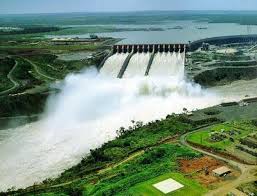
Hyrdo Power is a __________ energy resource.
a)
Renewable
b)
Nonrenewable
53.
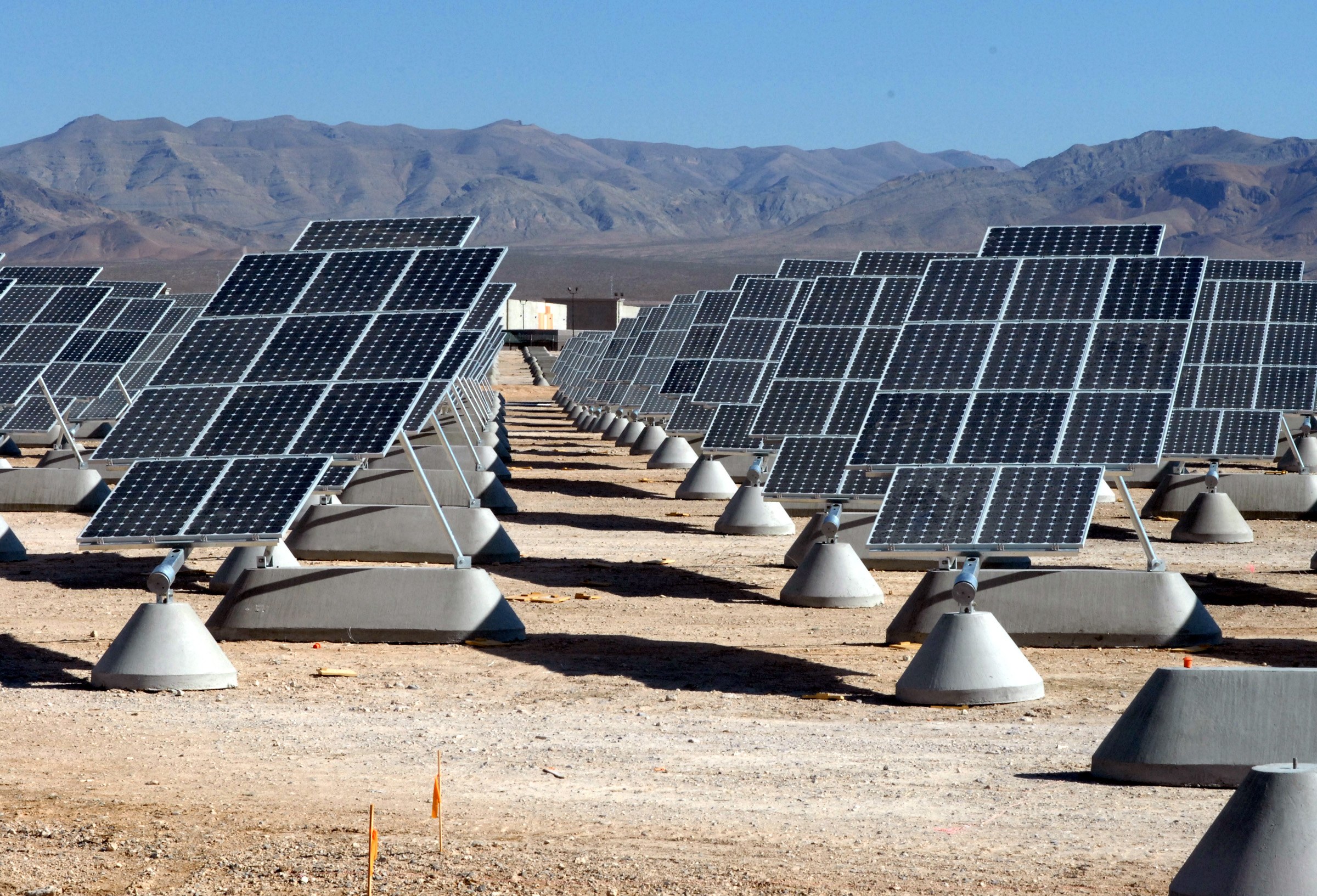
Solar Power is a __________ energy resource.
a)
Renewable
b)
Nonrenewable
54.
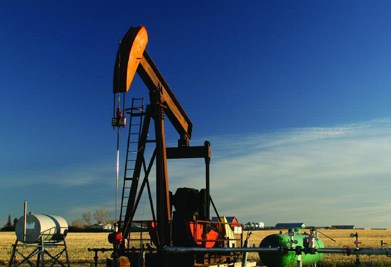
Oil is a __________ energy resource.
a)
Renewable
b)
Nonrenewable
55.
__________uses heat from the interior of the Earth.  We will be using this at our new school!
a)
Solar
b)
Geothermal
c)
Nucler
d)
Wind