

Wayground logo

Free Printable Worksheets

Font size

S
M
L
XL
Worksheets

Carbon, Oxygen, Water Cycle practice assign - 2nd

Total questions: 14

Worksheet time: 12mins

Name
Class
Date
1.

________________ could increase the amount of oxygen in the air.

a)

Building more houses

b)

Burning more oil

c)

Paving more streets

d)

Planting more trees

2.

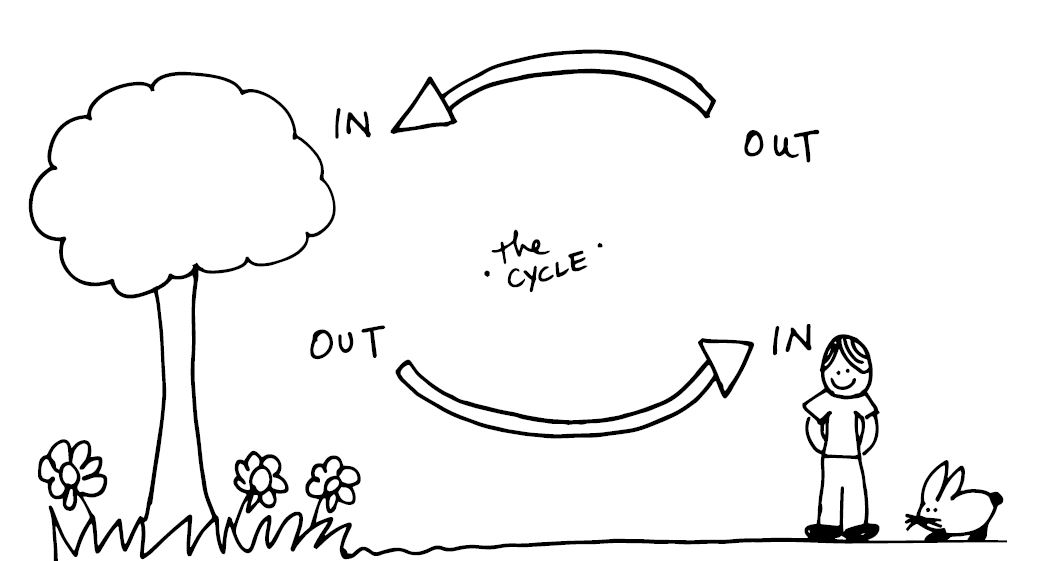
How plants and animals interact in the carbon dioxide/oxygen cycle?

a)

Plants release oxygen into the atmosphere which animals inhale. Animals exhale carbon dioxide into the atmosphere which is taken in by plants.

b)

Animals release oxygen into the atmosphere which plants inhale. Plants release carbon dioxide into the atmosphere which is breath in by animals.

c)

Plants and animals don't need each other.

d)

Plants and animals take in oxygen and release carbon dioxide.
3.
Animals and plants use substances that cycle through the environment.  Which substance is needed by plants to survive and is released into the environment by animals?
a)
oxygen
b)
sugar
c)
salt
d)
carbon dioxide
4.

All of the following put more CO2 into the air EXCEPT...

a)

photosynthesis

b)

your breathing

c)

the process of decomposition

d)

combustion

5.

When humans burn fossil fuels, most of the carbon quickly enters the atmosphere as this gas:

a)

Water

b)

Carbon Dioxide

c)

Oxygen

d)

Water

6.
Which one of these does not add CO2 to the atmosphere?
a)
cooking with gas
b)
planting trees
c)
burning wood
d)
riding in a bus
7.
Combustion is another word for _______________.
a)
a train
b)
a bus
c)
a dog
d)
burning
8.
How do living organisms return carbon to the atmosphere in the carbon cycle?
a)
respiration and photosynthesis
b)
 decomposition and respiration
9.
What is the water cycle?
a)
the 3 forms of water
b)
the movement of water on, above, or below the surface of the Earth
c)
when water melts
d)
when clouds form
10.
What part of the water cycle does this picture show?
a)
condensation
b)
precipitation
c)
evaporation
11.
Which of these is an example of precipitation?
a)
snow
b)
air
c)
clouds
d)
vapor
12.
Which is the opposite of condensation?
a)
runoff
b)
evaporation
c)
precipitation
d)
transpiration
13.
Which best explains why runoff is important?
a)
It returns water to other locations on Earth
b)
It increases the chance of flooding
c)
It makes evaporation occur faster
d)
It increases condensation
14.
What is evaporation?
a)
The part of the water cycle when the sun heats up water, turning it from a liquid into water vapor or steam. It rises from the ground into the air.
b)
The part of the water cycle when the water vapor in the air gets cold. The water turns back into a liquid and forms clouds.
c)
The part of the water cycle when clouds get heavy and can no longer hold the liquid water. This causes the water to fall from the sky to the earth as rain, snow, sleet, or hail.
