
 Worksheets
Plate Tectonics
Total questions: 38
Worksheet time: 38mins
Name
Class
Date
1.
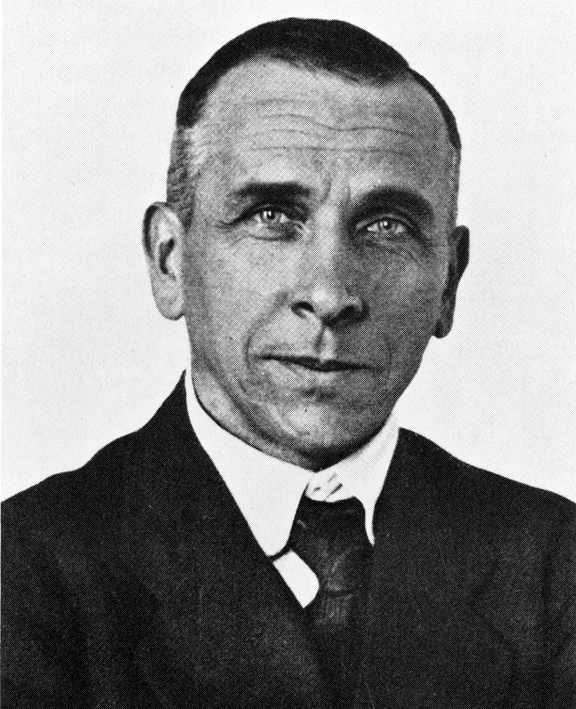
Who is the person credited with developing the theory of continental drift?
a)
Harry Hess
b)
Galileo
c)
Alfred Wegener
d)
Newton
2.
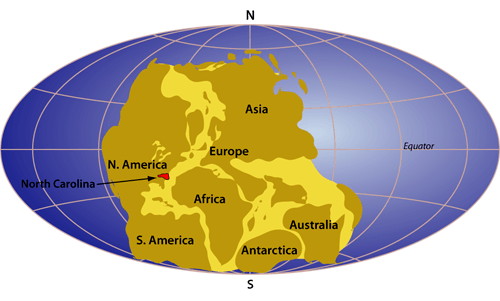
What is this a picture of?
a)
plate tectonics
b)
continental drift
c)
pangea
d)
glacier scaring
3.
What does the theory of continental drift state?
a)
The continents were once joined in a super-continent and have moved over time
b)
Continents are stationary and do not move
c)
The Earth is broken into lithospheric plates that move due to convection currents
d)
none of the above
4.
What evidence did Wegener use in his theory?
a)
Land features
b)
Fossils
c)
climate
d)
all of the above
5.
Why did no one believe Wegener's thoery?
a)
He could not explain HOW the continents moved
b)
He didn't have evidence
c)
His data was wrong
d)
He didn't use the right technology to gather data
6.
What two specific continents fit together most noticeably?
a)
Africa and North America
b)
South America and Europe
c)
South America and Africa
d)
Antartica and Africa
7.

What is the theory that states that parts of the Earth's crust slowly drift atop a liquid core.
a)
Theory of Evolution
b)
Heliocentric Theory
c)
Geocentric Theory
d)
Continental Drift Theory
8.
In the early 20th century, Wegener published a paper explaining his theory that the continental land masses were _______.
a)
Gliding
b)
Sliding
c)
Drifting
d)
They're not moving
9.
The OLDEST seafloor is located?
a)
Closest to the mid-ocean ridge
b)
Farthest from the mid-ocean ridge
10.
True or False : Sea-floor Spreading adds new material to the ocean floor?
a)
True
b)
False
11.
What happens when Subduction occurs?
a)
Parts of the crust fall into the mantle
b)
Parts of the crust fall into the core
c)
Parts of the crust fall into space
d)
None of the Above
12.
When one tectonic plate __________ under another at a convergent boundary it sinks back in the mantle.
a)
subducts
b)
falls
c)
sinks
13.
The oceanic crust is pushed aside on both sides of the
a)
Continent's edge
b)
Deep-ocean trench
c)
Mid-ocean ridge
14.
Which type of crust is more dense and thinner?
a)
Continental
b)
Asthenosphere
c)
Oceanic
d)
Byers
15.
Which of the following supports the theory of seafloor spreading?
a)
Fossils
b)
Crustal Age
c)
Magnetic Reversal
d)
Continuous Mountain Chains
16.
What causes the crust to move?
a)
convection
b)
conduction
c)
tension
d)
radiation
17.
The entire cycle of heating occurring in the mantle is called
a)
Convection currents
b)
Compound currents
c)
heat currents
d)
subcurrents
18.
What 2 kinds of evidence were used to prove that the seafloor spread?
a)
Pillow lava, age of rocks, WWII shipwrecks
b)
Age of rocks, magnetic seafloor stripes, WWII ship logs
c)
magnetic seafloor stripes, age of rocks
19.
What technology was used during WWII to detect enemy submarines and produce the first map of the seafloor?
a)
Sonar
b)
Radar
c)
GPS
20.
What are Mid-Ocean Ridges?
a)
A chain of underwater waterfalls
b)
A chain of underwater volcanos
c)
A chain of underwater mountains
d)
A chain of underwater rocks
21.
Which is NOT evidence of sea-floor spreading?
a)
Molten magma constantly erupting
b)
Drilling samples of rock
c)
Magnetic stripes
d)
Fossil evidence
22.
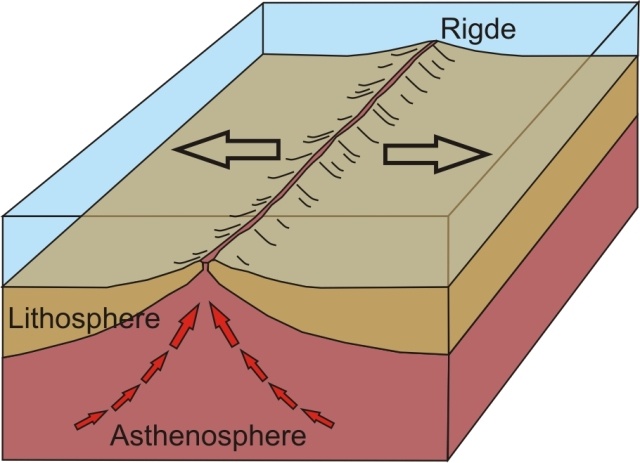
What kind of plate boundary is shown here?
a)
divergent
b)
convergent
c)
transform
d)
subducting
23.

What kind of plate boundary is shown here?
a)
divergent
b)
convergent
c)
transform
d)
submergent
24.

What kind of plate boundary is shown here?
a)
divergent
b)
convergent
c)
transform
d)
strike slip
25.
What geologic feature/event you be most likely to find at a transform boundary?
a)
Earthquakes
b)
Volcanoes
c)
Mountains
d)
Rift Valleys
26.
What geologic feature/event would you most likely to find at a divergent boundary between two pieces of oceanic crust?
a)
Rift Valley
b)
Mid-Ocean Ridge
c)
Island Arc
d)
Flat land
27.
What geologic feature/event would you most likely to find at a divergent boundary between two pieces of continental crust?
a)
Mid-Ocean Ridge
b)
Mountain
c)
Rift Valley
d)
Island Arc
28.
What geologic feature/event would you most likely to find at a convergent boundary between two pieces of continental crust?
a)
Volcano
b)
Mountain
c)
Rift
d)
Island Arc
29.
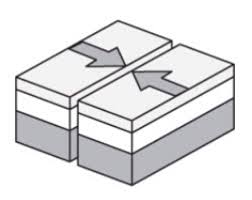
Name the boundary
a)
convergent boundary
b)
divergent boundary
c)
transform boundary
d)
sergent boundary
30.

Name the boundary
a)
convergent boundary
b)
divergent boundary
c)
transform boundary
d)
sergent boundary
31.
In which type of boundary do the plates move away from each other?
a)
convergent
b)
normal
c)
divergent
d)
transform
32.
Plates slide past one another at ____________ boundaries.
a)
divergent
b)
convergent
c)
transform
d)
submergent
33.

Which of these events can ONLY happen on a DIVERGENT BOUNDARY?
a)
Rift Valley
b)
Mountain
c)
A peninsula
d)
An Insanely complex, long answer that you will click out of instinct.
34.

What type of boundary is the SAN ANDREAS FAULT on?
a)
Covergent
b)
Transformers
c)
Divergent
d)
Transform
35.

Which of these events can ONLY happen at a CONVERGENT BOUNDARY?
a)
Rift Valley
b)
A Tree
c)
Volcano
d)
Orcacane
(Orca Hurricane)
(Orca Hurricane)
36.
The stress that occurs when two plates pull apart
a)
Tension
b)
Shearing
c)
Compression
d)
Ring of Fire
37.
The stress that occurs when two plates slip past each other
a)
Compression
b)
Shearing
c)
Tension
38.
A stress force that occurs when two plates come together
a)
Tension
b)
Shearing
c)
Compression
100 %

