
NEW
Font size
S
M
L
XL
 Worksheets
Physics First Final - Astronomy
Total questions: 25
Worksheet time: 16mins
Name
Class
Date
1.
Which of these statements is true?
a)
There is no gravity on the moon.
b)
The moon's phases are caused by ocean tides.
c)
The moon has the same amount of iron as the Earth.
d)
There is less gravitational pull on the moon than there is on Earth.
2.

Approximately how much time passes between the new moon and full moon?
a)
one month
b)
two weeks
c)
3 days
d)
24 hours
3.
Phases of the moon in which the moon appears to be getting larger are referred to as _.
a)
waxing
b)
waning
c)
new
d)
eclipse
4.

Name the moon phase
a)
waning crescent
b)
waxing crescent
c)
waning gibbous
d)
waxing gibbous
5.
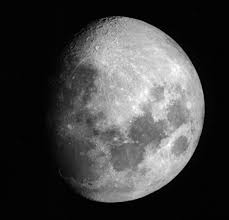
Name the moon phase
a)
waning crescent
b)
waxing crescent
c)
waning gibbous
d)
waxing gibbous
6.
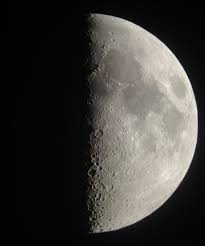
Name the moon phase
a)
First Quarter
b)
Last Quarter
c)
New Moon
d)
Full Moon
7.
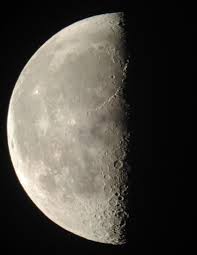
Name the moon phase
a)
First Quarter
b)
Last Quarter
c)
New Moon
d)
Full Moon
8.

Name the moon phase that would come AFTER this moon.
a)
waning crescent
b)
waxing crescent
c)
waning gibbous
d)
waxing gibbous
9.
What is the darkest inner part of the shadow cone called, where a total eclipse can be viewed.
a)
Total
b)
Umbra
c)
Penumbra
10.
What is the larger outer lighter part of the shadow cone called, where a partial eclipse can be viewed?
a)
Partial
b)
Umbra
c)
Penumbra
11.

What causes the seasons to change?
a)
The warming and cooling of Earth's core.
b)
The distance from the sun.
c)
Earth's tilt in relation to the sun.
d)
Earth's rotation on its axis.
12.

What happens when the area in which you live tilts away from the sun?
a)
It is summer.
b)
It is spring.
c)
It is winter.
d)
It is fall.
13.

What season is it in the Southern Hemisphere when it is fall in the Northern Hemisphere?
a)
winter
b)
spring
c)
summer
d)
fall
14.

Why does the area around the equator stay the same temperature all year?
a)
The equator rotates slower than the poles.
b)
The equator remains the same distance from the sun.
c)
The equator always receives direct sunlight.
d)
The equator has 18 hour days.
15.
In the Northern Hemisphere, on which day will you receive the most daylight?
a)
September 21
b)
December 21
c)
March 21
d)
June 21
16.
The spinning of an object on its axis is called______
a)
orbit
b)
rotation
c)
revolution
d)
tide
17.
Day and night is caused by the _____________ of earth on its axis.
a)
revolution
b)
orbit
c)
rotation
18.
How long does it take the Earth to make one REVOLUTION around the Sun?
a)
12 hours
b)
24 hours
c)
365 days
d)
29.5 days
19.
Earth rotates:
a)
east to west
b)
west to east
c)
to the south
d)
to the north
20.
When the Northern Hemisphere is pointing towards the sun, what season is the Southern Hemisphere?
a)
Winter
b)
Spring
c)
Fall
d)
Summer
21.
The Earth's _______ is an imaginary line that goes from the North Pole to the South Pole.
a)
vernal equinox
b)
axis
c)
solar eclipse
d)
solar flare
22.
There is less daylight in the winter.
a)
True
b)
False
23.
The imaginary line that separates the northern and southern hemispheres is called the....
a)
axis
b)
equator
c)
solstice
d)
equinox
24.
What does the rotation of the earth cause us to experience?
a)
seasons
b)
year
c)
day & night
d)
eclipse
25.
Earth would no longer have seasons if
a)
It stopped rotating
b)
It wasn't tilted on its axis
c)
It revolved the opposite way around the sun
d)
It took 2 years to orbit the sun
Reset

