
 Worksheets
Chemistry Solutions Quiz
Total questions: 30
Worksheet time: 39mins
Name
Class
Date
1.

How many grams of sodium nitrate, NaNO3, are soluble in 100 g of water at 10 ºC?
a)
80 grams
b)
100 grams
c)
40 grams
d)
10 grams
2.
Contains the maximum amount of dissolved solute
a)
unsaturated solution
b)
supersaturated solution
c)
saturated solution
3.

How does a solution become supersaturated?
a)
dissolve lots of solvent in it.
b)
dissolve a little solute in it.
c)
dissolve more solute than you should be able to.
d)
dissolve a super amount of solvent in it.
4.

At 50˚C, describe the saturation level if there are 70g of KBr present in the solution
a)
Saturated
b)
Super Saturated
c)
Unsaturated
5.

At 40˚C, at what point is the solution saturated with KCl?
a)
20g
b)
30g
c)
40g
d)
50g
6.

At approximately what temperature does the solubility of sodium chloride, NaCl, match the solubility of potassium dichromate, K2Cr2O7?
a)
60 ºC
b)
30 ºC
c)
50 ºC
d)
83 ºC
7.

Which solute is the least soluble at 90 ⁰C?
a)
SO2
b)
KClO3
c)
KI
d)
HCl
8.

Which of the following would result in being able to dissolve a greater amount of gas in a
solution?
solution?
a)
Heat the gas and solution
b)
Decrease the pressure of the solution
c)
Make the gas an electrolyte
d)
Cool the gas and solution
9.
How many moles of Na2SO4 is needed to make 2.5 L of 2.0 M solution?
a)
5 moles
b)
1 moles
c)
1.25 moles
d)
0.80 moles
10.

This graph represents a(n) ___ solution
a)
saturated
b)
supersaturated
c)
unsaturated
d)
undefined
11.
Capillary action is the result of adhesion. Which aspect of water is responsible for this?
a)
Nonpolar covalent bonds that enable water to dissolve other substances
b)
Polar covalent bonds that join molecules of water to other substances
c)
Hydrogen bonds between water and another substance
d)
Ionic bonds that enable electrons to flow through water and into another substance
12.
Large bodies of water do not quickly fluctuate in temperature. Why?
a)
Water is a solvent.
b)
Water has a high heat capacity.
c)
Water acts as a buffer.
d)
Water is non-polar.
13.
Water striders can walk across the surface of calm water. Their feet push the surface of the water down slightly, but they do not break the surface. Why?
a)
The insects are light enough so they do not break the hydrogen bonds holding the water molecules together
b)
The insects actually use their wings to hover slightly above the water’s surface and they only skim it with their feet.
c)
The insect’s feet are non-polar, so they are repelled by the polar water molecules and are pushed away from the water’s surface.
d)
The insects are small enough to see the individual water molecules, so they are able to step carefully from one molecule to the next
14.

What two elements make up water?
a)
Helium and oxygen
b)
Hydrogen and oxygen
c)
helium and carbon
d)
oxygen and carbon
15.

What word describes when water is attracted to other substances?
a)
cohesion
b)
adhesion
c)
capillary action
d)
surface tension
16.
Why can water have no net charge but have slight charges in different parts of the molecule?
a)
The oxygen end is slightly negative and the hydrogen end is slightly positive
b)
The hydrogen end is slightly negative and the oxygen end is slightly positive
c)
The hydrogen and oxygen ends change in polarity
d)
Because it is hydrophobic
17.
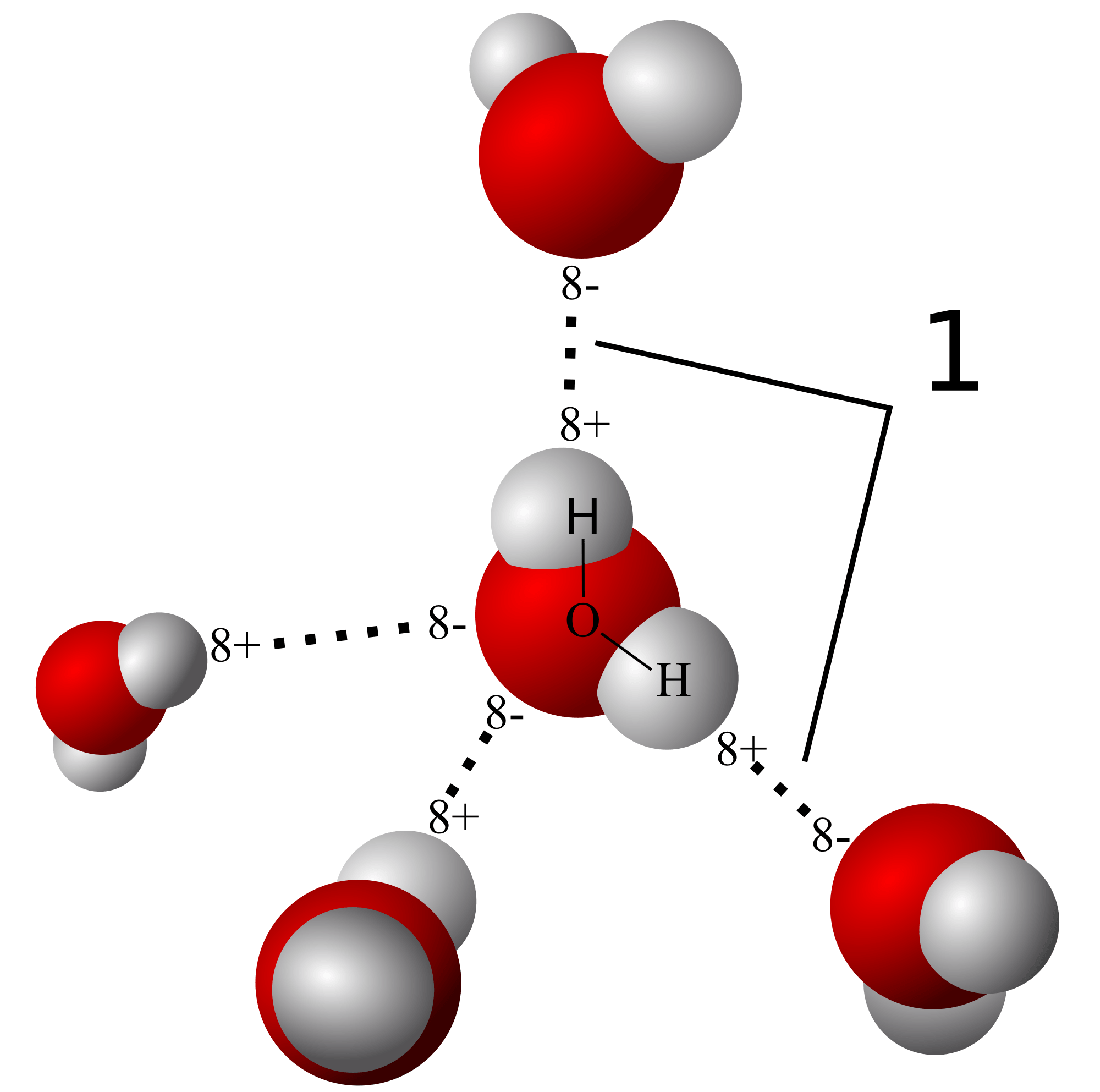
Attractions between water molecules are called
a)
Covalent bonds
b)
Ionic bonds
c)
Polar bonds
d)
Hydrogen bonds
18.
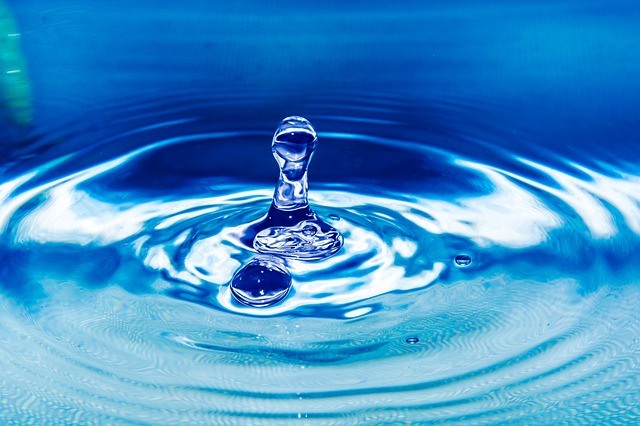
Which is NOT a unique property of water?
a)
Frozen water floats on liquid water.
b)
Water covers most of the Earth’s surface and retains a large amount of heat.
c)
Water molecules stick to each other through hydrogen bonds.
d)
Water cools very rapidly.
19.
Which types of compounds dissolve easily in water?
a)
Polar and Nonpolar
b)
Polar and Ionic
c)
Nonpolar and Ionic
d)
Covalent and Nonpolar
20.
Water is a universal solvent because it...
a)
It can be found anywhere
b)
It freezes when it gets cold
c)
floats when frozen
d)
Dissolves most substances
21.
How much 1.50M KBr can be made from 15.6 mL of concentrated KBr with a molarity of 9.65 M?
a)
150. mL
b)
151 mL
c)
1.00 L
d)
100. mL
22.
Molarity is measured in
a)
moles per kg
b)
mols per L
c)
moles per kJ
d)
moles per mL
23.
What is the molarity of a solution made by adding 1.565 moles of PbNO3 to 500 mL?
a)
300. M
b)
31.3 M
c)
3.13 M
d)
1.56 M
24.
How many moles are needed to make 2.5 L of a 3.8 M solution?
a)
9.5 mol
b)
0.66 mol
c)
1.5 mol
d)
15 mol
25.
How many liters of 0.88 M solution can be made with .968 moles of lithium fluoride?
a)
0.87 L
b)
29 L
c)
1.1 L
d)
0.46 L
26.
What is a substance that is dissolved in another substance?
a)
solution
b)
solute
c)
solvent
d)
compound
27.
What is a solvent?
a)
The substance that does the dissolving in a solution.
b)
The substance that is being dissolved in a solution.
c)
The mixing of different substances.
d)
The process in which neutral molecules lose or gain electrons
28.
A solution that is considered dilute would be....
a)
Dark in color
b)
Have a strong scent
c)
Have a large amount of solute
d)
Have a small amount of solute
29.
Another name for a homogeneous mixture is
a)
an element.
b)
a solution.
c)
a compound.
30.
Which of the following is not a way to increase the rate of dissolving
a)
evaporation
b)
stirring
c)
increasing temperature
d)
using a smaller particle size
100 %

