wayground logo

Free Printable Worksheets

NEW

Font size

S
M
L
XL
Worksheets

Semester 2 Final Exam Quizizz

Total questions: 75

Worksheet time: 55mins

Name
Class
Date
1.

which location would be best for solar energy?

a)

Arizona

b)

Oklahoma

c)

Hawaii

d)

Colorado

2.
What is a disadvantage of wind power?
a)
Takes a long time to construct
b)
Takes up a large land area
c)
Creates some pollutants
d)
Kills flying animals
3.
What is the rock formation in California that produces geothermal energy?
a)
Shale rock
b)
Marcellus Shale
c)
Geysers
d)
California dam
4.
This is the world's fastest growing energy source
a)
solar
b)
hydroelectricity
c)
geothermal
d)
wind
5.
What does bio mean
a)
life
b)
living
c)
animals
d)
plants
6.
What does geo mean
a)
minerals
b)
rock
c)
earth
d)
crust
7.
What is a disadvantage to using biofuels/biomass?
a)
uses waste products
b)
can explode
c)
can still produce pollutants when burned
d)
can only be used in developed countries
8.
Energy can be classified into..
a)
Renewable and non renewable
b)
Natural and non renewable
c)
Renewable and Natural
d)
All of them
9.
Why is solar energy considered renewable energy?
a)
It's cheaper than fossil fuels
b)
The sun's energy would not run out for billions of years
c)
Solar energy recharges batteries
d)
All of them
10.
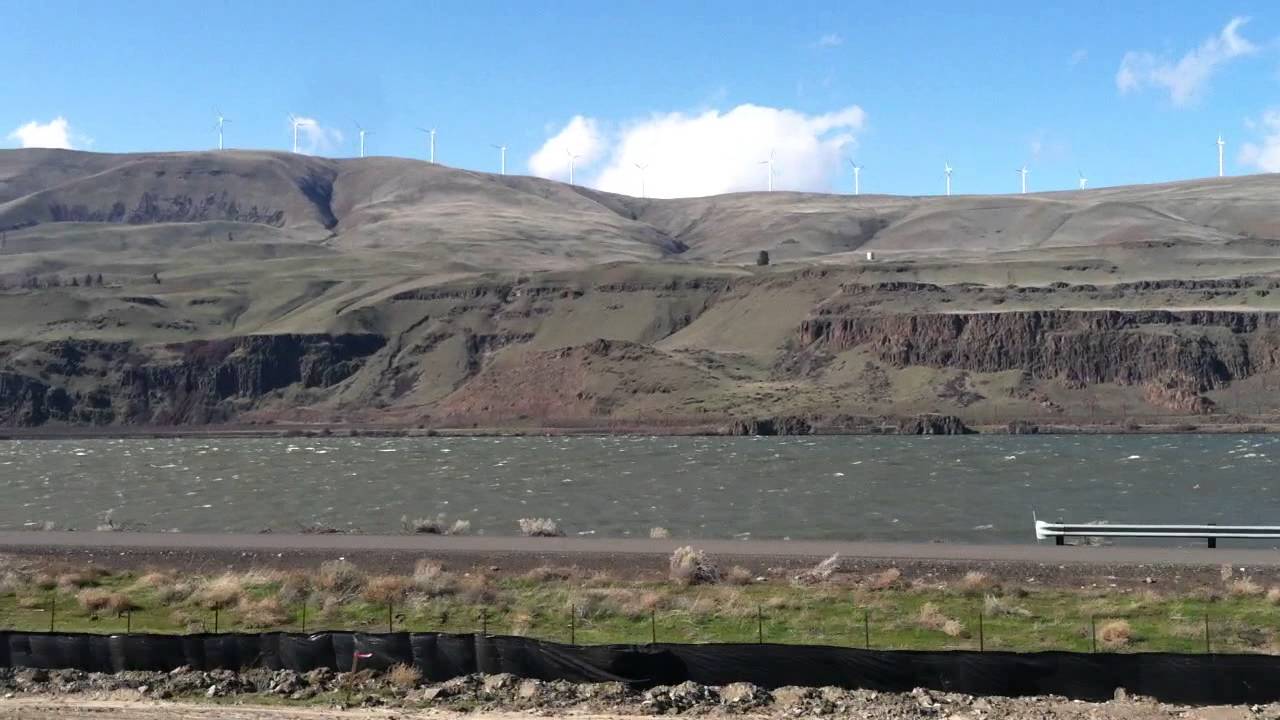
What are the following devices called?
a)
Turbines
b)
Mills
c)
Converters
d)
All of them
11.
Which of the following is an advantage of nuclear energy?
a)
does not produce solid waste
b)
does not produce air pollution
c)
it is cost effective
d)
can convert uranium into natural gas
12.
Which of the following is not a renewable resource?
a)
wind
b)
sunlight
c)
water
d)
fossil fuels
13.
Nuclear
a)
Renewable
b)
Nonrenewable
14.
What is a non renewable resource?
a)
water
b)
wind
c)
coal
d)
biomass
15.
There are 3 Main Fossil Fuels. We Know Them As --
a)
Carbon Dioxide, Oxygen, Nitrogen
b)
Cookies, Nutella, Granola
c)
Coal, Oil, Natural Gas
d)
Canyons, Oceans, Nymph
16.
Oil is a __________ energy resource.
a)
Renewable
b)
Nonrenewable
17.
Natural Gas is a __________ energy resource.
a)
Renewable
b)
Nonrenewable
18.
What percentage of our energy use comes from fossil fuels?
a)
25%
b)
45%
c)
61%
d)
86%
19.
__________ is an energy resource that WILL NOT run out in the next several hundred years.
a)
Renewable Energy Resource
b)
Nonrenewable Energy Resource
20.
__________ is an energy resource that WILL run out in the next several hundred years.
a)
Renewable Energy Resource
b)
Nonrenewable Energy Resource
21.
Geothermal energy is energy from 
a)
the sun
b)
heat from deep in the earth
c)
wind
d)
inexhaustable
22.
Energy from the sun is called
a)
Biofuels
b)
Solar
c)
Geothermal
d)
Hydroelectric
23.
Which of the following is NOT an alternative energy source?
a)
fossil fuels
b)
geothermal energy
c)
hydroelectric energy
d)
wind energy
24.
_____ uses dams to turn flowing water into electricity.
a)
hydropower
b)
tidal power
c)
biomass
d)
nuclear
25.
Which is NOT an example of Biomass?
a)
wood
b)
crops
c)
wind
d)
animal and yard waste
26.
Fossil fuels include coal, oil and natural gas. Fossil fuels are classified as nonrenewable because they —
a)
Take many, many years to be replaced
b)
require expensive equipment
c)
Can be found all over Earth's surface
d)
Provide much of the energy we use
27.
The most abundant fossil fuel is
a)
Coal
b)
Oil
c)
Natural Gas
d)
Petroleum
28.

When did climate change (CO2 in the atmosphere) increase significantly?

a)

1800s Industrial Revolution

b)

1600s Industrial Revolution

c)

1800 Crusades

d)

1600 Crusades

29.

What is the definition of "Greenhouse Effect?"

a)

Gases that increase Earth's temperature

b)

when the gases in Earth’s atmosphere trap heat from the Sun and keep the planet warm

c)

the pattern of weather that occurs over time

d)

When our climate changes

30.

What is the definition of weather?

a)

The condition of the air/atmosphere around the Earth

b)

The pattern of weather over time

c)

Rain and Snow

d)

When water falls from the sky

31.

What is the definition of weather?

a)

The condition of the air/atmosphere around the Earth

b)

The pattern of weather over time

c)

Rain and Snow

d)

When water falls from the sky

32.

In the 1800's why did CO2 levels increase significantly?

a)

New factories were being built that caused more pollution

b)

The civil war caused more pollution

c)

Scientists figured out how to clean up pollution in the air

d)

It did not increase

33.

Why don't we want to use as much non-renewable energy sources?

a)

They cause pollution and CO2 to be put into our air/atmosphere

b)

The cause less pollution

c)

They are difficult to get

d)

They smell funky

34.
Visible light reaches Earth’s surface while infrared light is trapped as heat. Which characteristic of Earth’s atmosphere causes this to happen?
a)
the hole in the ozone
b)
the greenhouse effect
c)
atmospheric pressure
d)
the inversion layer
35.
Compared to other greenhouse gases, carbon dioxide is very effective in trapping heat near the surface of the Earth.
a)
true
b)
false
36.
Which of the following have been linked to climate change?  
a)
droughts
b)
flooding
c)
melting of polar ice caps
d)
all of the above
37.
The main human activity that releases greenhouse gases is
a)
using bottled water
b)
burning fossil fuels
c)
texting on cellphones
d)
eating meat
38.
Some greenhouse gases are naturally present in the Earth's atmosphere
a)
True
b)
False
39.
Worldwide, temperatures have been increasing for more than 100 years.  Is this evidence of global warming?
a)
yes
b)
no
40.
Melting of glaciers and polar ice caps....
a)
will result in cooler temperatures in the Arctic
b)
will result in sea-levels rising
c)
Will have no effect on ecosystems
d)
None of the above
41.
The warming of the atmosphere by the trapping of heat being radiated to space is called
a)
evaporation
b)
condensation
c)
the greenhouse effect
d)
radiation
42.
The second layer of the atmosphere up from Earth, where the ozone layer is that protects us from harmful UV rays, is the
a)
thermosphere
b)
stratosphere
c)
troposphere
d)
mesosphere
43.
Increasing quantities of CO2 (Carbon Dioxide) in the atmosphere will cause air temperatures to be _____. 
a)
warmer
b)
cooler
44.
Which of the following is NOT evidence of global warming?
a)
Sea level rising
b)
Loss of Arctic Sea Ice
c)
Less Water Vapor in the Air
d)
More extreme weather events
45.
The following graph tells us what?
a)
Sea Levels are decreasing.
b)
Sea Levels are rising.
46.
What temperature would Earth be with no greenhouse effect?
a)
25 degrees C
b)
50 degrees C
c)
-18 degrees C
d)
0 degrees C
47.
A solar eclipse only happens during a ________ moon.
a)
New
b)
Cresent
c)
Gibbous
d)
Full
48.
A lunar eclipse only happens during a ________ moon.
a)
New
b)
Cresent
c)
Gibbous
d)
Full
49.
Why is a lunar eclipse very rare?
a)
Because it happens every new moon
b)
Because the moon's orbit is tilted, so the sun, moon and earth rarely line up
c)
because the moon isn't close enough to the earth
d)
because the earth isn't close enough to the sun
50.
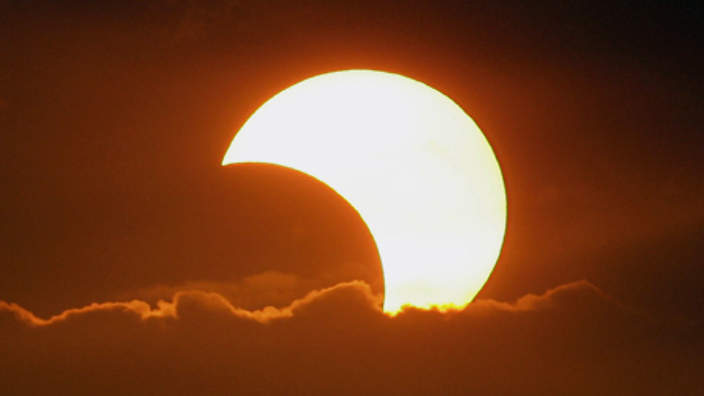
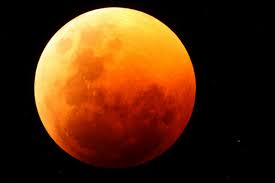
This image is an example of
a)
Lunar Eclipse
b)
Full Moon
c)
New Moon
d)
Solar Eclipse
51.
This image is an example of 
a)
Lunar Eclipse
b)
New Moon
c)
Solar Eclipse
d)
Full Moon
52.
Why isn't there an eclipse every month?
a)
Because the moon orbits the sun differently than Earth does.
b)
Because the Earth's orbit and the moon's orbit are at the same angle, flat plane.
c)
Because the moon's orbit is offset from Earth's orbit by 1.5°, not in a flat plane.
d)
Because the lunar cycle is longer than a month.
53.
What is the darkest inner part of the shadow cone called, where a total eclipse can be viewed.
a)
Total
b)
Umbra
c)
Penumbra
54.
For a solar eclipse to occur, what has to happen?
a)
The sun must be directly between Earth and the moon.
b)
The moon must be directly between Earth and the Sun.
c)
Earth must be directly between the Sun and the moon.
55.
Tides are caused mainly by what?
a)
Moon’s gravitational pull
b)
Sun’s gravitational pull
c)
Earth’s gravitational pull
56.
A[n] ______________ tide occurs when the sun is at right angles to the line between Earth and the moon. 
a)
high
b)
neap
c)
low
d)
spring
57.
A[n] ___________ tide occurs when the sun, Earth, and the moon are nearly in a line. 
a)
spring
b)
high
c)
low
d)
neap
58.
The bulge of water on the side of the Earth closest to the moon produces ___________.
a)
high tide
b)
low tide
c)
neap tide
d)
spring tide
59.
Tides are caused mainly by the differences in how much gravity from the moon and the sun pulls on different parts of the Earth. 
a)
True
b)
False
60.
What is a difference between spring and neap tides?
a)
Spring tides occur when the earth and sun are IN LINE with the new or full moon. 
b)
Spring tides occur when moon in 3rd or 1st quarter phases
c)
Spring tides are LOWER than neap tides
61.
When the moon is at full moon or new moon, what type of tide will we experience?
a)
rip tide
b)
spring tide
c)
neap tide
d)
breaker tide
62.
Spring tides and neap tides occur in patterns governed by the
a)
phases of the moon
b)
seasons (fall, winter, etc.)
c)
surface currents
d)
deep sea currents
63.
What part of the moon do we see from Earth?
a)
all of it
b)
the same side
c)
none of it
d)
only one quarter
64.
As the moon's shape appears to get smaller, we say that the moon is _.
a)
swelling
b)
waxing
c)
waning
d)
disappearing
65.
Which moon phase is when you can't see the moon at all?
a)
Waning crescent
b)
Full moon
c)
Waxing gibbous
d)
New moon
66.
What causes the phase of the Moon to change each night?
a)
The Moon changes its acutal shape throughout the course of the month.
b)
The alignment between the Earth, Moon, and Sun determines the amount of light reflected by the Moon.
c)
The season of the year determines the phase of the Moon.
d)
The closer the Moon is to Earth, the more light the Moon reflects.
67.
Phases of the moon in which the moon appears to be getting larger are referred to as _.
a)
waxing
b)
waning
c)
new
d)
eclipse
68.
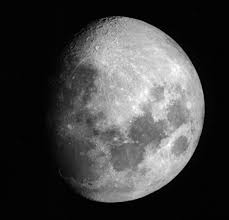
Name the moon phase
a)
waning crescent
b)
waxing crescent
c)
waning gibbous
d)
waxing gibbous
69.
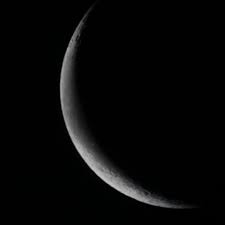
Name the moon phase
a)
waning crescent
b)
waxing crescent
c)
waning gibbous
d)
waxing gibbous
70.
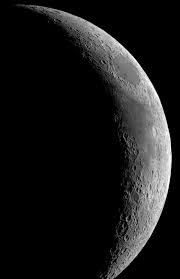
Name the moon phase
a)
waning crescent
b)
waxing crescent
c)
waning gibbous
d)
waxing gibbous
71.
Name the moon phase
a)
waning crescent
b)
waxing crescent
c)
waning gibbous
d)
waxing gibbous
72.
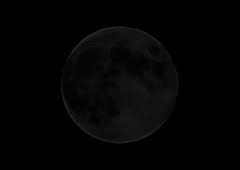
Name the moon phase
a)
First Quarter
b)
Last Quarter
c)
New Moon
d)
Full Moon
73.
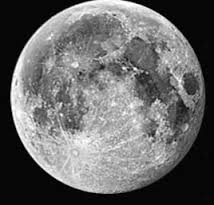
Name the moon phase
a)
First Quarter
b)
Last Quarter
c)
New Moon
d)
Full Moon
74.
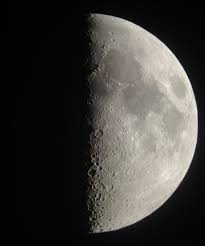
Name the moon phase
a)
First Quarter
b)
Last Quarter
c)
New Moon
d)
Full Moon
75.

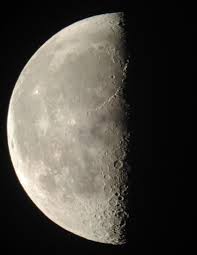
Name the moon phase

a)

First Quarter

b)

Third Quarter

c)

New Moon

d)

Full Moon