
NEW
Font size
S
M
L
XL
 Worksheets
STAAR Science Everything
Total questions: 55
Worksheet time: 1hrs 3mins
Name
Class
Date
1.
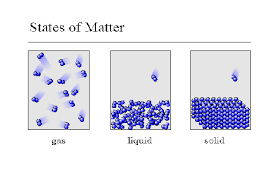
At higher temperatures
a)
particles in an object have less energy
b)
particles in an object move faster
c)
a gas contracts
2.
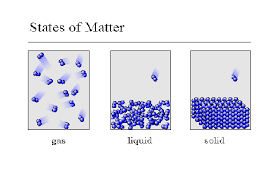
A gas
a)
has a definite shape but no definite volume
b)
has a definite volume but no definite shape
c)
has fast-moving particles
3.
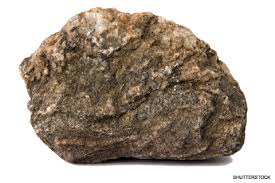
Which state of matter has tightly packed molecules?
a)
solid
b)
liquid
c)
gas
4.
Particles of a liquid
a)
are tightly packed together and stay in a fixed position.
b)
have no viscosity.
c)
decrease in volume with increasing temperature.
d)
are free to move around one another but still touch.
5.
Thermal energy is...
a)
heat energy.
b)
the energy of motion
c)
energy of nuclear processes.
d)
an indication of physical change.
6.
Lemonade is a special mixture called a
a)
substance
b)
solution
c)
plasma
d)
ingredient
7.
A solution is a mixture of one or more substances _________ evenly into another substance.
a)
dissolved
b)
evaporated
c)
carried
d)
split
8.
What is the unit to MEASURE force?
a)
Kilogram
b)
Meter
c)
Pascal
d)
Newton
9.

What type of force?
a)
Magnetic
b)
Gravitational
c)
Applied
d)
Normal
10.
Why is it important for basketball players to wear shoes with tread when playing?
a)
to increase the speed of the player
b)
to decrease the force between the player and the floor
c)
to increase friction between the floor and the player’s feet
d)
to decrease the amount of force needed for the player to move
11.
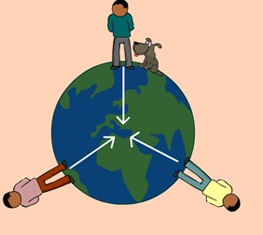
What is gravity?
a)
A force
b)
Energy
c)
A push
d)
All of them
12.
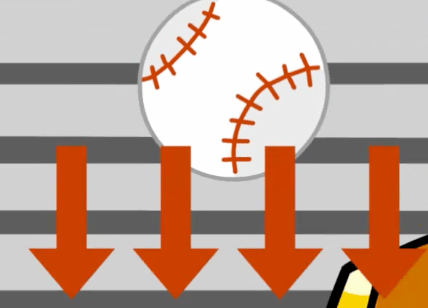
Why a ball falls to the ground?
a)
Earth's force of gravity is GREATER than the ball's, so the ball gets attracted to the ground.
b)
Earth's force of gravity is LESS than the ball's, so the ball gets attracted to the ground.
13.
Which object is the best conductor of electricity?
a)
A ceramic mug
b)
A plastic fork
c)
A penny
d)
A wooden craft stick
14.
What form of energy is being used when a person pushes heavy boxes across the floor?
a)
Electrical energy
b)
Mechanical energy
c)
Heat energy
d)
Sound energy
15.

Which statement is true about the picture?
a)
The metal pan causes the water to boil.
b)
The metal pan is a poor conductor of heat.
c)
The wooden handle is a good heat insulator.
d)
The wooden handle is a good heat conductor.
16.
A girl turned the light off and went to bed. She remembered she had accidentally left her glass of ice water on the counter. When she got up the next morning, the ice had melted. What form of energy caused the ice to melt?
a)
Sound energy
b)
Light energy
c)
Thermal energy
d)
Mechanical energy
17.

A student created an electrical circuit, shown.
Which of the following statements is true about the circuit?
Which of the following statements is true about the circuit?
a)
The electrical circuit is working.
b)
The electrical circuit is open.
c)
The electrical circuit is complete.
d)
The electrical circuit is closed.
18.
Students were conducting an investigation to observe how the amount of force used to pull an object affects how fast it can travel 3 meters. Which of the following would NOT be needed for the experiment?
a)
Magnet
b)
Meter stick
c)
Stop Watch
d)
Spring Scale
19.
Which form of energy is produced when a lamp is switched on?
a)
Sound energy
b)
Electrical energy
c)
Chemical energy
d)
Light energy
20.
A student wanted to see how his toy car would roll on different types of flooring. Jack decided to roll the car on a tile floor, a wood floor, and a carpeted floor. Jack's experiment was designed to test the effects of which of the following forces.
I. Gravity
II. Friction
III. Magnetism
I. Gravity
II. Friction
III. Magnetism
a)
Gravity
b)
Gravity and magnetism
c)
Magnetism and friction
d)
Friction
21.
The Earth spins on a tilted angle called a (an)
a)
Axis
b)
Invert
c)
Revolution
d)
Bounce
22.
Rotation of the earth is what causes
a)
The seasons
b)
Day and night
c)
The tides
d)
A full moon
23.
Rotation of the earth takes
a)
One day
b)
One year
c)
One summer
d)
One winter
24.
The earth's revolution is called an orbit, and we orbit around
a)
The moon
b)
The sun
c)
Earth
d)
Venus
25.
Which happens in one year’s time?
a)
The moon makes one complete revolution around Earth.
b)
Earth makes one complete revolution around the sun.
c)
Earth makes one complete spin on its axis.
d)
The sun makes one complete spin on its axis.
26.
Which of the following best describes why the Earth has the four seasons?
a)
The sun is closer to the Earth during summer and farther away during winter
b)
The sun shines directly onto the equator all year long
c)
The tilt of the Earth is the primary reason for the seasons
27.
What causes your shadow to change throughout the day?
a)
The Earth's orbit
b)
The moon's reflection
c)
The Earth's rotation
d)
How much you ate for lunch
28.
The complete cycle of the moon lasts about a _.
a)
day
b)
year
c)
week
d)
month
29.

What Moon phase is this?
a)
Full Moon
b)
Waxing Gibbous
c)
New Moon
d)
Half Moon
30.

What happens when the area in which you live tilts away from the sun?
a)
It is summer.
b)
It is spring.
c)
It is winter.
d)
It is fall.
31.
The moon cycle (lunar cycle) takes approximately _______________ to complete.
a)
14 days
b)
28 days/approximately one month
c)
58 days
d)
1 week
32.
The way energy is passed from one organism to another
a)
food chain
b)
energy
c)
extinct
d)
habitat
33.
Which one is NOT an example of a decomposer?
a)
mushroom
b)
leaves
c)
mold
d)
worm
34.
What four things do every organism need for survival?
a)
food, water, dirt, and a hat
b)
shelter, food, water, and air
c)
air, sun, dirt, and water
d)
light, electricity, and worms
35.
Examples of a producer
a)
frog
b)
algae
c)
worm
d)
mouse
36.
Example of a consumer
a)
worm
b)
bacteria
c)
mushroom
d)
hawk
37.
A tree is a ....
a)
composer
b)
decomposer
c)
producer
38.
Humans are considered...
a)
consumers
b)
decomposers
c)
producers
39.

What is a herbivore?
a)
an animal that gets energy from eating other animals
b)
an organism that gets energy from eating only plants
c)
an animal that gets energy by eating both plants and other animals
d)
an animal that eats only herbs
40.

An organism that gets energy from eating other organisms is a ______________
a)
producer
b)
consumer
c)
decomposer
d)
prey
41.

A connection of food chains with many food energy paths in an ecosystem is a ____________
a)
ecosystem
b)
food web
c)
environment
d)
population
42.

An animal that is hunted and eaten for food is a
a)
predator
b)
prey
c)
population
43.
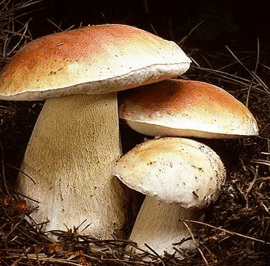
An organism that gets energy from breaking down dead organisms, non-living material or waste
a)
producer
b)
consumer
c)
decomposer
d)
autotroph
44.

What is a carnivore?
a)
an animal that gets energy by eating other animals
b)
An animal that gets energy by eating only plants
c)
an animal that gets energy by eating both plants and animals
d)
an animal that makes its own energy through photosynthesis
45.

Which of the following is NOT a consumer
a)
grass
b)
dog
c)
shark
d)
fish
46.

The shrew provides energy for the _______?
a)
cricket
b)
grasshopper
c)
frog
d)
snake
47.

Where do all life forms get their energy?
a)
Earth's Core
b)
Water
c)
Plants
d)
The Sun
48.

What is the water cycle?
a)
the 3 forms of water
b)
the movement of water on, above, or below the surface of the Earth
c)
when water melts
d)
when clouds form
49.
What is the energy source for the water cycle?
a)
the sun
b)
the earth
c)
water
d)
the moon
50.

What part of the water cycle does this picture show?
a)
condensation
b)
precipitation
c)
evaporation
51.
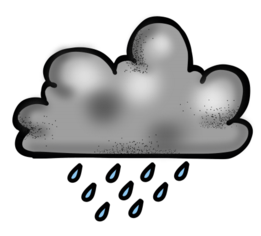
What part of the water cycle does this picture show?
a)
condensation
b)
precipitation
c)
evaporation
52.
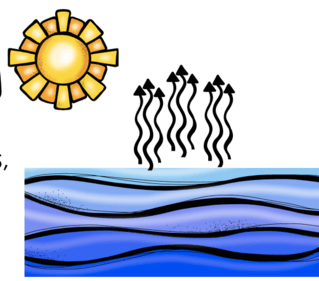
What part of the water cycle does this picture show?
a)
condensation
b)
precipitation
c)
evaporation
53.
What is evaporation?
a)
The part of the water cycle when the sun heats up water, turning it from a liquid into water vapor or steam. It rises from the ground into the air.
b)
The part of the water cycle when the water vapor in the air gets cold. The water turns back into a liquid and forms clouds.
c)
The part of the water cycle when clouds get heavy and can no longer hold the liquid water. This causes the water to fall from the sky to the earth as rain, snow, sleet, or hail.
54.
What is condensation?
a)
The part of the water cycle when the sun heats up water, turning it from a liquid into water vapor or steam. It rises from the ground into the air.
b)
The part of the water cycle when the water vapor in the air gets cold. The water turns back into a liquid and forms clouds.
c)
The part of the water cycle when clouds get heavy and can no longer hold the liquid water. This causes the water to fall from the sky to the earth as rain, snow, sleet, or hail.
55.
What is precipitation?
a)
The part of the water cycle when the sun heats up water, turning it from a liquid into water vapor or steam. It rises from the ground into the air.
b)
The part of the water cycle when the water vapor in the air gets cold. The water turns back into a liquid and forms clouds.
c)
The part of the water cycle when clouds get heavy and can no longer hold the liquid water. This causes the water to fall from the sky to the earth as rain, snow, sleet, or hail.
Reset

