
 Worksheets
Animal Phyla! (Specific to Cape Cod Marine Waters)
Total questions: 25
Worksheet time: 20mins

What type of symmetry do sponges (Porifera) have?
asymmetrical
radial
bilateral
medial

What phyla contains the clamworms?
Chordata
Mollusca
Anthropoda
Annelida

Which phyla contains clams and oysters. They have a true coelom and shells that grow with them (thus never requiring molting).
Mollusca
Echinodermata
Chordata
Porifera

What phyla to all vertebrates belong in?
Chordata
Porifera
Echinodermata
Ctenophora


Sponges belong to which phyla? Common characteristics include pores for filter feeding and assymmetrical body structure.
Cnidaria
Mollusca
Annelida
Porifera

Mollusks include which of the following?
Octopus, Squid, Slugs, Snails
Comb jellies, tunicates
Sea stars, Sea cucumbers, sea urchins
Fish, Whales, Turtles

The animal phyla containing animals with jointed appendages and an exoskeleton that is molted as they grow....
Porifera
Arthropoda
Annelida
Ctenophora

What phylum do crustaceans belong to?
Mollusca
Echinodermata
Arthropoda
Cnidarian
Invertebrates that have stinging cells and take food into a central body cavity.
Annelida
Mollusk
Platyhelminthes
Cnidarian

Which phyla contains jellyfish?
Porifera
nematoda
SquishyFish
Cnidaria
Which of the following is NOT true about ALL animals?
They are all made up of eukaryotic cells
They all have digestive systems
They all have backbones
They are all multicellular

Because sponges cannot move around they are considered ______.
sessile
senile
coelem
mammarian

Sponges use pores to
move from place to place.
filter food from the water.
defend themselves.
sleep

This is the type of symmetry shared by the vast majority of the members of the phyla Porifera.
asymmetry
bilateral symmetry
trilateral symmetry
radial symmetry

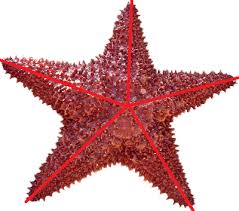
What type of symmetry do echinoderms share?
asymmetry
bilateral symmetry
radial symmetry
trilateral symmetry

I have tentacles with stinging cells and a radial symmetry. I am a sea anemone. Which Phylum do I belong to?
Arthropoda
Cnidaria
Echinodermata
Mollusca

I have a hard exoskeleton, a segmented body, pairs of jointed appendages, and live on land and water. I am a crab. What is my phylum?
Mollusca
Arthropoda
Echinodermata
Cnidaria

I am spiny, have a water vascular system with tube feet, radial symmetry, and am called a brittle star.
Mollusca
Arthropoda
Echinodermata
Cnidaria
The 7 levels of classification, broadest to most specific.
Kingdom, Genus, Family, Order, Class, Phylum, Species
Kingdom, Species, Genus, Phylum, Family, Class, Order
Kingdom, Phylum, Class, Order, Family, Genus, Species
Kingdom, Order, Species, Phylum, Family, Class, Genus

These radially symmetric animals are gelatinous, and do not possess stinging cells. They feed by using 8 internal lines of bristles or "combs," giving them the common name of the Comb Jellies.
Cnidaria
Mollusca
Ctenophora
Echinodermata

What type of symmetry do the Comb Jellies (Ctenophora) have?
asymmetrical
radial
bilateral
medial

