
 Worksheets
6th World History Final
Total questions: 133
Worksheet time: 1hrs 20mins
Name
Class
Date
1.

"the land between the rivers"; an early civilization between the Tigris and Euphrates Rivers
a)
China
b)
India
c)
Egypt
d)
Mesopotamia
2.
The division of the people in a society by rank or class
a)
Domestication
b)
Social hierarchy
c)
Surplus
d)
Trade Routes
3.
The type of arrangement in which each worker specializes in a particular task or job
a)
Division of Labor (Specialization)
b)
Polytheism
c)
Work Force
d)
Domestication of Labor
4.

More food than as needed by a person.
a)
Trade
b)
Domestication
c)
Surplus
d)
Irrigation
5.
A city with political and economic control over the surrounding countryside
a)
City-State
b)
Country
c)
Villiage
d)
Culture
6.

Belief in more than one god
a)
Polytheism
b)
Monotheism
c)
Theocracy
d)
Theology
7.
Temples built by Sumerians to honor the gods and goddesses they worshiped
a)
City-States
b)
Statues
c)
Churches
d)
Ziggurats
8.
A form of writing that uses groups of wedges and lines. It originated in Mesopotamia.
a)
Heiroglyphics
b)
Cuneiform
c)
Sumerian
d)
Sanskrit
9.
A person who writes
a)
Author
b)
Scribe
c)
Hammurabi
d)
Illustrator
10.

Babylonian leader who created the first written code of 282 laws that dealt with almost every part of daily life
a)
Gilgamesh
b)
Sargon
c)
Hammurabi
d)
Sumer
11.
Rule by one person, a king or queen
a)
Dictatorship
b)
Theorcracy
c)
Monarchy
d)
Oligarchy
12.

Government that is controlled by religious leaders
a)
Monarchy
b)
Theocracy
c)
Oligarchy
d)
Dictatorship
13.
Curved strip of land that runs from the Mediterranean Sea to the Persian Gulf
a)
Mesopotamia
b)
Fertile Crescent
c)
silt
d)
Babylon
14.
A system that supplies dry land with water through ditches, pipes, or streams
a)
Fertile Crescent
b)
polytheism
c)
cuneiform
d)
irrigation
15.
What are the two main rivers in Mesopotamia?
a)
Tigris and Nile
b)
Tigris and Amazon
c)
Tigris and Euphrates
d)
Euphrates and Mississippi
16.

What were the rivers effect on people?
a)
provided fertile soil
b)
killed crops
c)
they were calming
d)
were pretty to look at
17.

What modern day country is Mesopotamia mostly in?
a)
India
b)
Egypt
c)
China
d)
Iraq
18.
The Sumerians invented something that made it possible for their armies to use chariots. What was it?
a)
harnesses
b)
swords
c)
wheels
d)
horseshoes
19.
The first civilizations arose in__________ because the conditions for farming were good.
a)
mountains
b)
deserts
c)
river valleys
d)
none of the above
20.
River valleys were also ideal locations for __________ to develop.
a)
trade and travel
b)
water skiing
c)
mining
d)
forestry
21.
The flooding of the Mesopotamia river valley could be described as __________.
a)
predictable
b)
unpredictable
c)
gentle
d)
calm
22.
If you were to describe the religion of most Sumerian city-states they would be ________.
a)
monotheistic
b)
theocratic
c)
polytheistic
d)
atheistic
23.
Which of the following statements most closely defines Mesopotamia's division of labor?
a)
The lower class were largely made up of artisans
b)
the upper class of priests and kings ruled
c)
The middle class were slaves who performed hard labor
d)
The middle class had more rights and privileges than the upper class
24.
_____________ was the king who created the first empire in Mesopotamia.
a)
Hammurabbi
b)
Nebudchadnezzar
c)
David
d)
Sargon
25.
Artisans, merchants, and fishers made up this group
a)
Lower Class
b)
Upper Class
c)
Middle Class
d)
Pass Class
26.
When the Akkadians under Sargon conquered the city-states of Sumer, they created the first
a)
empire
b)
huge city-state
c)
nation
d)
democracy
27.
Which of the following is NOT true of Hammurabi's code?
a)
It covered many aspects of Babylonian life, not just crimes.
b)
t was used by many later civilizations as a model
c)
It treated all people the same under the law.
d)
It was carved in stone.
28.
The Nile River flows through two important regions in Egypt called
a)
Mesopotamia
b)
Upper and Lower Egypt
c)
Eastern and Western Egypt
d)
Nubia and Cairo
29.
Besides providing a stable food diet, what other advantage did Egypt's location provide for early Egyptians?
a)
Temples to worship in
b)
Sumerian artwork
c)
Natural barriers to protect them
d)
2 dynasties to celebrate religious tradtion
30.
What is a dynasty?
a)
a collection of queens
b)
a collection of kingdoms
c)
series of rulers from different families
d)
series of rulers from the same family
31.
Who would the people blame if crops did not grow or if disease struck?
a)
the farmers
b)
the mummies
c)
the pharaoh
d)
the dynasty that was in power
32.
Which of the following beliefs was central to Egyptian religion?
a)
the afterlife
b)
the pyramids
c)
the pharaohs
d)
the heavens
33.
Why were tombs filled with art, jewelry, etc.....?
a)
Tombs were museums.
b)
Tombs were private storage for the pharaoh.
c)
Tombs were the safest place in the kingdom.
d)
They believed the dead enjoyed their materials in the afterlife.
34.
Pyramids are
a)
warehouses to store food surplus
b)
temples where people are allowed to come and pray
c)
tombs with 2 rectangle-shaped sides
d)
tombs with 4 triangle-shaped sides that meet in a point at the top
35.
What was learned through studying King Tut's tomb?
a)
He was a king.
b)
The burial practices of Egyptians.
c)
He was wealthy.
d)
He had many wives.
36.
Pharaoh means
a)
great king
b)
great house
c)
great family
d)
great friend
37.
Who would write and record information?
a)
slaves
b)
scribes
c)
farmers
d)
craftspeople
38.
Egyptian writing system
a)
papyrus
b)
alaphabet
c)
cuneiform
d)
heiroglyphics
39.
Where is the most fertile soil in Egypt?
a)
Nile Delta
b)
desert
c)
far south
d)
cataracts
40.
What is papyrus?
a)
mud used in building
b)
plant from which paper is made
c)
rock used to make tools
d)
animal skin
41.
Why was the Rosetta Stone so important?
a)
It helped archaeologists decipher Egyptian writing?
b)
It gave clues about building.
c)
It was a book of the dead.
d)
It told how pharaoh's rules.
42.
What was the Egyptian economy based on?
a)
farming
b)
sale of artwork
c)
mining
d)
painting temples
43.
How did the yearly flooding of the Nile River affect the people of Egypt and Kush?
a)
It isolated the settlements.
b)
It left silt that improved the soil.
c)
It spread diseases that destroyed whole empires.
d)
It attracted hunters and gatherers looking for wildlife.
44.
Which period is often called the Golden Age, a time when Egypt had reached the height of its power?
a)
the Old Kingdom
b)
the Middle Kingdom
c)
the New Kingdom
d)
after the New Kingdom
45.
Hatshepsut was the FIRST pharaoh was was
a)
a god.
b)
a child.
c)
a priest.
d)
a woman.
46.
The Nile River is the _____________ river in the world.
a)
widest
b)
shortest
c)
fastest
d)
longest
47.
This ruler united Upper and Lower egypt
a)
Imhotep
b)
RamsesII
c)
Narmer
d)
Tutankhamen
48.
Egyptian sun God
a)
Amon Re
b)
Aton
c)
Re
d)
Hapi
49.
What is another name for Nubia?
a)
Kush
b)
Palestine
c)
Assyria
d)
Carthage
50.
Land forms that separated Greek city-states and made them fiercely independent
a)
mountains and deserts
b)
mountains and seas
c)
deserts and seas
d)
islands and deserts
51.
From whom did the Greeks adopt an alphabet?
a)
Phoenicians
b)
Minoans
c)
Mycenaeans
d)
Dorians
52.
What three types of government existed in Ancient Greece before Athens developed a democracy?
a)
Theocracy, monarchy, oligarchy
b)
Monarchy, oligarchy, tyranny
c)
Monarchy, nobles ruled, tyranny
d)
Monarchy, theocracy, tyranny
53.
Who first ruled the city-states of ancient Greece called a monarchy?
a)
Tyrants
b)
Kings
c)
Oligarchies
d)
Nobles
54.
Who were wealthy landowning aristocrats that soon overthrew the monarchs?
a)
Tyrants
b)
Kings
c)
Oligarchies
d)
Nobles
55.
Under the Greek definition of "citizen", who qualified for citizenship?
a)
Freed slaves (later on: women)
b)
Wealthy women with land
c)
Free native-born men with land (later on: merchant, artisan, or farmer)
d)
Foreign-born men with land
56.
City state that created a a military oligarchy with a strong army
a)
Athens
b)
Sparta
c)
Troy
d)
Miletus
57.
What was the occupation or job of most Greeks?
a)
Artisans
b)
Merchants
c)
Farmers
d)
Slaves
58.
What Athens and a group of city states were called by joining together to defend themselves against the Persians
a)
Democracy League
b)
Delian League
c)
Direct Democracy League
d)
Delos League
59.
Who wrote the Iliad and the Odyssey
a)
Homer
b)
Hermes
c)
Hypnos
d)
homer Simpson
60.
Who believed in absolute truth and drank poison in prison
a)
Plato
b)
Aristotle
c)
Socrates
d)
Solon
61.
Who wrote the Republic and disagreed with Democracy?
a)
Socrates
b)
Plato
c)
Aristotle
d)
Archimedes
62.
Who started the concept of democracy?
a)
Solon
b)
Cleisthenes
c)
Pericles
d)
Alexander the Great
63.
What was the name of the most famous temple in Greece built to honor the goddess Athena?
a)
Pericles
b)
Parthenon
c)
Athena
d)
Oracle
64.
Who was the Greek slave that is now famous for his fables?
a)
Socrates
b)
Aesop
c)
Plato
d)
Aristotole
65.
What are short tales that teach a lesson about life or morals?
a)
Fables
b)
Drama
c)
Epics
d)
History
66.
What is a story told by actors called who pretend to be characters in that story?
a)
Fable
b)
Epic
c)
Drama
d)
History
67.
What is a type of drama called that has a sad ending?
a)
Fable
b)
Tragedy
c)
Epic
d)
Comedy
68.
What is the type of drama called that ends happily?
a)
Fable
b)
Tragedy
c)
Epic
d)
Comedy
69.
What method of teaching did Socrates use to help people find the knowledge inside themselves?
a)
Question Method
b)
History Method
c)
Socratic Method
d)
Searching Method
70.
Why did some leaders in Athens think Socrates was dangerous?
a)
He encouraged people to question government leaders'
b)
He was starting a war
c)
He wanted to be
king
king
d)
He did not like democracy.
71.
What was the period of time called when Alexander spread Greek culture to Persian, Egyptian, and Indian civilizations?
a)
Persian Era
b)
Greek Era
c)
Hellenistic Era
d)
Roman Era
72.
Who made huge advancements in geometry and physics and is considered the world's greatest mathematician?
a)
Aristotle
b)
Alexander
c)
Archimedes
d)
Pythagoras
73.
Which word best describes a large land mass that is smaller than a continent?
a)
country
b)
subcontineent
c)
state
d)
region
74.
What is the name of the seasonal winds that cause the wet and dry seasons in India?
a)
hurrican
b)
tsunami
c)
Monsoon
d)
tornado
75.
Both Harappa and Mohenjo Daro were well planned cities. What inference can you make about the people who lived in the Indus Valley?
a)
They all wanted the cities to be identical
b)
They had difficulity completing task
c)
They were intelligent and talented
d)
They knew how to deal with monsoons.
76.
What physical feature gave the Indus valley natural protection?
a)
Red Sea
b)
Mediterranean Sea
c)
Fertile Crescent
d)
Himalayan Mountains
77.
In which language did Aryans write their poems and hymns?
a)
Indian
b)
Vedic
c)
Sanskirt
d)
Harapan
78.
All of the following were Indian achievements EXCEPT ?
a)
Concept of zero
b)
Algebra
c)
Wood Block Printing
d)
Arabic Numbers
79.
Two large cities formed along this?
a)
Ganges River
b)
Indian Ocean
c)
Indus River
d)
India River
80.
Reincarnation
a)
The process of recycling
b)
The process of rebirth
c)
The process of decomposition
d)
The process of farming
81.
The avoidance of violent actions?
a)
Nonviolence
b)
Non complance
c)
Non verbal
d)
Violent
82.
Hired soldiers
a)
mercenaries
b)
missionaries
c)
missions
d)
mysteries
83.
People who work to spread their religious beliefs sent by Asoka?
a)
Preists
b)
Monks
c)
Missionaries
d)
Troops
84.
Nirvana
a)
Band
b)
State of perfect peace
c)
City state in India
d)
Buddah's nickname
85.
Going without food?
a)
Starving
b)
Hungry
c)
Fasting
d)
Empty bowl
86.
The effects that good or bad actions have on a person's soul?
a)
Karma
b)
Carma
c)
Beliefs
d)
Charisma
87.
Divided India's society into groups?
a)
Social Hierarchy
b)
Caste System
c)
Social Classes
d)
Hinduism
88.
The practice of injecting a person with a small dose of a virus to help them build a defense to a disease?
a)
Shot
b)
Inoculation
c)
Anoculation
d)
Injection
89.
Mixtures of two or more metals?
a)
Metallurgy
b)
Metal mixing
c)
Alloys
d)
Allies
90.
The Caste system divided Indian society into ____ ranks or divisions.
a)
4
b)
3
c)
2
d)
1
91.
Two major religions that developed in India are
a)
Buddhism and Hinduism
b)
Hinduism and Judaism
c)
Judaism and Polytheism
d)
Monotheism and Polytheism
92.
The collection of Aryan religious works that include poems, hymns, and rituals are called
a)
the Vedas
b)
the Varnas
c)
Book of the Dead
93.
The spread of ideas and culture from one group to another is called
a)
counterculture
b)
cultural diffusion
c)
cross culture
d)
trade
94.
The Buddha's teachings were based on
a)
karma
b)
the Four Noble Truths
c)
the Vedas
95.
This Indian religion opposed (was against) the Caste System
a)
Buddhism
b)
Hinduism
96.
Who founded Buddhism?
a)
Buddha
b)
Theravada
c)
Siddhartha Guatama
d)
Mahayana
97.
What determined what caste a person belonged to?
a)
They were born into whatever caste their parents belonged to.
b)
At age 12, children were tested over skills and knowledge to see where their achievement placed them.
c)
The priests assigned the caste when a child reached adulthood.
d)
Everyone began life as a Dalit, but moved up if they pleased the gods.
98.
Who became the first Emperor of China by uniting warring kingdoms?
a)
Wudi
b)
Shi Huangdi
c)
Confucius
d)
Han
99.
Along what river did China's earliest civilizations develop?
a)
Huang He (Yellow)
b)
Indus
c)
Yangtze
d)
Nile
100.
The right of a Chinese Dynasty to rule with the blessings of the Gods is called...?
a)
The Mandate of Heaven
b)
The Dynastic Cycle
c)
The Heavenly Commandments
d)
The Oracle Bones
101.
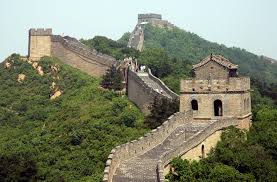
What is the purpose of the structure pictured here?
a)
It is a temple
b)
To protect China's northern border
c)
To protect China's Southern border
d)
To protect China from India
102.
____ is fine, windblown yellow soil
a)
Loess
b)
Clan
c)
Oracle Bone
d)
Yangzi
103.
Confucius believed respect for parents, or _____, was very important to the relationships.
a)
civil service system
b)
mandate of heaven
c)
filial piety
d)
dynastic cycle
104.
What religion was spread to China on the Silk Road?
a)
Christianity
b)
Buddhism
c)
Islam
d)
Hinduism
105.
How did the Silk Road effect China?
a)
China became wealthy
b)
China ended farmed
c)
China started a war
d)
China stopped trading
106.
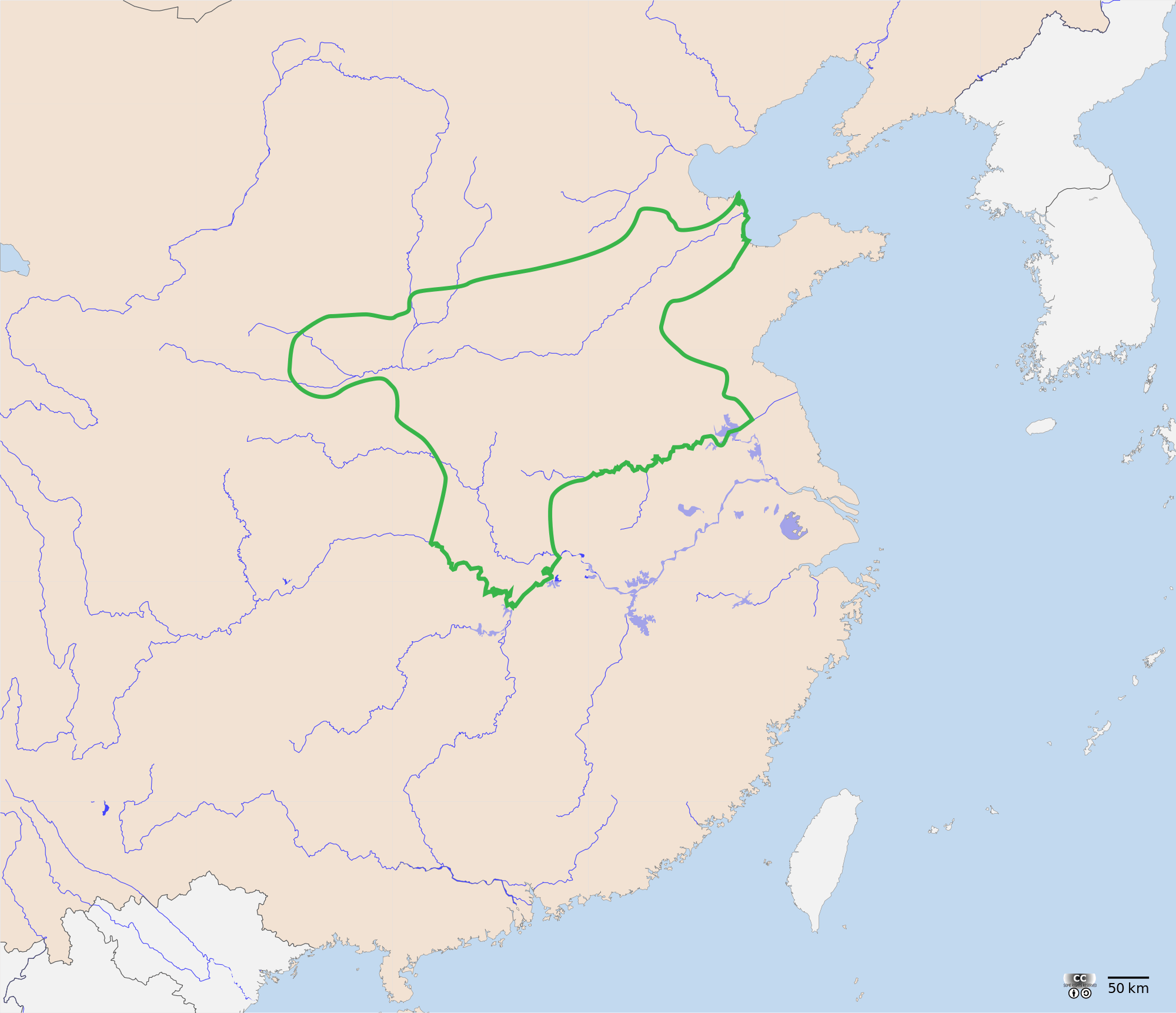
What was the name of China's FIRST dynasty?
a)
Shang
b)
Zhou
c)
Hanfeizi
d)
Huang He
107.
Trade route that stretched from western China to southern Asia
a)
filial piety
b)
Silk Road
c)
Great Wall
d)
Anyang
108.
Women in Ancient China:
a)
Were treated well
b)
Were educated
c)
Served as member of the government
d)
Were treated as second class citizens
109.
Early civilizations like Mesopotamia, Egypt, India and China have one thing in common.....
a)
each civilization flourished despite harsh desert conditions
b)
we know little about them due to catastrophic natural disasters
c)
they were founded along rivers and fertile valleys
d)
their coastal locations allowed them to trade with the Roman Empire
110.

What is the central idea of Daoism
a)
Duty to community
b)
Living in harmony with nature
c)
Enforcing laws with harsh punishments
d)
Humans are naturally evil
111.
What was the natural border of China that was an ocean?
a)
Atlantic Ocean
b)
Pacific Ocean
c)
Arctic Ocean
d)
Indian Ocean
112.
What was the natural border of China that was a desert?
a)
Sahara
b)
Gobi
c)
Death Valley
d)
Antarctica
113.
Confucius a very famous ____________, in Ancient China
a)
emperor
b)
philosopher
c)
army leader
d)
god
114.
What were the four main dynasties of Ancient China?
a)
Shang, Zhou, Qin, Han
b)
Hand, Mouth, Foot, Head
c)
Shoe, Chin, Hand, Shang
d)
Tavs, Lodas, Kohlmann, Hoeft
115.
What is contribution from the Ancient Chinese?
a)
wheelbarrow
b)
fireworks
c)
gunpowder
d)
All of them
116.
Chinese philosophy developed by Hanfeizi; taught that humans are naturally evil and therefore need to be ruled by harsh laws
a)
Confucianism
b)
Daoism
c)
Legalism
d)
Mandate of Heaven
117.

What were oracle bones used for?
a)
Cooking
b)
Telling stories
c)
Building the Great Wall of China
d)
Asking for advice from the gods
118.
A wealthy, upperclass person in the Ancient Roman Republic
a)
patrician
b)
plebian
c)
counsul
d)
dictator
119.
A structure that carries water over long distances
a)
colosseum
b)
dome
c)
aqueduct
d)
arch
120.
An ordinary citizen in the ancient Roman Republic
a)
patrician
b)
plebian
c)
counsul
d)
mercenary
121.
Which emperor made Christianity the official religion of Rome?
a)
Caesar
b)
Augustus
c)
Diocletian
d)
Constantine
122.
Augustus was Julius Caesar's
a)
nephew
b)
son
c)
brother
d)
grandson
123.
Why did the Romans create the republic?
a)
So they would not have a king in control.
b)
To defend themselves.
c)
So that every person could be a citizen.
d)
So that judges could make laws.
124.
Who were the two main characters in the story that tells the beginnings of Rome?
a)
Romulus & Remus
b)
Zeus & Hera
c)
Ronulus & Roman
d)
Bill & Ted
125.
Which emperor wanted to share power with the senate? Hint: he controlled the time known as Pax Romana?
a)
Julius Caesar
b)
Caligula
c)
Augustus
d)
Diocletian
126.
What city was buried in ash when Mount Vesuvius erupted?
a)
Naples
b)
Florence
c)
Rome
d)
Pompeii
127.
Which of the following was NOT true for women in Ancient Rome?
a)
Had power over all family matters
b)
Often married young
c)
Sometimes went to school, but not often.
d)
Could not enter politics
128.
People elect leaders to govern them in this.
a)
Republic
b)
Democracy
c)
Monarchy
d)
Dictatorship
129.
The two most powerful magistrates in Rome were called.
a)
Consuls
b)
Judges
c)
Senators
d)
Plebeians
130.
This was Romes public meeting place.
a)
Parking lot
b)
Food Lion
c)
A big field
d)
Roman Forum
131.
This was series of wars against Carthage.
a)
World War 2
b)
World War 1
c)
Punic Wars
d)
Crusades
132.
This means Roman peace.
a)
Sanity
b)
Quiteness
c)
Pax Romana
d)
Corruption
133.
In addition to their own developments, the Romans borrowed many ideas from the Etruscans and the
a)
Chinese
b)
Greeks
c)
Egyptians
d)
Mesopotamians
100 %

