wayground logo

Free Printable Worksheets

Font size

S
M
L
XL
Worksheets

LHS Enviro 2 SEMEX

Total questions: 91

Worksheet time: 1hrs 18mins
Name
Class
Date
1.
Which biome is characterized by low temperatures and low amounts of rainfall?
a)
tundra
b)
desert
c)
temperate deciduous forest
d)
tropical rain forest
2.
Which biome, because of its climate, has the largest number of species of plants and animals?
a)
tundra
b)
desert
c)
tropical rainforest
d)
pine forest
3.
One characteristic feature of tundra is that only the surface thaws in the summer and refreezes in the winter, leaving a layer of permanently frozen subsoil.  This characteristic is known as
a)
glaciation
b)
permafrost
c)
crystallization
d)
soilfrost
4.
Which major biome is home to cacti, mesquite, white thorn, pack rats, small reptiles, and coyotes?
a)
desert
b)
taiga
c)
tundra
d)
grassland
5.
In which biome is Georgia located?
a)
tropical rainforest
b)
temperate rainforest
c)
temperate deciduous forest
d)
alpine forest
6.
Which biome contains large populations of grazing herbivores, few species of birds, and deep, rich soil?
a)
taiga
b)
tundra
c)
deciduous forest
d)
grassland
7.
This biome contains mostly spruce trees and Douglas firs, which are both evergreen.  The winters are long and cold and the summers are short and rainy.  The soil is very rich.  Moose and elk live here.  This biome is classified as a
a)
taiga
b)
tundra
c)
deciduous forest
d)
temperate forest
8.
The most important abiotic factors when studying biomes are...
a)
Food and Water
b)
Water and Sunlight
c)
Temperature and Oxygen
d)
Water and Temperature 
9.
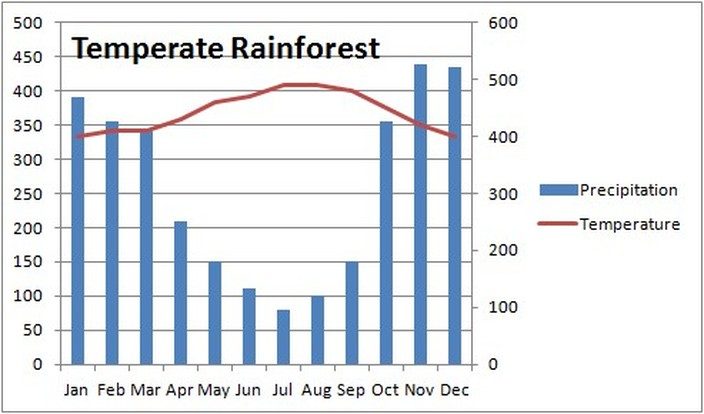
Which biome is represented by the rainfall amounts in letter C?
a)
desert
b)
prairie
c)
deciduous forest
d)
tropical rain forest
10.
Makes up most of the municipal solid waste
a)
paper
b)
plastic
c)
manufacturing waste
d)
leachate
11.
Cannot be broken down by biological processes
a)
plant waste
b)
paper
c)
plastic
d)
yard waste
12.
Makes up more than half of the total waste produced
a)
municipal solid waste
b)
manufacturing waste
c)
hazardous waste
d)
agriculture waste
13.
An example of something that is biodegradable is
a)
a leaf in a compost pile
b)
a plastic milk jug in a landfill
c)
a polystyrene burger container in a trash can
d)
All of the above
14.
From 1970 to the present, the percentage of waste that is recycled has
a)
increased from 6.6% to 28%
b)
decreased from 28% to 6.6%
c)
decreased from 28% to 19.6%
d)
remained the same
15.
Which of the following are problems associated with landfills?
a)
source reduction and composting
b)
surface improvement and leachate
c)
leachate and methane production
d)
all of the above
16.

As rain falls on a landfill it sinks through the solid waste, picking up pesticides, heavy metals and organic compounds. This liquid is called...

a)

leachate

b)

methane

c)

garbage soup

d)

liners

17.

Superfund was set up to provide funds for

a)

Researching new pollution control techniques

b)

Attorneys who sue polluters

c)

The cleanup of toxic wastes at abandoned sites

18.
According to federal law, companies that produce hazardous waste must track and account for the waste from its creation  ________________.
a)
until they pass it along to someone else
b)
until its eventual disposal
c)
until the company closes
d)
until no one is paying attention
19.
A __________ includes all living and non-living things in an environment. 
a)
population
b)
niche
c)
abitotic
d)
ecosystem
20.
_______ are consumers that eat only meat.
a)
Herbivore
b)
Omnivore
c)
Carnivore
21.
Which group do fungi, bacteria, and termites belong to?
a)
decomposers
b)
producers
c)
herbivores
d)
omnivores
22.

Which organism makes its own food through the process of photosynthesis?

a)

decomposer

b)

consumer

c)

herbivore

d)

producer

23.
If the population of prey increases, the population of predators will ________because of the availability of food.
a)
decrease
b)
stay the same
c)
increase
24.
What are interconnected food chains called?
a)
consumers
b)
predators
c)
food web
25.
How does energy enter an ecosystem? 
a)
sunlight
b)
soil 
c)
animals 
d)
invasive species 
26.

All the members of one species that live within an area of an ecosystem

a)

population

b)

community

c)

niche

27.
Mistletoe grows on an oak tree in a forest ecosystem.  The mistletoe gets all of its nutrients from the oak tree but the oak tree does not benefit.  The mistletoe is a _________________
a)
host
b)
producer
c)
consumer
d)
parasite
28.
When organisms need the same limited resources, there is ______________ .
a)
an extra resource
b)
competition
c)
extinction
d)
mutation
29.
Cattle egrets forage (feed) in fields among cattle. The egret gets easy access to flying insects stirred up by the cattle, and the cattle don't care if they are there or not.
a)
mutualism
b)
commensalism
c)
competition
d)
parasitism
30.
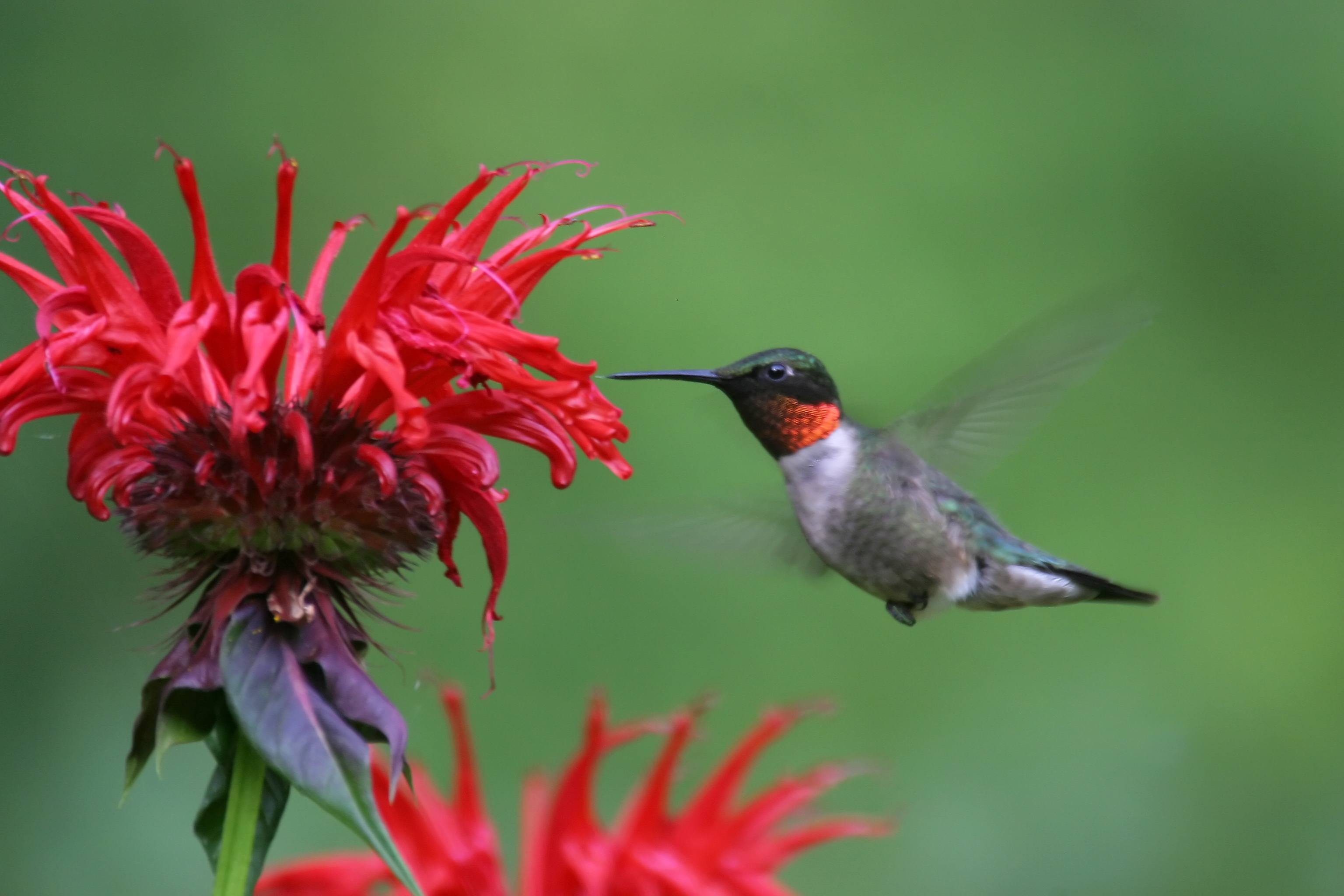
What type of symbiosis?  Hummingbirds feed on nectar from flowers.  The flowers are pollinated by hummingbirds as they move from flower to flower.
a)
commensalism
b)
mutualism
c)
parasitism
d)
predation
31.
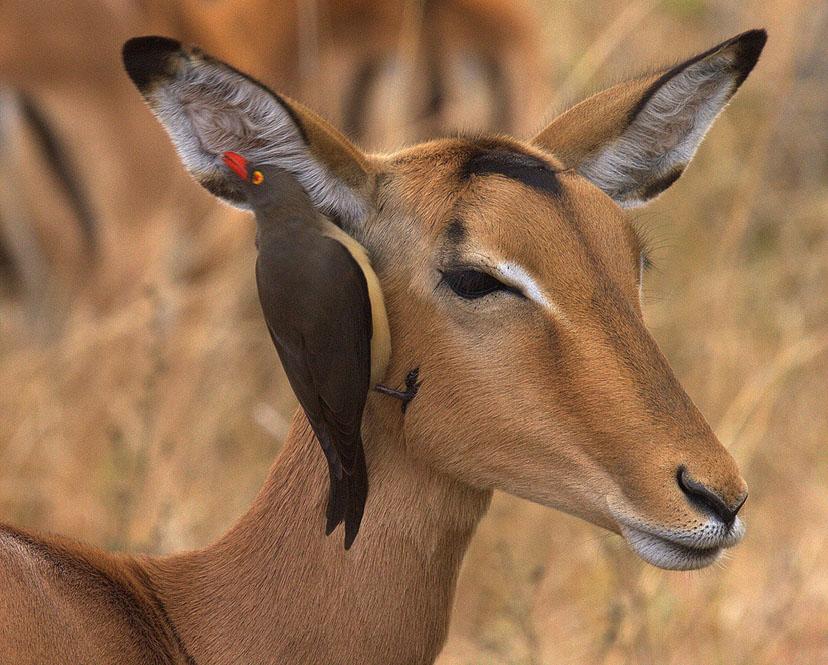
Red-billed oxpeckers are birds that often feed on parasites that infest impala.  This is an example of _______.
a)
commensalism
b)
mutualism
c)
neutralism
d)
competition
32.
A frog eats a fly. The frog and fly are demonstrating ________.
a)
mutualism
b)
competition
c)
predator/prey
d)
parasitism
33.
In the energy pyramid here, which organisms have the most energy available?
a)
Producers
b)
Carnivores
c)
Herbivores
d)
Top Predator
34.
The efficiency of energy transfer from a lower trophic level to the next highest level is roughly
a)
1%
b)
10%
c)
100%
d)
1000%
35.
Trophic levels are represented by 
a)
squares
b)
circles
c)
pyramids
d)
lines
36.
The unique position that a species has in the physical use of its habitat and in its function (job) within an ecosystem  
a)
producer
b)
biotic factors
c)
ecosystem
d)
niche
37.
Which of the following is a herbivore?
a)
cricket
b)
frog
c)
hawk
d)
shrew
38.

A semi-enclosed area where fresh water from a river meets salty water from the sea.

a)

Watershed

b)

Groundwater

c)

Estuary

d)

Ocean

39.
When salt and fresh water mix, what is the new water substance called?
a)
Brackish Acid
b)
Fresh Water
c)
Salt Water
d)
Brackish Water
40.

What is the largest Estuary in the world ?

a)

Biscayne bay

b)

Mississippi estuary

c)

Chesapeake bay

d)

New York Harbor

41.
True of False: The temperature of the ocean water decreases as the depth of the water increases.
a)
True
b)
False
42.
The deepest parts of the benthic zone do not get any _________.
a)
sunlight
b)
food
c)
fish
d)
chemicals
43.
True or False: Temperature does NOT affect the animals that live in marine ecosystems.
a)
True
b)
False
44.
organisms that live on or in the bottom
a)
benthos
b)
neuston
c)
littoral
d)
heterotrophs
45.
organisms that swim against the ocean’s currents
a)
 neuston
b)
plankton
c)
nekton
d)
naphron
46.
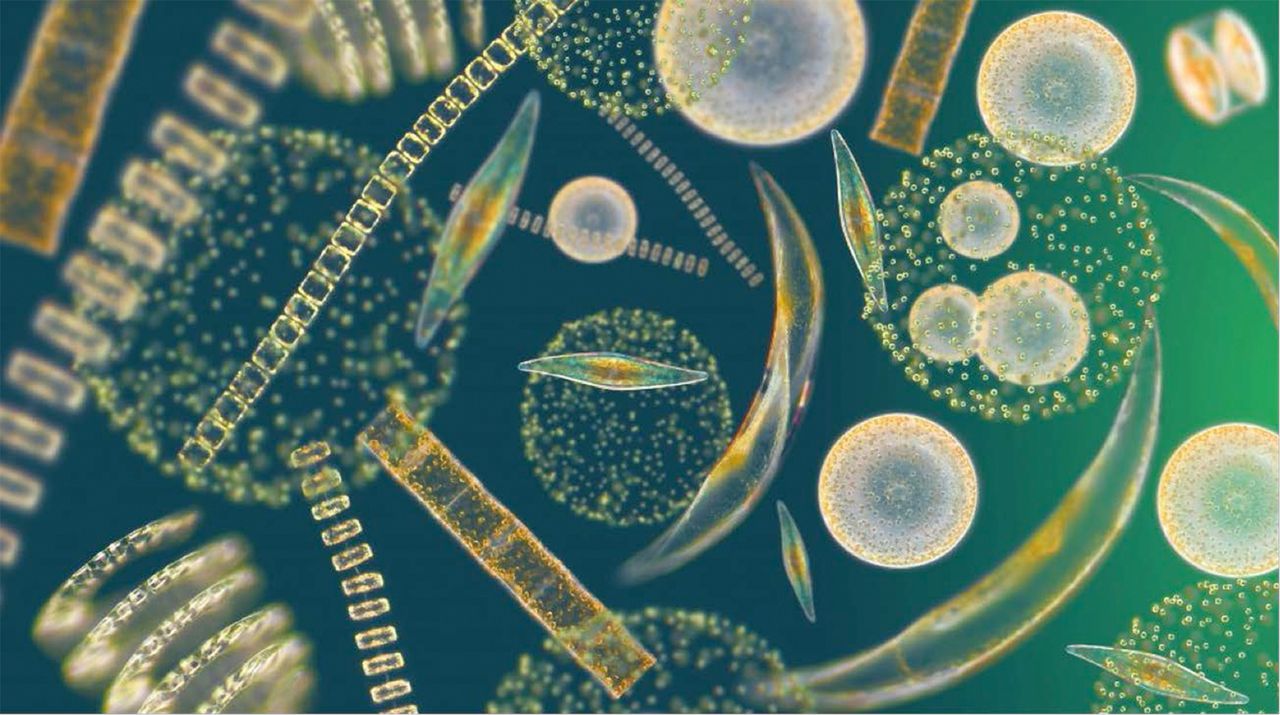
Plankton that uses photosynthesis:
a)
Phytoplankton
b)
Zooplankton
47.
Zooplankton are grouped into which kingdom?
a)
Monera
b)
Protista
c)
Plantae
d)
Animalia
48.
How do living organisms return carbon to the atmosphere in the carbon cycle?
a)
respiration and photosynthesis
b)
 decomposition and respiration
49.
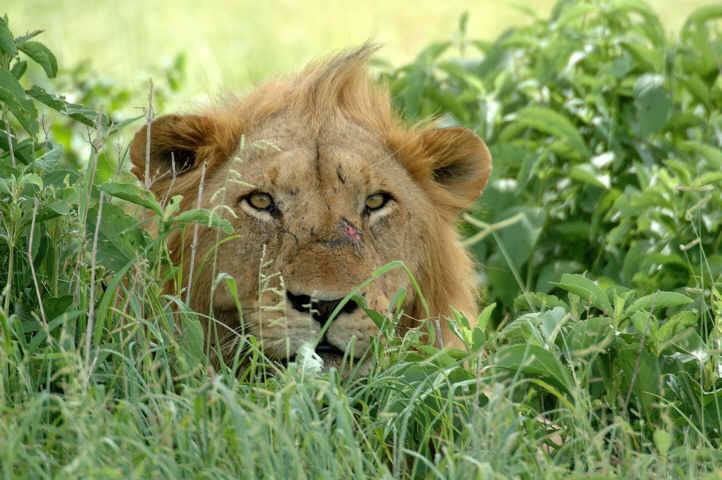
How does the carbon in grass become part of a lion?
a)
The lion eats the grass
b)
Carbon from grass doesn't end up in a lion. 
c)
The carbon ends up in the lion's food chain. 
d)
The lion breathes in carbon given out by the plant
50.
How do plants get the nitrogen they need?
a)
from the air
b)
from the soil or water in which they live
c)
from the Sun
d)
from broken-down rocks
51.
Animals obtain the nitrogen they need directly from the
a)
soil in their habitat
b)
air they breathe
c)
plants they eat
d)
bacteria living within them
52.
Eutrophication is caused by
a)
runoff of excessive fertilizer and nutrients
b)
cleaning up waterways
c)
using nuclear energy
d)
using solar energy
53.

This picture is an example of...

a)

phototropism

b)

dormancy

c)

eutrophication

d)

photosynthesis

54.

Which nutrient cycle does not have the atmosphere in its processes?

a)

Nitrogen

b)

Carbon

c)

Phosphorus

d)

Hyrdologic (Water)

55.

Water cycle processes include

a)

Evaporation, Condensation, Transpiration, Runoff, Infiltration, Accumulation

b)

Evaporation, condensation, Precipitation

c)

Evaporation, Precipitation, Accumulation
56.
The sum total of all the water on earth and in its atmosphere is known as
a)
Biosphere
b)
Atmosphere
c)
Hydrosphere
d)
Ionosphere
57.
Water Droplets in clouds become heavy and fall back to earth
a)
evaporation
b)
condensation
c)
precipitation
d)
transpiration
58.
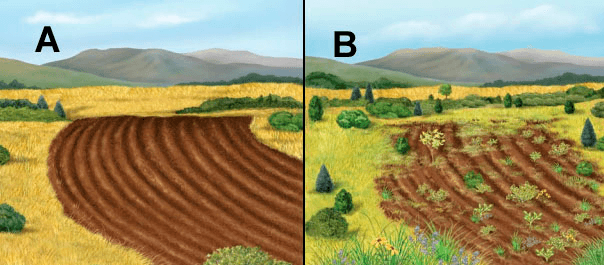
What type of succession is shown going from figure A to figure B?
a)
primary succession
b)
ecological succession
c)
secondary succession
d)
intermediate
59.
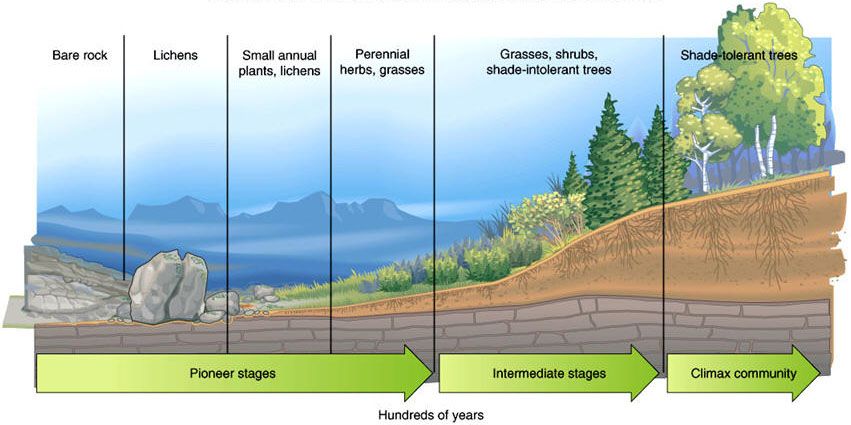
The picture shows what type of succession?
a)
primary
b)
secondary
c)
tertiary
d)
quadanary
60.
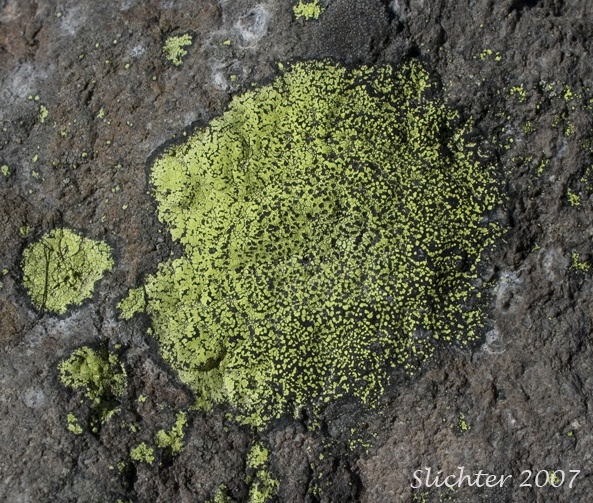
What is the name given to lichen or algae after a primary succession?
a)
pioneer species
b)
volunteer species
c)
founder species
d)
conqueror species
61.
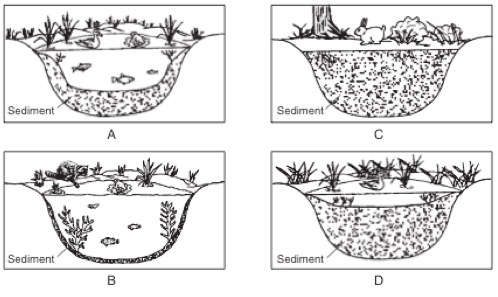
What is the correct order from oldest (happened first) to youngest (happened last) in this pond succession?
a)
A, B, C, D
b)
D, C, B, A
c)
B, A, D, C
d)
C, D, A, B
62.

Pioneer species are

a)

large organisms

b)

the first organisms to adapt to a new environment

c)

The best organisms

d)

Abiotic organisms

63.
What is climate?
a)
What's happening in space at a time and place.
b)
What's happening in our atmosphere at a time and place
c)
The average weather over many years
d)
The average temperature over many years.
64.
Which of the following does NOT have an affect on a region's climate?
a)
Large bodies of water
b)
Latitude
c)
Mountains
d)
Longitude
65.

Biome with many scattered shrubs, tall grasses and small trees.

a)

Savanna

b)

Temperate Grassland

c)

Desert

d)

Taiga

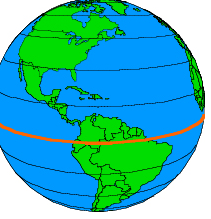
66.
a)
The map shows lines of longitude.
b)
The map shows lines of latitude.
67.
As a population reaches its carrying capacity, there may be an increase in competition for
a)
food
b)
shelter
c)
mates
d)
all the above
68.
A collection of organisms that belong to different populations but all live in the same area and interact with one another.
a)
Population
b)
Ecosystem
c)
Community
d)
Ecosphere
69.
If you were studying the niche of a species of bird, you might study 
a)
the food it eats
b)
its predators
c)
the temperature it needs to survive
d)
all of the above
70.
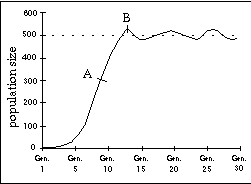
What is the carrying capacity of the graph?
a)
around 500
b)
more than 500
c)
less than 500
d)
around 600
71.
By definition, a mineral has which of the following characteristic(s)?
a)
definite chemical composition
b)
crystal structure
c)
naturally occuring
d)
all of the above
72.
Minerals that form from the evaporation of the liquid in which they were dissolved are known as what?
a)
evaporites
b)
minerals
c)
saturated
d)
supersaturated
73.
Which of the following are NOT potential environmental impacts of mining?
a)
Erosion and Sedimentation
b)
Air, Water, and Noise Pollution.
c)
Underground Fires, displacement of wildlife, and subsidence.
d)
All of the options are potential environmental impacts.
74.
The process of returning land to its original or better condition after mining is called:
a)
Bond forfeiture program
b)
Mineral
c)
Reclamation
d)
Cheese fries are delicious!
75.
What is the difference between an ore mineral and a gangue mineral?
a)
Gangue mineral has value
b)
Ore mineral has value
c)
Neither has value
d)
They are the same thing
76.
What are the 3 main fossil fuels?
a)
Coal, Oil, and Gasoline
b)
Coal, Oil, and Natural Gas
c)
Electricity, Gasoline, Petroleum
d)
Coal, Oil, Non-renewable Resources
77.

Which is a nonrenewable source of energy?

a)

solar

b)

wind

c)

coal

d)

geothermal

78.
Which is a renewable source of energy?
a)
oil
b)
nuclear
c)
wind
d)
natural gas
79.
The picture shows sunlight shining on solar panels. 
Which statement best describes this energy source?
a)
Sunlight is a renewable energy source used to produce hydropower.
b)
Sunlight is a nonrenewable energy source used to produce nuclear power.
c)
Sunlight is a renewable energy source used to produce electricity.
d)
Sunlight is a nonrenewable energy source used to produce natural gas.
80.
The picture shows a geothermal power plant. 
Which statement best describes this energy source?
a)
Geothermal power plants are renewable energy sources used to remove magma.
b)
Geothermal power plants are nonrenewable energy sources used to produce natural gas.
c)
Geothermal power plants are renewable energy sources used to produce electricity.
d)
Geothermal power plants are nonrenewable energy sources used to dig for oil.
81.

Nuclear fission releases energy which is used to heat water, which produces steam, which drives turbines to produce _________________

a)

Electricity

b)

Uranium

c)

Natural Gas

82.
In nuclear fusion, smaller atoms are forced together to create larger atoms. Does this process release, absorb or maintain energy?
a)
Absorb energy
b)
Maintain energy
c)
Release energy
83.
Very high temperature and pressure is required for:
a)
Fission
b)
 Fusion
c)
Radioactive Decay
84.
The splitting of a nucleus into smaller nuclei is
a)
fusion
b)
fission
c)
decay
d)
gamma radiation
85.
Where does fusion occur naturally?
a)
Underwater
b)
All around us
c)
In the radioactive waste
d)
On the sun
86.
Efficiency is...
a)
The percentage of energy that is actually used to do work
b)
The stuff in the walls that keeps energy in
87.
What is energy conservation?
a)
Adding up all your energy use
b)
Reducing energy use
88.

What are some of the things that people can recycle?

a)

Paper mache and elastic bands.

b)

Ink cartridges and DVD cases

c)

Household batteries and disposable plates

d)

Paper, plastic, glass, and electronic equipment

89.

Why is recycling so important?

a)

The world's resources are unlimited.

b)

The world's resources are unprotected.

c)

The world's resources are illegitimate.

d)

The world's resources are limited.

90.

How long does a plastic bag take to break down?

a)

6 months

b)

10 years

c)

450 years

d)

4500 years

91.
Investigates disease outbreaks, publishes reports, sponsors education/research.
a)
FDA
b)
CDC
c)
NIH
d)
none of the above