
 Worksheets
SSR
Total questions: 91
Worksheet time: 1hrs 7mins
Name
Class
Date
1.
Why was the Declaration of Independence written?
a)
to explain why the colonies were separating from Great Britain
b)
the start the American Revolution
c)
to offer a peace settlement to Great Britain.
d)
to instruct how a county wins its freedom.
2.
How do natural rights, as described in the Declaration of Independence, differ from other rights?
a)
People are born with natural rights.
b)
People can vote to choose natural rights
c)
Natural rights are given only to citizens.
d)
Natural rights come from the government.
3.
According to Thomas Jefferson, the power to rule comes from____________.
a)
the governed.
b)
God
c)
Parliament.
d)
the king.
4.
Why did Thomas Jefferson say that King George III was an unfit ruler?
a)
He denied the colonists their rights.
b)
He was not born in Great Britain
c)
He was not elected by Parliament
d)
He lived far away from the colonies.
5.
Which colonial leader introduced the ideas of John Locke's "social contract" theory into the Declaration of Independence?
a)
John Hancock
b)
Thomas Paine
c)
James Madison
d)
Thomas Jefferson
6.
Based on the Declaration of Independence, which is a natural right?
a)
the right to vote
b)
the right to bear arms
c)
the right to pursue happiness
d)
the right to equal protection of the laws
7.
Because King George did not want fighting with Native Americans to start again, he forbid the colonists to settle lands beyond . . .
a)
the Appalachian Mountains.
b)
the Ohio River Valley.
c)
the Mississippi River.
d)
the Gulf of Mexico.
8.
Moving goods illegally in or out of a country is called . . .
a)
smuggling.
b)
a proclamation.
c)
a duty.
d)
a boycott.
9.
Most early colonists were loyal to England and valued their rights as English subjects.
a)
True
b)
False
10.
The distance between the colonies and England made it difficult for colonists to have a say in English government.
a)
True
b)
False
11.

According to the Declaration of Independence, what truth was "self-evident"?
a)
All men are created equal
b)
Rights are given by good kings
c)
Government exists to protect us from ourselves
d)
Only a democracy can protect our rights
12.
The List of Grievances were the part of the Declaration that
a)
detailed the colonists' complaints with King George.
b)
listed a man's natural rights.
c)
introduced the Declaration.
d)
concluded the Declaration, declaring America a free country.
13.
What are our natural rights according to Jefferson? (He got the idea from John Locke, but he changed the last right.)
a)
Freedom of speech, religion, and press
b)
Life, liberty, and property
c)
Life, liberty, and the pursuit of happiness
d)
Voting, rebelling, and health
14.
The Preamble is...
a)
in the beginning of the Declaration...
b)
the conclusion.
c)
in the middle.
d)
not in the Declaration.
15.
Who was the main author of the Declaration of Independence?
a)
Benjamin Franklin
b)
Samuel Adams
c)
Thomas Jefferson
d)
Paul Revere
16.
The words self-evident means what?
a)
confusing
b)
obvious
c)
wrong
d)
self-aware
17.
The Declaration of Independence states the purpose of government is
a)
to tax and control finances
b)
to provide rules for the people
c)
to regulate trade
d)
to serve the people
18.

To whom were the signers writing this "break-up letter"?
a)
The world
b)
King George
c)
George Washington
d)
One Republic & Timabland
19.

What is the purpose of government?
a)
to secure (protect) the rights of the people
b)
to create taxes for the people
c)
to change the lives of the people
20.

What is one thing people should do when a government no longer serves it purpose?
a)
rebel against it
b)
alter (change) it
c)
leave it to others
21.

What is a second thing people should do when a government no longer serves it purpose?
a)
abolish it
b)
create a new version
c)
abolish it and create a new one
22.

What five things would the new United States be able to do?
a)
war, peace, contracts, commerce, and anything else that a country would do
b)
war, peace, alliances, negotiations, and anything else that a country would do
c)
war, peace, alliances, commerce, and anything else that a country would do
23.

The King was accused of interfering with the trade of the colonies.
a)
False
b)
True
24.
In the first part of the Declaration, Jefferson wrote that all men have rights. These included "Life, Liberty, and the Pursuit of Happiness". What is the first part of the Declaration called?
a)
The Closing
b)
The Body
c)
The Phone Number
d)
The Preamble
25.
To whom were the signers writing this "break-up letter"?
a)
The world
b)
King George
c)
George Washington
d)
One Republic & Timabland
26.
Independence means:
a)
to formally discuss an issue
b)
freedom from control by another government or country
c)
a course of action taken by a government
d)
rights common to everyone, as opposed to those given by law
27.

Why was the Declaration of Independence written?
a)
To stop taxes from the British Empire.
b)
To make a United States army.
c)
To gain independence from the British Empire
d)
To establish a new form of government.
28.
Who was one of the Georgia signers to the Declaration of Independence?
a)
Thomas Jefferson
b)
John Adams
c)
Austin Dabney
d)
Lyman Hall
29.
What did the Proclamation of 1763 forbid the colonists to do?
a)
Go West of the Appalachian Mountains
b)
Go East of the Appalachian Mountains
c)
Don't trade with the Native Americans
d)
Share the land with the Native Americans
30.
What does "consent of the governed" mean (found in the preamble to the Declaration of Independence)?
a)
it is the right of the people to accept the current government
b)
It is the right of the people to change a government that they no longer believe works
c)
people believe they should stay out of government policies and let the representatives handle it
d)
people believe they need to give their consent to elect people to run the government
31.
In the longest section of the Declaration, Jefferson listed the grievances, or complaints, against the King. Which of these would NOT be one of the complaints?
a)
making the colonists pay taxes
b)
cutting off trade with the rest of the world
c)
giving them stale biscuits for breakfast
d)
making them quarter the soldiers
32.
What taxed all paper in the colonies?
a)
Townshend Act
b)
Stamp Act
c)
Tea Act
d)
Quartering Act
33.
Which document announced the separation of the original 13 colonies from England in 1776?
a)
The Georgia Constitution
b)
The Articles of Confederation
c)
The Declaration of Independence
d)
The U.S. Constitution
34.
What is included in the middle part of the Declaration of Independence?
a)
a declaration of independence from Great Britain
b)
a declaration of war against Great Britain
c)
a list of grievances against the King England
d)
Signatures of the participants at the Continental Congress
35.
Which of the following signers of the Declaration of Independence was from Georgia?
a)
George Walton
b)
William Whipple
c)
Samuel Adams
d)
Francis Lewis
36.
Which act passed caused Georgia's Liberty boys to protest by burning a doll in the likeness of the tax collector in one of the squares of Savannah? (*Hint we were the only colony to collect the tax)
a)
Sugar Act
b)
Stamp Act
c)
Townshend Act
d)
Tea Act
37.
Which of the following signers of the Declaration of Independence was from Georgia?
a)
John Hancock
b)
Button Gwinnett
c)
John Adams
d)
John Penn
38.
Which of these is an example of precipitation?
a)
snow
b)
air
c)
clouds
d)
vapor
39.
Which is the opposite of condensation?
a)
runoff
b)
evaporation
c)
precipitation
d)
transpiration
40.
Snow, sleet, hail, and rain are all examples of ________________.
a)
evaporation
b)
condensation
c)
accumulation
d)
precipitation
41.

What is it called when WATER is FORMED from an LIQUID to a WATER VAPOR Oor an [GAS]?
a)
EVAPORATION
b)
PRECIPITATION
c)
TRANSPIRATION
42.

What is it called when plants give off water vapor as a waste product?
a)
condensation
b)
evaporation
c)
sublimation
d)
transpiration
43.

what does the #4 show in the diagram?
a)
condensation
b)
evaporation
c)
precipitation
d)
run off
44.
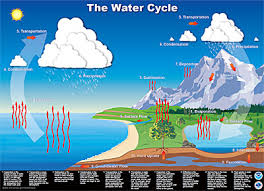
Which stage does ground water try to return to the ocean or soak into the ground?
a)
condensation
b)
evaporation
c)
precipitation
d)
run off
45.
What is water vapor?
a)
Water on the land (geosphere)
b)
Water in the air (atmosphere)
c)
Water in plants
d)
Water in the water (hydrosphere)
46.

When water _________, dew forms.
a)
Melts
b)
Evaporates
c)
Condenses
d)
Precipitates
47.

Snow, sleet, hail, and rain are all examples of ________________.
a)
evaporation
b)
condensation
c)
accumulation
d)
precipitation
48.
What are three stages of the water cycle?
a)
evaporation, condensation, precipitation
b)
condensation, precipitation, hibernation
c)
precipitation, dehydration, evaporation
d)
transpiration, dehydration, condensation
49.
What is the correct term for plants releasing water from their leaves, which then evaporates?
a)
evaporation
b)
precipitation
c)
transpiration
d)
condensation
50.
Where is water vapor found?
a)
in the air around you
b)
in your breath
c)
in steam from a kettle
d)
all of the above
51.
From where does most water evaporate?
a)
puddles
b)
rivers
c)
lakes
d)
oceans
52.
Why do water sources need to be conserved?
a)
We have a limited amount of fresh water.
b)
Pollution reduces the amount of usable water.
c)
Because we need to save it for the whales
d)
Both a and b.
53.
Which is not a part of the water cycle?
a)
evaporation
b)
condensation
c)
pollution
d)
precipitation
54.

Most of the Earth's water (about 97 percent) is
a)
salt water in the oceans.
b)
freshwater in lakes and rivers.
c)
in the form of snow or ice.
d)
in the clouds.
55.
True or false?
Condensation is when a liquid becomes a gas.
a)
True
b)
False
56.

Rainwater that flows into streams and rivers from surface areas
a)
spit
b)
erosion
c)
runoff
d)
sand bar
57.
Which of these is an example of precipitation?
a)
snow
b)
air
c)
clouds
d)
vapor
58.

What is the process of humans putting water into the air through pores in their bodies called?
a)
transpiration
b)
accumulation
c)
perspiration
d)
evaporation
59.
Precipitation occurs because
a)
the droplets evaporate in the air
b)
the droplets are too light for the air to hold
c)
the droplets are too heavy for the air to hold
60.
When tiny droplets of water form in the air its called-
a)
precipitation
b)
evaporation
c)
condensation
61.
The water cycle has no start or end
a)
true
b)
false
62.
x/3+ 10 = 15
a)
75
b)
15
c)
25
d)
5
63.
3/4(6x + 2) = 15
a)
3
b)
6
c)
18
d)
20
64.
2x - 3 + 4x = 27
a)
12
b)
4
c)
5
d)
15
65.
5x - 4 + 2x = 3
a)
1
b)
2
c)
3
d)
4
66.
3x + 2(4x - 4) = 3
a)
4
b)
3
c)
2
d)
1
67.
2x + 3(5x - 7) = 47
a)
1
b)
2
c)
3
d)
4
68.
6x + 5x = -11
a)
-2
b)
-1
c)
1
d)
2
69.
A slide is also called a _________.
a)
Translation
b)
Reflection
c)
Rotation
d)
Transformation
70.
A turn is also called a ___________.
a)
Translation
b)
Reflection
c)
Rotation
d)
Transformation
71.
Translations, reflections and rotations are all known as ________________________.
a)
Geometry
b)
Transformations
c)
Congruent
72.

Write a rule for the translation.
a)
(x -1, y + 2)
b)
(x -2, y + 1)
c)
(x +2, y - 1)
d)
(x +1, y - 2)
73.

Identify the transformation from ABC to A'B'C'.
a)
90o clockwise rotation
b)
90o counter clockwise rotation
c)
Reflection across the y-axis
d)
Reflection across the x-axis
74.

Identify the transformation from ABCD to A'B'C'D'.
a)
Translation
b)
Reflection across the y-axis
c)
Reflection across the x-axis
d)
90o counter clockwise Rotation
75.

Identify the transformation.
a)
Reflection across y-axis
b)
90 Rotation counter clockwise
c)
Translation 5 units left, 1 unit up.
d)
Translation 5 units right, 1 unit down
76.
Point (-5,2) is reflected over the y axis. Where is the new point located?
a)
(5,2)
b)
(-5,-2)
c)
(-5,2)
d)
(5,-2)
77.
Point (7,2) is translated vertically 2 units and horizontally -5 units. Where is the new point located?
a)
(9,-3)
b)
(2,4)
c)
(2,0)
d)
12,4)
78.

Reflect Point C over the y-axis:
a)
(-3, 2)
b)
(3,2)
c)
(-2,3)
d)
(3,0)
79.
The original figure prior to a transformation.
a)
Pre-image
b)
Image
80.

Is the picture being reflected in the y-axis or x-axis?
a)
y-axis
b)
x-axis
81.
Translation are always _______
a)
Congruent
b)
Bigger
c)
Smaller
d)
Rotated
82.
Point C (-5, 4) is reflected over the x-axis. What are the coordinates of C'?
a)
(5, 4)
b)
(-5, -4)
c)
(5, -4)
d)
(-5, 4)
83.
∆QRS contains the points: Q(4, 2) R(5, 1) S(3,7). If the triangle is reflected across the y-axis, what will S' be?
a)
S'(3, 7)
b)
S'(-3, 7)
c)
S'(-3, -7)
d)
S'(3, 7)
84.
∆BCD contains the points: B(2,3) C(2,1) D(5,1). If the triangle is reflected across the x-axis, what will B' be?
a)
B'(2, -3)
b)
B'(-2, 3)
c)
B'(-2, -3)
d)
B'(2, 3)
85.
∆QRS contains the points: Q(4, 2) R(5, 1) S(3,7). If the triangle is reflected across the x-axis, what will Q' be?
a)
Q'(4, 2)
b)
Q'(-4, 2)
c)
Q'(-4, -2)
d)
Q'(4, -2)
86.
What is this transformation?
(x, y) ----> (-x, y)
(x, y) ----> (-x, y)
a)
Reflect over the x axis
b)
Reflect over the y-axis
c)
Slide down 1
d)
slide left 1
87.

Reflect over the x axis and find K'.
a)
(4, 1))
b)
(-1, -4)
c)
(1, -4)
d)
(1, 4)
88.

Which answer shows a reflection across the x-axis?
a)
d
b)
c
c)
b
d)
a
89.

Where will A' be at, if triangle ABC is reflected by
(x,y) --> (-x,y)?
(x,y) --> (-x,y)?
a)
(2,1)
b)
(1,-2)
c)
(-1,2)
90.

Reflections over the x-axis change the ____-__________.
a)
y-coordinate
b)
x-coordinate
91.

Which answer shows a reflection across the y-axis?
a)
a
b)
b
c)
c
d)
d
100 %

