
Font size
S
M
L
XL
 Worksheets
Chemistry
Total questions: 146
Worksheet time: 46mins
Name
Class
Date
1.
What is the formula for density?
a)
density = mass x volume
b)
density = mass / volume
c)
density = mass + volume
d)
density = mass - volume
2.
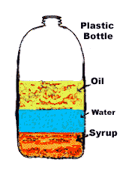
Which liquid is the least dense?
a)
oil
b)
water
c)
syrup
d)
plastic bottle
3.
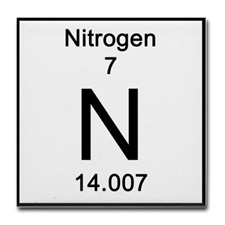
What is the number of protons that the element in this image contain?
a)
14
b)
7
c)
15
d)
18
4.

What is the atomic mass of "F"
a)
9
b)
18
c)
17
d)
19
5.
all matter is made of what
a)
energy
b)
atoms
c)
electrons
d)
compounds
6.
The positive particles of an atom are
a)
electrons
b)
positrons
c)
neutrons
d)
protons
7.
the central region of an atom where its neutrons and protons are is its
a)
nucleus
b)
electron cloud
c)
core
d)
center
8.
an atom with atomic number 6 would have how many protons
a)
6
b)
12
c)
3
d)
cannot be determined
9.
Which of the following is a positively charged subatomic particle found in the nucleus of an atom?
a)
Electron
b)
Proton
c)
Neutron
d)
Quark
10.
Which of the following is a subatomic particle with no charge that is found in the nucleus of an atom?
a)
Electron
b)
Proton
c)
Neutron
d)
Quark
11.
Where are electrons of an atom found?
a)
Nucleus
b)
Electron Cloud
c)
Some are in the nucleus and some in the electron cloud.
d)
They are moving everywhere.
12.
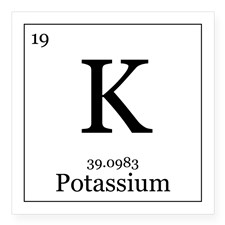
How many neutron are in the atom "K"?
a)
7
b)
2
c)
39
d)
12
13.

What is the number of protons that the element in this image contain?
a)
14
b)
7
c)
15
d)
18
14.

In which region would the nonmentals be found?
a)
1
b)
4
c)
3
d)
5
15.

In which region would the most reactive elements be found?
a)
1
b)
4
c)
5
d)
3
16.

In which region would the least reactive elements be found?
a)
1
b)
4
c)
3
d)
5
17.
The three main regions on the periodic table are ____________.
a)
solid, liquid, gas
b)
metals, nonmetals, meatlloids
c)
radioactive, man-made, poisonous
18.
Something that is made up of only one kind of atom is known as _________________.
a)
a molecule
b)
a compound
c)
an element
d)
a proton
19.
What determines where an element is located on the periodic table?
a)
its atomic mass
b)
its atomic number
c)
its number of electrons
d)
they're arranged alphabeticaly
20.
A "group" is a ____________ on the periodic table.
a)
column
b)
row
21.
A "period" is a ____________ on the periodic table.
a)
column
b)
row
22.
Elements on the periodic table that are usually shiny, easily hammered into thin sheets or pulled into wires, and are good conductors of electricity are called _____________.
a)
metals
b)
nonmetals
c)
metalloids
d)
transition elements
23.
Elements on the periodic table that are often gases at room temperature, are poor conductors of electricity, and are good insulators are called _____________.
a)
metals
b)
nonmetals
c)
metalloids
d)
transition elements
24.
Elements on the periodic table that have physical and chemical properties of both metals and nonmetals are called _____________.
a)
metals
b)
nonmetals
c)
metalloids
d)
transition elements
25.
Helium, neon, argon, krypton, xenon, and radon are known as _____________.
a)
halogens
b)
noble gases
c)
metalloids
d)
transition elements
26.
The sum of the protons and neutrons in the nucleus of an atom
a)
Atomic Number
b)
Compound
c)
Electrons
d)
Mass Number (also called Atomic Mass)
27.
These elements are found along the zig-zag line on the periodic table.
a)
Metal
b)
Group
c)
Metalloid
d)
Nonmetal
28.

This picture represents which of the following?
a)
element
b)
compound
c)
mixture of elements
d)
mixture of compounds
29.

This picture represents which of the following?
a)
element
b)
compound
c)
mixture
30.

This picture represents which of the following?
a)
element
b)
compound
c)
mixture
31.
How many elements are represented in the compound?
Na2CO3
Na2CO3
a)
1
b)
2
c)
3
d)
4
32.
Which one can be found on the periodic table?
a)
Compound
b)
Element
33.
Is salt (NaCI) a compound or a element
a)
Compound
b)
element
34.
compounds are chemically bonded together
a)
False
b)
true
c)
I don't know?
35.
Which of the following is NOT a property of metals?
a)
Malleability
b)
Ductility
c)
Luster
d)
Poor conductor of heat
36.
You bombed your social studies test- so you crumpled up your paper and threw it in the garbage. What kind of change took place?
a)
Physical Change
b)
Chemical Change
c)
Both
d)
Neither
37.
You looked at Mrs. Stephenson's car and saw there was a lot of rust on it. This is evidence of what kind of change?
a)
Physical Change
b)
Chemical Change
c)
Both
d)
Neither
38.
This terms defines 2 or more atoms that are bonded together (either the same or different).
a)
Molecule
b)
Compound
c)
Mixture
d)
Solution
39.
This term defines a substance consisting of 2 or more different types of atoms bonded together.
a)
Molecule
b)
Mixture
c)
Compound
d)
Solution
40.
Metals are considered ductile. This means?
a)
They can be hammered into thin sheets.
b)
They are shiny.
c)
They can be pulled into wires.
d)
They are good conductors of heat and electricity.
41.
How could you separate a mixture of salt water?
a)
Filter it through a screen
b)
Evaporate out the water
c)
Use a magnet
d)
Mix in another chemical
42.
This is the variable that the scientist changes.
a)
Dependent variable
b)
Independent variable
c)
Control variable
d)
None of these
43.
This is the variable that is measured.
a)
Dependent variable
b)
Independent variable
c)
Control variable
d)
None of these
44.
If you had an unknown substance in front of you and it conducted electricity, what type of substance is it?
a)
Metal
b)
Nonmetal
c)
Metalloid
d)
None of these
45.
In a chemical change, a solid can form out of a liquid- this is called a.....
a)
Participate
b)
Precipitate
c)
Particle
d)
Metal
46.
Ice melting is an example of what kind of change?
a)
Physical Change
b)
Chemical Change
c)
Both
d)
Neither
47.
Water is an example of
a)
An element
b)
A compound
c)
A mixture
d)
All of the above
48.
Pure gold is an example of
a)
An element
b)
A mixture
c)
A compound
d)
None of the above
49.
A substance has a pH of 13- this substance is...
a)
Acidic
b)
Basic
c)
Neutral
d)
None of the above
50.
These are positive ions
a)
Anions
b)
Panions
c)
Cations
d)
None of these
51.
If you balance an equation, you are fulfilling the Law of
a)
Conservation of Mass
b)
Thermodynamics
c)
Conservation of Energy
d)
Quantum Mechanics
52.
Acids have an excess of this ion in solution:
a)
H+
b)
OH-
c)
H2O
d)
H2O2
53.
If an atom loses an electron, it becomes
a)
Positive
b)
Negative
c)
Both
d)
Neither
54.
Which is true about liquids?
a)
indefinite volume
b)
indefinite shape
c)
vibrate in a fixed position
d)
very far apart
55.
Which of the following is a physical property of matter?
a)
reactivity
b)
flammability
c)
solubility
d)
combustivity
56.

Is burning wood a chemical or physical change?
a)
chemical
b)
physical
57.
Is melting butter for popcorn a chemical or physical change?
a)
chemical
b)
physical
58.
How many TOTAL atoms are in this compound?
H2C3O4N5
H2C3O4N5
a)
5
b)
14
c)
15
d)
19
59.
Can be pulled into wire
a)
Malleable
b)
Ductile
c)
Density
d)
Luster
60.
What is the number called that is to the right and below the symbol?
a)
product
b)
coefficent
c)
subscript
d)
reactant
61.
What do we call the part of the equation to the left of the arrow in this example
CH4 + O2 ---> CO2 +H2O
CH4 + O2 ---> CO2 +H2O
a)
product
b)
yield
c)
reactant
d)
action
62.
Most elements on the left side of the periodic table are
a)
nonmetals
b)
metalloids
c)
metals
d)
gas
63.

In an atom, electrons_.
a)
Are located in the nucleus
b)
Arempaired with nutrons
c)
Travel outside the nucleus
d)
Are always in the same place in an atom
64.
THE LAW OF CONSERVATION OF MATTER STATES THAT MASS BEFORE THE REACTION IS _____
a)
more after the reaction
b)
less after the reaction
c)
the same after the reaction
65.
Sodium
a)
S
b)
So
c)
Na
d)
Au
66.
Potassium
a)
P
b)
Pt
c)
K
d)
W
67.
Covalent compounds
a)
Share electrons
b)
transfer electrons
c)
contain a sea of electrons
d)
conduct electricity
68.
What is a valence electron?
a)
an electron that is found in the outermost shell of an atom.
b)
an electron found in the innermost shell of an atom.
c)
an electron found in the middle shell.
69.
Is Hydrogen considered a metal or a non-metal?
a)
Metal
b)
Non-metal
70.
If an atom loses two electrons what charge will it have?
a)
+ 2
b)
- 2
c)
+1
d)
-1
71.
What is a periodic table?
a)
Shows all known elements in the universe.
b)
A substance in which two or more different elements are CHEMICALLY bonded together.
c)
A substance composed of a single kind of atom.
d)
Cannot be broken down into another substance by chemical or physical means.
72.

What is the atomic number of this element?
a)
6
b)
12.01
73.

What is the symbol of this element?
a)
C
b)
Cu
c)
12.01
74.

What is the atomic weight or mass of this element?
a)
6
b)
C
c)
12.01
75.
A substance composed of a single kind of atom is called?
a)
compound
b)
element
c)
mixture
d)
metal
76.
A substance in which two or more different elements are chemically bonded together is called?
a)
element
b)
compound
c)
mixture
d)
metal
77.
For a chemical equation to be balanced, reactants and products must have what?
a)
More atoms in the product than atoms in the reactant
b)
Equal number of compounds
c)
Equal number of molecules
d)
Equal number of atoms of each element
78.
True or False: A "group" on the periodic table is also known as a "family".
a)
True
b)
False
79.
The number of valence electrons an atom has can be determined by looking at what?
a)
The atom’s period number
b)
The atom’s group/family number
c)
The atom’s atomic number
d)
The atom’s atomic mass
80.
The number of an atom's valence electrons directly affects the atom's what?
a)
Atomic mass
b)
Physical properties
c)
Reactivity
d)
Atomic number
81.
Elements in the same________ have similar chemical & physical properties.
a)
Family
b)
Group
c)
Neither answer is correct
d)
Both answers are correct
82.
To follow The Law of Conservation of Mass, an element's atoms in the product must do what?
a)
Equal number of atoms in the reactant
b)
Be less than its number of atoms in the reactant
c)
Be greater than its number of atoms in the reactant
83.
An element from Group 1 is most likely to react with an element from Group ___
a)
18
b)
1
c)
17
d)
2
84.
Fill in the blanks: A(____)=P(____)=E(_____)
a)
Atomic #=
Protons=Electrons
Protons=Electrons
b)
Atom=Protons=
Electrons
Electrons
c)
Atomic Mass=Protons=valence Electrons
85.
Mass number can be found by doing what?
a)
Counting the number of electrons
b)
Subtracting number of electrons from number of neutrons
c)
Adding electrons and protons
d)
Adding protons and neutrons
86.
The atomic number of an element is also the number of what that an element has?
a)
Protons
b)
Electrons
c)
Protons and electrons
d)
neutrons
87.
What is the formula for finding the Density of an element?
a)
D=mv
b)
D=m/v
88.
In the equation H2O, how many of each element is shown?
a)
H=2 O=1
b)
H=2 O=2
c)
H=1 O=1
89.
In a chemical equation, the Mass of the Reactant must ________ the Mass of the Product
a)
Be greater than
b)
Be less than
c)
Equal to
90.
How many atoms of each element are in the following equation? Al4C3O
a)
Al=12 C=12 O=4
b)
Al=4 C=3 O=1
c)
Al=4 C=3 O=4
d)
Al=7 C=3 O=3
91.
How many different elements are in the formula ZnCl2
a)
3
b)
2
c)
4
d)
0
92.
EVERY organic substance contains what?
a)
Oxygen (O)
b)
Carbon (C)
c)
Nitrogen (N)
d)
Sulfur (S)
93.
True or False: If the measured density of an object is LESS THAN "0", the object will float?
a)
True
b)
False: Density has to be GREATER THAN “0” to float
94.

How many valence electrons does this atom have?
a)
3
b)
7
c)
17
d)
35
95.

Which of these have similar chemical properties?
a)
Atom 1 and Atom 2
b)
Atom 2 and Atom 3
c)
Atom 3 and Atom 4
d)
Atom 1 and Atom 4
96.
Why is the following chemical equation not balanced?
H2 + O2 --> H2O
H2 + O2 --> H2O
a)
each side of the equation has a different number of oxygen atoms
b)
each side of the equation has a different number of hydrogen atoms
c)
each side has the same mass
97.
Which of the following is an unbalanced equation?
a)
CaCO3 --> CaO + CO2
b)
PbO2 + 2H2-->2Pb + H2O
c)
2Na+ 2H2O-->2NaOH + H2
d)
CS2 + 2O2 --> CO2 + 2SO2
98.
The amount of matter an object has.
a)
Weight
b)
Mass
c)
Volume
d)
Density
99.
Oil floats on water. The most accurate reason for this is ____.
a)
oil is less dense than water
b)
oil is immiscible (does not dissolve) in water
c)
oil is both less dense and immiscible with water
d)
water is heavier than oil
100.
______________ is the amount of space an object occupies.
a)
Weight
b)
Mass
c)
Volume
d)
Density
101.
What is happening at the boiling point?
a)
liquid to gas
b)
gas to liquid
c)
solid to liquid
d)
liquid to solid
102.
Water changes its state of matter when heat is added or taken away. When water reaches its boiling point the particles-
a)
are closer together
b)
stay the same
c)
are moving more rapidly
d)
are moving more slowly
103.
Ability of one substance to dissolve in another.
a)
Mixture
b)
Solubility
c)
Melting Point
104.

A gas
a)
has a definite shape but no definite volume
b)
has a definite volume but no definite shape
c)
has fast-moving particles
105.

How many atoms are present in the following compound?
a)
3
b)
48
c)
4
d)
47
106.
An unknown element has 9 protons, 10 neutrons, and 9 electrons. What is it?
a)
Neon
b)
Cobalt
c)
Aluminum
d)
Fluorine
107.
How many valance electrons does boron have?
a)
5
b)
3
c)
11
d)
13
108.
Which element is in group 16, period 3?
a)
Arsenic
b)
Carbon
c)
Sulfur
d)
Boron
109.

Is the equation below a balanced equation?
a)
Yes
b)
No
110.

How many atoms of hydrogen are in the compound above?
a)
12
b)
24
c)
36
d)
3
111.

How many total atoms are in the compound above?
a)
3
b)
4
c)
5
d)
12
112.

How many total atoms are in the compound above?
a)
1
b)
3
c)
4
d)
8
113.

How many total atoms are in the compound above?
a)
3
b)
4
c)
5
d)
6
114.

How many atoms of hydrogen are in the compound above?
a)
3
b)
5
c)
6
d)
8
115.

How many atoms of oxygen are in the compound above?
a)
12
b)
14
c)
4
d)
3
116.

How many elements are in the formula above?
a)
12
b)
24
c)
36
d)
3
117.

How many elements are in the formula above?
a)
3
b)
4
c)
5
d)
12
118.

How many elements are in the formula above?
a)
1
b)
3
c)
4
d)
8
119.

How many elements are in the formula above?
a)
3
b)
4
c)
1
d)
8
120.

How many elements are in the formula above?
a)
12
b)
14
c)
4
d)
3
121.

Is this an element, mixture, or compound?
a)
element
b)
mixture
c)
compound
122.

Is this an element, mixture, or compound?
a)
element
b)
mixture
c)
compound
123.

Is this an element, mixture, or compound?
a)
element
b)
mixture
c)
compound
124.
An anion is a negatively charged ion.
a)
True
b)
False
125.
A cation is a positively charged ion.
a)
True
b)
False
126.
share electrons, occur between non-metals and non-metals. Form molecules.
a)
ionic bonds
b)
covalent bonds
c)
metallic bonds
127.
Mixtures are separated through ___________changes.
a)
mixture
b)
compound
c)
physical
128.
What cannot be broken down into other substances?
a)
Compound
b)
Mixture
c)
Solids
d)
Element
129.
What classifies a substance as a mixture?
a)
Made up of two or more substances that are chemically bonded.
b)
One substance that can not be physically separated
c)
Two or more substances that are not chemically bonded.
d)
A substance that can not be seperated
130.
What is the left part of a chemical equation called?
H2 + O → H2O
H2 + O → H2O
a)
Reactants
b)
Products
c)
Yields
d)
Chemical Equation
131.
When materials combine to form new compounds it is a chemical change. Which example is a chemical change?
a)
baking powder fizzing
b)
water boiling
c)
ice melting
d)
sugar cube dissolving
132.
Choose the element
a)
H2O
b)
Air
c)
NaHCO3
d)
Au
133.
What is made of atoms?
a)
Elephants
b)
Spaghetti Squash
c)
Dandelions
d)
All of these
134.
Which is NOT a pure substance?
a)
mixture
b)
compound
c)
element
135.
H2o, CO2, and NaCl are examples of what?
a)
Element
b)
Compound
c)
Atoms
136.
When you eat food, which of these is an example of a chemical change?
a)
Food being broken into small pieces by your teeth
b)
The enzymes in your stomach breaking down the food
137.
Dissolved salt in water is an example of
a)
homogeneous mixture
b)
heterogeneous mixture
138.
If an ice cream cone is melted, then frozen again the amount of matter is
a)
the same
b)
more
c)
less
139.
Which is not true about energy?
a)
It can be released in food
b)
It can be stored in a battery
c)
It can be stored and released in a firework
d)
all of the above are true about energy
140.
"If the IV (Increase, decreases, or stays the same), then the effects of the DV (increases, decreases, or stays the same), because…" is the correct way to write what?
a)
A procedure
b)
An experiment
c)
A hypothesis
d)
An algebra equation
141.
This substance would have the slowest moving molecules
a)
Solid
b)
Liquid
c)
Gas
142.
How many nitrogen atoms are in the chemical formula below?
5C8H10N4O2
5C8H10N4O2
a)
4
b)
None
c)
20
d)
5
143.
Which description correctly identifies the substance below?
2Ca(OH)2
2Ca(OH)2
a)
2 atoms of Calcium, 4 atoms of Oxygen, 4 atoms of Hydrogen
b)
2 atoms of Calcium, 2 atoms of Oxygen, 2 atoms of Hydrogen
c)
2 atoms of Calcium, 1 atom of Oxygen, 2 atoms of Hydrogen
d)
2 atoms of Calcium, 2 atoms of Oxygenhydrogen
144.
How many molecules are in the following formula?
6C2H10O3
6C2H10O3
a)
90
b)
6
c)
3
d)
0-this is not a molecule, this is a compound
145.
True or False: All of the following examples of an element.
Cr, O2, He, HCl
Cr, O2, He, HCl
a)
True
b)
False- O2 is not an element
c)
False- HCl is not an element
d)
False- none of them are elements
146.
Brittle, poor conductors of electricity, and very reactive, are all characteristics of what type of element group on the Periodic Table?
a)
Metals
b)
Halogens
c)
Non-metals
d)
Metaloids
Reset