
 Worksheets
Science SOL Review
Total questions: 65
Worksheet time: 2hrs 50mins
Name
Class
Date
1.
Observation or Inference?
The wind is blowing today
The wind is blowing today
a)
observation
b)
inference
2.

Observation or Inference?
I believe he must have hit a pothole in the road
I believe he must have hit a pothole in the road
a)
observation
b)
inference
3.
These kind of observation use your senses to observe results.
a)
Qualitative
b)
Quantitative
c)
Scientific
4.
The leaf is 5mm wide.
a)
Qualitative
b)
Quantitative
5.
Sound travels FASTEST through which of these materials?
a)
Air
b)
Empty space
c)
Metal
d)
Water
6.

Measure of how high or low a sound is
a)
amplitude
b)
compression
c)
speed of sound
d)
pitch
7.

What is frequency?
a)
the number of vibrations per second
b)
how high or low a sound is
c)
the loudness or softness of a sound
d)
the back and forth movement of matter
8.
What is volume?
a)
how high or low a sound is
b)
the loudness or softness of a sound
c)
the number of vibrations per second
d)
vibrations
9.
The lowest part of the wave is?
a)
crest
b)
trough
c)
rarefaction
d)
wavelength
10.
The highest point on a wave
a)
trough
b)
amplitude
c)
crest
d)
wavelength
11.
Light travels in a straight line
a)
True
b)
False
12.
Smooth surfaces _______ a lot of light.
a)
reflect
b)
bend
c)
absorb
d)
twist
13.

Which explains why the fork looks different under water?
a)
light can't pass through the glass
b)
the wavelength of light lengthens
c)
the amount of light increases when going through water
d)
light is refracted at an angle
14.

Band of color in a rainbow, or from a light passing through a prism.
a)
Spectrum
b)
Space
c)
Prism
d)
Refraction
15.

Allows most light through
a)
eflection
b)
Refraction
c)
Translucent
d)
Transparent
16.

A combination of two or more substances where each keep their own properties
a)
Mixture
b)
Solution
c)
Substance
d)
Particles
17.

A mixture of one substance dissolved evenly in another
a)
Solution
b)
Mixture
c)
Lemonade
d)
Substance
18.

Is soda a mixture or a solution?
a)
Mixture
b)
Solution
19.
What is the Nucleus composed of?
a)
Protons
b)
Neutrons and Electrons
c)
Protons and Neutrons
d)
Electrons
20.
An example of matter made of only one element is
a)
water
b)
gold bar
c)
light bulb
d)
salad mixture
21.
The smallest part of an element is
a)
proton
b)
atom
c)
compound
d)
mixture
22.
The chemical symbol for Oxygen is
a)
Ox
b)
Og
c)
O
d)
On
23.
A compound is a molecule consists of 2 or more ________.
a)
cells
b)
atoms
c)
elements
d)
mixtures
24.
Which one can be found on the periodic table?
a)
Compound
b)
Element
25.
Is hammering wood together to build a house a chemical or physical change?
a)
chemical
b)
physical
26.
Is bleaching your hair a physical or chemical change?
a)
physical
b)
chemical
27.
When you break a cracker into pieces it is a
a)
Chemical change
b)
Physical change
28.
What is a vertebrate?
a)
Animals that live in water.
b)
Animals that live on land.
c)
An animal with a backbone.
d)
Animals that are advanced/complex.
29.
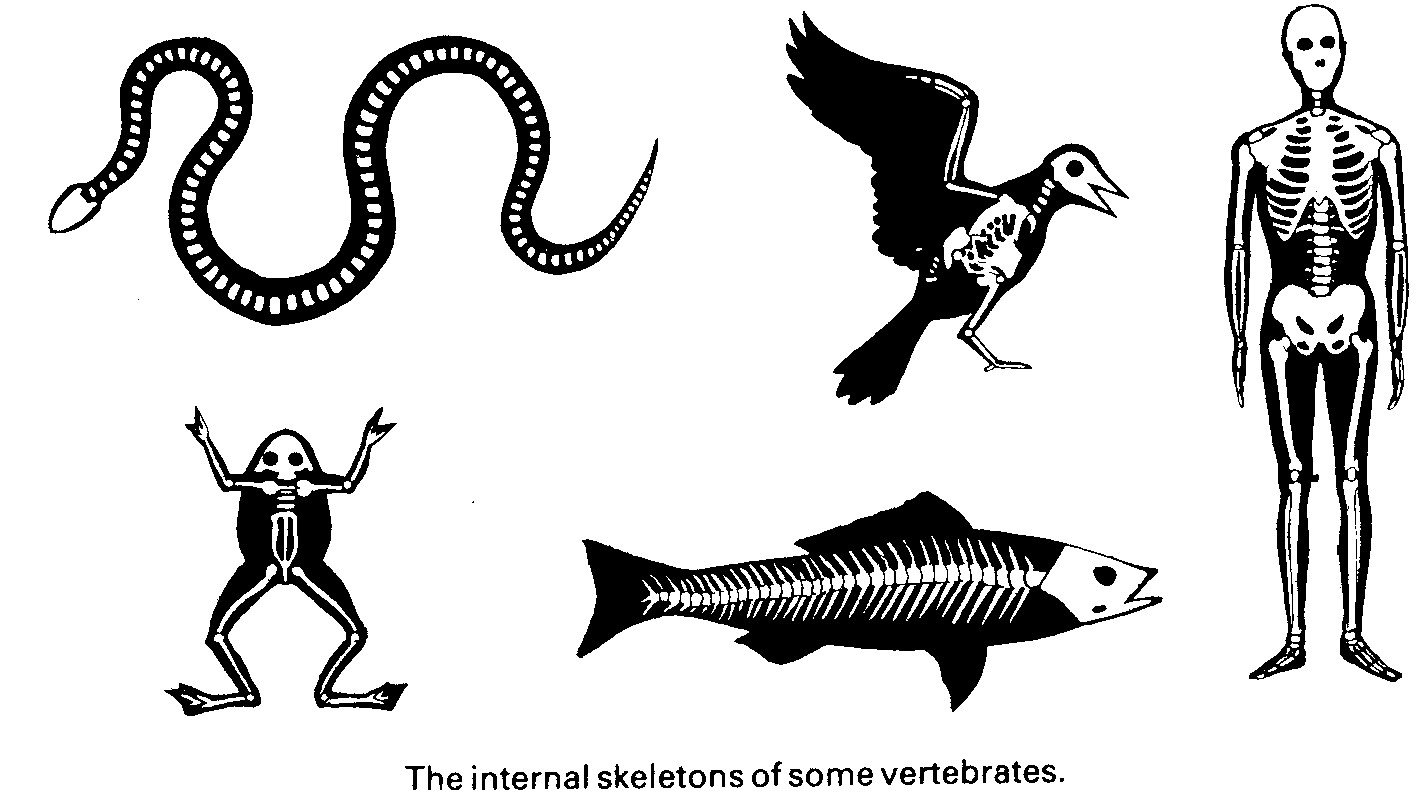
All vertebrates have a ___________.
a)
last name
b)
tail
c)
backbone
d)
neck
30.
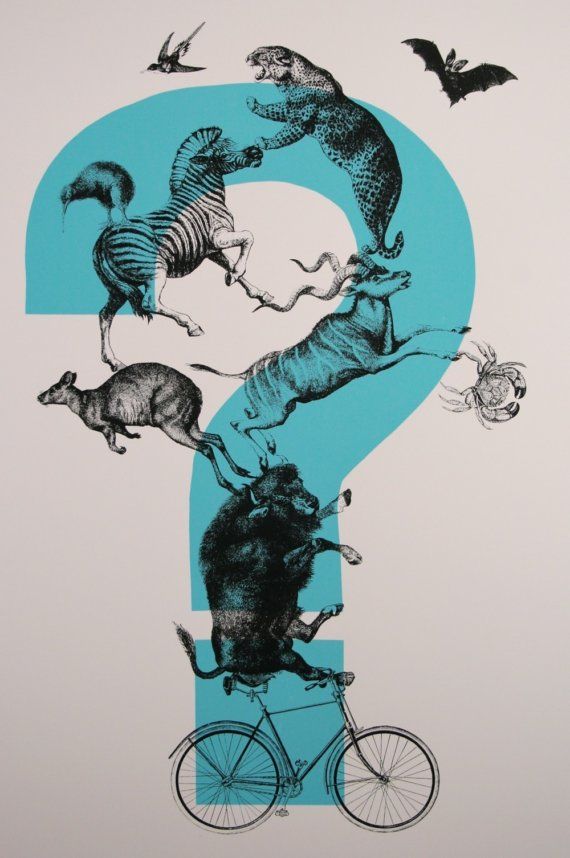
Mammals, fish, reptiles, amphibians, and birds are all __________________.
a)
invertebrates
b)
vertebrates
c)
good pets
31.

This animal is vertebrate or invertebrate?
a)
Invertebrate
b)
Vertebrate
32.
what organelle controls the cell.
a)
Lysosome
b)
Nucleus
c)
Nucleolus
d)
Chromosomes
33.
What tool do you use to view the cells?
a)
metric ruler
b)
centrifuge
c)
microscope
d)
pipette
34.
What part of the cell is the jelly-like substance that contains organelles?
a)
nucleus
b)
cell wall
c)
cell membrane
d)
cytoplasm
35.
These are the basic building blocks of all living things.
a)
cells
b)
atoms
c)
bacteria
d)
blood
36.
Horizontal distance between two wave crests is the
a)
frequency
b)
wavelength
c)
trough
d)
wave height
37.
The size of a wave is NOT affected by the
a)
length of time the wind blows across the water
b)
salinity of the water
c)
strength of the wind
d)
distance the wind blows across the water.
38.

How do waves form?
a)
Wind blowing across the surface
b)
Time wind blows
c)
Strength of the wind
d)
Wind when blows upwards off the water
39.

Deep Ocean currents are a result of
a)
Global Wind Patterns
b)
Earth's Rotation
c)
Density
d)
All of the above
40.
Scientists use ______ to determine the oceans depth.
a)
Submarine
b)
Sonar
c)
Helicopter
d)
Light
41.
the deep flat land of the ocean floor
a)
abyssal plain
b)
rift
42.
What is the steep slope at the edge of the continental shelf?
a)
seamount
b)
mid-ocean ridge
c)
continental slope
d)
rift zone
43.
This boundary moves away from another boundary.
a)
divergent
b)
convergent
c)
transform
44.
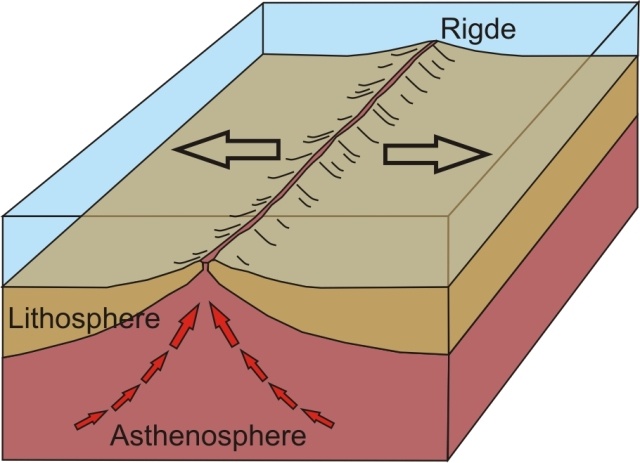
What kind of plate boundary is shown here?
a)
divergent
b)
convergent
c)
transform
d)
subducting
45.

What kind of plate boundary is shown here?
a)
divergent
b)
convergent
c)
transform
d)
submergent
46.

What kind of plate boundary is shown here?
a)
divergent
b)
convergent
c)
transform
d)
strike slip
47.
What geologic feature/event you be most likely to find at a transform boundary?
a)
Earthquakes
b)
Volcanoes
c)
Mountains
d)
Rift Valleys
48.
What geologic feature/event would you most likely to find at a divergent boundary between two pieces of continental crust?
a)
Mid-Ocean Ridge
b)
Mountain
c)
Rift Valley
d)
Island Arc
49.
Which type of rock results from melting and cooling of magma?
a)
Igneous
b)
Metamorphic
c)
Sedimentary
d)
Extrusive
50.
Which type of rock forms from extreme heat and pressure?
a)
Igneous
b)
Sedimentary
c)
Organic
d)
Metamorphic
51.
What is the MAIN way rocks are classified?
a)
Their color and shapes
b)
How they form
c)
Mineral bands
d)
Where they form
52.
True/False: Igneous rocks can only turn into metamorphic rocks.
a)
True
b)
False
53.
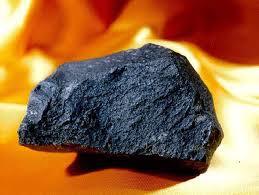
This rock was found near the mouth of a volcano. What type of rock is this?
a)
Sedimentary
b)
Igneous
c)
Metamorphic
54.
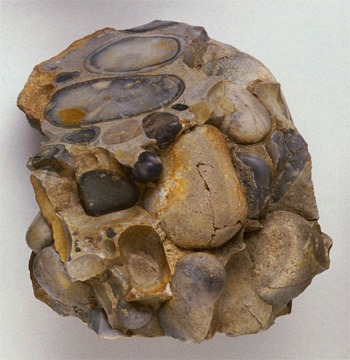
This rock was formed by smaller pieces of rock that settled at the bottom of a lake millions of years ago. What type of rock is this?
a)
Sedimentary
b)
Igneous
c)
Metamorphic
55.

What is #8 pointing to?
a)
petal
b)
stamen
c)
pistil
d)
ovary
56.

What is #6 pointing to?
a)
stigma
b)
style
c)
ovary
d)
petal
57.
What is the sticky part of the flower that catches pollen?
a)
style
b)
stigma
c)
ovary
d)
petal
58.
The part of the flower that is under the petals
a)
Stem
b)
Roots
c)
Sepal
d)
Stalk
59.
This part is responsible for collecting the pollen so that reproduction can occur
a)
style
b)
pistil
c)
stamen
d)
stigma
60.
What do consumers do in the food chain?
a)
They obtain energy from other organisms.
b)
They break down dead plant and animal material.
c)
They use sunlight to make food.
d)
They are parasites of plants.
61.
Which of the following directly use the Sun's energy to produce their own food?
a)
decomposers
b)
carnivores
c)
consumers
d)
producers
62.
Which of the following food chains shows the correct energy flow from left to right.
a)
rabbit--owl--grass
b)
grass--rabbit--owl
c)
owl--rabbit--grass
d)
grass--owl--rabbit
63.
A consumer that hunts is called:
a)
a producer.
b)
an omnivore.
c)
a predator.
d)
a herbivore.
64.
All of the living AND non-living things in an particular area is called a(n):
a)
ecosystem
b)
house
c)
community
d)
mountain
65.

Crab?
a)
Vertebrate
b)
Invertebrate
100 %

