

wayground logo

Free Printable Worksheets

NEW

Font size

S
M
L
XL
Worksheets

Roper's Second Semester Final

Total questions: 63

Worksheet time: 37mins

Name
Class
Date
1.
What does the word "Renaissance" mean?
a)
Renewed
b)
Rebuilt
c)
Remade
d)
Rebirth
2.
On what peninsula did the Renaissance begin?
a)
Spain
b)
England
c)
Italy
d)
Germany
3.
Humanism...
a)
emphasized the Bible
b)
leads to happier lives
c)
encourages people to learn Latin and Greek
d)
focuses on the potential of humans to achieve 
4.
Which of the following is associated with classical learning?
a)
the ideas of the middle ages
b)
the ideas of Greece & Rome
c)
the ideas of ancient China
d)
the ideas of ancient India
5.

Nicholas Copernicus discovered what theory about the planets?

a)

That they and the sun revolve around Jupiter

b)

The the Earth revolves and all the other planets revolve around the sun. (Heliocentric)

c)

That the Sun revolves around the Earth. (Geocentric)

d)

That the Sun and all the other planets revolve around Saturn.

6.

Before the telescope confirmed what Copernicus thought about the planets, prevailing thought was that...

a)

That they and the sun revolve around Jupiter

b)

The the Earth revolves and all the other planets revolve around the sun. (Heliocentric)

c)

That the Sun and all the planets and stars revolve around the Earth. (Geocentric)

d)

That the Sun and all the other planets revolve around Saturn.
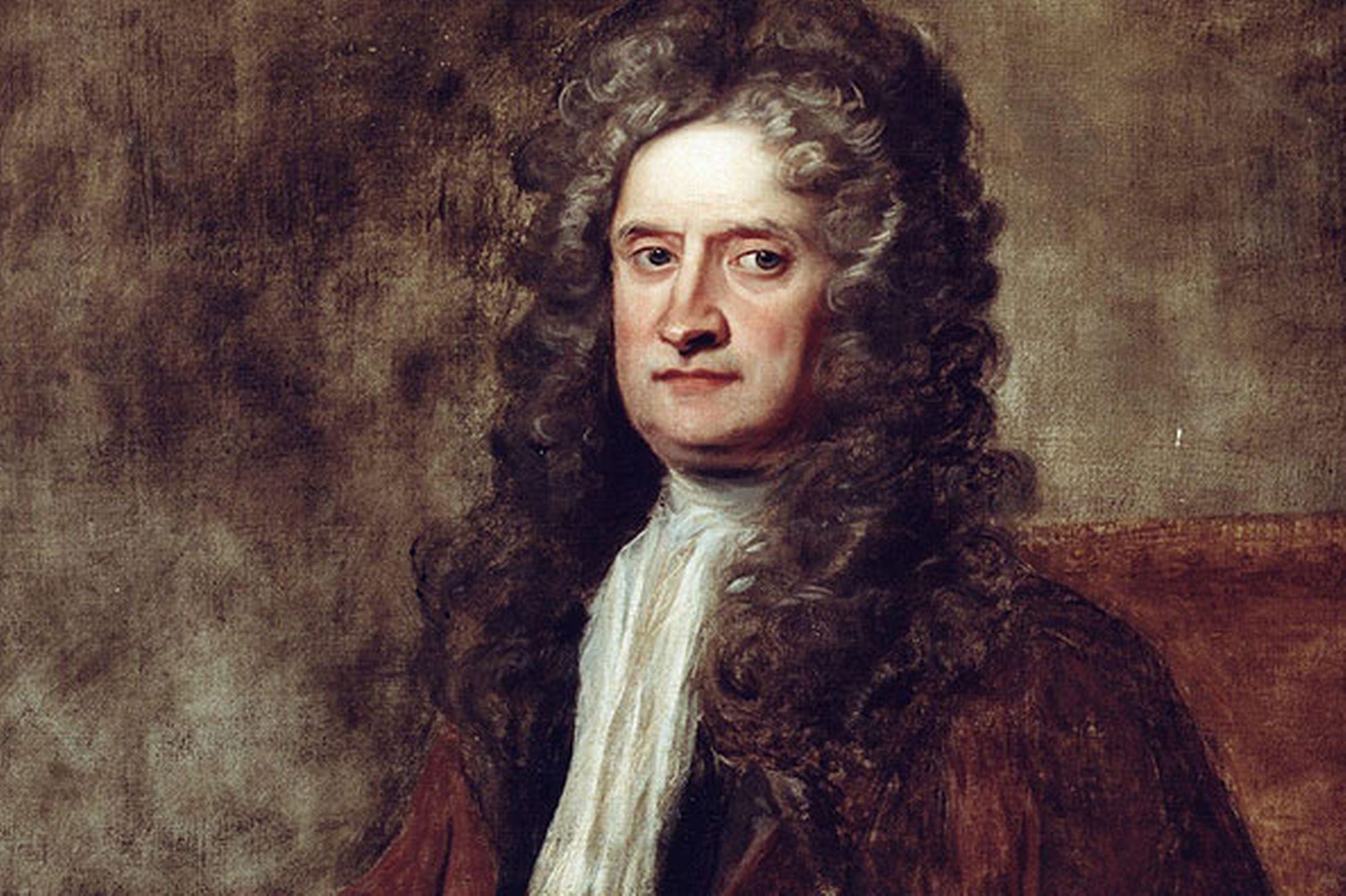
7.
During the Scientific Revolution the heliocentric view of the universe was first proposed by __.
a)
Ptolemy
b)
Francis Bacon
c)
Isaac Newton
d)
Nicolaus Copernicus
8.
Bacon, Galileo, & Newton promoted the idea that knowledge should be based on experimentation & ________.
a)
observation
b)
guessing
c)
research
d)
what your friends say
9.
Both the Renaissance and the ______________ (movement) had a questioning spirit that led to the Scientific Revolution.
a)
Reformation
b)
Viking
c)
Mongol
d)
Equal Rights
10.
Which scientist developed laws of motion?  
a)
Ptolemy
b)
Copernicus
c)
Galileo
d)
Newton
11.
Which of the following was developed by Isaac Newton?
a)
the heliocentric theory
b)
the scientific method
c)
the theory of scientifc rationalism
d)
the theory of universal gravitation
12.

According to John Locke, these are given by God and cannot be taken by the government. The protection of these is the purpose of the government.

a)

divine rights

b)

systemic rights

c)

natural rights

d)

preternatural rights

13.

The influence of John Locke is clear in this document, although he died in 1704 and this document was written in 1776.

a)

The Declaration of Independence

b)

The Communist Manifesto

c)

The U.S. Constitution

d)

The Social Contract

14.
Who believes humans are born poor, nasty, brutish and short?
a)
John Locke
b)
Thomas Hobbes
c)
The English Monarchy
d)
Sir William Jones
15.
In which country did the Industrial Revolution begin?
a)
The United States
b)
England
c)
France
d)
Germany
16.

What product was first made using machines in factories?

a)

Steel

b)

textiles

c)

locomotives

d)

flying shuttles

17.
Which of the following was NOT associated with early factory working conditions?
a)
Low wages
b)
Safe working conditions
c)
Dangerous working conditions
d)
Widespread pollution
18.
Mass production led to:
a)
Products being more superior in quality
b)
goods became less expensive
c)
laborers received higher wages
d)
industries moved to rural areas
19.
What is the movement from rural to urban areas called?
a)
Moving
b)
colonization
c)
inflation
d)
urbanization
20.
Why did people move to the cities during the Industrial revolution?
a)
Jobs in factories
b)
Jobs on the farm
c)
Family
d)
Friends
21.
This machine allowed factories to be built anywhere, powered by coal.
a)
flying shuttle
b)
steam engine
c)
spinning jenny
d)
cotton gin
22.
Imperialism is __________.
a)
when a powerful nation uses its resources to help a weaker nation
b)
when a weaker nation invites a powerful nation to help it industrialize
c)
when a powerful nation takes control of the economy and government of a weaker nation
d)
when weak nations join together to fight a strong nation
23.
Economic motives for imperialism include _________.
a)
a desire to spread Christianity
b)
a need for military bases around the world
c)
a need for raw materials to be used in factories
d)
a desire to gain glory
24.
The poem, The White Man's Burden, by Rudyard Kipling, represents the belief that European culture was _______.
a)
superior to other cultures
b)
misunderstood by Americans
c)
the oldest culture in the world
d)
a replica of Ancient Greek culture
25.
This word means pride in one's country; it was a cause of WWI.
a)
Militarism
b)
Alliances
c)
Nationalism
d)
Imperialism
26.
This word means strengthening a country's military; it's a cause of World War I.
a)
Nationalism
b)
Militarism
c)
Alliances
d)
Imperialism
27.
This word means seeking other colonies; it was a cause of World War I.
a)
Militarism
b)
Imperialism
c)
Alliances
d)
Nationalism
28.
This word means support for different sides during war; there were the Allied and Central powers during WWI.
a)
Nationalism
b)
Imperialism
c)
Alliances
d)
Militarism
29.
World War I began in ____ and ended in _____.
a)
1914, 1917
b)

1917, 1918

c)
1914, 1918
30.
Who won WWI?
a)
Allied powers
b)
Central Powers
31.
What was signed in 1919 to end WWI?
a)
Treaty of Versailles
b)

Treaty of Paris

c)
Treaty of World Wars
32.
WWI sets the stage for the rise of what German leader?
a)
FDR
b)
Adolf Hitler
c)
Winston Churchill
33.

Germany also had to take ______ for the war according to the treaty.

a)

a hit

b)

blame

c)

one for the team

34.

Germany also had to ______ their military.

a)

disarm

b)

increase

c)

strengthen

d)

make them more sensitive

35.
What were the causes of WWI?
a)
Militarism, Alliances, Nationalism, Imperialism
b)
Militarism, Alliances, Nationalism, Isolationism
c)
Militarism, Against, Nice, Iguanas
d)
Militarism, Alliances, Nationalism, Impractical
36.

What sparked World War I?

a)

Assassination of Archduke Franz Ferdinand

b)

Assassination of Archduke Marmaduke

c)

Assassination of Archduke Kaiser Permanente

d)

Assassination of Archduke Kaiser Wilhelm

37.

Russia, Great Britain, and France were all part of the________ during World War I.

a)

Allied Powers

b)

Central Powers

c)

Axis Powers

d)

Neutral Powers

38.

Germany, Austria-Hungary, and the Ottoman Empire were all a part of the _________ during World War I.

a)

Central Powers

b)

Allied Powers

c)

Axis Powers

d)

Neutral Powers

39.

The spread of idea to help a cause or hurt an opposing cause is known as

a)

propaganda

b)

armstice

c)

isolationism

d)

truce

40.
All of the following are true about trench warfare EXCEPT:
a)
trenches provided protection to soldiers from gun fire
b)
trench warfare was uncommon in World War I
c)
each side built extensive networks of trenches
d)
 soldiers were forced to live in terrible conditions and share the trenches with dead bodies
41.
Which document punished Germany after World War I?
a)
Treaty of Versailles
b)
Yalta Agreement
c)
Roosevelt Corollary
d)
Fourteen Points
42.

Why did people accept dictatorial rulers during the Great Depression?

a)

Dictators offered simple solutions.

b)

Nobody else wanted to lead the countries.

c)

Dictators took over by force.

d)

Most people preferred dictators over freedom.

43.
Which of the following helped Adolf Hitler gain power in Germany?
a)
The promise of a new democracy
b)
The Great Depression
c)
Big business and labor
d)
The support of the Weimar government
44.

Who was the leader of Germany during World War II

a)

Hitler

b)

Mussolini

c)

Roosevelt

d)

Stalin

45.

Who was the leader of Italy during World War II?

a)

Hitler

b)

Mussolini

c)

Roosevelt

d)

Stalin

46.

Who was the leader of Soviet Union during World War II?

a)

Hitler

b)

Mussolini

c)

Roosevelt

d)

Stalin

47.

Pearl Harbor happened on what day?

a)

December 7,1945

b)

December 25, 1945

c)

December 7, 1941

d)

December 13, 1941

48.

On August 6, 1945 where was the 1st atomic bomb dropped?

a)

Nagasaki

b)

Beijing

c)

Hiroshima

d)

Berlin

49.

Blitzkrieg means

a)

lightning storm

b)

lightning war

c)

fire fight

d)

bombing war

50.

Which country was invaded which caused France and Great Britain to declare war?

a)

Thipoia

b)

Soviet Union

c)

United States

d)

Poland

51.

Pearl Harbor happened in what country and/or state?

a)

Hawaii

b)

Japan

c)

Phillipines

d)

Midway

52.
Germany, Italy, Japan
a)
Central Powers
b)
Allied Powers
c)
Axis Powers
53.
United States, Great Britain, Soviet Union
a)
Central Powers
b)
Allied Powers
c)
Axis Powers
54.
This country was neutral at the beginning of WWII.
a)
Germany
b)
Japan
c)
France
d)
United States
55.
The reason America joined WWII
a)
bombing of Pearl Harbor
b)
invasion of Poland
c)
Holocaust
d)
attack on the Soviet Union
56.
The time period when millions of Jews were killed and persecuted because of their religion.
a)
Imperialism
b)
Fascism
c)
Holocaust
d)
Pearl Harbor
57.
The first atomic bomb was dropped on this city
a)
Japan
b)
Nagasaki
c)
Hiroshima
d)
Germany
58.
The second atomic bomb was dropped on this city
a)
Japan
b)
Nagasaki
c)
Hiroshima
d)
Germany
59.

the Prime Minister of England during WWII

a)

Benito Mussolini

b)

Winston Churchill

c)

Joseph Stalin

d)

Adolph Hitler

60.
Which of the following was NOT a cause of the Great Depression?
a)
Famers bought land could couldn't pay back their loans
b)
People bought items like radios, cars, & stocks on credit
c)
The prosperity of the Roaring Twenties
d)
The stock market crashing
61.

After the end of World War II, these two countries engaged in a 45 year long conflict where they undermined each-other via National Security. This conflict threatened Nuclear War between these two countries.

a)

The United States and Germany

b)

The Soviet Union and Germany

c)

Sweden and France

d)

The United States and Soviet Union

62.

The Soviet Union tried to spread which ideology during the Cold War?

a)

Communist

b)

Globalist

c)

Amish

d)

Capitalist

63.

The United States tried to Spread the ideology of ___________ during the Cold War.

a)

Communism

b)

Capitalism

c)

Amish

d)

Idolitism
