
NEW
Font size
S
M
L
XL
 Worksheets
Rocks & Minerals
Total questions: 40
Worksheet time: 31mins
Name
Class
Date
1.
What type of rock would you most likely find a fossil inside of?
a)
sedimentary
b)
igneous
c)
metamorphic
d)
diamond
2.
What type of rock is formed when magma and lava cools and hardens?
a)
minerals
b)
sedimentary
c)
igneous
d)
metamorphic
3.
Emily was looking at a rock and saw tiny crystals. Emily should know that all rocks are made up of _____.
a)
diamonds
b)
minerals
c)
fossils
d)
dirt
4.
What would you use to determine the hardness of a mineral?
a)
color tiles
b)
streak test
c)
Mohs Scale
d)
weight scale
5.
What type of rock is formed when an existing rock has been changed into a new rock?
a)
sedimentary
b)
igneous
c)
minerals
d)
metamorphic
6.
What type of rock forms when sand, particles of rock, bits of soil, and remains of once-living things are cemented?
a)
igneous
b)
sedimentary
c)
minerals
d)
metamorphic
7.
Which of the following is NOT a property that can be used to identify a mineral?
a)
luster
b)
color
c)
weight
d)
hardness
8.
What type of rocks would I most likely see at the top of a volcano?
a)
igneous
b)
metamorphic
c)
sedimentary
d)
minerals
9.
How could you determine the streak of a mineral?
a)
streak test
b)
balance test
c)
weight test
d)
scratch test
10.
Which of the following is a type of rock?
a)
igneous
b)
metamorphic
c)
sedimentary
d)
All of the above
11.
What do we call the scientist who studies rocks?
a)
geologist
b)
rock scientist
c)
rockologist
d)
mineralogist
12.
Metamorphic rocks are existing rocks that have been changed into new rocks by _____.
a)
heat
b)
time
c)
pressure
d)
All of the above
13.
True or False:
The cleavage of a mineral is the way the mineral shines or reflects light.
The cleavage of a mineral is the way the mineral shines or reflects light.
a)
True
b)
False
14.
The continuous series of change that rocks undergo is known as the _____.
a)
rock cycle
b)
water cycle
c)
hibernation
d)
metamorphisis
15.
This is measured on the Mohs Scale.
a)
Cleavage
b)
Density
c)
Hardness
d)
Luster
16.
The _________ of a mineral is a physical property that is easy to observe.
a)
Chemical Composition
b)
Color
c)
Hardness
d)
Streak
17.
This is how a mineral reflects light.
a)
Cleavage
b)
Density
c)
Hardness
d)
Luster
18.
________ is the mass per unit volume.
a)
Crystal Structure
b)
Density
c)
Hardness
d)
Solid
19.
_______ is a property that describes a mineral that splits evenly along flat surfaces.
a)
Cleavage
b)
Fracture
c)
Inorganic
d)
Organic
20.
The three major rock groups are:
a)
Inorganic, Metamorphic, and Sedimentary
b)
Inorganic, Metamorphosis, and Sediment
c)
Igneous, Metamorphic, and Sediment
d)
Igneous, Metamorphic, and Sedimentary
21.
This rock is formed from molten rock (magma/lava) that has cooled.
a)
Igneous
b)
Inorganic
c)
Metamorphic
d)
Sedimentary
22.
This rock is formed by erosion (continuously broken down into small fragments) and then is compressed and cemented together.
a)
Inorganic
b)
Igneous
c)
Metamorphic
d)
Sedimentary
23.
This rock is formed by extreme heat and/or pressure that alters the chemical composition into a new form of rock.
a)
Inorganic
b)
Igneous
c)
Metamorphic
d)
Sedimentary
24.
When identifying minerals, _______ can be tested by scratching the surface with different materials such as your fingernail or a coin.
a)
Cleavage
b)
Density
c)
Hardness
d)
Streak
25.
What is the outer layer of the Earth called?
a)
crust
b)
core
c)
mantle
d)
dirt
26.
What is the process of wearing away rocks called?
a)
rock cycle
b)
vinegar
c)
weathering
27.
What did we place the rocks in when performing the acidic test?
a)
water
b)
vinegar
c)
sprite
d)
plaster
28.

What property of rock is being observed when looking for what color is left after scratching it on a ceramic plate?
a)
hardness
b)
color
c)
cleavage
d)
streak
29.
What is the hardest mineral there is?
a)
Calcite
b)
Feldspar
c)
Quartz
d)
Diamond
30.
What scale do scientist use to test the hardness of minerals?
a)
1-5
b)
1-10
c)
A-Z
d)
10, 20, 30, 40, 50
31.
Using the hardness scale that scientist use to test minerals, what does 1 stand for?
a)
Softest
b)
Hardest
c)
Biggest
d)
Smallest
32.
In sedimentary rocks, there are pieces of rocks called ________________ that have been pressed together.
a)
Chunks
b)
Small rocks
c)
Sediments
33.
Minerals are solid, nonliving materials that are formed in ___________.
a)
Factories
b)
Nature
c)
Classrooms
34.
A mineral's resistance to being scratched is called?
a)
streak
b)
luster
c)
hardness
d)
heft
35.
A metamorphic rock changes into an igneous rock by what two processes?
a)
Melting and cooling
b)
Extreme heat and pressure
c)
Compaction and cementation
d)
Weathering and erosion
36.
Wind, water, and ice breaking down rock is called
a)
Erosion
b)
Deposition
c)
Compaction
d)
Weathering
37.
What is the MAIN way rocks are classified?
a)
Their color and shapes
b)
How they form
c)
Mineral bands
d)
Where they form
38.
True/False: Igneous rocks can only turn into metamorphic rocks.
a)
True
b)
False
39.
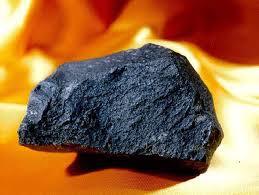
This rock was found near the mouth of a volcano. What type of rock is this?
a)
Sedimentary
b)
Igneous
c)
Metamorphic
40.

Each rock type can follow only one pathway of the rock cycle.
a)
True
b)
False
Reset

