
 Worksheets
World History Final Review
Total questions: 211
Worksheet time: 2hrs 11mins
Name
Class
Date
1.
The 0 degree line of latitude is the ___________.
a)
Equator
b)
Prime Meridian
c)
International Date Line
d)
Contour line
2.
The 0 degree mark of longitude is known as the ___________ ______________ measure from Greenwich England.
a)
Equator
b)
Prime Meridian
c)
International Date Line
d)
Contour Line
3.
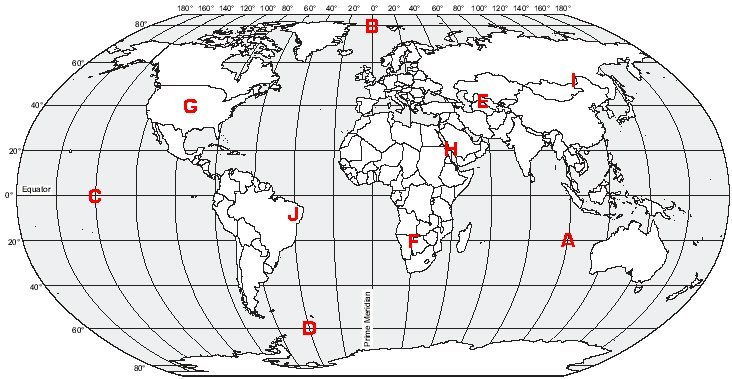
What is the approximate location of letter B?
a)
80oN, 0o
b)
0o, 80oW
c)
80oS, 0o
d)
0o, 80oE
4.
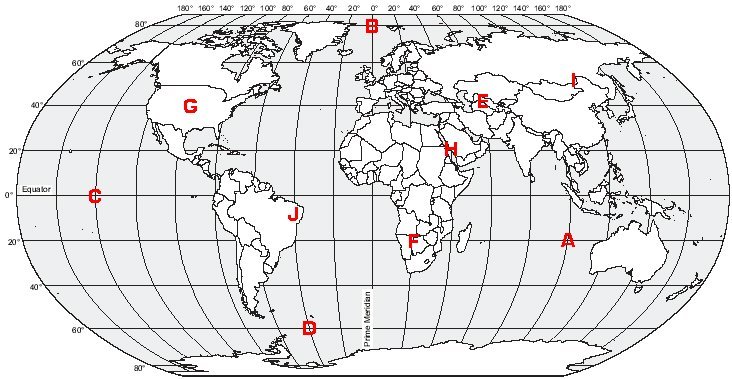
What is the approximate location of G?
a)
100oW, 40oN
b)
40oN, 100oW
c)
40oS, 100oW
d)
40oN, 100oE
5.

Which of the following letter is at approximately 60 degrees S, 40 degrees W?
a)
A
b)
D
c)
E
d)
H
6.
What does BCE stand for?
a)
Before Common Era
b)
Before Christians Evoloved
c)
Before Christ Era
d)
Before Civilization Era
7.
What does AD stand for?
a)
After Death
b)
After Disease
c)
Ante Diem
d)
Anno Domini
8.
What does the term Anno Domini mean?
a)
After death
b)
In the Year of Our Lord
c)
After Civilization
d)
After Christ died
9.
What doe CE stand for?
a)
Common End
b)
Common Era
c)
Christian Era
d)
Christian End
10.
Which is an example of a primary source?
a)
Textbook
b)
Encyclopedia
c)
Artifact
d)
Biography
11.
Which is an example of a secondary source?
a)
Textbook
b)
Artifact
c)
Diary
d)
Legal Document
12.
Put the following dates in chronological order (first to last):
1000 AD/CE, 500 BC/BCE, 1000 BC/BCE, 1 AD/CE
1000 AD/CE, 500 BC/BCE, 1000 BC/BCE, 1 AD/CE
a)
1000 BC/BCE, 500 BC/BCE, 1 AD/CE, 1000 AD/CE
b)
1000 AD/CE, 500 BC/BCE, 1000 BC/BCE, 1 AD/CE
c)
1 AD/CE, 500 BC/BCE, 1000 AD/CE, 1000 BC/BCE
d)
1000 BC/BCE, 1 AD/CE, 500 BC/BCE, 1000 AD/CE
13.

Name the River Valley Civilization shaded in purple on the map
a)
Egypt
b)
Mesopotamia/
Sumer
Sumer
c)
India
d)
China
14.

Name the River Valley Civilization shaded in orange on the map
a)
Egypt
b)
Mesopotamia/
Sumer
Sumer
c)
India
d)
China
15.

Name the River Valley Civilization shaded in pink on the map
a)
Egypt
b)
Mesopotamia/
Sumer
Sumer
c)
India
d)
China
16.

Name the River Valley Civilization shaded in yellow on the map
a)
Egypt
b)
Mesopotamia/
Sumer
Sumer
c)
India
d)
China
17.

Name the civilization:
- Nile River
- Hieroglyphics
- Pyramids
- Nile River
- Hieroglyphics
- Pyramids
a)
Egypt
b)
Mesopotamia/
Sumer
Sumer
c)
India
d)
China
18.

Name the civilization:
- Tigris and Euphrates
- Cuneiform
- City-States
- Tigris and Euphrates
- Cuneiform
- City-States
a)
Egypt
b)
Mesopotamia/
Sumer
Sumer
c)
India
d)
China
19.

Name the civilization:
- Indus River
- Harappa
- Mohenjo Daro
- Indus River
- Harappa
- Mohenjo Daro
a)
Egypt
b)
Mesopotamia/
Sumer
Sumer
c)
India
d)
China
20.

Name the civilization:
- Huang He (Yellow) River
- Calligraphy writing
- Paper and Silk
- Huang He (Yellow) River
- Calligraphy writing
- Paper and Silk
a)
Egypt
b)
Mesopotamia/
Sumer
Sumer
c)
India
d)
China
21.

River Valleys provided all the following benefits EXCEPT -
a)
Protection from invaders
b)
Potential severe floods
c)
Water for agriculture
d)
Water for sanitation
22.

Most early religious traditions can be categorized as -
a)
Monotheistic
b)
Polytheistic
c)
Atheistic
d)
Agnostic
23.
Which group believed the kings were gods?
a)
Mesopotamia
b)
Egypt
c)
China
24.
Which group traded within the Fertile Crescent?
a)
Mesopotamia
b)
Egypt
25.
Which of the following ancient civilizations was the first to develop a writing system, build an empire, and establish a law code?
a)
Egyptian
b)
Mesopotamian
c)
China
d)
India
26.
Which factor influenced the development of ancient civilizations along river valleys?
a)
fertile soil
b)
dry climate
c)
dense rain forests
27.

Which of the following means one god?
a)
Monotheism
b)
Polytheism
28.

Cuneiform is...
a)
a system of government
b)
the world's first system of writing
c)
a type of poem or story
d)
a seal
29.

The people in the region were able to water their crops by ...
a)
rain
b)
praying
c)
singing
d)
irrigation
30.
What made Hammurabi famous?
a)
He was a powerful king who built an empire.
b)
He had some harsh laws.
c)
He conquered and enslaved the Jewish people.
d)
He created the first written laws.
31.
Began in India
a)
Christianity
b)
Buddhism, Hinduism
c)
Hinduism, Islam
d)
Hinduism
32.
Monotheistic
a)
Buddhism, Hinduism, Judaism
b)
Hinduism, Christianity, Islam
c)
Christianity, Judaism, Islam
33.
Worships in synagogues
a)
Hinduism
b)
Islam
c)
Buddhism
d)
Judaism
34.

What religion uses this symbol?
a)
Islam
b)
Christianity
c)
Hinduism
d)
Judaism
35.

What religion uses this symbol?
a)
Hinduism
b)
Christianity
c)
Buddhism
d)
Judaism
36.

What religion uses this symbol?
a)
Hinduism
b)
Christianity
c)
Buddhism
d)
Judaism
37.

What religion uses this symbol?
a)
Hinduism
b)
Christianity
c)
Buddhism
d)
Judaism
38.

What religion uses this symbol?
a)
Hinduism
b)
Christianity
c)
Buddhism
d)
Judaism
39.
Holy city is Mecca
a)
Hinduism
b)
Islam
c)
Buddhism
d)
Judaism
40.
Goal is to reach Enlightenment and Nirvana
a)
Christianity
b)
Islam
c)
Buddhism
d)
Judaism
41.
Four Noble Truths, Eightfold Path
a)
Hinduism
b)
Islam
c)
Judaism
d)
Buddhism
42.
10 Commandments
a)
Hinduism
b)
Christianity, Judaism
c)
Islam
d)
Buddhism
43.
Prophet: Muhammad
a)
Hinduism
b)
Christianity
c)
Islam
d)
Buddhism
44.
5 Pillars
a)
Judaism
b)
Hinduism
c)
Christianity
d)
Islam
45.
5 Pillars
a)
Judaism
b)
Hinduism
c)
Christianity
d)
Islam
46.
Clergy: Rabbi
a)
Judaism
b)
Islam
c)
Hinduism
d)
Buddhism
47.
Holy Book: Torah
a)
Judaism
b)
Islam
c)
Hinduism
d)
Buddhism
48.
Polytheistic
a)
Judaism
b)
Islam
c)
Hinduism
d)
Buddhism
49.
Neither monotheistic or polytheistic
a)
Judaism
b)
Christianity
c)
Buddhism
d)
Hinduism
50.
At one time had the Caste System, which required a person to live in the Caste, follow the rules of the Caste until the person could be reincarnated into a higher Caste
a)
Buddhism
b)
Hinduism
c)
Judaism
d)
Christianity
51.
This was where 7,000 Spartans held off the Persian army for two days
a)
Battle of Marathon
b)
Battle of Salamis
c)
Battle at Thermopylae
d)
Battle at Anderson
52.
The Hellenistic Era was created because of the conquests of whom?
a)
Alexander the Great
b)
Constantine
c)
Julius Caesar
d)
Darius
53.
The governing body in Rome at the end of the 2nd century was the
a)
Senate
b)
Triumvirate
c)
Republic
d)
Empire
54.

The country of Greece is closest to which number?
a)
1
b)
2
c)
3
d)
4
55.
On which of the following did the city-state of Sparta concentrate its resources?
a)
Famous artists and sculptors
b)
Successful merchants
c)
A pleasurable lifestyle
d)
Brave and skillful soldiers
56.
Which of these played the biggest role in the economy of ancient Greece?
a)
Persian Gulf
b)
Mediterranean Sea
c)
Black Sea
d)
Nile River
57.
Match the city-state with the correct statement below.
Develop the 1st democracy
Develop the 1st democracy
a)
Athens
b)
Sparta
58.
Ancient Athenian women had ______ political rights.
a)
Partial
b)
Full
c)
No
59.
• Justinian imposes new code of law.
• Completion of Hagia Sophia adds beauty to Constantinople.
• Greco-Roman tradition preserved.
• Completion of Hagia Sophia adds beauty to Constantinople.
• Greco-Roman tradition preserved.
a)
Byzantine
b)
Persian
c)
Mauryan
d)
Ottoman
60.
What is a form of government called in which the leader is put into office by citizens with the right to vote?
a)
Republic
b)
Empire
c)
Monarchy
d)
Theocracy
61.
What were wealthy landowners called who made up Rome's ruling class?
a)
Plebeians
b)
Monarchs
c)
Patricians
d)
Aristocrats
62.
What commoners such as artisans shopkeepers, and owners of small farms were called
a)
Aristocrats
b)
Monarchs
c)
Patricians
d)
Plebeians
63.
A structure that carries water over long distances? A structure that carries water over long distances?
a)
breakwater
b)
sewer
c)
aqueduct
d)
arch
64.
Which group most heavily influenced Roman art and architecture?
a)
Babylonians
b)
Egyptians
c)
Greeks
d)
Persians
65.

Gladiators fought to the death for entertainment in this 50,000 seat amphitheatre.
a)
Circus Maximus
b)
Agora
c)
Pantheon
d)
Colesseum
66.
Who were the two brothers who founded Rome?
a)
Ben and Jerry
b)
Caesar and Augustus
c)
Romulus and Remus
d)
Hercules and Atlas
67.
Which term best describes the Roman Empire during the Pax Romana?
a)
Unstable
b)
Democratic
c)
Revolutionary
d)
Prosperous
68.
Put the following events in order of when they actually happened: 1) Julies Caesar becomes dictator; 2) the Senate is formed; 3) Barbarians take over Rome; 4) Caesar Augustus becomes Emperor
a)
1, 2, 3, 4
b)
3, 1, 4, 2
c)
2, 1, 4, 3
d)
4, 1, 2, 3
69.
What was NOT an event that led to the downfall of Rome?
a)
Weak armies/barbarian attacks
b)
Bad emperors
c)
The Pax Romana
d)
Loss of trade/money
70.
The medieval Church was a unifying force in Europe after the fall of Rome because it offered:
a)
indulgences for sinners
b)
stability and security
c)
redistribution of wealth
d)
multiple sets of beliefs
71.
Why was the time immediately following the fall of Rome called the Dark Ages?
a)
Emperors kept tight control of the people.
b)
There was little formal education for the masses.
c)
Artwork from Greece, not Rome, survived.
d)
There was no building being done.
72.
Which of the following groups had the MOST political power?
a)
vassals
b)
serfs
c)
lords
d)
knights
73.
_____________ is a political/social system and _____________ is an economic system.
a)
Middle Ages…feudalism
b)
manorialism…feudalism
c)
feudalism…manorialism
d)
Roman Empire…feudalism
74.
-Begun during the Roman Empire -Started as an offshoot of Judaism -Spread throughout the Roman Empire -Promoted the idea of salvation for all -Became the most powerful influence in medieval Europe Which of the following is the best title for the above list?
a)
Origins, Ideas, and Spread of Christianity
b)
Reasons for the Spread of Christianity
c)
History and Development of Feudalism
d)
Origins and Spread of Islam
75.
When Rome split near the end of its existence, why did the West fall when the East survived a thousand years longer?
a)
The Eastern Empire had a
powerful army which the West
did not.
b)
The Western Empire had no
slaves to use for fighting the
barbarians.
c)
The Eastern Empire had a more
sustainable and advanced
economy.
d)
The Western Empire had the
political system that the East did
not.
76.
A major goal of the Catholic Church during the Crusades (1096-1291) was to –
a)
Unite Arab peoples
b)
Establish Christianity in Western Europe
c)
Capture the Holy Land from Islamic rulers
d)
Strengthen the power of European rulers
77.
Which is the most valid generalization about the impact of the Crusades?
a)
They strengthened the power of the serfs in Europe
b)
They increased trade between Europe and Asia
c)
They brought European influence to Asia
d)
They promoted the idea of religious freedom
78.
Which answer choice shows the order of Feudal Society from highest to lowest?
a)
peasants, knights, nobles, king
b)
king, nobles, knights, peasants
c)
knights, king, peasants, serfs
d)
merchants, knights, commoners, serfs
79.
How are knights and samurai similar?
a)
They are from Europe.
b)
They have metal armor.
c)
They are Christian.
d)
They follow codes of honor.
80.
What does the word "Renaissance" mean?
a)
Rebirth
b)
Stagnation
c)
Traditional
d)
A Latin term for art
81.
What provided the major economic support for the Renaissance?
a)
wealthy patrons
b)
church officials
c)
government grants
d)
kings competing for prestige
82.
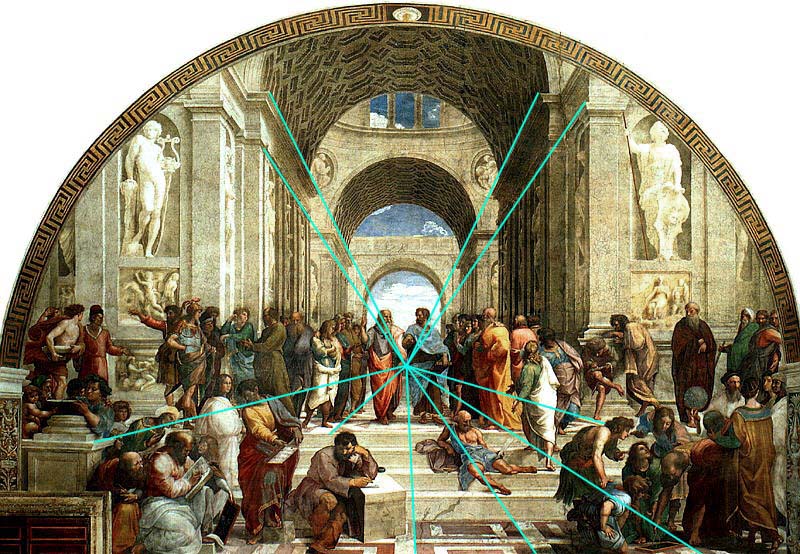
What is the artistic technique that is used to show depth and distance on a flat surface?
a)
realism
b)
perspective
c)
idealism
d)
distancism
83.
Which of the following is associated with Humanism?
a)
the ideas of the middle ages
b)
the ideas of Greece & Rome
c)
the ideas of ancient China
d)
the ideas of ancient India
84.
Where did the Renaissance begin?
a)
Italy
b)
France
c)
England
d)
Germany
85.
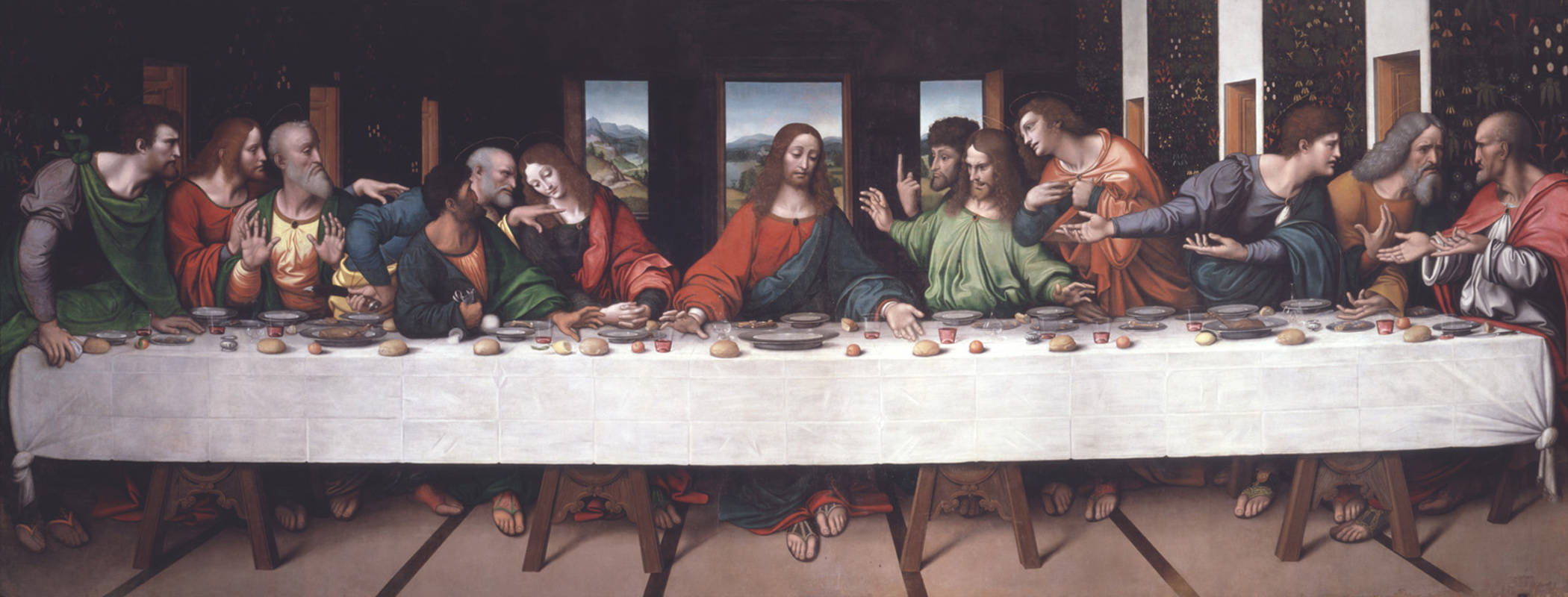
Who painted "The Last Supper"?
a)
Machiavelli
b)
Botticelli
c)
Kepler
d)
Leonardo da Vinci
86.
Which of the following is NOT a reason why the Renaissance began in Italy?
a)
Wealthy Italian patrons supported the arts
b)
Cultural diffusion encouraged curiosity and spread Arab and African ideas
c)
The Black Plague did not hit Italy as a result of the Alps
d)
Renewed interest in the cultures of Ancient Greece and Rome
87.
The Medici Family...
a)
Were the first mafia family to live in Italy
b)
Were the most famous painters in Florence
c)
Were the family of Mona Lisa
d)
Were patrons of the arts in Florence
88.
Which of the following was NOT a pillar of the Renaissance?
a)
Individualism
b)
Humanism
c)
Mannerism
d)
Secularism
89.
"The end justifies the means" was a key belief of this man, who wrote "The Prince"
a)
Machiavelli
b)
Castiglione
c)
Shakespeare
d)
Petrarch
90.
Why does the Renaissance take longer to spread to the northern parts of Europe?
a)
It did not take longer
b)
Northern Europeans did not embrace the ideas of the Renaissance
c)
The Alps separated Italy from the rest of Europe, making it harder to spread ideas
d)
The Black Death started in Northern Europe
91.
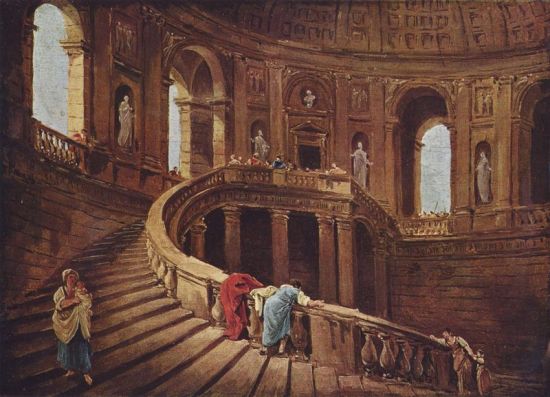
a)
Classical Art
b)
Middle Ages Art
c)
Renaissance Art
d)
Islamic Art
92.
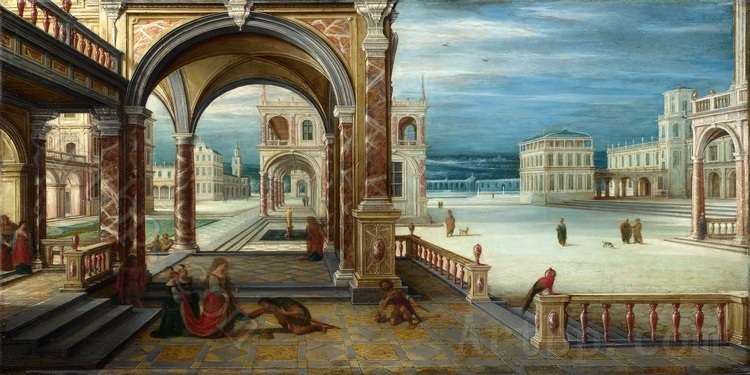
a)
Classical Art
b)
Middle Ages Art
c)
Renaissance Art
d)
None of the above
93.
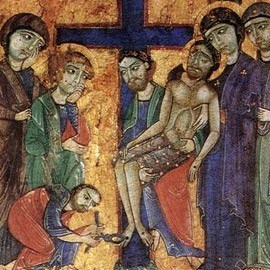
a)
Classical Art
b)
Middle Ages Art
c)
Renaissance Art
d)
Islamic Art
94.
Which of the following is a synonym best used to describe the word "secular"
a)
Worldly
b)
Religious
c)
Chivalry
d)
Rebirth
95.
Advantages of Johannes Gutenberg's printing press include all of the following EXCEPT:
a)
Cheaper book prices
b)
Increase in education/literacy
c)
Increase in church power
d)
Rapid spread of ideas
96.
While Gutenberg introduced the printing press in Europe, this country was the first to develop moveable type, which influenced his invention.
a)
Japan
b)
Korea
c)
England
d)
China
97.
Which of the following was NOT a way Mansa Musa spread Islam and education throughout Mali?
a)
He hired artists and architects to build mosques in Mali.
b)
He outlawed all religions except Islam.
c)
He stressed the importance of reading and writing in Arabic, the language of the Qur'an.
98.
One way in which the African kingdoms of Ghana and Mali are similar is that they
a)
Established their wealth through trade
b)
Opened trade routes to the Americas
99.
The economies of the western African civilizations of Ghana, Mali, and Songhai relied on
a)
Textile production
b)
Trans-Saharan trade routes
100.
What was a significant effect of Mansa Musa’s pilgrimage to Mecca?
a)
Islamic
learning and culture expanded in Mali
b)
The
African written language spread to southwest Asia
101.
Much of the wealth of the West African kingdoms of Ghana and Mali was gained from the
a)
taxation on goods brought by Indian merchants
b)
control of the trans-Saharan trade in gold and salt
102.
Which civilization best completes the heading of the partial outline below?
I._________________________
A. Spread of Islam
B. Gold and salt trade
C. Growth of Timbuktu
D. Pilgrimage of Mansa Musa
I._________________________
A. Spread of Islam
B. Gold and salt trade
C. Growth of Timbuktu
D. Pilgrimage of Mansa Musa
a)
Mali
b)
Songhai
103.
What is the Aztec capital?
a)
Mexico
b)
Tenochtitlan
c)
Tlatelolco
d)
Calpolli
104.
Why was the Inca road system important?
a)
The roads connected all parts of the empire.
b)
The roads all led to Machu Picchu.
c)
The roads were used as part of religious ceremonies.
d)
The roads formed a ring around Cuzco.
105.

The Mayans were located at what letter on the map?
(Click to hide text)
(Click to hide text)
a)
A
b)
B
c)
C
106.

The Aztec were located at what letter on the map?
(Click to hide text)
(Click to hide text)
a)
A
b)
B
c)
C
107.

The Inca were located at what letter on the map?
(Click to hide text)
(Click to hide text)
a)
A
b)
B
c)
C
108.
What civilization, located on the Yucatan Peninsula, was a collection of independent city-states, linked through trade?
a)
Aztec
b)
Olmec
c)
Inca
d)
Maya
109.
What caused the destruction of the Inca and Aztec civilizations?
a)
flooding caused by a long rainy season
b)
new foods brought by the Europeans
c)
wars with European conquerors
d)
conflict with the Mayan people
110.
During the Classical Period of Maya civilization, Maya cities
a)
formed a wide-ranging empire
b)
developed democratic ideas
c)
were governed by a single ruler
d)
were most independent city-states
111.
The term Mesoamerican refers to the civilizations that emerged in the
a)
Pacific Northwest
b)
land area between North and South America
c)
Arctic
d)
Peruvian Andes
112.
What two groups had two calendars, one for tracking religion and one for farming?
a)
Maya and Aztec
b)
Olmec and Aztec
c)
Maya and Inca
d)
Aztec and Inca
113.

Who set foot on an island in the Americas in 1492?
a)
Da Gama
b)
Dias
c)
Las Casas
d)
Columbus
114.

Who was the first person to sail from Europe to India?
a)
Columbus
b)
Vasco da Gama
c)
John Winthrop
d)
Dias
115.
What are the 3 G's?
a)
goldfish, grapes, and graham crackers
b)
God, gold, and glory
c)
Grits, greens, golf
d)
God, grain, and glory
116.
Which group of explorers developed a profitable trading system with the Native Americans?
a)
Spanish
b)
French
c)
English
d)
Italians
117.
What name was given to Cortes, Coronado, and Cabrillo?
a)
rebels
b)
conquistadors
c)
horsemen
d)
seekers
118.

What is this an image of?
a)
Triangular Trade
b)
Silk Road
c)
Middle Passage
d)
Rectangular Trade
119.
What was the purpose of Columbus' expeditions?
a)
To find a shorter route to Asia by sailing west
b)
To claim land in Canada
c)
To explore the Hudson Bay
d)
None of the above
120.
The Age of Exploration and Discovery was a result of the
a)
Attempt to prove that the world was round
b)
Search for new trade routes to Asia
c)
Decline of Italy as a center of commerce
d)
Protestant Reformation
121.

What would have been the MOST common European language found in the area in red?
a)
Spainish
b)
English
c)
Dutch
d)
French
122.
What is considered the "New World?"
a)
Europe
b)
Asia
c)
The Americas
d)
Africa
123.
The voyage across the Atlantic that enslaved Africans is better known as what?
a)
African Diaspora
b)
Middle Passage
c)
Caravel
d)
Northwest Passage
124.
Why did colonists in need of cheap labor turn to slaves from West Africa?
a)
They were familiar with agriculture
b)
Spain legalized the sale of slaves
c)
They had built up an immunity to European disease
d)
The pope encouraged the use of slaves in Catholic lands
125.
What happened during the Columbian Exchange?
a)
Native Americans were shipped to Europe
b)
Plants, animals, disease and ideas were traded and shared
c)
Columbus discovered new animals in the Americas
d)
New foods were brought to Europe and caused diseases
126.
This is when a monarch has complete authority over a government and its people.
a)
absolute monarchy
b)
divine right
c)
constitutional monarchy
d)
theocracy
127.
This is when a monarch claims that their right to rule comes from God.
a)
absolute monarchy
b)
divine right
c)
constitutional monarchy
d)
theocracy
128.
This man was king during the French Revolution, and was beheaded.
a)
Charles I
b)
Louis XVI
c)
Louis XIV
d)
Philip II
129.
This woman was famous for saying "Let them eat cake" when informed of the starving people in France.
a)
Marie Antoinette
b)
Catherine the Great
c)
Elizabeth I
d)
Maria Theresa
130.
This man led the Reign of Terror, until he himself was beheaded by the people of France.
a)
Maximilian Robespierre
b)
Louis XVI
c)
Louis XVI
d)
Oliver Cromwell
131.
This was the tool of execution during the Reign of Terror.
a)
guillotine
b)
axe
c)
electric chair
d)
firing squad
132.
This was a first attempt at a Constitution for France during the Revolution.
a)
Declaration of the Rights of Man
b)
Constitution of 1791
c)
The Constitution
d)
Declaration of Independence
133.
Which statement best describes the effects of the works of Nicolaus Copernicus, Galileo Galilei, and Sir Isaac Newton?
a)
the acceptance of traditional authority was strengthened
b)
funding to education was increased by the English government
c)
interest in Greek and Roman drama was renewed
d)
the scientific method was used to solve problems
134.
Which pair of ideas were central to the Scientific Revolution?
a)
observation and experimentation
b)
social stability and economic self-sufficiency
c)
technology and military expansion
d)
scarcity and interdependency
135.
Which group had the most influence on the ideas stated in the Declaration of Independence and the U.S. Constitution?
a)
Political Leaders of Spain and Portugal
b)
Religious Leaders of the Medieval Period
c)
Writers of the Renaissance
d)
Philosophers of the Enlightenment
136.
How did the Enlightenment and American Revolution influence the French Revolution?
a)
They inspired ideas about unlimited government.
b)
They inspired ideas about limited government.
c)
They inspired ideas about getting rid of taxes.
d)
They inspired ideas about attacking the Bastille.
137.
As a result of the Glorious Revolution and the English Bill of Rights of 1689, government in Great Britain gradually became a:
a)
theocracy
b)
limited monarchy
c)
direct democracy
d)
socialist republic
138.
The Principles of the American Revolution and the French Revolution are similar in many ways. Which of the following best summarizes their similarities?
a)
both favored representative governments
b)
both limited voting rights to an economic elite
c)
both retained certain hereditary rights for aristocrats
d)
both supported equal rights for women
139.

Between 1790 and 1828, which situation helped cause the change reflected in these maps of South America?
a)
the Aztecs regain control of many areas of South America
b)
South American voters removed Spanish and Portuguese rulers from power
c)
Spain sent conquistadors to South America
d)
enlightenment and revolutionary ideas spread from Europe and the Unites States to South America
140.
The Magna Carta and the English Bill of Rights were significant influences on the United States Constitutional development because they
a)
provided suffrage for all men and women
b)
placed limits on the powerof the government
c)
called for the abolition of all slavery
d)
supported the development of federalism
141.
John Locke and Jean Jacques Rousseau would be most likely to support
a)
a return to feudalism in Europe
b)
a government ruled by a divine right monarchy
c)
a coiety ruled by the Catholic Chirch
d)
the right of citizen to decide the best form of government
142.

Which solution would Baron de Montesquieu offer to avoid the enactment of tyrannical laws?
a)
granting freedom of speech
b)
reinstating absolute monarchies
c)
separating the branches of government
d)
limiting natural laws
143.
The Industrial Revolution happening during the _____ and the ____.
a)
1700s, 1800s
b)
1800s, 1900s
c)
1900s, 2000s
d)
1500s, 1600s
144.
The cottage industry system involved manufacturing...
a)
of steam engines.
b)
of luxury goods.
c)
in the home.
d)
in small factories.
145.
Which of the following was NOT associated with early factory working conditions?
a)
Low wages
b)
Widespread pollution
c)
Dangerous working conditions
d)
Safe working conditions
146.
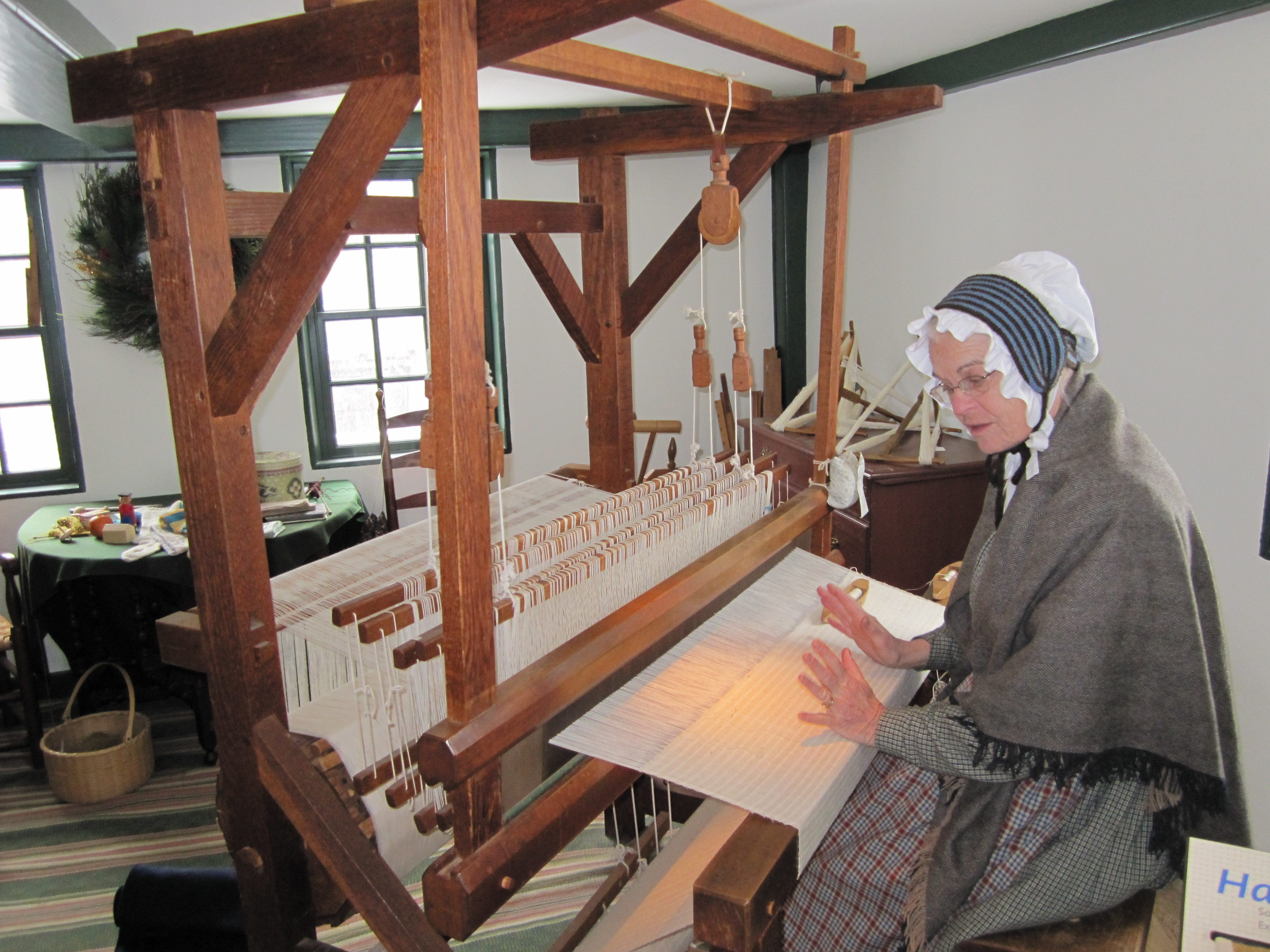
Any fabric that is woven (by machine or hand) is called -
a)
technology
b)
textile
c)
economy
d)
industrialization
147.
A place where people and machines join together to mass produce goods.
a)
School
b)
Corporation
c)
Factory
d)
Urbanization
148.
What innovation increased the transportation of goods and people?
a)
Flying Shuttle
b)
Spinning Jenny
c)
Steam Engine
d)
Water Frame
149.
The Industrial Revolution was triggered by sweeping changes in what?
a)
Religion
b)
Education
c)
Agriculture
d)
Politics
150.
Mass production led to:
a)
Products being more superior in quality
b)
goods became less expensive
c)
laborers received higher wages
d)
industries moved to rural areas
151.
Why did "cottage industry" come to an end?
a)
Too many people moved to the city.
b)
It was replaced by the factory system.
c)
The need for textiles decreased.
d)
Women who worked in cottage industries went on strike.
152.
How did the Industrial Revolution affect the cities?
a)
Made the crime rate decrease
b)
Led to an increase in farm workers
c)
Make the cities cleaner and safer
d)
Led to an increase in population in the cities
153.
What was the purpose of labor unions?
a)
Negotiate as a group for bigger factories
b)
Negotiate as a group for better working conditions
c)
Negotiate as a group for a political revolution
d)
Negotiate as a group for a social revolution
154.
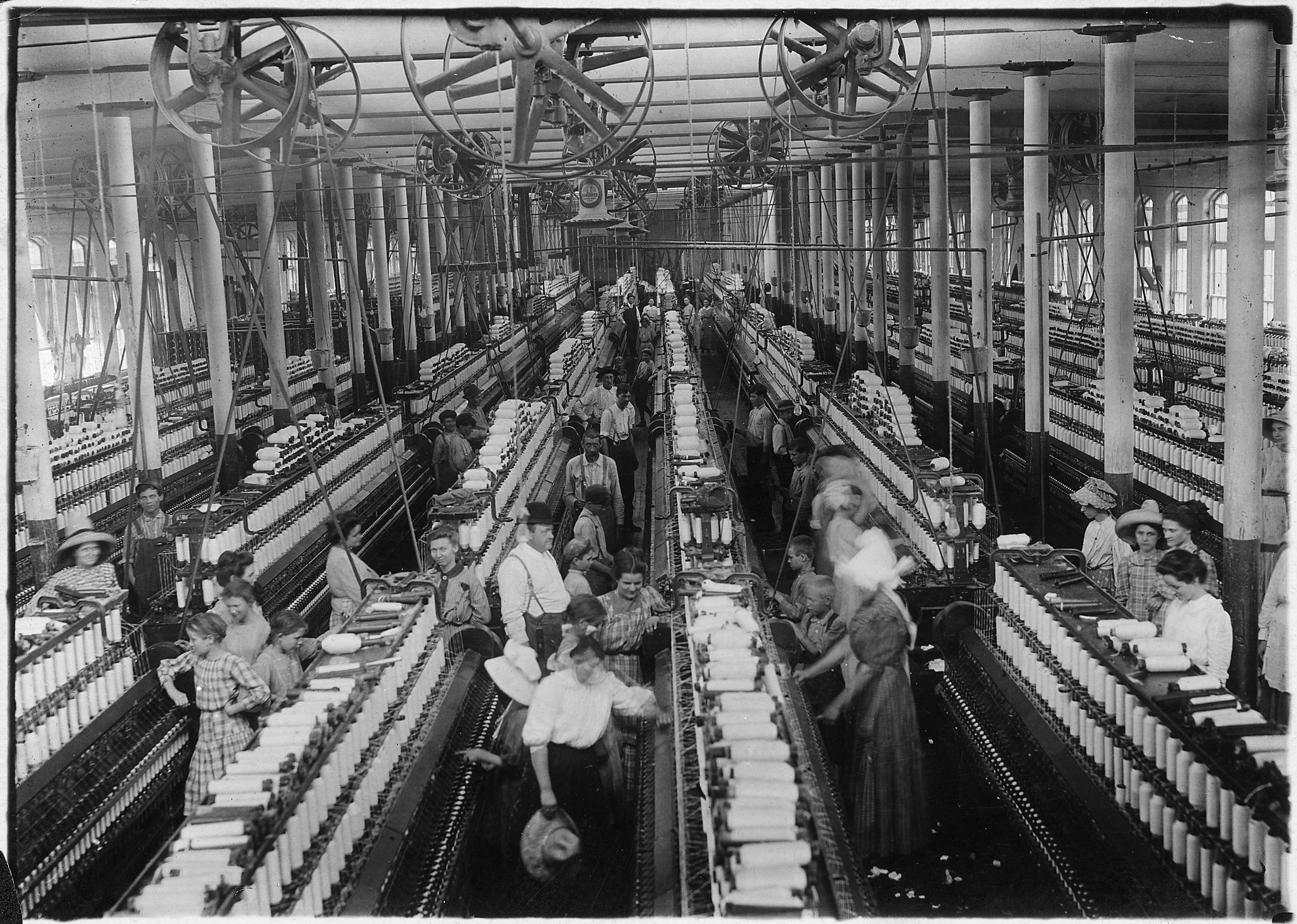
Where were most factories built before the steam engine was invented?
a)
in the mountains
b)
in the desert
c)
along rivers
d)
anywhere
155.
Which 2 natural resources were the backbone of the Industrial Revolution?
a)
wood and peat
b)
oil and natural gas
c)
coal and iron
d)
cotton and tobacco
156.
Which innovation allowed factories to be built anywhere?
a)
flying shuttle
b)
spinning jenny
c)
cotton gin
d)
steam engine
157.
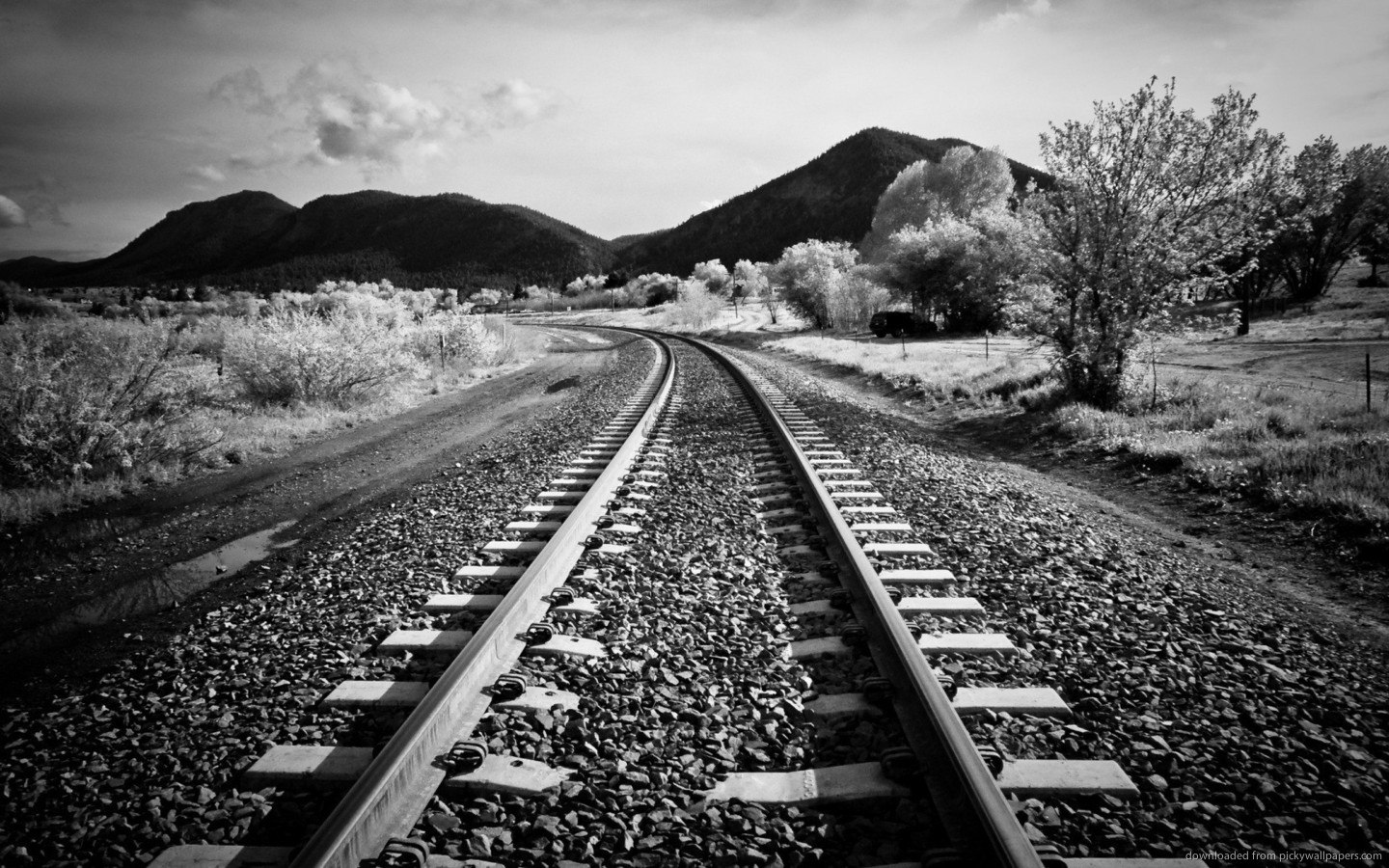
Why were railroads so important during this time?
a)
they moved goods more quickly and less expensively over greater distances
b)
they were fun to ride on to go visit family in other states
c)
people could ride on railroads to get to their jobs in another city
158.
This word means pride in one's country; it was a cause of WWI.
a)
Militarism
b)
Alliances
c)
Nationalism
d)
Imperialism
159.
This word means strengthening a country's military; it's a cause of World War I.
a)
Nationalism
b)
Militarism
c)
Alliances
d)
Imperialism
160.
This word means seeking other colonies; it was a cause of World War I.
a)
Militarism
b)
Imperialism
c)
Alliances
d)
Nationalism
161.
This word means support for different sides during war; there were the Allied and Central powers during WWI.
a)
Nationalism
b)
Imperialism
c)
Alliances
d)
Militarism
162.
Who won WWI?
a)
Allied powers
b)
Central Powers
163.
How did many Americans react to the Zimmermann Telegram?
a)
They became concerned about Russian expansion
b)
They wanted to avoid membership in the League of Nations.
c)
They wanted to fire Zimmermann
d)
They were outraged over a possible German-Mexican alliance.
164.
Germany used their U-boats to sink ships of the Allied powers; this British passenger liner was destroyed in 1917.
a)
Lusitania
b)
USS Maine
165.

What was the nickname given to the popular poster that encouraged young men to join the U.S. Military?
a)
U.S. Army Wants you
b)
Uncle Sam
c)
Army Man
166.
Which country had to accept blame for WWI?
a)
England
b)
France
c)
Austria
d)
Germany
167.
What was the name of the political group that brought communism to Russia?
a)
Mensheviks
b)
Bolsheviks
c)
Michaelvicks
d)
Czarinoviks
168.
What was the significance of Russia pulling out of WWI for the Central Powers?
a)
It allowed Austria to throw all their forces at Italy.
b)
Germany could throw all of their forces against the Allies on the Western front.
c)
It had no impact. Russia didn't cause much of a problem for the Central Powers.
d)
It allowed Germany to invade Russia and take more land.
169.
What treaty officially ended WWI?
a)
Brest-Litovsk
b)
Paris
c)
Versailles
d)
Trafalgar
170.
Which organization was created after WWI to deal with world problems, and prevent future wars?
a)
The League of Champions
b)
The United Nations
c)
The League of Nations
d)
The Justice League
171.
What impact did the Treaty of Versailles have on the borders of Europe?
a)
No impact, all borders remained the same.
b)
France gave land to Germany.
c)
The Soviet Union was given more land to keep them from invading the rest of Europe.
d)
All of the empires of Europe were split up, and many new countries were created.
172.
Which of the following did NOT happen to Germany as a result of Versailles?
a)
They were able to rebuild, and became a powerful ally to France and England.
b)
They were left powerless with a weak military.
c)
They were forced to pay heavy reparations to the rest of Europe.
d)
They were denied entry to the League of Nations.
173.
How are dictators able to rise to power after countries suffer hardships?
a)
People want strong leaders to solve their problems.
b)
Dictators promise freedom.
c)
Dictators allow everyone to vote.
d)
Dictators promise to end fascism.
174.
Who was the dictator of Germany that rose to power with the Nazi Party?
a)
Joseph Stalin
b)
Winston Churchill
c)
Adolf Hitler
d)
Franklin D. Roosevelt
175.
In which WWII event did Japan use the strategy of surprise attack to bomb the United States?
a)
D-Day on the shores of France
b)
Pearl Harbor
c)
Invasion of Poland
d)
V-E Day
176.
Victory in Europe (V-E Day) was a result of ________________.
a)
Japan surrendering
b)
The atomic bombings
c)
Germany surrendering
d)
the signing of the Treaty of Versailles
177.
Which countries belonged to the Axis Powers?
a)
U.S., Italy, and Great Britain
b)
U.S., Great Britain, and France
c)
Germany, Italy, and Japan
d)
Germany, France, and Japan
178.
Why were natural resources, like gasoline, scarce during WWII?
a)
The U.S. government did not want to spend money on natural resources.
b)
The U.S. had all the natural resources it needed.
c)
Natural resources were scarce because they were needed for the war effort.
d)
Americans were greedy and did not want to share the natural resources.
179.
What did allied forces do on D-Day, June 6, 1944?
a)
They sent thousands of troops to Berlin.
b)
They stormed the beaches of Normandy, France.
c)
The fought the Nazi troops in Russia.
d)
They took control of many Japanese islands.
180.
Which of the following is NOT true about the United States during World War II?
a)
The U.S. entered the war after the bombing of Pearl Harbor.
b)
Factories produced war goods and natural resources were rationed.
c)
Most women stayed home to raise children and tend to their husbands.
d)
The Tuskegee Airmen helped the allies defeat the Axis powers.
181.
Which WWII leader declared war on Germany and Japan, and was loved by many Americans for the programs he developed ?
a)
Winston Churchill
b)
Franklin D. Roosevelt
c)
Harry S. Truman
d)
Adolf Hitler
182.
Which famous WWII leader was the dictator of the Soviet Union that had an alliance with Germany at the beginning of the war but later joined forces with the allied powers.
a)
Benito Mussolini
b)
Adolf Hitler
c)
Winston Churchill
d)
Joseph Stalin
183.
Which WWII leader was the fascist dictator of Italy, believed in nationalism, and was an Axis ally?
a)
Joseph Stalin
b)
Benito Mussolini
c)
Winston Churchill
d)
Adolf Hitler
184.
What strategy did the United States develop to help defeat Japan?
a)
island hopping
b)
total war
c)
Anaconda plan
d)
blockade
185.
Which organization was created after World War II to help countries peacefully resolve conflicts?
a)
League of Nations
b)
Warsaw Pact
c)
North American Treaty Organization
d)
United Nations
186.
What role did women take during WWII?
a)
house wives that took care of the house and children
b)
drove tanks and fought in the war
c)
created black out curtains for everyone
d)
filled many traditionally male jobs
187.
Germany employed a tactic that used extremely quick attacks. What was this called
a)
blitzkrieg
b)
lebenbaum
c)
leningrad
d)
Trench warfare
188.
The extermination of 11 million people, including 9 million Jews, was called
a)
Holocaust
b)
Reichtag
c)
Third Reich
189.
Which event marked the turning point in the European front?
a)
Battle of Midway
b)
Battle of Stalingrad
c)
Battle of Britain
d)
Invasion of Poland
190.
What was the name of the plan to make the atomic bomb?
a)
The Bracero Program
b)
The Manhattan Project
c)
The Bronx Venture
d)
The Brooklyn Enterprise
191.
What was the major turning point in the Pacific War against Japan?
a)
Battle of Iwo Jima
b)
Battle of Midway
c)
Battle of the Bulge
d)
Battle of Okinawa
192.
What event began World War II?
a)
Assassination of Archduke Franz Ferdinand
b)
Invasion of Poland
c)
Bombing of Pearl Harbor
d)
Munich Conference
193.
WWII was fought from:
a)
1941-1947
b)
1939-1941
c)
1939-1945
d)
1933-1941
194.
What is the policy of appeasement?
a)
giving in to an aggressor to avoid war
b)
standing up for one's beliefs
c)
depending on allies to fight for you
d)
disarming to show your unwillingness to fight
195.

What two nations were in competition with each other during the Cold War?
a)
Spain and Portugal
b)
England and France
c)
Germany and Italy
d)
United States and Soviet Union
196.

President Truman adopted a new foreign policy during the Cold War know as the Truman Doctrine. What was the main goal of the Truman Doctrine?
a)
To expand trade with Europe
b)
To limit the build up of nuclear weapons
c)
To stop the spread of communism
d)
to send financial aid to Europe
197.

What was the term 'iron curtain' used to describe the division of?
a)
North and South Vietnam
b)
East and West Asia
c)
North and South Korea
d)
East and West Europr
198.

The United States got involved in conflicts like Korea and Vietnam because they were afraid of the domino theory. What is the domino theory?
a)
If one country fell to democracy, others would follow
b)
If one country fell to communism, others would follow
199.

Where was Korea divided?
a)
18 parallel
b)
34 parallel
c)
38 parallel
d)
15 parallel
200.

Why was the United States involved in the Berlin Airlift?
a)
to airlift food to the people of West Berlin
b)
to bomb East Berlin
c)
to demolish the Berlin Wall
d)
to transport people out of East Berlin
201.

Where was Vietnam divided?
a)
17th Parellel
b)
20thParellel
c)
38th Parellel
d)
34th Parellel
202.

How did the US respond to finding out that the Soviets had missiles in Cuba?
a)
They sent the Air Force to bomb Cuba
b)
They began placing missiles in the Soviet Union.
c)
They placed a naval blockade around Cuba.
d)
They invaded Cuba and the Soviet Union.
203.

What was the name of the first satellite in space launched by the Soviet Union?
a)
Gagarin
b)
Apollo 11
c)
Sputnik
d)
Apollo 13
204.
What is Communism?
a)
people taking a chance to start a new business
b)
the government having complete control of businesses and property
c)
free enterprise and economic growth encouraged by the government
d)
a democratic government with personal freedoms and economic opportunities
205.
Why did the Soviet Union build the Berlin Wall?
a)
They built it to keep Soviet people from going to Western Europe.
b)
They built it to try to keep East Germans from going to West Germany.
c)
The Soviet Union and the United States divided Berlin in two parts after the war.
d)
The Soviet Union was trying to put people back to work by building the Berlin Wall.
206.

What was the mutual defense alliance of non communist nations?
a)
NATO
b)
Warsaw Pact
c)
Truman Doctrine
d)
Open Skies
207.
What was the name for the 1955 alliance of Soviet-dominated countries of Eastern Europe that were the counterpart to the western alliance?
a)
NATO
b)
Warsaw Pact
c)
European Alliance
d)
Iron Curtain
208.
Leader of communism in China
a)
Mao Zedong
b)
Hirohito Showa
c)
Xi Jinping
d)
Pu Yi
209.
Ordinary people & businesses control the production of goods and services is called _________________________.
a)
capitalism
b)
free trade
c)
marketing
d)
communism
210.
A competition between nations to build powerful weapons is called ___________.
a)
Arms Race
b)
Blockade
c)
Space Race
d)
Atomic Bomb
211.

Why is the Cold War called a "cold" war?
a)
The areas affected were in the polar regions of the world
b)
The war was fought during winter months only
c)
Leaders of the superpowers were sick with coughs and fevers
d)
There was never direct fighting between the two superpowers
100 %

