
 Worksheets
HBS EOC Unit 4 Review
Total questions: 25
Worksheet time: 14mins
Name
Class
Date
1.

The knee joint is
a)
Hinge
b)
Gliding
c)
Ball and socket
d)
Pivot
2.
What type of tissue is bone?
a)
Nerve
b)
Muscle
c)
Epithelium
d)
Connective
3.

Connects bone to bone
a)
Ligament
b)
Tendon
c)
Cartilidge
4.
This type of joint allows the C1 and C2 to rotate as in shaking your head no
a)
condyloid
b)
gliding
c)
pivot
d)
saddle
5.

What is the name for the connector that attaches muscle to bone?
a)
ligament
b)
tendon
c)
patella
d)
string
6.
What are the 3 types of muscle tissue?
a)
Thigh, Calf, & Shoulder
b)
Traps, Forearm, & Abs
c)
Hamstring, Biceps, & Triceps
d)
Smooth Muscle, Cardiac Muscle, & Skeletal Muscle
7.
Muscles always work in _____
a)
pairs
b)
groups of 3
c)
bones
d)
joints
8.
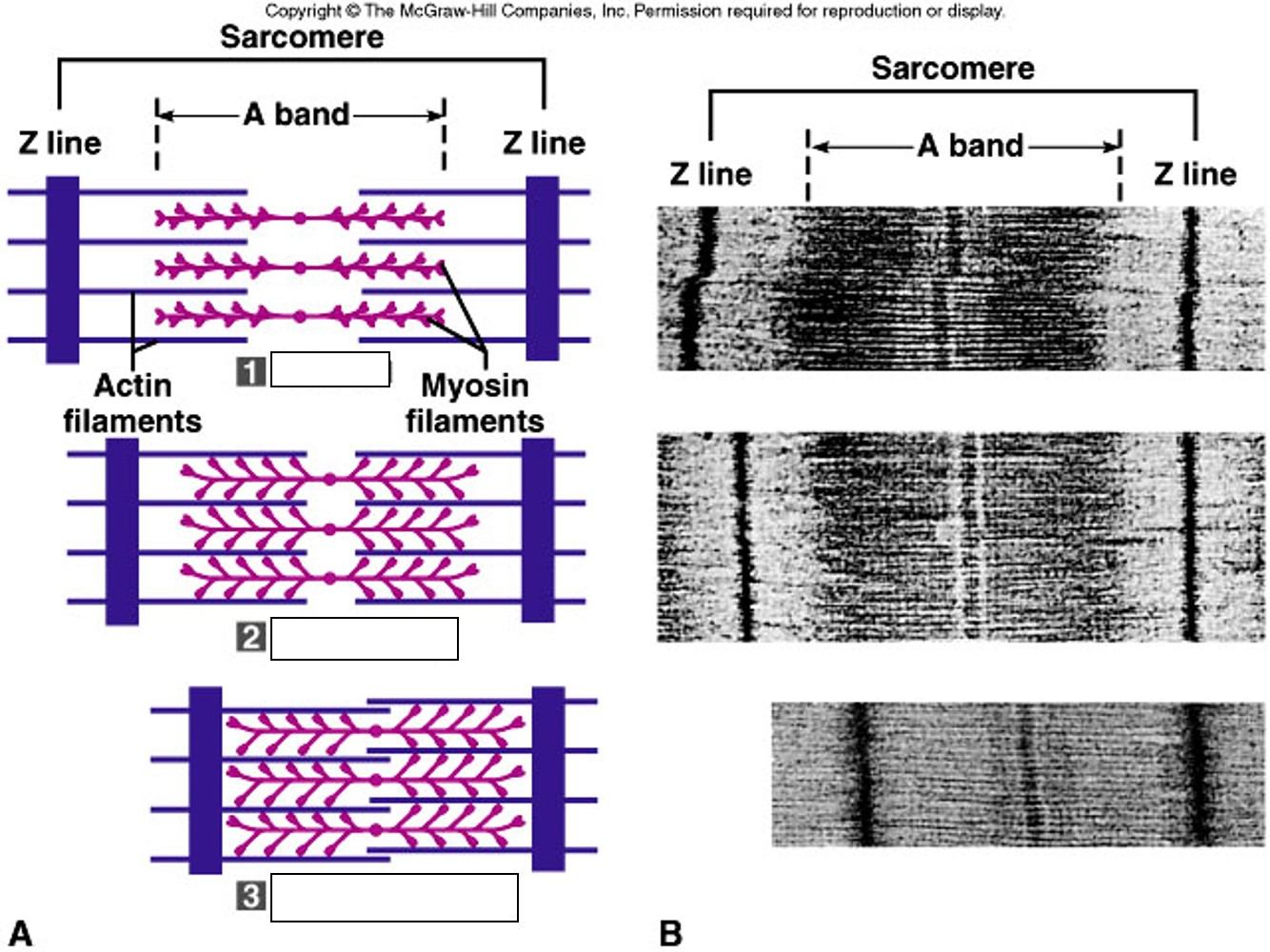
What state is the sarcomere in #1
a)
Relaxed
b)
Contracting
c)
Fully Contracted
d)
None of the above
9.
What two chemicals are necessary for muscle contraction to occur?
a)
Niacin and Potassium
b)
Calcium and ATP
c)
Sodium and Potassium
d)
Ach and Potassium
10.
the thin filament in muscle cells
a)
myosin
b)
actin
c)
myoglobin
d)
hemoglobin
11.
What is required in order to allow the myosin head to bind to the actin binding site?
a)
glucose
b)
glycogen
c)
ATP
d)
the Na+/K+ pump
12.
What is the function of the cardiovascular system
a)
carries oxygen and nutrients to body
b)
carries waste to excretory system
c)
defense against disease
d)
all of the above
13.
Bicuspid valve is also called __________
a)
tricuspid
b)
mitral
c)
pulmonary
d)
aortic
14.
The flow of blood between the heart and cells of body
a)
Systemic circulation
b)
Pulmonary circulation
c)
Oxygenated blood
d)
Deoxygenated blood
15.

The flow of blood between the heart and the lungs
a)
systemic circulation
b)
oxygenated circulation
c)
Pulmonary circulation
d)
none of the above
16.
________carry blood back to the heart
a)
arteries
b)
capillaries
c)
veins
d)
arterioles
17.
blood vessels that carry blood to the heart; have valves to prevent the backflow of blood
a)
arteries
b)
veins
c)
capillaries
18.

Identify
a)
Left atrium
b)
Right atrium
c)
Left ventricle
d)
Right ventricle
19.
What is the pressure inside the arteries during contraction called.
a)
systolic
b)
diastolic
20.
A group of disorders that cause a thickening and hardening of the arteries
a)
Heart Disease
b)
Arteriosclerosis
c)
Hypertension
d)
Stroke
21.
A condition in which the pressure of the blood on the walls of the blood vessels stays at a level that is higher than normal
a)
Stroke
b)
Heart Attack
c)
Blood Pressure
d)
Hypertension
22.
Which of the following is a possible long-term side effect of smoking?
a)
Heart Disease
b)
Cancer
c)
Stroke
d)
All of these
23.
Enlarged, twisted, superficial veins, most commonly seen in the lower extremities.
a)
thrombophlebitis
b)
athreosclerosis
c)
arteriosclerosis
d)
varicose veins
24.

Smoking increases the risk of this condition, in which an artery is completely blocked and blood flow is compromised.
a)
myocardial infarction
b)
peripheral artery disease
c)
stroke
d)
congestive heart failure
25.

Arteries are more efficient than veins in blood flow
a)
true
b)
false
100 %

