
 Worksheets
8th Grade Science Final Review
Total questions: 15
Worksheet time: 9mins

What is the volume of the following object?
16.5 cubic inches
136.5 cubic inches
150 cubic inches
136.5 cubic centimeters

Balance: C + H2 --> CH4
2C + 2H2 --> CH4
C + 2H2 --> CH4
2C + H2 --> 2CH4
C + H2 --> 2CH4

What is a group on the periodic table?
A column of elements in the periodic table of the chemical elements.
A row of elements in the periodic table of the chemical elements.
Horizontal rows that have the same number of electron shells.

The location of the valence shell is the ________.
innermost shell.
outermost shell.

If the pendulum was at X, what type of energy is at its maximum?
Kinetic
Mechanical
Potential
Thermal

What is the formula for weight?
Fg=mgh
Fg=1/2mv2
Fg=mg
None of the Above

True or False: Mass is the force exerted by the gravity on an object, but weight is the actual amount of material contained in a body.
True
False

Newton's Third Law States:
F=ma
An object in motion will stay in motion and an object at rest will stay at rest unless acted on by an unbalanced force.
A regularly occurring or apparently inevitable phenomenon observable in human society.
For every action, there is an equal and opposite reaction.

What is an inference?
Information we gather directly through our five senses.
An explanation for an observation you have made.

J. J. Thompson discovered the _______.
Atom
Periodic Table
Atomic Theory
Electron

What is the acceleration of a 50 kg object pushed with a force of 500 newtons? The answer to this question is most likely.
15 N
10 m/s2
100 kg
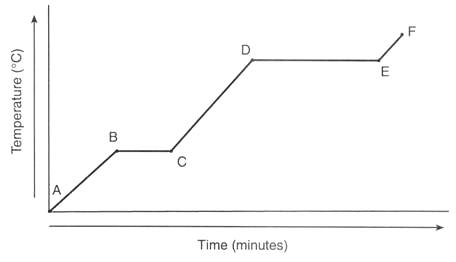

How do covalent bonds form?
Donating & receiving valence electrons between atoms.
Opposite slight charges attract each other between compounds.
Scientists are still not sure how they form.
Sharing valence electrons between atoms.

What is Electromagnetic Energy?
The energy of electrical bonds.
The energy caused by movement of electrons.
The energy in nucleus of an atom.
The energy of motion released from stored energy.

