wayground logo

Free Printable Worksheets

Font size

S
M
L
XL
Worksheets

Final Exam Review

Total questions: 145

Worksheet time: 2hrs 39mins

Name
Class
Date
1.
Which of the following fits the Paleolithic era?
a)
Specialized jobs
b)
Planted crops in settlements
c)
Hunting and Gathering
d)
Permanent Shelter
2.
What started the Neolithic Age?
a)
Cultural Revolution
b)
Creation of fire
c)
Information Revolution
d)
Agricultural Revolution
3.
What was the writing system used in Mesopotamia?
a)
Hieroglyphics
b)
Sanskrit
c)
Alphabet
d)
Cuneiform
4.
Which came first?
a)
989 BCE
b)
873 BCE
c)
746 CE
d)
1903 CE
5.
A belief is one god is
a)
Gilgamesh
b)
polytheism
c)
scribe
d)
monotheism
6.
A city that governs itself 
a)
empire
b)
city-state
c)
Mesopotamia
d)
province
7.
The 2 main rivers in Mesopotamia are
a)
Tigris and Nile
b)
Tigris and Amazon
c)
Tigris and Euphrates
d)
Indus and Tigris
8.
River Valleys were a good place for civilizations to grow because they offered
a)
religion
b)
government
c)
fertile soil
d)
writing
9.
The writing system in Ancient Egypt
a)
cuniform
b)
heiroglyphics
c)
papyrus
d)
sanskrit
10.
Why were the pyramids built?
a)
Religious monuments
b)
For future generations to study
c)
Tombs for Pharaohs
d)
Government
11.
What continent is Egypt on?
a)
Europe
b)
North America
c)
Asia
d)
Africa
12.
What 2 cities were at the center of the Indus Valley Civilization?
a)
Hormuz and Rome
b)
Mohenjo Daro and Harrapa
c)
Indus and Brahmaputra
d)
Ganges and Indus
13.
Life began in India along the ___________ River.
a)
Nile
b)
Amazon 
c)
Hindu Kush
d)
Indus
14.
The 4 classes (varnas) in the caste system are:
a)
Pharaoh, priest, artisans, slaves
b)
Brahman, Kshatriyas, Vaisyas, Sudras
c)
King, Queen, prince, lords
d)
Shogun, samurai, governor, artisan
15.
What religion was spread to China?
a)
Christianity
b)
Buddhism
c)
Judaism
d)
Islam
16.
What was China's first dynasty?
a)
Shang
b)
Zhou
c)
Hanfiezi
d)
Qin
17.
What were oracle bones most likely used for?
a)
to serve ceremonial meals
b)
to make music
c)
to send messages to the nobles
d)
to ask advice from ancestors
18.
Confucius was a very famous ______________ in China.
a)
emperor
b)
army leader
c)
god
d)
philosopher
19.
The land of Greece was _________________.
a)
rocky and mountainous
b)
desert
c)
flat
d)
rolling plains
20.
Where do we see the influence of Ancient Greece in today's world?
a)
clothing
b)
people walk everywhere
c)
architecture
d)
isolated communities
21.
What does the word "Democracy" mean?
a)
rule by the government
b)
rule by the many
c)
rule by the wealthy
d)
rule by the people
22.
What type of government is run by the wealthiest and most powerful?
a)
Democracy
b)
Monarchy
c)
Oligarchy
d)
Tyranny
23.
The Romans borrowed many ideas from the Greeks and the 
a)
Chinese
b)
Etruscans
c)
Mesopotamians
d)
Egyptians
24.
Belief in more than one god
a)
Polytheism
b)
Monotheism
c)
Theocracy
d)
Theology
25.
Temples built by Sumerians to honor the gods and goddesses they worshiped
a)
City-States
b)
Statues
c)
Churches
d)
Ziggurats
26.
A form of writing that uses groups of wedges and lines. It originated in Mesopotamia.
a)
Heiroglyphics
b)
Cuneiform
c)
Sumerian
d)
Sanskrit
27.
Babylonian leader who created the first written code of 282 laws that dealt with almost every part of daily life
a)
Gilgamesh
b)
Sargon
c)
Hammurabi 
d)
Sumer
28.
What river is the Indus River Valley located next to?
a)
Tigris River
b)
Indus River
c)
Huang He River
d)
Nile River 
29.
What is the name of the strict social structure of the Indus Valley?
a)
Upper Class
b)
Caste System
c)
Triangle Structure
d)
Social System
30.
Hinduism and Buddhism both believed in the idea of reincarnation, which means
a)
the process of preparing a body for the afterlife.
b)
the process of rebirth.
c)
the process of creating paper.
d)
the process of creating social class systems.
31.
According to Hinduism, what is the effect of good or bad actions have on the soul called?
a)
Dharma
b)
Karma
c)
Nirvana
d)
Ahimsa
32.
Buddhist founder who became known as "The Enlightened One" or The Buddha?
a)
Siddhartha Guatama
b)
Gurus
c)
Shiva
d)
Jesus Christ
33.
What were Egyptian kings called?
a)
Emperors
b)
Lords
c)
Pharaohs
d)
Queens
34.
What sea is located to the North of Egypt?
a)
Mediterranean Sea
b)
Red Sea
c)
Dead Sea
d)
North Sea
35.
The right of a Chinese Dynasty to rule with the blessings of the Gods is called...?
a)
The Mandate of Heaven
b)
The Dynastic Cycle
c)
The Heavenly Commandments
d)
The Oracle Bones
36.
How did geography affect the development of Chinese culture? (7.19)
a)
Long coastlines made access to trade possible.
b)
Flat land made travel easy.
c)
Great Wall of China made travel along the top easier for traders.
d)
Tall mountains and deserts isolated China from other nations.
37.

Were people from Neolithic nomads or sedentary?

a)

Sedentary

b)

Nomads

38.
I was the king of Macedonia.
a)
Alexander the Great
b)
Ptolemy I
c)
Pericles
d)
Doge
39.
I was a great general of Athens.
a)
Alexander the Great
b)
Ptolemy I
c)
Pericles
d)
Doge
40.
Supreme ruler of all gods.
a)
Zeus
b)
Heracles
c)
Athena
d)
Picachu
41.
I was a gladiator who led an army of slaves in a revolt.
a)
Julius Caesar
b)
Paul
c)
Spartacus
d)
Romulus
42.
The Senate assassinated me on the March 15, 44 B.C.
a)
Julius Caesar
b)
Paul
c)
Spartacus
d)
Romulus
43.
Group of people who built the first civilization in Italy.
a)
Pax Romana
b)
Etruscans
c)
Philosophy
d)
Hieroglypics
44.
How long ago did the modern humans first appear on the earth?
a)
2,000 years
b)
20,000 years
c)
200,000 years
d)
2,000,000 years
45.
How did early humans find food?
a)
hunting
b)
cooking
c)
farming
d)
shopping
46.
an account of an event created by someone who took part in or witnessed an event
a)
history
b)
secondary source
c)
primary source
d)
fossil
47.
information gathered by someone who did not take part in or witness an event
a)
artifact
b)
primary source
c)
archeology
d)
secondary source
48.
objects created and used by humans
a)
fossils
b)
artifacts
c)
primary source
d)
secondary source
49.
The Neolithic Revolution was characterized by the 
a)
decline of large empires
b)
change from nomadic to farming
c)
migration of early peoples to the Americas
d)
growth of iron-making technology
50.
The Code of Hammurabi and the Twelve Tables were designed to 
a)
emphasize the importance of life after death
b)
provide a framework for democracy
c)
promote peace with other cultures
d)
create a stable society
51.
One contribution of ancient Roman culture was the development of
a)
the concept of zero
b)
the republican form of government
c)
the printing press
d)
the process of making silk
52.
How did geography influence development of ancient Greece?
a)
rise of city-states
b)
lots of farmland led to dependence on farming
c)
flat plains led to centralized rule
d)
poor harbors discouraged fishing
53.
Hellenistic civilization consisted of all of the following EXCEPT:
a)
Greek
b)
Persian
c)
Indian
d)
Incan
54.
Sparta was characterized by
a)
education
b)
human rights
c)
family order
d)
military service
55.
This led to contact between other cultures and trade
a)
silk road
b)
Great Wall of China
c)
absolute monarchies
d)
monotheism
56.
Similarity between the Romans and the Han dynasty
a)
monotheism
b)
system of roads
c)
Confucianism and the civil service system
d)
republican style government
57.
In which region did China's earliest civilization develop?
a)
Tibetan plateau
b)
Yellow River Valley
c)
Gobi desert
d)
Himalayan Mts
58.
One similarity between the ancient civilizations in Egypt and China  is that they developed
a)
democratic governments
b)
written forms of communication
c)
monotheistic beliefs
d)
nomadic lifestyles
59.
The Greek historian Herodotus used the phrase “the gift of the ________” to describe Egypt.
a)
Indus
b)
Tigris
c)
Nile
d)
Huang He
60.
Buddhism spread across Asia mostly as a result of
a)
trade.
b)
hunters.
c)
herders.
d)
farmers.
61.
In Buddhism, the release from selfishness and pain is know as
a)
sangha.
b)
dharma.
c)
moksha.
d)
nirvana.
62.
The sacred texts of Hinduism are called the
a)
varnas.
b)
vedas.
c)
Four Noble Truths.
d)
Eight-Fold Path.
63.
Hinduism and Buddhism have a common belief in
a)
many gods.
b)
reincarnation.
c)
the caste system.
d)
the sacredness of all life.
64.
Which is the oldest of the following religions?
a)
Judaism
b)
Hinduism
c)
Christianity
d)
Buddhism
65.
Which two religions originated in India?
a)
Hinduism and Buddhism.
b)
Judaism and Christianity.
c)
Confucianism and Buddhism.
d)
Islam and Hinduism.
66.
After serving in other government positions, many Romans joined the ___, a body of about 300 men acting as advisors to other groups.
a)
Assembly
b)
Senate
c)
Tribunal
d)
Congress
67.
Rome faced off against Hannibal and the army of Carthage in this series of three wars.
a)
Punic Wars
b)
Peloponnesian Wars
c)
Carthagian Wars
d)
Augustian Conquest
68.
As the first emperor after the death of Julius Caesar, he laid the groundwork for the rest. He was Pater Patriae, Pontifex Maximus, and Imperator of Rome.
a)
Augustus
b)
Caligula
c)
Hadrian
d)
Justinian
69.
Which Roman social class consisted of a landing-owning upper class?
a)
Plebian
b)
Patrician
c)
Pompeiian
d)
Populesque
70.
In a timeline, B.C.E stands for?
a)
Before Christ Era
b)
Before Common Era
c)
Before Christ Existed
d)
Before Common Existence 
71.
What type of source is this? An encyclopedia entry on the Vietnam War
a)
Primary
b)
Secondary
72.
What type of source is this? An original photograph from the 1941 attack at Pearl Harbor that you found in your grandparents photo album
a)
Primary
b)
Secondary
73.
What type of source is this? The diary of Anne Frank -a young girl who lived in hiding during the Holocaust
a)
Primary
b)
Secondary
74.
A Youtube video describing how the pyramids were built.
a)
Primary Source
b)
Secondary Source
75.
What is prehistory?
a)
The time of the Ancient Greeks
b)
The time period before written language
c)
The Middle Ages 
d)
The time before history
76.
Where did early civilizations form?
a)
on mountains
b)
beside deserts
c)
near rivers
d)
on islands
77.
Describe the burial practices of Egyptians?
a)
They used a funeral pyre for the dead.
b)
They carried the dead to a nearby country.
c)
They preserved bodies as mummies.
d)
They were buried in the river.
78.
Why do civilizations develop by rivers?
a)
It is easy to build straw homes.
b)
There is fertile soil for farming.
c)
You can use the seas to travel to other areas.
79.
The ancient Greeks were  
a)
Monotheistic  
b)
Polytheistic
c)
Atheist
d)
Scientologist
80.
A militaristic city-state where boys were trained from an early age to fight.
a)
Athens
b)
Delphi
c)
Corinth
d)
Sparta
81.
What is a dynasty?
a)
a collection of queens
b)
a collection of kingdoms
c)
series of rulers from different families
d)
series of rulers from the same family
82.
Which of the following beliefs was  central to Egyptian religion?
a)
the afterlife
b)
the pyramids
c)
the pharaohs
d)
the heavens
83.
Who would write and record information?
a)
slaves
b)
scribes
c)
farmers
d)
craftspeople
84.
Method of bring water to a field is called ______________
a)
Irrigation 
b)
Agriculture 
c)
Domestication 
85.
Government in which the ruler controls religious and political affairs
a)
Bureaucrats
b)
Dynasty
c)
Shadoof
d)
Theocracy
86.
What is it called when land has water on three sides? 
a)
isthmus  
b)
 peninsula
c)
 Peloponnesus
d)
  island
87.
Ancient Greece was divided into several city-states. The Greek word for city-state is…  
a)
Senate
b)
Republic
c)
Democracy 
d)
Polis
88.
Greece is just north of what major sea?     
a)
Black Sea   
b)
Red Sea  
c)
Mediterranean Sea   
d)
Red Sea
89.
What is the geography of Greece like?       
a)
Forests
b)
Rivers
c)
Flatlands
d)
Mountains
90.
What is the name for the government type where absolute ruling power is held by a person who is not a lawful king?
a)
Tyranny
b)
Oligarchy
c)
Monarchy
d)
Hellespont
91.
We were posted in the Forum for all to see, the recorded laws of Rome
a)
The Ten Commandments
b)
Hammurabi's Code
c)
The Twelve Taboos
d)
The Twelve Tables
92.
Which of the following was NOT true of the Roman government?
a)
more people had rights than under the Greek system
b)
It was a direct democracy
c)
It was based on the concept of individual rights
d)
In times of crisis, a dictator could be appointed
93.
Athens focused on _______________ and Sparta focused on ______________. 
a)
Education / War
b)
Conquering / Education 
c)
Oligarchies / Family 
d)
Monarchies / Democracies 
94.
Hindus need to follow their job in life, this job or duty is called
a)
Karma
b)
Dharma
c)
Reincarnation
d)
Vedas
95.
Why did people create the first civlizations in Mesopotamia, the Indus River Valley and along the Haunge He?
a)
The rivers brought rain to the area
b)
The rivers were hard to cross
c)
The flooding of the rivers deposited silt along the banks making it fertile for farming
d)
People liked the view of the river
96.
One reason the Silk Road was important is
a)
It allowed Europe to trade silk
b)
Chinese population increased
c)
It created more farmland
d)
It connected previously isolated cultures
97.
Which Chinese philosophy taught that people are naturally wicked and must have strict rules and harsh punishments to force them to do the right thing?
a)
Confucianism
b)
Daoism
c)
Legalism
98.
Which Chinese philosophy teaches respect at home and in society?
a)
Confucianism
b)
Daoism
c)
Legalism
99.
Which Chinese philosophy is represented by the Yin and Yang symbol?
a)
Confucianism
b)
Daoism
c)
Legalism
100.
Tigris & Euphrates Rivers
a)
Mesopotamia
b)
Egypt
c)
China
d)
India
101.
Indus & Ganges Rivers
a)
Mesopotamia
b)
Egypt
c)
China
d)
India
102.
Huang He (Yellow) and Yangzte Rivers
a)
Mesopotamia
b)
Egypt
c)
China
d)
India
103.
Line of rulers from the same family
a)
Legalism
b)
long Chinese line
c)
filial piety
d)
dynasty
104.
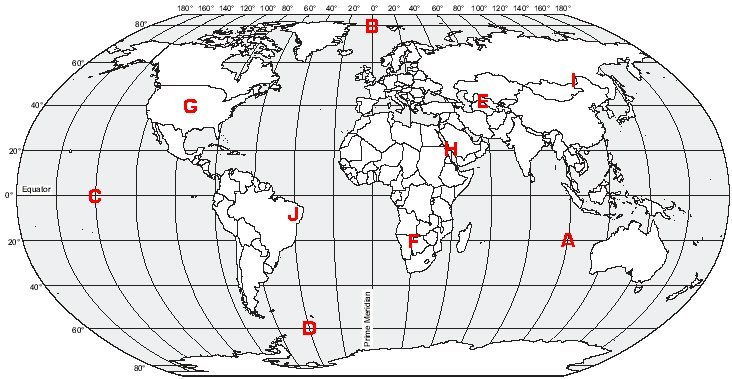
What are these lines known as?
a)
latitude
b)
longitude
c)
relative location
d)
absolute location
105.
What continent do we live on?
a)
North America
b)
United States of America
c)
Europe
d)
Georgia
106.
What is the zero degree line of latitude?
a)
Prime Meridian
b)
Equator
c)
Tropic of Capricorn
107.
The zero degree line of longitude is called the
a)
Equator
b)
Prime Meridian
c)
Tropic of Cancer
108.
What is the approximate location of letter B?
a)
80oN, 0o
b)
0o, 80oW
c)
80oS, 0o
d)
0o, 80oE
109.
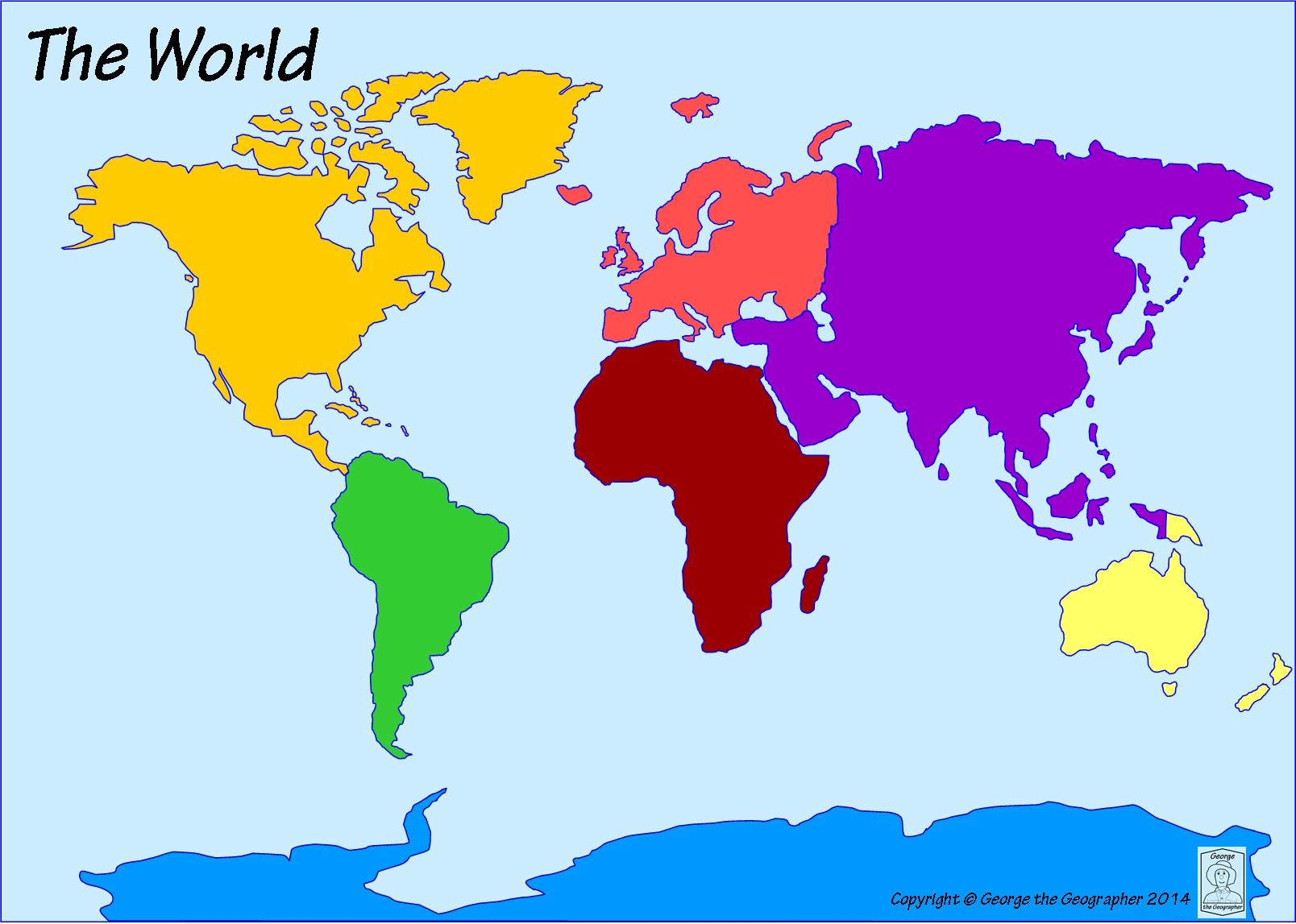
Which continent is shown?
a)
Asia
b)
Africa 
c)
South America
d)
North America
110.
We were posted in the Forum for all to see, the recorded laws of Rome
a)
The Ten Commandments
b)
Hammurabi's Code
c)
The Twelve Taboos
d)
The Twelve Tables
111.
Which part of the Roman government was chosen for life?
a)
Consuls
b)
Senate
c)
Tribunes
d)
Judges
112.
What is a main difference between the current U.S. government and that of the Roman republic?
a)
Women are allowed to vote.
b)
A system of checks and balances is in place.
c)
The senate is a branch of government.
d)
Officials can veto other officials.
113.
How did life change for Rome’s poor as the empire became larger?
a)
Jobs became easier to find.
b)
There was more land to farm.
c)
Relationships with landowners improved.
d)
Poor people moved to the city for work.
114.
After winning civil wars, the military commanders Sulla and Caesar
a)
left the army.
b)
urged the poor to riot.
c)
made themselves dictators.
d)
joined the senate.
115.
How did Rome change as it conquered more territory?
a)
It became smaller.
b)
It became an empire.
c)
It became poorer.
d)
It became landlocked.
116.
How did Julius Caesar’s actions impact the political structure of Roman civilization?
a)
They led to the return of democracy in Rome.
b)
They led to the fall of the Roman Empire.
c)
The led to a decrease in civil war in Rome.
d)
They led to the creation of the Roman Empire.
117.
Why was communication difficult between communities in Ancient Greece?
a)
They did not have telephones
b)
Mountains and Water
c)
communication was easy
d)
most people had horses
118.
Which of the following beliefs was  central to Egyptian religion?
a)
the afterlife
b)
the pyramids
c)
the pharaohs
d)
the heavens
119.
Why was the Rosetta Stone so important?
a)
It helped archaeologists decipher Egyptian writing?
b)
It gave clues about building.
c)
It was a book of the dead.
d)
It told how pharaoh's rules.
120.
In addition to their own developments, the Romans borrowed many ideas from the Etruscans and the 
a)
Chinese
b)
Greeks
c)
Egyptians
d)
Mesopotamians
121.
In 509 BC, the Romans rebelled against what people and monarchy and set up a new type of government?
a)
Carthaginians
b)
Egyptians
c)
Greeks
d)
Etruscans
122.
What is a form of government called in which the leader is put into office by citizens with the right to vote?
a)
Republic
b)
Monarchy
c)
Empire
d)
Theocracy
123.
How did the Plebeians convince the Patricians they should have more rights?
a)
They refused to serve in the army and left the city to set up their republic
b)
They set up their own army and fought the Patricians
c)
They sailed to Greece and started a new Roman colony
d)
They joined the Carthaginians and fought against Rome
124.
Who could rule with absolute power for a short period of time during a crisis?
a)
King
b)
Senator
c)
Dictator
d)
President
125.
Who said, "I found Rome a city of brick and left it a city of marble?"
a)
Julius Caesar
b)
Cleopatra
c)
Caesar Augustus
d)
Mark Antony
126.
Confucius believed respect for parents, or _____, was very important to the relationships.
a)
civil service system
b)
mandate of heaven
c)
filial piety
d)
dynastic cycle
127.
Which of the following were traded on the Silk Road? (7.23)
a)
Spices
b)
Religion
c)
Fabric
d)
All of the above
128.
What are the two major rivers of Ancient India?
a)
Tigris & Euphrates
b)
Nile & Blue Nile
c)
Indus & Ganges
d)
Huang He & Yangtze
129.
What was the name of the written language of the Ancient Indian civilization?
a)
cuneiform
b)
Sanskrit
c)
hieroglyphics
d)
Hindi
130.
Buddha means...
a)
All Wise One
b)
The Enlightened One
c)
Your Majesty
d)
The Creator
131.
An Egyptian king was called a ___________
a)
scribe
b)
servant
c)
papyrus
d)
pharaoh
132.

What type of government did the Athenians have?

a)

democracy

b)

oligarchy

c)

aristocracy

d)

monarchy

133.

Government by the few

a)

oligarchy

b)

plutocracy

c)

aristocracy

d)

monarchy

134.

What is the name of the largest continent?

a)

North America

b)

Europe

c)

Asia

d)

Africa

135.
What is the continent that is yellow?
a)
Africa
b)
Australia
c)
Asia
d)
Antarctica
136.
What is the continent that is orange?
a)
Africa
b)
Australia
c)
Antarctica
d)
Asia
137.

Why did the senators stab Juius Caesar?

a)

They thought he was going to have them killed.

b)

They knew he was planning to begin another war.

c)

They were afraid he was becoming too powerful.

d)

They thought he was a very untrustworthy leader.

138.

in ancient Rome, a person who fought people or animals for public entertainment

a)

plebeian

b)

patrician

c)

triumvirate

d)

gladiator

139.

a person who ruled with complete power temporarily during emergencies

a)

census

b)

forum

c)

dictator

d)

republic

140.

large farming estates

a)

veto

b)

praetor

c)

latifundia

d)

aqueduct

141.

What were the brothers Tiberius and Gaius Gracchus known for?

a)

They stood up for the poor and tried to get land back for them. They were both killed for their views.

b)

They were two of the most famous Roman generals who paid the soldiers to gain their loyalty.

c)

They fought in the Senate for rules to help the rich citizens steal land form poor farmers.

d)

They were brothers who founded Rome, according to legends.

142.

This was a large farming estate created when a rich person bought up many smaller farms and used slaves to work it.

a)

Triumvirate

b)

Latifundia

c)

Actium

d)

Dictator

143.
This military leader is Rome's most famous leader. He was loved by the poorer people in the lands and went on to take control of Rome and become its ruler. He was murdered by Senators that did not want him in control.
a)
Octavian
b)
General Sulla
c)
Julius Caesar
d)
Cicero
144.
What kingdom led the Hellenistic civilization?
a)
Athens
b)
Sparta
c)
Thebes
d)
 Macedonia
145.
Who first led the Macedonians in conquering territories?
a)
Darius I
b)
Philip II
c)
Darius III
d)
Philip IV