
 Worksheets
Respiratory system
Total questions: 26
Worksheet time: 15mins
The passageway that is shared by both the digestive and respiratory system is the....
larynx
pharynx
trachea
mouth
Four parts of respiratory system is given here.
1. larynx
2. nasal cavity
3. pharynx
4. trachea
Which of the following is the correct order that air would flow during inhalation?
1,2,3,4
2,3,1,4
2,1,3,4
4,2,3,1
Which are the functions of the Respiratory System?
it warms the air
it exchanges O2 and CO2
it pumps blood to the organs
it creates sound through the larynx
What is another name for pharynx?
trachea
throat
windpipe
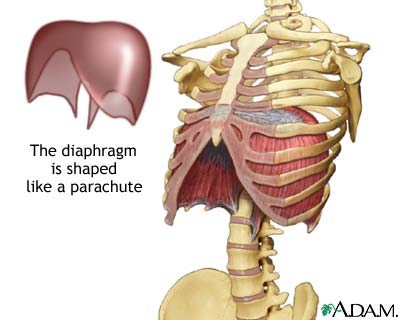
What is the main muscle involved in inspiration?
Lungs
Skeletal
Diaphragm
What happens to the diaphragm during inhalation?
The diaphragm contracts and flattens
The diaphragm relaxes and moves upward

Identify these respiratory structures
Humerus and Ulna
Vertebrae and clavicle
Intercostal muscle and ribs
What does the nasal hair do?
traps the dust particles
produces a watery liquid called mucous
moistens the air and traps bacteria
warms the air before it passes to the lungs
What does the lining of cells in the nose do?
traps the dust particles
produces a watery liquid called mucous
moistens the air and traps bacteria
warms the air before it passes to the lungs
What does the mucous secreted in the nose do?
traps the dust particles
produces a watery liquid called mucous
moistens the air and traps bacteria
warms the air before it passes to the lungs
How does the air gets warmed before it passes to the lungs?
the nasal hair warms it
the mucous warms it
the air is not warmed up at all
blood vessels beneath the nasal lining warms it
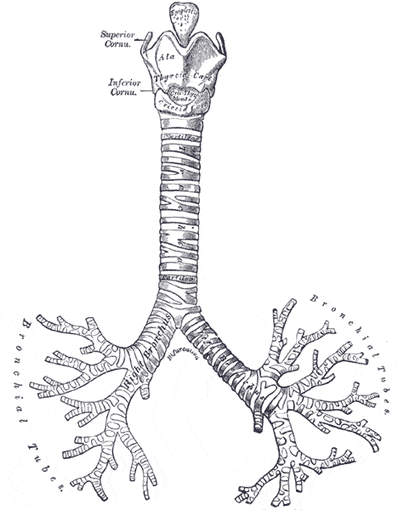
What is trachea made of?
muscles
bones
cartilages
What happens to the dust particles and bacteria that enters the windpipe?
they are killed by the mucous in the windpipe
they are absorbed by the ciliated epithelial cells
they are destroyed by the mucous secreting cells
they are pushed towards the back of the mouth by the cilia
Which of the statements is NOT true?
Trachea is made of rings of cartilages
Bronchus is made of rings of cartilages
Bronchioles are made of rings of cartilages
Bronchioles are made of muscles
What happens when the diaphragm contracts?
air enters into the lungs
air leaves the lungs
The lungs is made up of
only smooth muscles
only millions of alveoli
smooth muscles and millions of alveoli
cartilages, which are soft bones
Oxygen is the most abundant gas in the atmosphere
true
false
Inhaled air contains more
Carbon dioxide
Helium
Oxygen
Water Vapour
Inhaled air has about 21% of oxygen, but exhaled air has only 17% oxygen. Why this difference?
They got converted to something else in the nose
They were diffused into the blood stream
They got destroyed when we breathe in
None of these
Inhaled air has less than 1% of carbon dioxide gas, but exhaled air has 4% of carbon dioxide gas. Why this difference?
Our body cells generate carbon dioxide gas during respiration, which is exhaled by us
There are no plants near by
Once in a while when we breathe, more oxygen gets converted to carbon dioxide
When we become very tired, we exhale excess of carbon dioxide gas

