wayground logo

Free Printable Worksheets

Font size

S
M
L
XL
Worksheets

Computer studies form 1

Total questions: 56

Worksheet time: 17mins

Name
Class
Date
1.

Full meaning for ROM IS

a)

Read only memeory

b)

read access memory

c)

Random access memory

2.

Coordinates all processing activities

a)

Cpu

b)

Control unit

c)

Main memory

d)

Alu

3.

Performs logic and arithmetic

a)

Logic unit

b)

Rom

c)

Control unit

d)

Arithmetic and logic unit

4.

What is a buffer

a)

holds Data to relive the cpu to attend other urgent activities

b)

A special memory found in input/output devices

c)

Hold one piece of data at time

5.

which one is not a characteristic of ram

a)

Volatile

b)

Non-volatile

c)

One can read and write

d)

It’s full meaning is random acces memory

6.

What is the function of programmable Read only memory

a)

Allows the user to alter it only once after the content is written on it

b)

Once content it is written on it it cannot be changed

c)

The rom can be erased and programmed again using electricity

7.

The following are special purpose memories except

a)

Buffers

b)

Cache register

c)

Cache memory

d)

Register

8.

The figure above shows

a)

functional elements of the cpu

b)

The cpu,cu,mm,&alu

c)

The functional organization of the cpu

9.
The purpose of the CPU is to ____. 
a)
Process data
b)
Store data
c)
Input data
d)
Output Data
10.
CPU carries out a cycle called___. 
a)
Execute-decote-fetch
b)
Fetch-decode-execute
c)
Fetch-execute-decode
d)
Decode-execute-fetch
11.
The part of the CPU that gets instructions from the memory is...
a)
Storage
b)
Fetch
c)
Decode
d)
Execute
12.
The part of the CPU that carries out instructions is...
a)
Storage
b)
Fetch
c)
Decode
d)
Execute
13.
Which below is not part of the CPU?
a)
Storage
b)
Fetch
c)
Decode
d)
Execute
14.
A device that sends data into the computer is called...
a)
Input
b)
Process
c)
Output
d)
Storage
15.
A device that displays/sends data out of the computer is called...
a)
Input
b)
Process
c)
Output
d)
Storage
16.
Clock Speed means...
a)
How many cycles it does in a second
b)
How many cycles it does in a minute
c)
How many cycles it does in a hour
d)
How many cycles it does in a day
17.
What is the purpose of registers in the CPU?
a)
To hold temporary data while a software program is running.
b)
To store files including graphics, sound and text files.
18.
What is the purpose of the Memory Address Register (MAR)?
a)
Holds the location in memory (address) of the next piece of data or program to be fetched (or stored).
b)
Stores result of fetch from memory which is either an instruction or data. It receives instructions or data from memory via the data bus.
19.
What is the purpose of the Accumulator?
a)
•Holds the current instruction to be executed, having been fetched from memory. •Contents are transferred to control unit for decoding.
b)
•Stores a running total of the calculation that is currently being executed.
20.
This would send a signal such as “Memory Read” (5-7) 
a)
Arithmetic Logic Unit 
b)
Accumulator 
c)
Cache
d)
Control Unit
21.
 This would perform an operation including the word “And” (5-7) 
a)
Arithmetic Logic Unit 
b)
Accumulator 
c)
Cache
d)
Control Unit
22.
What is held in ROM? (1-4) 
a)
Data currently in use 
b)
Bootstrap Loader 
c)
Instructions frequently used 
d)
Operating System 
23.
What is transferred down the data bus? (4-6) 
a)
Data only 
b)
Addresses only 
c)
Data and Instructions 
d)
Data, Instructions and Addresses 
24.
This sends signals such as “I/O Read” (5-7) 
a)
Arithmetic Logic Unit 
b)
Accumulator 
c)
Cache 
d)
Control Unit 
25.
Carries address of the next instruction that will be fetched (4-6) 
a)
Address Bus
b)
Data Bus 
c)
Cache 
d)
Control Unit 
26.

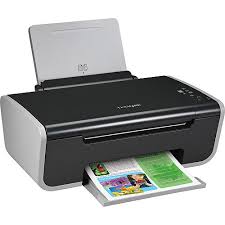
Is this device Input or Output?

Printer

a)

Input

b)

Output

27.
What type of device is this? Smartphone screen
a)
Input
b)
Output
c)
Input and Output
28.
What type of device is this? CD / DVD / Blu-Ray
a)
Input
b)
Output
c)
Storage
29.
Small light on the front of the computer that indicates if the computer is switched on...
a)
LED
b)
CRT
c)
TFT
d)
LCD
30.
What's this?
a)
MOUSE
b)
BARCODE READER
c)
TRACKERBALL
d)
DIGITAL CAMERA
31.
This device works in the same way as a mouse
a)
Keyboard
b)
Trackerball
c)
Graphics Tablet
d)
Microphone
32.

จากาพ คือ ข้อใด

a)

Keyboard

b)

Microphone

c)

scanner

d)

joystick

33.

จากาพ คือ ข้อใด

a)

Keyboard

b)

webcam

c)

scanner

d)

joystick

34.
What is the main function of the CPU?
a)
To carry out processing of the data.
b)
To help with playing games.
c)
To fetch instructions from memory, decode them and execute the instructions.
d)
To heat up the computer.
35.
What is the job of the control unit?
a)
It carries out calculations
b)
It stores information.
c)
It does nothing.
d)
It controls the input and output of data to make sure that it gets to the right place.
36.
What are the two other parts of the CPU that you learned?
a)
RAM & ROM
b)
Hard Drive & Motherboard
c)
The ALU and Cache
37.
Which level of cache is the fastest but has the smallest capacity?
a)
Level 1
b)
Level 2
c)
Level 3
d)
Level 4
38.
What are registers used for?
a)
To check that students are in school.
b)
To temporarily hold bits of data needed by the CPU.
c)
To make sure that the CPU runs properly.
d)
To make the CPU faster.
39.
What is the main function of the boot program?
a)
To load programs that are being used.
b)
To shut the computer down.
c)
To get the computer up and running and get the operating system loaded.
d)
To load Microsoft Office.
40.
What happens at the Decode step of the fetch-decode-execute cycle?
a)
The CPU makes sense of the instructions.
b)
The CPU fetches the information from RAM.
c)
The instructions are executed.
41.
What is the program counters job?
a)
To count the programs
b)
It contains the memory address of the next instruction to be loaded
c)
It stores instructions
d)
It carries out the calculations
42.
Which of the following CPU's will have a better better performance:
A: 3 GHz Quad Core CPU
B: 3 GHz Duel Core CPU 

a)
A
b)
B
43.
How does clock speed affect computer performance?
a)
The higher the clock speed the slower the computer will run.
b)
It improves the amount you can store on the computer.
c)
The higher the clock speed the better the performance.
d)
It will make loading program slower
44.
How does clock speed affect computer performance?
a)
The higher the clock speed the slower the computer will run.
b)
It improves the amount you can store on the computer.
c)
The higher the clock speed the better the performance.
d)
It will make loading program slower
45.
What is a bus?
a)
A circuit that connect one part of CPU to other components.
b)
A type of long term memory
c)
A type of permanent memory
d)
A method of transport
46.
What is cache memory?
a)
A very large, temporary memory
b)
A very small but expensive memory
c)
It is used to store data and programs permanently
d)
It is a type of payment
47.
How can a bigger cache improve CPU performance?
a)
By being able to carry out more calculations
b)
By being able to store more recently used instruction inside the CPU for quicker access times
c)
By being able to 
48.
Which of the following is an example of 'main memory'.
a)
Hard Drive
b)
USB Drive
c)
RAM
d)
ROM
49.
Where are the results of calculations stored?
a)
Accumulator
b)
ALU
c)
MDR
d)
CIR
50.
Which component would calculate the result of 6 * 4?
a)
Accumulator
b)
ALU
c)
Control Unit
d)
MAR
51.
If a CPU has 4 cores what does it mean?
a)
The CPU can carry out more instructions at once
b)
The CPU is able to store more instructions
c)
The CPU will have a large cache
d)
The CPU will have a faster clock speed
52.
What is the function of a CPU's cache memory?
a)
To store cores
b)
Fetches instructions from RAM and stores them
c)
Stores previously calculated instructions for faster access
d)
Copies data from RAM when it gets full
53.
What does ALU stand for?
a)
Arguable Logic Unit
b)
Arithmetic Larger Unit
c)
Arithmetic Logic Unit 
d)
Arithmetic Logic Utility
54.
What is the function of the ALU?
a)
Performs all the logic 
b)
Stores previously executed instructions
c)
Has overall control of the CPU
d)
Performs all the calculations
55.
Which best describes the CPU's fetch cycle?
a)
The CPU fetches information from RAM
b)
The CPU fetches information from ROM
c)
The CPU fetches data from RAM
d)
The CPU fetches information from the HDD
56.
Which best describes the CPU's decode job?
a)
Takes binary, turns it into information
b)
Takes information and performs calculations
c)
Data is sent to RAM where it decodes binary
d)
Takes binary, calculates and makes comparisons, turns it into an instruction