
 Worksheets
reflection of light
Total questions: 25
Worksheet time: 14mins
Name
Class
Date
1.
A ray of light is incident on a plane mirror and the angle of incidence is 25 degrees. What is the angle of reflection?
a)
A. 0 degrees
b)
B. 50 degrees
c)
C. 90 degrees
d)
D. 25 degrees
2.

The following is a picture of what type of mirror?
a)
Convex Mirror
b)
Concave Mirror
c)
Plane Mirror
d)
Flat Mirror
3.
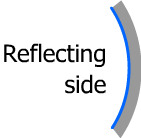
The following is a picture of what type of mirror?
a)
Convex Mirror
b)
Concave Mirror
c)
Plane Mirror
d)
Flat Mirror
4.
An image that you can see , but does not really exist is called which of the following?
a)
Real Image
b)
Fake Image
c)
Virtual Image
d)
Digital Image
5.

The Law of Reflection:
The angle of incidence is _________ the angle of reflection
The angle of incidence is _________ the angle of reflection
a)
bigger than
b)
the same as
c)
smaller than
6.
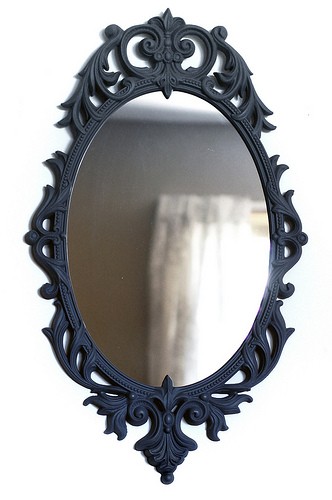
An image that you can see when you look into a mirror, but does not really exist is called which of the following?
a)
Real Image
b)
Fake Image
c)
Virtual Image
d)
Digital Image
7.
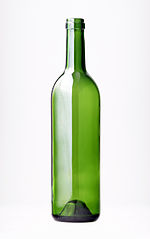
a real image...
a)
is produced by virtual rays and can be projected on a screen
b)
is produced by real rays and cannot be projected on a screen
c)
is produced by virtual images and cannot be projected on a screen
d)
is produced by real rays and can be projected on a screen
8.

The fact the two angles are the same is an example of....
a)
Refraction
b)
Angle of Incidence
c)
Law of reflection
d)
Magnification
9.

Which mirror(s) have a focal point?
a)
plane only
b)
concave only
c)
plane, convex and concave
d)
concave and convex, but not plane
10.

What is an image called that forms when light rays actually meet
a)
virtual image
b)
real image
c)
diffuse reflection
d)
regular reflection
11.
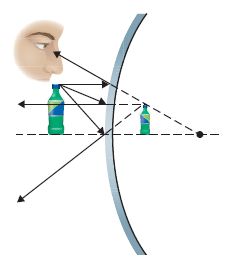
What kind of mirror is shown here?
a)
plane
b)
concave
c)
convex
d)
diffuse
12.

Convex mirrors can create virtual and real images.
a)
True
b)
False
13.
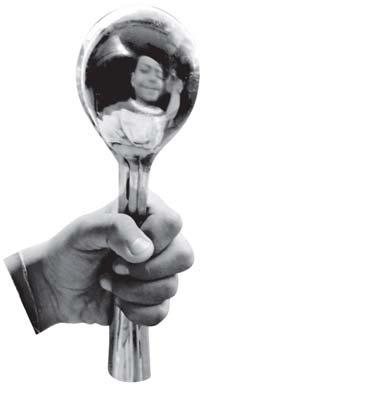
Concave mirrors can create virtual and real images.
a)
True
b)
False
14.

An incident ray that is parallel to the principal axis of a curved mirror...
a)
will reflect parallel to the principal axis
b)
will reflect through the focal point
c)
will reflect through the center of curvature
d)
will continue along the same path through the lens
15.
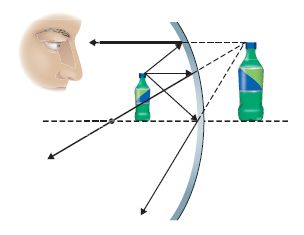
Which terms describe the reflection seen in this image?
a)
behind mirror, upright, magnified, virtual
b)
behind mirror, upright reduced, virtual, inverted
c)
d < f, upright, reduced, real
d)
d < f, upright, reduced, virtual
16.

This is an example of a __________ mirror.
a)
Concave
b)
Convex
c)
Plane
d)
Magnifying
17.

This is an example of a _____________ mirror
a)
Concave
b)
Convex
c)
Plane
d)
Magnifying
18.
Convex mirrors cause light to spread out.
a)
True
b)
False
19.
The distance between the focal point and the mirror is
a)
raduis
b)
diameter
c)
focal point
d)
focal length
20.
The focal length is equal to the:
a)
radius of curvature
b)
diameter of curvature
c)
half radius of curvature
d)
half diameter of curvature
21.
According to the laws of reflection, if i = angle of incidence and r = angle of reflection,
a)
A. i = r
b)
B. i > r
c)
C. r > i
d)
D. i is not equal to r
22.
According to the laws of reflection, if i = angle of incidence and r = angle of reflection,
a)
A. i = r
b)
B. i > r
c)
C. r > i
d)
D. i is not equal to r
23.

What is the value of the unknown angle (theta) in the following diagram?
a)
A. 30 degrees
b)
B. 45 degrees
c)
C. 90 degrees
d)
D. 60 degrees
24.
What is the incident ray?
a)
The ray of light leaving the mirror
b)
The ray of light approaching the mirror
25.
Angles are always measured from the:
a)
Boundary
b)
Normal
c)
Incident Ray
d)
Reflected Ray
100 %

