
 Worksheets
Term 3 Chemistry Revision Quiz
Total questions: 15
Worksheet time: 18mins
CaC₂(s) + H₂O(l) --> C₂H₂(g) + Ca(OH)₂(aq)
Fe2O3(s) + 3H2(g) → 2Fe(s) + 3H2O(l)
How many moles of iron can be made from 6 moles H2?
HNO₃ + NaOH → NaNO₃ + H₂O
Neutralization/acid base
Single Replacement
Combustion
Double Replacement
What is the endpoint of a titration
point at which the indicator changes colour
Where there is no base
When the volume of base in the burette is used up
equal amounts of acid-base
Actual yield = 62g
Calculate the percent yield.
2Al + 3H2SO4 -> Al2(SO4)3 + 3H2
How many grams of aluminum sulfate would be formed if 250g H2SO4 completely reacted with aluminum?
0.85 g
290 g
450 g
870 g
What is the equivalence point of a titration
Where the moles of acid and moles of base are equal
Where the colour changes
At the end
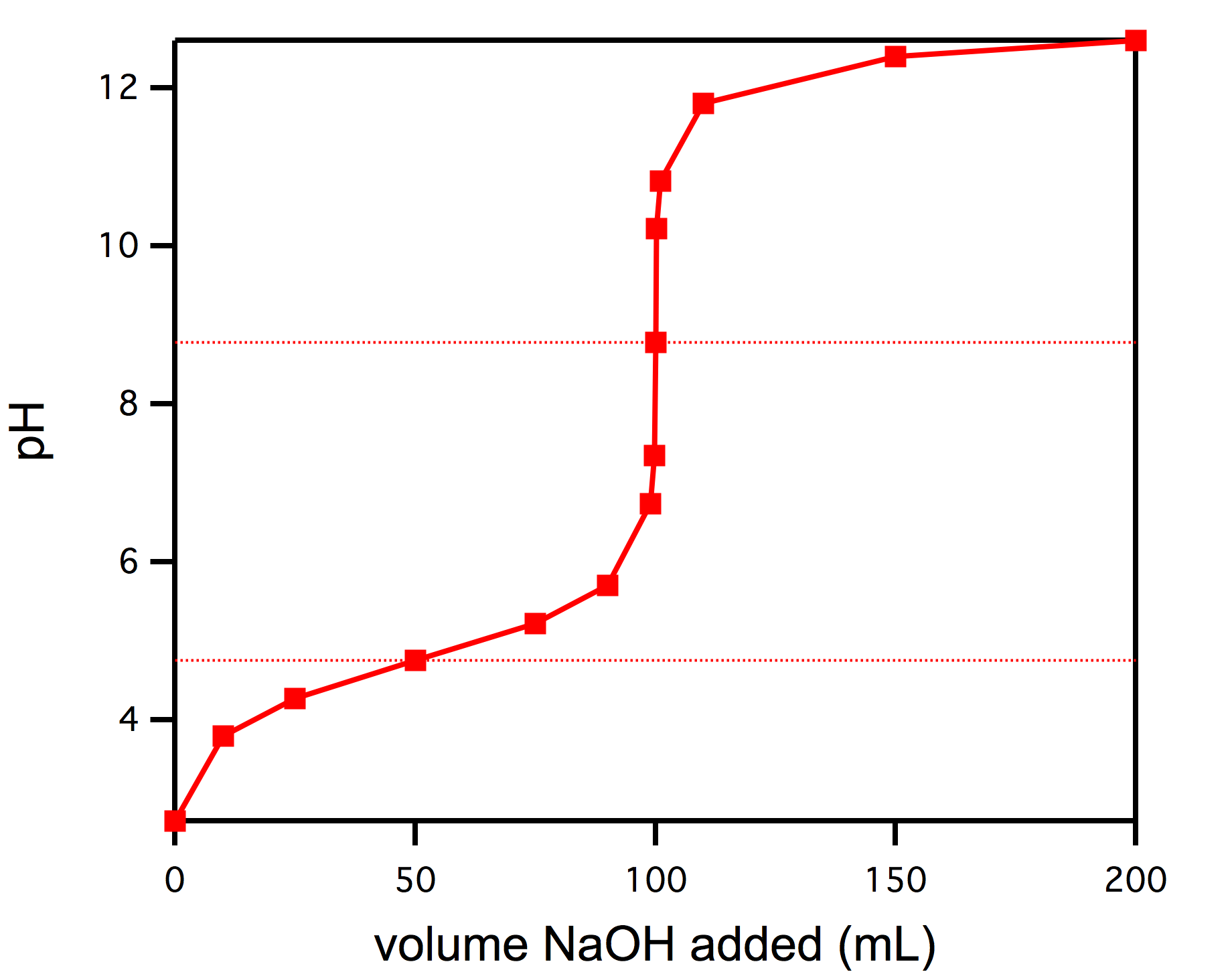
What is the pH at the equivalence point.
The pH is approximately 5
The pH is approximately 6
The pH is approximately 8
The pH is approximately 9
The correct formula for Molarity is
m/mm
n x mm
n/v
c1v1=c2v2
Formula used to find the % yield is
m1v1 = m2v2
( experimental / theoretical ) x 100
( theoretical / experimental ) x 100
final mass - initial mass

