
 Worksheets
Symmetry and Body Plans
Total questions: 15
Worksheet time: 15mins
Name
Class
Date
1.
Which term refers to the absence of a central point or axis?
a)
Symmetry
b)
Asymmetry
c)
Phylogeny
d)
Ecology
2.
Which term refers to how parts are arranged around a point or axis?
a)
Symmetry
b)
Asymmetry
c)
Phylogeny
d)
Ecology
3.
Which term refers to a true body cavity?
a)
Exoskeleton
b)
Endoskeleton
c)
Cephalization
d)
Coelom
4.
Which term of direction refers to the head end?
a)
Anterior
b)
Posterior
c)
Dorsal
d)
Ventral
5.
The embryo layer that forms the skin and nervous tissue is
a)
endoderm
b)
ectoderm
c)
mesoderm
d)
protostome
6.
The animal's digestive tract forms from the
a)
endoderm
b)
extoderm
c)
mesoderm
d)
protostome
7.
What type of of symmetry does a penny have?
a)
bilateral symmetry
b)
radial symmetry
c)
no symmetry
d)
biaxial symmetry
8.
Which of these animals has bilateral symmetry?
a)
sponge
b)
hydra
c)
jellyfish
d)
flatworm
9.

Identify this body type.
a)
Diploblastic
b)
Coelomate
c)
Psuedocoelomate
d)
Acoelomate
10.
This body type is considered a false body cavity.
a)
Psuedocoelomate
b)
Coelomate
c)
Acoelomate
d)
Triploblast
11.
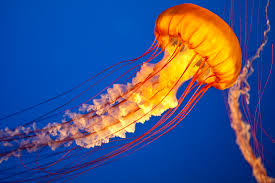
What type of symmetry does this organism have?
a)
Asymmetry
b)
Radial
c)
Bilateral
12.
Term used to describe thin, flattened body forms
a)
turbellaria
b)
cephalization
c)
acoelomate
d)
bilateral symmetry
13.
Which type of worm is a pseudocoelomate?
a)
flatworm
b)
roundworm
14.
The method of locomotion for snakes is _______________.
a)
crawling
b)
slithering
c)
walking
d)
sliding
15.
The means of locomotion for frogs is _____________.
a)
leaping
b)
swimming
c)
swimming and leaping
d)
crawling
100 %

