
Font size
 Worksheets
Climate Review
Total questions: 45
Worksheet time: 56mins
In the lapse rate, temperature decreases about ____*F for each 1,000 feet of altitude.
2.5
4
5
3.5
The earth's surface is heated unevenly, causing rising areas of low pressure and falling areas of cool high pressure. As a result....
rising low pressure is replaced by the high pressure creating wind
rising high pressure is replaced by the low pressure falling creating storms
rising high pressure is replaced by the low pressure falling to create wind
None are correct
Due to the Coriolis Effect, ocean currents flow ______ in the northern hemisphere.
clockwise
counter-clockwise
randomly
slower
In the rain shadow effect, what side of the mountain receives high precipitation totals?
rainward
windward
leeward
siteward
Which of the following best describes a tropical rainforest climate biome?
cool temps with low precipitation totals
hot temps with high precipitation totals
temperate temps with moderate precipitation totals
hot temps with low precipitation totals
Which of the following best describes a humid continental climate biome?
fairly cold to fairly hot without the extremes
hot and dry
cold and wet
temperate climate with no precipitation
What is decomposing organic material in the soil called?
hummus
deciduous
humus
coniferous
Which of the following best describes the Mediterranean Climate Biome?
fairly cold to fairly hot without many extremes
Long, hot drought filled summers with mild, rainy winters
Not much seasonal change
Constantly cold with minimal precipitation
What is the primary cause of global wind patterns?
Uneven heating of the Earth's surface by the sun.
The gravitational pull of the moon
The movement of tectonic plates
What is the main factor that causes the Coriolis effect?
ocean currents
atmospheric pressure
rotation of the Earth
What climates are found mainly in the Northern Hemisphere?
Marine West Coast and Humid Continental
Subarctic and Tundra
Highland and Desert
Which climate has the least amount of vegetation?
Ice Cap
Steppe
Desert
Where would one find most Steppe Climates?
Bordering the Mediterranean Sea
Throughout most of South America
Bordering deserts
How would you describe the climate in which we live?
Marine West Coast
Humid Continental
Subarctic
A key feature of Tundra Climate is permanently frozen layers of soil called permafrost.
True
False
1. Some mountains located near the Earth's Equator have snow-covered peaks.
2. Icecaps exist at the Earth's poles.

The curved paths of the planetary winds are a result of
The _______ of a mountain range is the side that receives a lot of precipitation.
windward side
leeward side
Because of its high _______________, Mount Everest has a cool climate all year.
Elevation
Latitude
Water level
level of snow
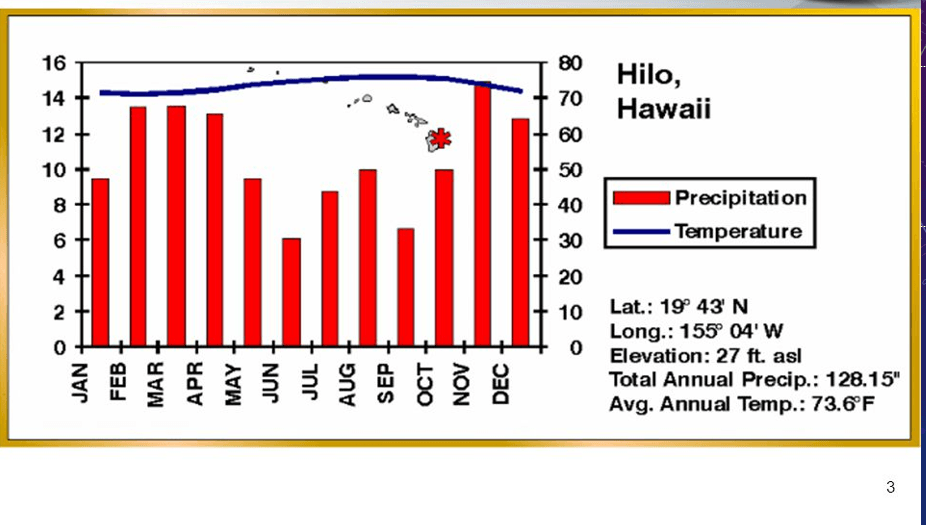
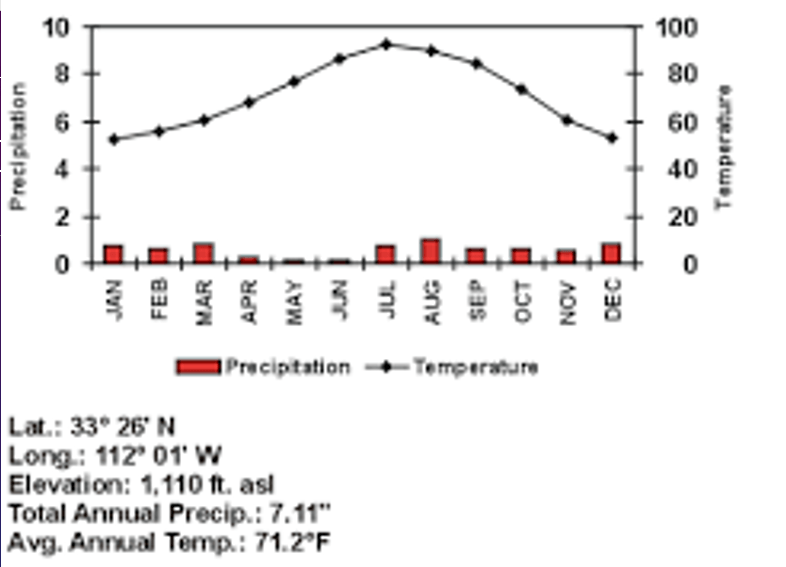
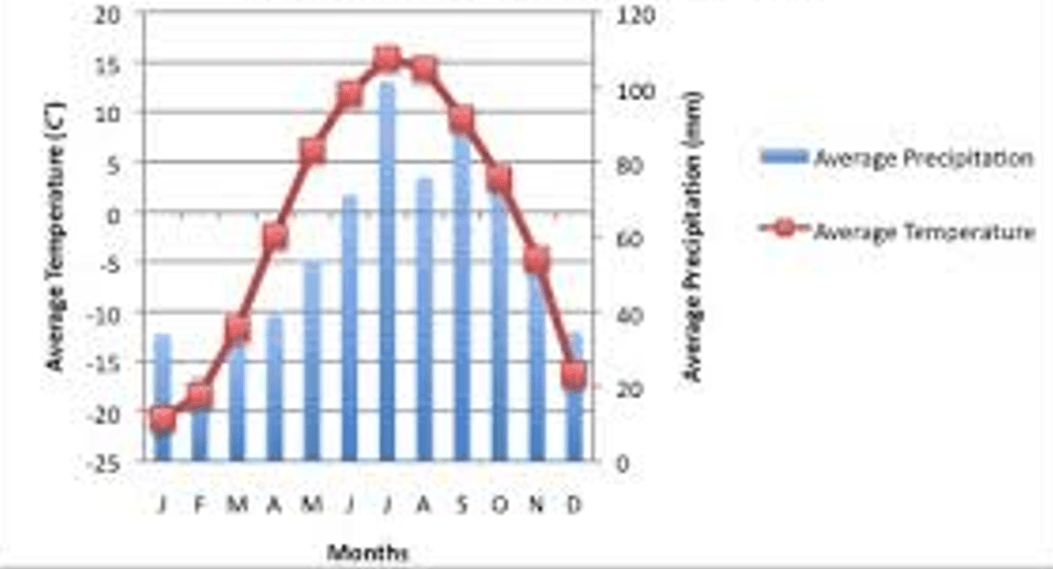

In which month do they get the most precipitation in this location?
January
May
August
November
How much precipitation does this location get in August?
30 mm
200 mm
375 mm
37 mm

Which months have the warmest temperatures?
December, January, February
March, April, May
June, July, August
September, October, November
What is the temperature in December?
400 degrees Celsius
14 degrees Celsius
2 degrees Celsius
14 degrees Fahrenheit

Which month has the coldest temperature?
January
April
September
March
When does the least precipitation occur?
February - March
April - May
June - July
November - December
How would you describe this climate? (Pick 2)
Warm
Cold
Dry
Wet

Which of the following is NOT correct?
Location C has warm and wet summers
The summers in all 4 locations are dry
Location A and C have both have periods where they get heavy rainfall
Location C and B have steady temperatures throughout the year
Which of the following is a true statement?
Location A and B have steady temperatures throughout the year
Location C is dry all year
Location A and C have similar precipitation patterns with the same dry and wet seasons
Location C and B have steady temperatures throughout the year
Which climograph has the most precipitation during the summer?
A
B
C
D
Which climograph has the most precipitation during the winter?
A
B
C
D

