
 Worksheets
Biomolecules for A&P
Total questions: 41
Worksheet time: 46mins
Name
Class
Date
1.
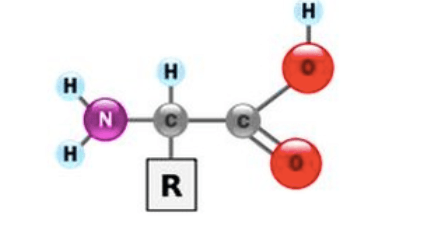
Which biomolecule is this a picture of?
a)
Protein
b)
Nucleic Acid
c)
Lipid
d)
Carbohydrate
2.
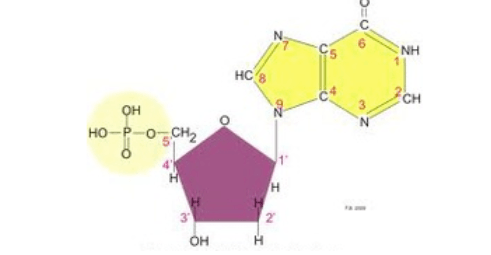
Which biomolecule is this a picture of?
a)
Protein
b)
Nucleic Acid
c)
Lipid
d)
Carbohydrate
3.
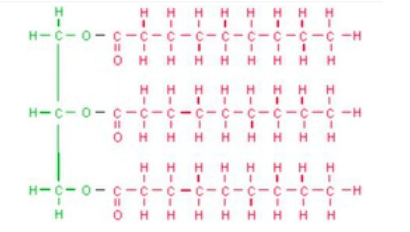
Which biomolecule is this a picture of?
a)
Protein
b)
Nucleic Acid
c)
Lipid
d)
Carbohydrate
4.
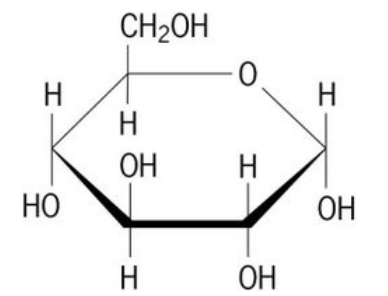
Which biomolecule is this a picture of?
a)
Protein
b)
Nucleic Acid
c)
Lipid
d)
Carbohydrate
5.
Which biomolecule is also known as enzymes?
a)
Carbohydrate
b)
Lipid
c)
Nucleic Acid
d)
Protein
6.
Which biomolecule contains pastas and breads?
a)
Lipid
b)
Protein
c)
Nucleic Acid
d)
Carbohydrate
7.
Which biomolecule is made of nucleotides and contain you DNA?
a)
Carbohydrate
b)
Lipids
c)
Protein
d)
Nucleic Acid
8.
Which biomolecule helps form muscles?
a)
Nucleic Acid
b)
Carbohydrate
c)
Protein
d)
Lipids
9.
Which biomolecule is responsible for insulation and energy storage?
a)
Protein
b)
Nucleic Acid
c)
Lipid
d)
Carbohydrate
10.
Which biomolecule contain your genetics?
a)
Carbohydrate
b)
Lipid
c)
Nucleic Acid
d)
Protein
11.
Which biomolecule is made of amino acids?
a)
Nucleic Acid
b)
Carbohydrate
c)
Protein
d)
Lipid
12.
Which biomolecule contains fats, oils, and waxes?
a)
Proteins
b)
Nucleic Acid
c)
Lipids
d)
Carbohydrate
13.
Which biomolecule includes fats, such as triglycerides, oils, waxes, and steroids (cholesterol); insoluble in water; provides energy storage, insulation, part of cell membrane, and hormones
a)
Nucleic Acid
b)
Lipids
c)
Carbohydrate
d)
Protein
14.
Which biomolecule contains Deoxyribonucleic acid; a sequence of bases that makes hereditary code; Ribonucleic acid; translate hereditary code into proteins that determine how the cell will function under various conditions; provides storage and retrieval of information; encode genes, gene expression, helps make proteins
a)
Nucleic Acid
b)
Lipid
c)
Carbohydrate
d)
Protein
15.
Steroids are a type of ________.
a)
Nucleic Acid
b)
Lipid
c)
Cholesterol
d)
Protein
16.
What do monomers do?
a)
Bonds to make a Polymer
b)
Creates Protiens
c)
Stores energy
d)
Splits to make more cells
17.
Many monomers can be cross-linked together to form ______________.
a)
molecules
b)
plastic material
c)
polymers
d)
balloons and silly putty
18.

The image is an example of a
a)
Lipid
b)
Polysaccaride
c)
Protein
d)
Lipid (polypeptide)
19.
What does the word organic mean?
a)
has nitrogen
b)
has sulfur
c)
has carbon
d)
has oxygen
20.
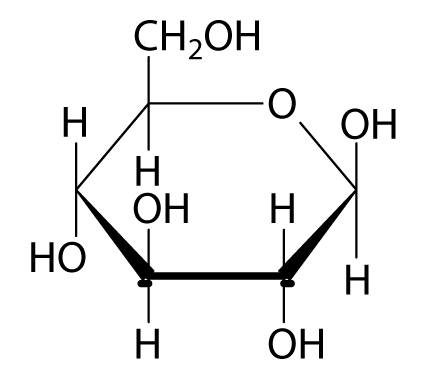
Identify the biomolecule
a)
Carbohydrate
b)
Lipid
c)
Protein
d)
Nucleic Acid
21.
What property of water allows it to be such a versatile solvent that it is often called the "universal solvent?"
a)
Purity
b)
Polarity and high surface tension
c)
High heat capacity
d)
Expansion upon freezing
22.
Large bodies of water do not quickly fluctuate in temperature. Why?
a)
Water is a solvent.
b)
Water has a high heat capacity.
c)
Water acts as a buffer.
d)
Water is non-polar.
23.
Why can water have no net charge but have slight charges in different parts of the molecule?
a)
The oxygen end is slightly negative and the hydrogen end is slightly positive
b)
The hydrogen end is slightly negative and the oxygen end is slightly positive
c)
The hydrogen and oxygen ends change in polarity
d)
Because it is hydrophobic
24.
Which has a pH below 7?
a)
Acid
b)
Base
25.
Which has a pH above 7?
a)
Acid
b)
Base
26.
Which is the stronger acid?
a)
pH 1
b)
pH 4
c)
pH 8
d)
pH 13
27.
Which range of numbers represent basic solution?
a)
0-6
b)
7
c)
8-14
d)
3-9
28.
If the [H+] > [OH-] the solution is...
a)
acidic
b)
basic
c)
neutral
29.
If the [H+] < [OH-] the solution is...
a)
acidic
b)
basic
c)
neutral
30.
The element _______is found in all of the organic compounds.
a)
Iron
b)
Nitrogen
c)
Carbon
d)
Oxygen
31.
What is a substance called if it speeds up a chemical reaction?
a)
reusable
b)
catalyst
c)
specific
d)
fragile
32.
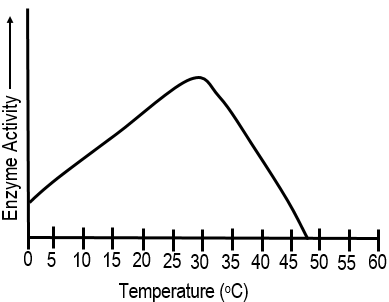
Based on the graph, what is the optimal temperature for this enzyme?
a)
15oC
b)
40oC
c)
30oC
d)
35oC
33.
An enzyme speeds up a chemical reaction in the cell but can only be used once. True or False?
a)
true
b)
false
34.
What is the function of an enzyme?
a)
enzymes break themselves into small pieces
b)
enzymes slow down chemical reactions
c)
enzymes speed up chemical reactions
d)
enzymes combine products to form reactants
35.
What happens when enzymes are heated to a high temperature?
a)
The enzymes die.
b)
The shapes of the enzyme are altered denature
c)
The enzymes' amino acid sequence changes.
d)
The enzymes remain the same
36.
Which of these is most likely an enzyme?
a)
Sucrose
b)
Galactose
c)
Fructose
d)
Amylase
37.
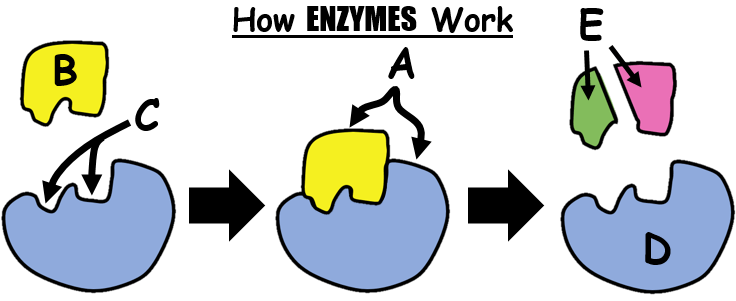
Letter C...
a)
active site
b)
enzymes
c)
substrate
d)
products
38.
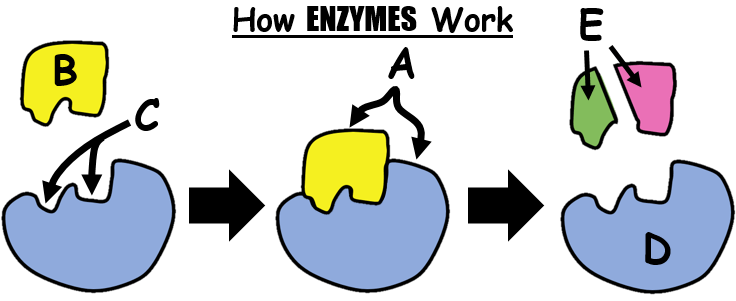
Letter B...
a)
active site
b)
enzyme
c)
substrate
d)
products
39.
Water is often called the universal
a)
solution
b)
solvent
c)
solute
d)
salvation
40.
What 2 building blocks make up lipids
a)
Glycerol and Nucleotides
b)
Glycerol and Fatty acids
c)
Fatty acids and monosaccharides
d)
Fatty acids and amino acids
41.
All compounds that end in ASE are..
a)
Sugars
b)
Enzymes
c)
DNA
d)
Fats
100 %

